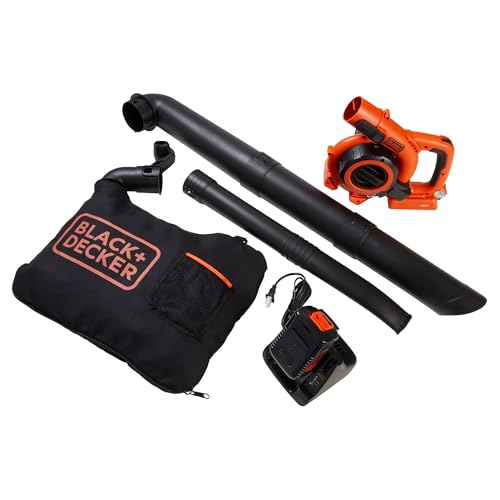
For homeowners who want to skip manual fuel mixing while clearing large properties, the VEVOR 75.6CC 4-Stroke Backpack Leaf Blower Gas delivers dedicated 4-cycle operation with an advertised 615 CFM, though it lacks the raw commercial airspeed found on heavier two-cycle alternatives.
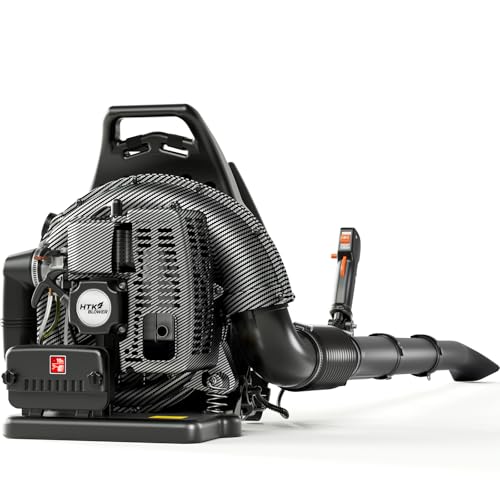
Pros
- 63CC 2-stroke engine provides up to 665 CFM and 205 MPH
- Fully padded ergonomic backpack harness
- Variable-speed throttle with built-in cruise control
- Generous 1.7 L fuel tank for extended yard sessions
Cons
- Requires 2-stroke fuel mixing and gas engine maintenance
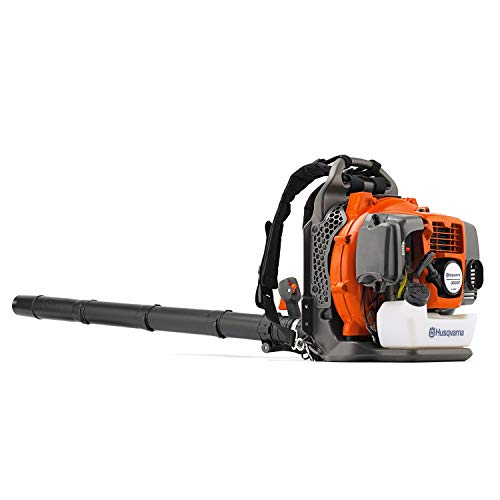
Pros
- 50.2-cc 2.1-HP X-Torq engine
- Rated blowing force of 692 CFM and 180 MPH
- LowVib technology dampens machine vibrations
- Air purge primer simplifies engine starts
- Ergonomic harness with offset control handle
Cons
- Weighs 22 pounds before fuel is added
- Requires ongoing two-stroke fuel mixing

Pros
- Delivers up to 972 CFM and 236 MPH air output
- 66-cc 4-HP X-Torq 2-cycle engine
- Load-reducing backpack harness with wide shoulder straps
- Air purge system and cruise control for easier operation
Cons
- Heavier build weighs 24.5 pounds
- Requires 2-cycle gas and oil fuel mixing

Pros
- 75.6CC 4-stroke engine requires no fuel pre-mixing
- 2600W motor runs at up to 7000 RPM
- Cruise control lever enables one-handed operation
- Thickened backpack harness shields user from heat
- Internal shock-absorbing springs reduce vibration
Cons
- Gas-powered design requires periodic maintenance
- Large form factor can be cumbersome in tight areas

Pros
- 75.6cc 4-stroke engine eliminates fuel-oil premixing
- Generates up to 900 CFM air volume and 210 MPH air speed
- Large 1,900 ml fuel tank reduces refueling interruptions
- Ergonomic padded backpack harness and cruise control handle
- Tube-mounted throttle with variable speed control
Cons
- Substantial footprint takes up noticeable storage space
- Requires routine 4-stroke engine upkeep like oil checks

Pros
- 75.6cc 4-stroke engine requires no oil mixing
- Delivers up to 615 CFM and 179 MPH airflow
- Large 1.8-liter fuel tank for longer runs
- Padded backpack harness dampens vibration
- Simple 4-step engine starting process
Cons
- Heavy bare machine weight at 28.44 pounds
- Large footprint requires substantial storage
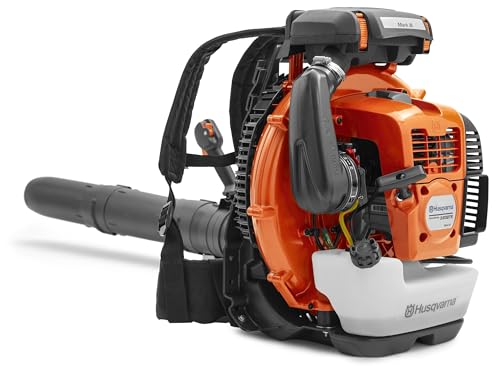
Pros
- Strong rated output of 1000 CFM, 220 MPH, and 47 N blow force
- Ventilated ergonomic harness with load-distributing hip belt
- Two-stage intake air filtration protects engine in dusty jobs
- Intuitive tube-mounted throttle control
Cons
- Substantial 34-pound weight can lead to operator fatigue
- Requires ongoing 2-cycle fuel mixing and maintenance

Pros
- Claims up to 1,110 CFM airflow and 220 MPH air speed
- Generous 1.89-liter fuel tank allows 50 to 60 minutes of runtime
- Padded harness and shock-absorption system reduce vibration
- Cruise control locks throttle for continuous operation
- Includes earmuffs, maintenance tools, and fuel mixing bottle
Cons
- Heavy 26.46-pound total weight can fatigue operators
- Requires mixing 2-cycle gas and oil fuel

Pros
- 51cc 2-cycle engine produces up to 765 CFM and 270 MPH
- Padded harness and hip belt provide balanced load distribution
- Air purge system removes fuel line air for easier starting
- Variable speed throttle includes cruise control functionality
- Proven X-Torq engine technology maintains high clearing force
Cons
- Heavier 22-pound build can cause fatigue on extended jobs
- Requires routine 2-cycle gas and oil fuel maintenance
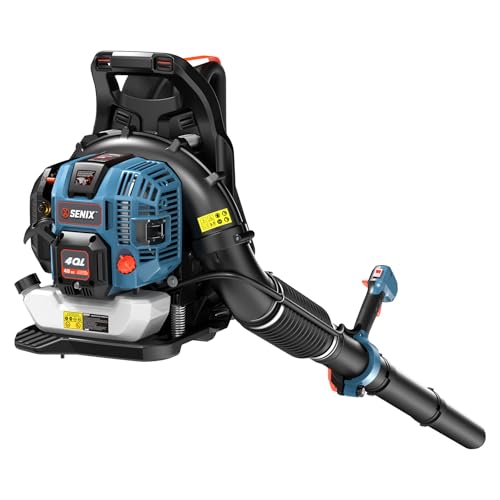
Pros
- 4-cycle engine eliminates the need to mix oil and gas
- Produces lower emissions than typical 2-cycle models
- Variable-speed throttle with convenient cruise control
- Lightweight backpack build at just 18.2 pounds
Cons
- Lower output at 425 CFM and 195 MPH than larger blowers
How Do 4-Stroke Backpack Engines Simplify Yard Work?
Dedicated four-stroke leaf blowers eliminate the need to pre-mix oil and gasoline, reducing refueling errors and running with noticeably cleaner emissions. The VEVOR 75.6CC 4-Stroke Backpack Leaf Blower Gas runs on straight gasoline from its 1.8-liter fuel tank, relying on a four-step start process that avoids separate mixing canisters. Similarly, the SENIX 49CC 4-Cycle Gas Powered Backpack Leaf highlights reduced exhaust emissions relative to conventional two-stroke platforms.
However, pure 4-cycle engines incorporate more mechanical components, such as independent oil sumps and valves, which inherently add physical weight compared to simple two-cycle blocks. While you gain fuel convenience and lower fumes, the machine can feel bulkier during multi-hour yard cleanups.
Comparing Real-World Air Volume and Speed Across Models
Air volume (measured in CFM) moves piles of debris across open ground, while air speed (measured in MPH) loosens wet, compacted matter from turf. The 75.6CC 4-Stroke Backpack Gas Leaf Blower advertises a formidable 900 CFM and 210 MPH from its 75.6cc engine, making it a high-output option on paper for stubborn yard debris. In contrast, the SENIX 49CC 4-Cycle Gas Powered Backpack Leaf delivers an advertised 425 CFM at 195 MPH, suited primarily for medium suburban lots of a half-acre to one acre.
A notable trade-off lies in manufacturer specifications: budget-tier brands provide advertised performance claims that have not undergone standardized independent lab benchmarks. Buyers prioritizing certified commercial durability often look to established platforms, but those typically utilize 2-cycle mixtures.
4-Stroke Convenience vs. Commercial 2-Stroke Power
When comparing dedicated four-cycle blowers to heavy-duty two-cycle options, the main divider is brute clearing capacity versus daily fueling ease. The commercial-grade Husqvarna 580BTS Gas Backpack Leaf Blower utilizes a 75.6cc 2-cycle X-Torq engine to generate an advertised 1000 CFM and 47 N of blowing force, easily outmatching mid-range 4-cycle engines on wet, matted debris.
The trade-off is maintenance routine: units like the Husqvarna 580BTS Gas Backpack Leaf Blower require a 50:1 gas-and-oil mix every time you fill up. If you prefer to pour gasoline straight from the pump without calculating ratios, the 4-Stroke Gasoline Backpack Leaf Blower provides a functional alternative, even if it lacks commercial brand dealer support.
Harness Comfort and Vibration Management During Extended Use
Ergonomic back padding and spring-loaded dampers prevent engine vibration from causing arm fatigue and lumbar strain over long sessions. The 4-Stroke Gasoline Backpack Leaf Blower includes thick backrest padding designed to insulate the operator from engine exhaust heat, coupled with shock-absorbing springs. Meanwhile, the Husqvarna 350BT Gas Leaf Blower uses proprietary LowVib technology alongside an offset handle to balance rotational forces.
The trade-off with heavily padded harnesses is added warmth and bulk in early autumn heat. A unit offering deep padding and integrated frame dampening adds stability, but you must ensure the hip and chest straps adjust closely to keep the engine from shifting off-center.
Fuel Capacity and Continuous Run Times
A larger fuel reservoir allows operators to clear wide lawns without interrupting work for refuels, though extra fuel weight sits directly on your shoulders. The 75.6CC 4-Stroke Backpack Gas Leaf Blower features an oversized 1.9-liter (1900 ml) tank, matching the continuous-run focus of the VEVOR 63CC Gas Backpack Leaf Blower, which advertises 50 to 60 minutes of run time from its 1.89-liter tank.
Carrying nearly two liters of liquid fuel alongside a 75cc engine increases total operating weight significantly when topped off. Buyers looking to manage tight properties might prefer smaller, lighter options like the SENIX 49CC 4-Cycle Gas Powered Backpack Leaf, which sacrifice run time to reduce shoulder strain.
Common Questions About 4-Cycle Backpack Blowers: FAQ
Do 4-stroke backpack leaf blowers require mixing oil with gasoline?
No. Dedicated 4-stroke backpack blowers feature separate compartments for engine oil and straight fuel, eliminating the need to measure and mix 2-cycle oil into your gas can.
Why do commercial landscapers often choose 2-stroke over 4-stroke blowers?
Two-stroke engines generally provide a higher power-to-weight ratio and faster throttle response, delivering up to 1000 CFM on models like the Husqvarna 580BTS, whereas 4-stroke units trade top-end blowing force for lower emissions and no-mix fueling.
Which Backpack Leaf Blower Should You Choose?
Selecting the right backpack blower depends on whether your priority is avoiding two-stroke fuel mixing or maximizing raw commercial air output across multi-acre properties. If you need a complete guide on acquiring lawn equipment locally, see our article on where to buy a leaf blower. Buyers who frequently clear paved surfaces can also explore specialized configurations in our leaf blowers for driveways overview.
The recommended option for buyers seeking dedicated no-mix operation is the VEVOR 75.6CC 4-Stroke Backpack Leaf Blower Gas, designed specifically for suburban property owners who want straight-gas convenience and simple four-step starting. Its main limitation is that its advertised 615 CFM airflow falls well short of commercial-grade debris pushers. If your priority is maximum commercial clearing force and proven dealer servicing, choose the Husqvarna 580BTS Gas Backpack Leaf Blower, keeping in mind that it requires standard 2-cycle fuel mixing.