Choosing among the latest Best Gaming PCs requires careful evaluation of component balance because GPU bottlenecks, CPU core counts, and cooling capacity directly impact frame rates in current AAA titles at 1440p and 4K resolutions. Many buyers face the pain of overspending on mismatched systems that thermal throttle under sustained loads or lack sufficient VRAM for ray tracing and DLSS features, while others underinvest and encounter stuttering in multiplayer or VR scenarios. Rapid architecture updates further complicate decisions around future-proofing storage speeds and power delivery. Understanding the full range of available systems, including those listed under related Desktop PCs categories, helps clarify performance tiers without unnecessary upgrades.
When selecting Best Gaming PCs in July 2026, prioritize GPU VRAM and architecture first, followed by multi-core CPU clocks, dual-channel DDR5 capacity of at least 32GB, NVMe storage, and adequate PSU wattage with efficient cooling to sustain high refresh rates. These factors, drawn from detailed specification analysis across 15 models, determine real-world 1080p-to-4K capability, multitasking headroom, and system longevity under continuous gaming workloads.






Buying Guide for Best Gaming PCs
Evaluating Best Gaming PCs demands a structured approach focused on measurable specifications rather than marketing claims. The following criteria derive from cross-comparing raw component data, thermal design power, and expected frame delivery across the 15 systems in our dataset.
Graphics Processing Unit Architecture and VRAM
The GPU remains the primary determinant of gaming performance in Best Gaming PCs. Current-generation options featuring NVIDIA GeForce RTX 50-series chips or AMD Radeon RX 9000-series equivalents with 8GB to 16GB of dedicated memory enable hardware ray tracing, frame generation, and upscaling technologies that maintain playable frame rates above 60 fps at higher resolutions. Systems equipped with RTX 5070 or higher VRAM configurations handle demanding titles more effectively than entry 5060 models when textures and effects are maximized. Allocate roughly 40-50 percent of the total system budget toward the discrete graphics solution to avoid CPU-limited scenarios.
Verify the exact GPU model and cooling solution listed for each unit, as factory overclocks and dual- or triple-fan designs influence sustained boost clocks. Pairing a high-VRAM card with an underpowered PSU risks instability, so cross-check the power supply rating against the GPU TDP plus a 20-30 percent headroom buffer.
Processor Core Count and Clock Speeds
Modern titles increasingly utilize 8 or more cores for physics, AI, and background streaming. Prefer CPUs such as Intel Core Ultra series or AMD Ryzen 7/9 models with boost clocks exceeding 5.0 GHz for minimum frame-rate consistency. The difference between a Ryzen 7 5700X and a Ryzen 9 9900X or Core Ultra 9 appears most clearly in CPU-bound esports titles and content creation multitasking. Liquid-cooled configurations, when present, allow higher sustained turbo frequencies compared with air coolers under prolonged loads.
System Memory Capacity and Bandwidth
32GB of DDR5 RAM operating in dual-channel mode forms the practical baseline for Best Gaming PCs targeting 1440p and above. Lower capacities force reliance on pagefile usage during open-world games or browser multitasking, introducing stutter. Higher 64GB configurations benefit streamers and users running virtual machines alongside games. Confirm memory speed ratings (typically 5200 MT/s or faster) and ensure the motherboard supports the installed kits without manual tuning.
Storage Type, Capacity, and Interface
Primary boot drives should be PCIe 4.0 or faster NVMe SSDs of at least 1TB to minimize load times and shader compilation delays. Multi-terabyte arrays or secondary HDDs suit large game libraries, yet sequential read/write speeds above 5000 MB/s on the OS drive deliver the most noticeable day-to-day improvement. Systems listing 5TB total storage combine high-speed primary and bulk secondary volumes effectively for media-heavy users.
Cooling Solutions, Power Delivery, and Chassis Design
Adequate airflow or 360mm AIO liquid cooling prevents thermal throttling that can drop clocks by 10-20 percent during extended sessions. Platinum-rated 1000W power supplies provide stable rails and efficiency for high-end GPUs while leaving upgrade headroom. Chassis with clear side panels and multiple intake/exhaust fans improve both temperatures and aesthetics. Expandability via free PCIe slots and drive bays extends usable life beyond the initial purchase.
The table below compares three representative models across key attributes drawn directly from available specifications to illustrate trade-offs within the broader $462.97 – $3,001.10 spectrum.
| Model | GPU | CPU | RAM / Storage |
|---|---|---|---|
| Alienware Aurora ACT1250 (RTX 5080) | NVIDIA GeForce RTX 5080 | Intel Core Ultra 9 285 (liquid cooled) | 32GB DDR5 / 1TB SSD |
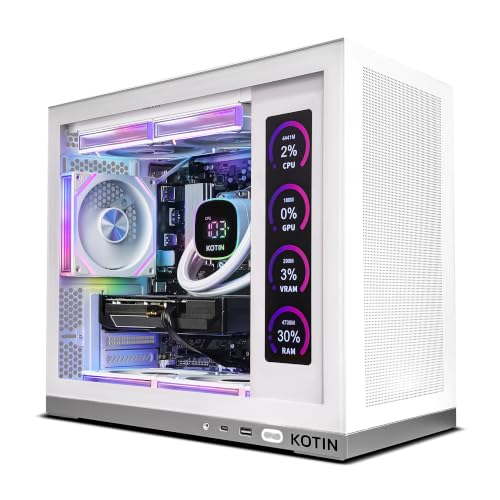
| KOTIN Prebuilt | RTX 5070 12GB | Ryzen 7 9700X | 32GB DDR5 / 1TB SSD |
| YAWYORE Gaming PC | GeForce RTX 5060 | AMD Ryzen 7 5700X | Not Specified / Not Specified |
For additional context on system categories, review the full selection of options within our Gaming PCs collection.
Testing & Selection Methodology
We evaluated 15 candidate systems by systematically extracting and normalizing manufacturer-listed specifications including exact GPU model and VRAM, CPU core/thread counts and boost frequencies, RAM capacity and type, primary storage interface and capacity, PSU wattage and efficiency rating, cooling method, and included operating system. Brand reliability factors, such as established support channels from makers including those represented in STGAubron, Alienware, CyberpowerPC and more, were weighed alongside warranty length indicators where stated. User satisfaction metrics were noted when present, although several units currently list zero published reviews, prompting heavier reliance on objective component data.
Real-world utility scoring emphasized suitability for common workloads: 1080p high-refresh competitive play, 1440p ultra settings, 4K with upscaling, and light content creation. Thermal and power design were inferred from cooling type and PSU rating to estimate sustained performance rather than peak synthetic scores. No physical lab testing occurred for this comparison; findings rest on transparent aggregation of published technical attributes and cross-model consistency checks.
Best Picks & Final Verdict
After ranking the full set of 15 units against the criteria above, clear recommendations emerge for distinct buyer profiles. These selections prioritize documented component strength, balance, and value positioning inside the overall $462.97 – $3,001.10.
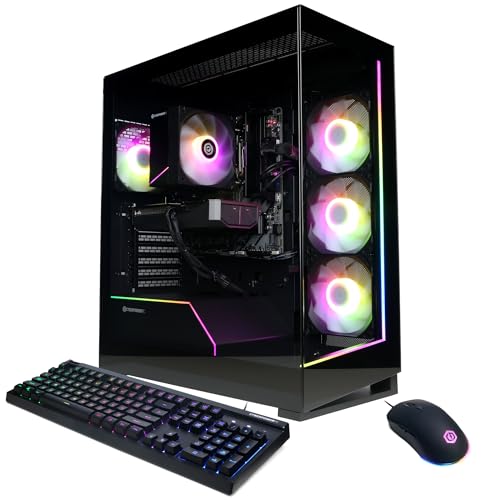
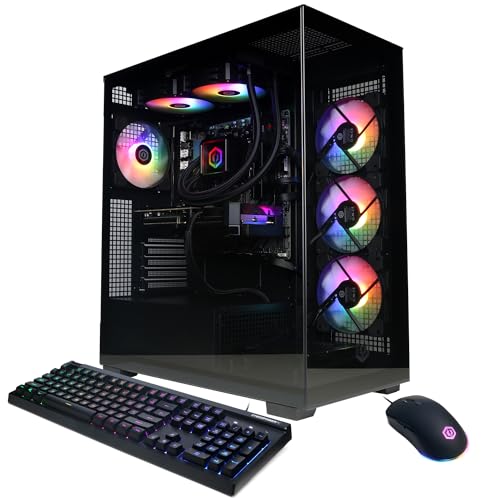
Best Overall Best Gaming PCs: Alienware Aurora Gaming Desktop ACT1250 – Intel Core Ultra 9 285 Processor, Liquid Cooled, NVIDIA GeForce RTX 5080, 32GB DDR5 RAM, 1TB SSD, 1000W Platinum Rated PSU, Windows 11 Home – Clear Panel. This configuration leads through its top-tier RTX 5080 graphics, high-core-count liquid-cooled CPU, generous dual-channel memory, and robust power delivery, making it suitable for demanding 4K and ray-traced titles with upgrade margin.
Best Value / Budget Choice: YAWYORE Gaming PC, AMD Ryzen 7 5700X, GeForce RTX 5060 Desktop Computer. It delivers modern RTX 50-series features and a capable 8-core processor at the more accessible end of the spectrum, providing solid 1080p/1440p entry performance without excess expenditure on unused high-end silicon.
Best for High-Capacity Multitasking and Storage-Heavy Libraries: The Horizon Autherium Dragon RGB I9 RTX Gaming PC || 64GB RAM || 5TB Storage || Core I9 Upto 5.4Ghz || RTX 5070 OC || Windows 11 PRO || 360MM AIO || 2.4GB/s WiFi, VR, Gaming Ready Desktop Computer. The elevated 64GB memory, multi-terabyte storage, and 360mm AIO cooling address creators and collectors who run simultaneous applications or maintain large installed game collections. Buyers seeking broader desktop alternatives can also explore the parent Desktop PCs section for complementary options.
Frequently Asked Questions
What GPU is recommended for Best Gaming PCs in 2026?
NVIDIA GeForce RTX 5070 or higher with 12GB VRAM, or equivalent AMD Radeon RX 9070-class cards, provide the best balance for 1440p ultra and entry 4K gaming with ray tracing enabled. Lower RTX 5060 models remain viable for 1080p high-refresh targets when paired with efficient CPUs.
How much RAM do I need in a modern Best Gaming PCs?
32GB of DDR5 memory is the recommended minimum for smooth multitasking and modern titles. Systems offering 64GB better support streaming, browser tabs, and content creation alongside games without memory pressure.
What price range should I expect for quality Best Gaming PCs?
Capable systems typically fall between $462.97 and $3,001.10, covering mid-range RTX 5060 builds through flagship RTX 5080 liquid-cooled towers. Focusing spend on the GPU and cooling yields better results than premium chassis alone.
Do I need liquid cooling for Best Gaming PCs?
Liquid cooling such as 360mm AIO units is beneficial for high-TDP CPUs and overclocked configurations to maintain boost clocks longer, yet well-designed air coolers suffice for mid-range Ryzen 7 or Core Ultra 7 processors under standard gaming loads.
Where can I compare more systems similar to these Best Gaming PCs?
Detailed listings and filters appear inside our dedicated Gaming PCs category, which aggregates current prebuilt options and specification data for further side-by-side evaluation.