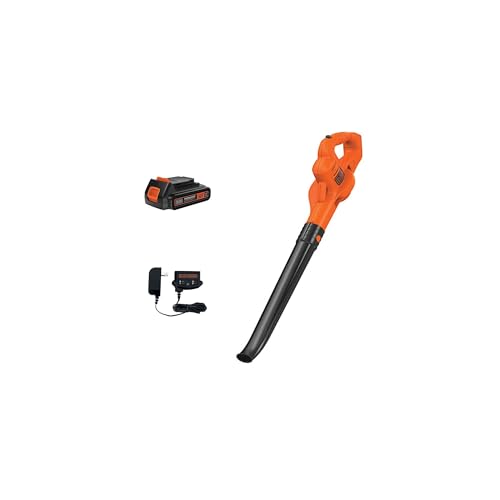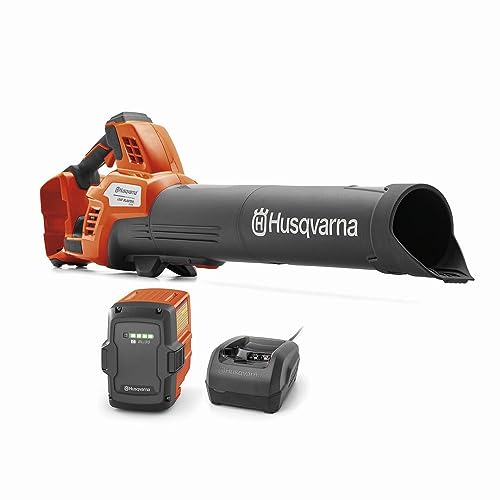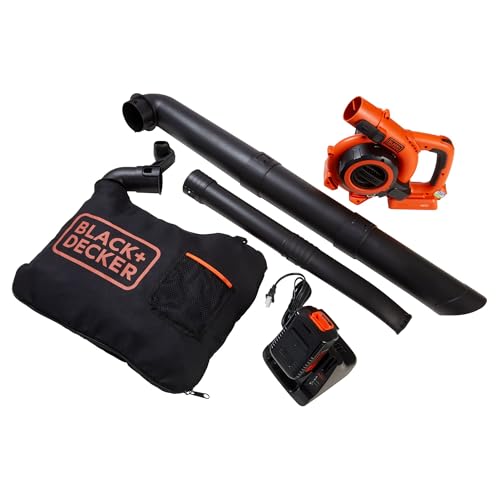
For clearing heavy grass clippings and post-trimming debris, the YOOVL electric blower provides the highest listed airflow at 650 CFM, though its larger output comes at a higher price tag of $89.98. If your yard work involves only quick driveway sweep-ups after edging, lighter and lower-capacity blowers offer easier handling at a reduced cost.
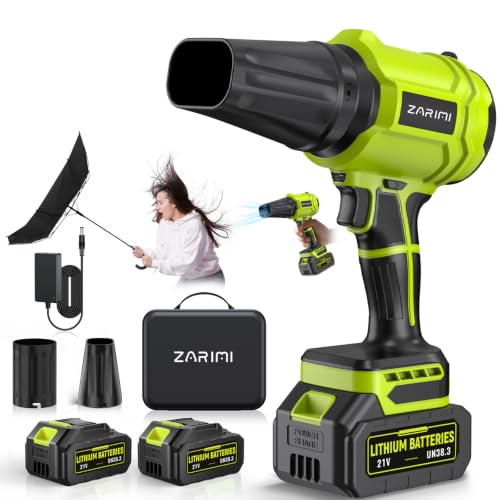
Pros
- Extremely lightweight at only 2.8 pounds for low-fatigue use
- Reaches stated air speeds over 50 m/s (110+ MPH)
- Comes with two batteries and charger for alternating use
- Includes a concentrated narrow nozzle for detailed edging
- Compact footprint stores easily in tight spaces or vehicle trunks
Cons
- Limited runtime of only about 13 minutes per battery
- Not designed for moving heavy or deep piles of wet leaves
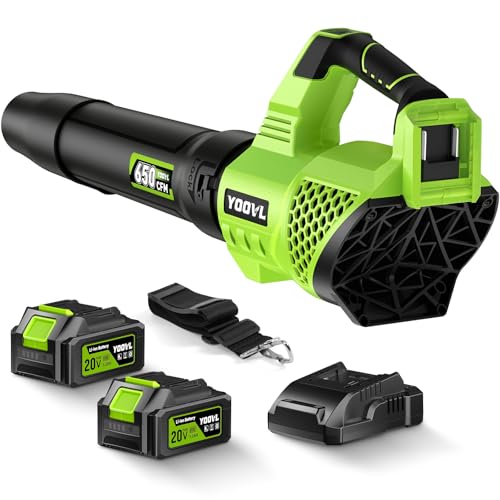
Pros
- Airflow rated up to 650 CFM using advanced turbo technology
- Comes with two high-capacity 20V 5.2Ah batteries and fast charger
- Three selectable speed modes for delicate to heavy-duty jobs
- Includes an adjustable shoulder strap to reduce arm fatigue
- Includes blower tube and extension nozzle attachments
Cons
- Maximum 150-minute runtime applies only to low-speed mode
- Heavier battery packs may add weight during prolonged handheld use

Pros
- Includes two 21V 4.0Ah batteries for extended runtime
- Delivers up to 420 CFM airflow and 150 MPH air speed
- Lightweight design weighs under 3 lbs bare tool for low fatigue
- Comes with both round and flat interchangeable nozzles
- Two adjustable speed settings for varying cleanup tasks
Cons
- Limited to two preset airflow speeds
- Best suited for dry leaves and light debris rather than heavy wet waste

Pros
- Claims up to 450 CFM and 150 MPH for efficient debris clearing
- Lightweight 3.8-pound body reduces arm fatigue
- Includes two batteries and a charger for extended sessions
- Two selectable speed modes match different cleaning tasks
- Simple assembly requiring only nozzle and battery attachment
Cons
- Runtime reaches up to 30 minutes per battery only on low speed
- High-speed battery consumption significantly shortens run times

Pros
- Includes two 21V 2.0Ah batteries
- Fast 1-hour battery charging system
- Ultra-lightweight body at around 3.5 pounds
- Rated top air speed of 150 MPH
- Built-in battery overheat protection
Cons
- High-speed mode lasts about 10 minutes per pack
- Air volume CFM rating is not specified
How Airflow and Airspeed Dictate Debris Clearing
Airflow volume determines how much loose material a blower can push at once, while airspeed dictates its ability to lift damp debris from concrete and turf. Manufacturer claims range from 420 CFM on the compact models up to 650 CFM on the YOOVL unit. Similarly, airspeed ratings reach up to 150 MPH across the VIBOGEN, WOLFMEN, and LAZYBOI models, while YUQUESEN advertises 110+ MPH.
When selecting a cordless weed blower for edging cleanup, higher CFM ratings let you move broader swaths of scattered weeds and grass. However, advertised maximum figures are typically achieved on high-speed modes that rapidly drain batteries. Users prioritizing stubborn, wet clippings will appreciate the higher push force, but must plan for faster battery depletion.
Comparing the YOOVL 650CFM and VIBOGEN 420CFM
The primary distinction between the YOOVL blower and the VIBOGEN model lies in airflow capacity versus physical weight and price. YOOVL delivers a manufacturer-rated 650 CFM powered by two 20V 5.2Ah batteries and includes a shoulder strap for $89.98. In contrast, VIBOGEN advertises 420 CFM and 150 MPH, powered by two 21V 4.0Ah batteries, retailing at an entry-level $49.97.
While YOOVL provides more raw volume for larger lawns, VIBOGEN offers an ultra-light bare tool weight of just 2.74 lbs and includes dual nozzles (round and flat) for directional flexibility. The trade-off centers on workload: expansive lawns with heavy trimming debris benefit from YOOVL’s dual 5.2Ah packs, whereas tight residential paths and driveways are easily managed with VIBOGEN’s lighter frame at nearly half the cost.
Understanding Dual-Battery Runtimes Across Models
Every featured cordless blower includes two battery packs, but claimed runtimes vary drastically based on capacity and operational speed. The YOOVL claims an upper threshold of up to 150 minutes across two 5.2Ah packs, presumably on its lowest setting, while LAZYBOI advertises 10 minutes on high or 15 minutes on low per 2.0Ah pack. YUQUESEN states roughly 13 minutes per pack, netting around 26 minutes of continuous use.
Prospective buyers should note that manufacturer runtime claims reflect optimal conditions and low-power modes. Running any of these tools at full throttle to blow heavy wet weeds will noticeably decrease operation time. Having a secondary pack minimizes downtime, but uninterrupted yard maintenance requires rotating and recharging packs promptly.
Weight and Ergonomics for Post-Mowing Cleanup
Tool weight directly influences operator comfort, especially when maneuvering around flower beds and curbs. The YUQUESEN is the lightest fully assembled option at an advertised 2.8 lbs, while VIBOGEN weighs 2.74 lbs before attaching its battery pack. LAZYBOI lists a total weight of approximately 3.5 lbs, and WOLFMEN comes in at 3.8 lbs.
Lighter blowers significantly decrease wrist strain during one-handed operation. To counterbalance its heavier motor assembly, the YOOVL unit includes an adjustable shoulder strap to distribute weight across extended sessions. If fatigue is your main concern, choosing an under-3-lb tool provides effortless maneuverability, though usually at the expense of total CFM output.
Nozzle Design and Speed Versatility
Air control versatility prevents blowing light mulch into turf or scattering gravel onto walkways. The YOOVL unit incorporates 3 distinct speed modes, giving operators finer control between delicate flower beds and open pavement. WOLFMEN, LAZYBOI, and VIBOGEN provide 2-speed controls, separating light dust maintenance from heavy clearing.
Nozzle shapes also alter the blowing pattern. VIBOGEN packages both a round nozzle for concentrated spot cleaning and a flat nozzle for sweeping wide swaths of driveways. Dedicated narrow nozzles, like the one included with the YUQUESEN, are ideal for tight crevices along fences and edging lines, though they narrow the effective clearing path on open lawns.
Frequently Asked Questions About Cordless Weed Blowers
Can these cordless blowers move wet weed trimmings and heavy grass?
Models with higher airflow and speeds—such as 450 to 650 CFM or 150 MPH—can displace damp lawn debris, though doing so typically requires running the tool on high speed, which exhausts the battery much faster.
Are replacement batteries cross-compatible between different blower brands?
Battery compatibility across different budget power tool brands is generally not guaranteed. Unless a manufacturer explicitly documents standard platform fitment, expect each tool to work only with its supplied proprietary battery packs.
Choosing the Right Cordless Weed Blower for Your Yard
The right cordless blower depends on your yard size, physical comfort preferences, and the volume of debris left after weed trimming. Homeowners with large lawns or damp clippings will gain the most utility from the higher volume generated by larger battery platforms, while smaller patio owners benefit from lightweight, budget-friendly sweepers.
For demanding yard maintenance, the Leaf Blower Cordless, 650CFM Electric Leaf Blowers is our primary recommendation due to its strong 650 CFM output and generous dual 5.2Ah battery setup. Its primary limitation is a heavier build and higher $89.98 price tag. For property owners seeking an ultra-lightweight, affordable tool strictly for clearing paved surfaces, the Electric Leaf Blower Cordless with Battery serves as a compelling, low-fatigue alternative at just 2.74 lbs bare weight.