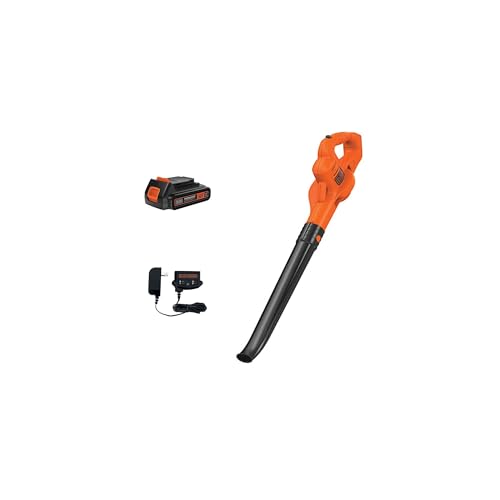
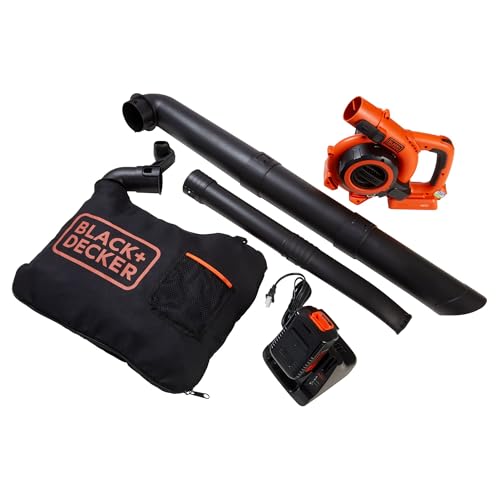
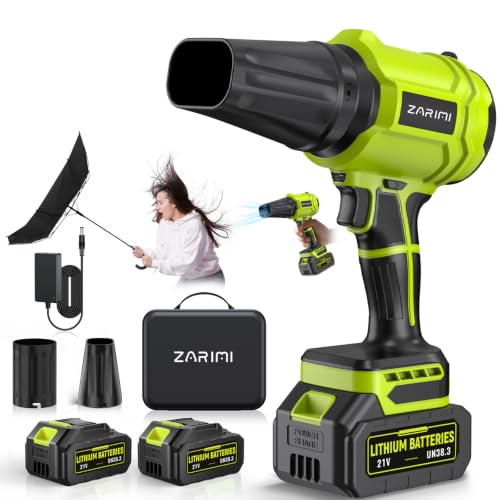
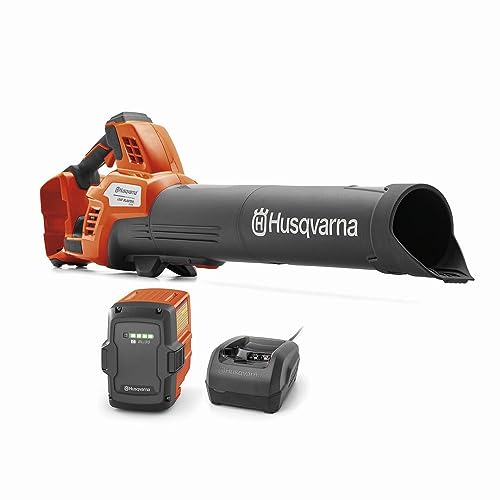
If you need heavy debris clearing across open lawns, high-volume cordless tools provide substantial airflow, but battery models require managing recharge cycles and come at a higher cost than corded alternatives.

Pros
- Wheeled vacuum tube supports tool weight during collection
- Tool-free lever switch between blowing and vacuuming
- Brushless motor with 2-speed output control
- Includes two 20V PowerShare batteries and a dual charger
- Mulches leaves at a manufacturer-rated 12:1 ratio
Cons
- Maximum 340 CFM airflow is relatively modest for wet leaves
- Tool weighs 11.25 pounds without debris

Pros
- Brushless motor delivers up to 550 CFM and 130 MPH
- Ultralight build weighs only 5.07 pounds
- Cruise control and variable-speed trigger with Turbo
- Includes 40V 4.0Ah battery and charger
Cons
- Runtime is limited to around 20 continuous minutes
- 130 MPH air speed is modest compared to high-velocity blowers

Pros
- Delivers up to 600 CFM and 110 MPH airflow
- Continuous corded power eliminates recharging and gas mixing
- Variable-speed control adjusts airflow to the task
- Lightweight design weighs just 6.4 pounds
Cons
- Operating range is tethered to an electrical outlet

Pros
- High-performance brushless motor rated up to 700 CFM and 170 MPH
- Includes an 80V 2.5Ah battery and compatible charger
- Cruise control and variable-speed trigger for effortless pacing
- Rated at 74 dB for quieter operation than comparable gas units
Cons
- Operating continuously on turbo mode quickly depletes the 2.5Ah battery
- Weighs 5.84 pounds before factoring in user movement

Pros
- Instant switch between blow and vacuum modes
- High 18:1 mulch ratio maximizes bag capacity
- Rated up to 350 CFM and 210 MPH air output
- Variable-speed control for different debris types
- Includes 42L debris collection bag
Cons
- Corded design limits overall yard reach
- Weighs 9.3 pounds before debris accumulates

Pros
- Weighs only 3.27 pounds for easy handling
- Up to 150 MPH wind speed for clearing hard surfaces
- Includes 40V 2.0Ah battery and dedicated charger
- Variable speed dial adapts to light or denser debris
- Ergonomic grip minimizes fatigue during use
Cons
- Modest 135 CFM airflow limits heavy debris clearing
- Narrow sweeper tube is best suited for hard surfaces
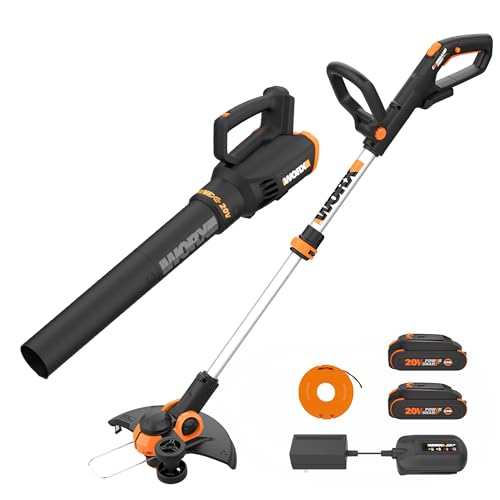
Pros
- Includes both a trimmer/edger and a leaf blower in one package.
- Two batteries and a charger are included, adding convenience and value.
- Lightweight build improves maneuverability for many users.
- The trimmer’s pivoting head adds edging capability without extra equipment.
Cons
- Battery runtime is not listed in the provided data, so long-session performance is unclear.
- The 12-inch cutting width may be limiting for larger yards or heavier overgrowth.
- No detailed specifications are provided for battery capacity, charge time, or runtime.
Overview: The WORX WG928 is a cordless yard care combo that pairs a 20V 12-inch string trimmer and edger with a 360 CFM leaf blower. It is positioned as a convenient all-in-one solution for homeowners who want to handle trimming, edging, and light debris cleanup with one bundle.
Performance & Key Features: The trimmer converts from trimming to edging with a pivoting head, which adds flexibility for sidewalks, driveways, and lawn borders. Its push-button line feed is designed to supply fresh line when needed, while the blower uses a turbine-style design rated at 360 CFM and 75 mph for moving leaves and loose yard debris.
Drawbacks & Considerations: The provided product data does not include battery runtime, charging time, or battery capacity, so it is difficult to judge endurance for larger projects. The 12-inch trimmer width is practical for routine maintenance, but users with bigger yards or thicker growth may want a more powerful or wider-cut option.
Verdict: This WORX combo is best suited for homeowners who want a lightweight, cordless starter set for regular yard upkeep. It offers strong convenience and useful multi-function value, but it is more of a general-purpose maintenance kit than a heavy-duty professional solution.
WORX vs. Greenworks: Which Brand Ecosystem Fits Your Yard?
Shoppers searching for “works” leaf blowers typically compare two distinct brands: WORX and Greenworks. Each brand structures its outdoor power equipment around specific battery platforms and yard duties. Greenworks concentrates heavily on dedicated blowing performance across its 40V and 80V cordless lines. In contrast, WORX emphasizes multi-tool utility and modular convenience through its 20V and 40V PowerShare platform, as well as dedicated plug-in yard equipment.
If your priority is sheer blowing power for clearing broad lawn areas, Greenworks provides dedicated blowers ranging from 135 CFM up to 700 CFM. However, if your yard routine involves gathering debris from flower beds and bagging it for compost, WORX offers combo kits and 3-in-1 blow-vac-mulch designs that reduce manual labor. When deciding what leaf blower is the best for your routine, your existing battery tools should also guide your brand choice.
Airflow Volume vs. Wind Speed: Understanding CFM and MPH Ratings
Airflow volume (CFM) determines how wide of a debris pile a tool can push, while air speed (MPH) determines the tool’s ability to loosen heavy or damp material. Evaluating both metrics helps ensure you do not buy an underpowered tool for your specific yard surface.
The Greenworks 80V Electric Leaf Blower, 700 CFM leads the category in raw volume, delivering up to an advertised 700 CFM and 170 MPH in turbo mode. This combination allows it to sweep large swaths of grass and lift wet, matted debris efficiently. On the other end of the spectrum, the Greenworks 40V Cordless Leaf Blower, 135 CFM focuses on higher velocity over a compact area, producing 150 MPH at 135 CFM via a concentrator nozzle. That setup makes it suitable as a sweeper for hard surfaces, but far less effective across thick turf. For homeowners clearing paved walkways, dedicated leaf blowers for driveways often benefit from this balance of focused airspeed over broad air volume.
Cordless Mobility vs. Continuous Corded Electric Power
Cordless blowers provide total mobility across large or sloped properties, but corded electric blowers deliver uninterrupted power at a lower purchase price.
Corded tools like the WORX 12 Amp Turbine Electric Leaf Blower for Daily draw continuous power from a standard outdoor outlet, producing up to 600 CFM and 110 MPH while weighing just 6.4 pounds. Because there are no onboard batteries, you never have to pause a cleanup job to recharge. The obvious trade-off is the physical tether of an extension cord, which restricts your working radius and can snag on landscape edging and shrubs.
Battery-powered alternatives like the Greenworks 40V Electric Leaf Blower, 550 CFM eliminate cords completely. Greenworks advertises up to a 20-minute continuous runtime with its included 4.0 Ah battery, operating at an advertised 78 dB sound level. While 20 minutes is ample for routine garage sweeping or deck cleaning, clearing an entire tree drop across a half-acre lot may require purchasing extra batteries.
Mulching and Vacuum Capabilities: Are 3-in-1 Tools Worth It?
A 3-in-1 leaf blower, vacuum, and mulcher simplifies yard cleanup by shredding leaves directly into a collection bag, though these tools are heavier than dedicated sweepers.
The WORX Trivac 3-in-1 Electric Leaf Blower/Leaf uses a 12 Amp motor to push up to 350 CFM at 210 MPH, then converts to vacuum mode to shred debris at an advertised 18:1 mulch ratio into a 42-liter collection bag. This significantly reduces waste volume, saving disposal bags. Similarly, the cordless WORX 40V 3-in-1 Cordless Leaf Blower/Leaf offers cordless shredding at a 12:1 mulch ratio and incorporates a wheeled vacuum tube to support the unit during long passes across the lawn.
The limitation of any multi-function machine is weight and handling. Switching between blowing and vacuuming requires adjusting attachments or diverter levers, and collecting shredded leaves adds substantial weight as the bag fills. If you only intend to blow dry clippings off a patio, a dedicated small rechargeable leaf blower or lightweight sweeper is easier to maneuver.
Frequently Asked Questions About Works Leaf Blowers
What is the primary difference between WORX and Greenworks leaf blowers?
WORX models frequently emphasize multi-function versatility, such as 3-in-1 vacuum-mulcher capabilities and modular 20V PowerShare batteries. Greenworks models focus heavily on high-CFM dedicated blowers powered by 40V and 80V battery ecosystems.
Is high CFM or high MPH more important for yard maintenance?
CFM (cubic feet per minute) measures the volume of air, making it best for moving large piles of dry leaves across grass. MPH (miles per hour) measures airspeed, which is critical for dislodging wet, heavy debris stuck to paved surfaces.
Choosing the Right Works Leaf Blower for Your Property
Selecting the right blower depends on property size, debris type, and whether you need mulching capabilities alongside standard blowing functions. Understanding whether you need commercial-grade battery power or a low-maintenance corded tool prevents overspending on equipment you do not need.
For homeowners managing mid-to-large properties with stubborn, damp debris, the Greenworks 80V Electric Leaf Blower, 700 CFM is the most capable option due to its high airflow output and cordless freedom, though its higher price point and battery weight remain primary trade-offs. For budget-conscious homeowners who want to vacuum and mulch leaves around flower beds without battery runtime limits, the corded WORX Trivac 3-in-1 Electric Leaf Blower/Leaf serves as a practical, economical alternative.