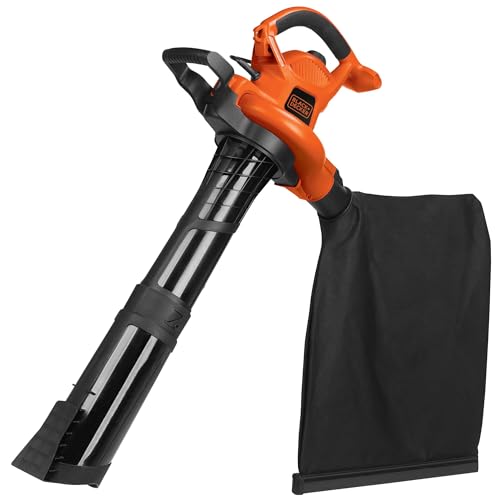
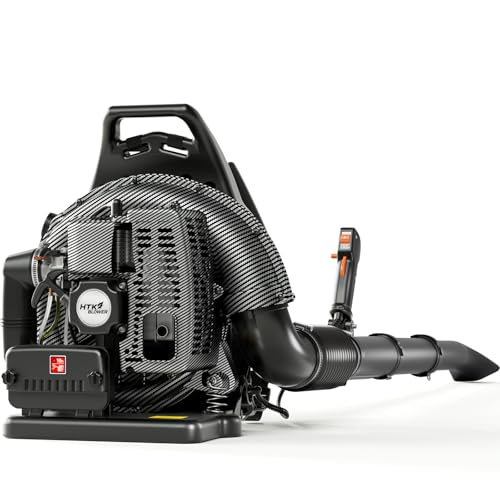
For property owners managing large lawns with thick leaf accumulation, a gas blower and vacuum provides dependable clearing velocity and integrated shredding, though it demands regular fuel mixing and carries notable engine weight.

Pros
- 2-stroke engine rated at 0.7kW output
- Delivers up to 424 CFM airflow
- Includes blowing, vacuuming, and mulching modes
- Supplied with straight and curved blow pipes
- Comes with a 30L leaf collection bag
Cons
- Requires 2-stroke gas and oil fuel mixing
- Gas engine demands regular maintenance
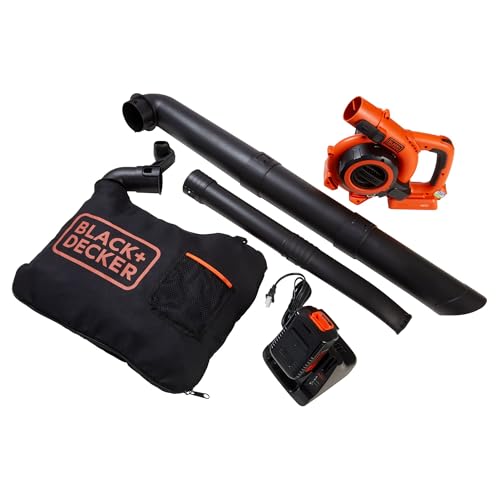
Pros
- Lightweight design at 5.4 lbs in blow mode and 6.9 lbs in vac mode
- 40V MAX battery with built-in state of charge indicator
- Mulching fan shreds up to 6 bags of leaves down to 1 bag
- Built-in scraper on the tube helps loosen stuck debris
- 6-speed Powercommand dial tailors airflow to the task
Cons
- Modest 120 mph maximum air velocity intended for hard surfaces
- Lower mulching ratio compared to larger yard units

Pros
- 3-in-1 functionality for blowing, vacuuming, and mulching
- Delivers up to 180 MPH air speed and 450 CFM airflow
- Lightweight 9.9 lb handheld design
- Includes 5-piece tube set and shoulder strap
- Primer-assisted recoil start with CDI ignition
Cons
- Requires 25:1 gas-and-oil fuel mixing
- 0.5L fuel tank requires regular refilling

Pros
- 28-cc 2-cycle engine rated at 470 CFM and 170 MPH
- Includes vac kit with mulching knives and bag
- Cruise control feature simplifies extended use
- Auto-return stop switch automatically resets to on
Cons
- Weighs 9.6 pounds before fuel and collected debris
- Requires 2-cycle gas and oil fuel mixing

Pros
- 25.4cc 2-stroke gas engine
- Delivers up to 165 mph and 391 cfm
- Includes powerhead, pipes, and collection bag
- Variable speed throttle control
- Rated for relatively quiet 70 dBA operation
Cons
- Requires manual 2-stroke fuel mixing
- Weighs 11 pounds before fuel addition

Pros
- Instant switch between blow and vacuum modes
- High 18:1 mulch ratio maximizes bag capacity
- Rated up to 350 CFM and 210 MPH air output
- Variable-speed control for different debris types
- Includes 42L debris collection bag
Cons
- Corded design limits overall yard reach
- Weighs 9.3 pounds before debris accumulates

Pros
- Brushless motor delivers rated airflow up to 505 CFM
- Variable speed dial with on-demand turbo boost button
- Includes a 40V 5.0Ah lithium-ion battery and charger
- Works with over 75 tools in the Greenworks 40V platform
Cons
- Heavy overall build weighing 13.42 pounds
- Mulch collection bag details are unspecified in data

Pros
- Powerful 12-amp motor generating up to 260 MPH and 450 CFM
- Hands-free 55-liter backpack collection bag for easy carrying
- Tool-free conversion between blower, vacuum, and mulcher
- Wide-mouth bag opening enables quick emptying
Cons
- Requires an extension cord for power, limiting yard reach
- Weighs 11.27 pounds without debris in the collection bag

Pros
- Cordless 2-cycle gas engine for unrestricted range
- 3-in-1 functionality blows, vacuums, and mulches
- High 18:1 mulch reduction ratio compacts yard waste
- Includes large 12-gallon debris collection bag
- Rated for up to 180 MPH and 432 CFM output
Cons
- Heavy 16-pound dry weight
- Requires mixing 2-cycle gas and oil fuel

Pros
- 28-cc engine delivers up to 470 CFM and 170 MPH
- Cruise control function enables comfortable sustained operation
- Air purge system removes air from carburetor for easier starting
- Auto-return stop switch automatically resets to the on position
- Adjustable soft-grip handle engineered to reduce strain
Cons
- Requires 2-cycle fuel and oil mixing
- Produces engine exhaust emissions and engine noise
Airflow and Engine Displacement: Evaluating Clearing Force
Engine displacement directly governs the airspeed and volume needed to dislodge wet debris, making higher cubic centimeter ratings preferable for demanding yard cleanups. High air volume (CFM) allows you to sweep broad swathes of loose leaves into tidy windrows, while high air speed (MPH) provides the concentrated force required to lift damp, matted foliage from lawn edges and driveway seams.
Among verified gas models, engine performance varies across displacement tiers:
- Husqvarna 125BVx: Features a 28cc, 1.1-HP 2-cycle engine delivering an advertised 470 CFM and 170 MPH, generating 12.5 N of clearing force.
- DTNESS 26cc: Powered by a 26cc 2-stroke engine rated at 0.75kW output, producing an advertised 450 CFM and 180 MPH.
- NEO-TEC 3-in-1: Houses a 25.4cc 2-cycle engine generating an advertised 432 CFM and 180 MPH.
- Echo ES-250: Utilizes a 25.4cc 2-stroke engine delivering an advertised 391 CFM and 165 MPH.
- Leaf Vacuum Cordless with Bag (lamphle): Despite its cordless product naming, this 2-stroke gas unit lists a 0.7kW power output and 424 CFM airflow.
The primary trade-off with high-output gas engines is fuel consumption and fatigue. Operating near peak throttle clears stubborn debris faster but drains small fuel tanks quickly and transfers sustained vibration to your hands. Additionally, buyers seeking suction capability must avoid blower-only models like the Husqvarna 125B, which shares the 28cc engine and 470 CFM output but lacks the vacuum kit and collection hardware included with the 125BVx.
Husqvarna 125BVx vs. Echo ES-250: Two-Stroke Yard Workhorses
The Husqvarna 125BVx provides greater overall blowing output and dedicated shredding knives, whereas the Echo ES-250 focuses on variable speed control and a manufacturer-documented 70 dBA operational noise rating. Both represent established outdoor power equipment brands, but they target slightly different yard demands.
The Husqvarna 125BVx ($269.99 list price) emphasizes ergonomic clearing power. Its 28cc engine delivers 470 CFM and 170 MPH, backed by an auto-return stop switch, cruise control, and manufacturer claims of up to 60% lower emissions and 20% increased fuel efficiency. The included vacuum conversion kit utilizes dedicated mulching knives to reduce leaf bulk before it enters the collection bag.
In contrast, the Echo ES-250 ($319.00 list price) features a 25.4cc engine producing 391 CFM and 165 MPH. It includes a 16.9-ounce fuel tank, variable-speed throttle control, EPA compliance, and ships complete with the powerhead, pipes, collection bag, operator manual, and 2-stroke oil. It is assembled in Japan and specifically rated at 70 dBA, offering a documented sound specification that many budget alternatives omit.
While the Echo ES-250 carries a higher price point despite lower advertised velocity and airflow figures, it delivers verified noise compliance and packaged consumables. The Husqvarna 125BVx, on the other hand, delivers higher advertised blowing force (12.5 N) and integrated mulching blades for buyers tackling heavy seasonal leaf drops.
Mulch Ratios and Collection Capacity: Managing Debris Volume
Higher mulching ratios significantly reduce the frequency of bag emptying by compressing loose leaves into compact shreds, though wet debris can cause clogs in the vacuum chute. The mechanical reduction ratio determines how many bags of whole leaves are condensed into a single bag of fine mulch.
The NEO-TEC 3-in-1 25.4cc advertises an 18:1 mulch reduction ratio paired with a 12-gallon collection bag, allowing significant debris accumulation before requiring a trip to the compost bin. The lamphle Leaf Vacuum Cordless with Bag includes a 30-liter collection bag. By comparison, corded electric alternatives like the WORX Trivac WG509 also offer an advertised 18:1 mulch ratio into a 42-liter bag, while the CRAFTSMAN CMEBL7000 incorporates a 55-liter backpack collection system.
The operational trade-off of aggressive mulching is concentrated weight. While fine mulching eliminates frequent stops, dense, shredded foliage adds up rapidly. A 12-gallon bag packed with mulched leaves can place substantial strain on your shoulder strap. Furthermore, vacuum impellers are intended primarily for dry foliage; sucking up wet clumps, gravel, or thick branches risks jamming the blades, stressing the crankshaft, or tearing the fabric collection bag.
Weight, Maintenance, and Starting: Daily Handling Realities
Gas-powered blower-vacuums offer unhindered mobility across large properties, but they require regular fuel mixing, filter cleaning, and manual pull starts that electric alternatives eliminate. Understanding the mechanical demands of a two-stroke engine helps prevent starting frustration and premature wear.
The DTNESS 26cc weighs 9.9 pounds as a bare tool and operates on a 25:1 gas-to-oil mixture within its 0.5-liter tank. It features a primer-assisted recoil start with CDI ignition and includes a shoulder strap to distribute load. The Husqvarna 125BVx incorporates an air purge system and an auto-return stop switch designed to reset the switch to the on position for smoother starting.
In contrast, cordless models like the BLACK+DECKER Leaf Blower Cordless Leaf Vacuum weigh only 5.4 pounds in blow mode and 6.9 pounds in vac mode, starting instantly with a 6-speed dial. However, that battery unit generates only 120 MPH and depends on 40V battery runtime. For those planning property maintenance routines or researching where to purchase outdoor equipment, our guide on where to buy a leaf blower outlines key shopping considerations and local retailer options.
Gas Blower and Vacuum FAQ: Operation and Maintenance
What fuel mixture is required for a 2-stroke gas blower and vacuum?
Most 2-stroke engines run on fresh unleaded gasoline blended with 2-cycle engine oil. Ratios depend on the manufacturer; for instance, the DTNESS 26cc specifies a 25:1 fuel-to-oil mixture. Always verify the manufacturer's user manual and utilize a fuel mixing bottle to prevent carburetor damage or engine seizure.
Can gas blower vacuums safely mulch wet leaves and twigs?
Gas leaf vacuums operate most effectively on dry leaves. While the suction can pull in damp foliage, wet debris easily sticks to the intake tube and impeller housing, creating stubborn blockages. Vacuuming thick branches, pinecones, or gravel can chip the mulching blades and tear collection bags.
How much does a gas leaf vacuum weigh when fully assembled and loaded?
Bare tool dry weights, such as the 9.9 pounds of the DTNESS 26cc, only account for the engine body. Once you attach the wide vacuum tubes, fill the fuel tank (typically 16.9 ounces or 0.5 liters), and begin packing mulched debris into a 30-liter or 12-gallon bag, the total working weight can easily exceed 15 to 20 pounds.
Choosing the Right Gas Blower and Vacuum for Your Property
Selecting the ideal gas blower and vacuum comes down to balancing your property size and yard debris volume against your willingness to handle engine maintenance and carrying weight. Patios and small suburban lots rarely justify mixing two-cycle fuel, but properties with extensive perimeter landscaping benefit greatly from continuous gas power.
When assessing options, evaluate whether you need pure clearing velocity or an all-in-one vacuum and shredder kit. Machines with modular tube systems require manual conversion between blowing and vacuuming modes, so look for configurations that supply durable attachments, secure clamps, and padded carrying straps.
For most homeowners with sizable lawns who require dependable clearing power and leaf reduction, the Husqvarna 125BVx Gas Leaf Blower represents the most balanced investment, delivering strong 470 CFM output and dedicated mulching knives. Its primary limitation is the higher initial cost and the maintenance demands inherent to any 2-cycle gas engine. Buyers on a stricter budget who want a complete multi-piece kit with an included shoulder strap may prefer the DTNESS 26cc Gas Leaf Blower Vacuum, while those with smaller hardscape areas who prioritize push-button starting and a featherweight design should consider the BLACK+DECKER Leaf Blower Cordless Leaf Vacuum instead.