If you need continuous clearing power without monitoring battery levels, a compact corded model like the Grasstigon Electric Leaf Blower Corded, 7-Amp offers high airflow at a low weight, though your working range is strictly tethered to an extension cord.

Pros
- Lightweight 4 lb build minimizes arm fatigue
- Delivers up to 390 CFM airflow and 210 MPH speed
- Continuous corded power eliminates recharging pauses
- Two-speed switch toggles between light and full force
- Nested two-piece tube design for full assembly
Cons
- Requires an extension cord and nearby wall outlet
- Tubes ship nested and must be pulled apart before use

Pros
- Lightweight design at only 4.4 pounds
- 7-Amp motor rated up to 180 MPH and 180 CFM
- Built-in cord retention prevents unplugging
- Zero emissions with instant push-button start
- Simple, low-maintenance corded design
Cons
- Extension cord is not included
- Operating range is limited by cord reach
Pros
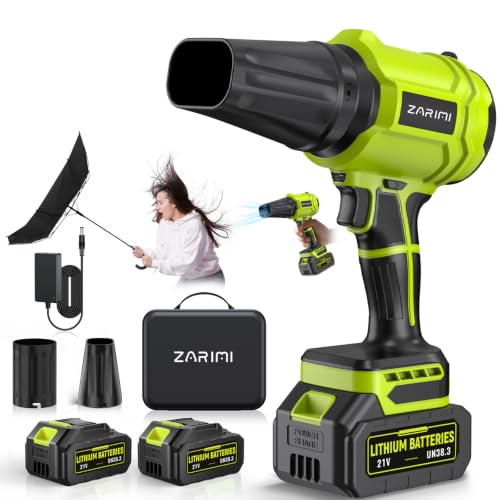
- Extremely lightweight at only 2.8 pounds for low-fatigue use
- Reaches stated air speeds over 50 m/s (110+ MPH)
- Comes with two batteries and charger for alternating use
- Includes a concentrated narrow nozzle for detailed edging
- Compact footprint stores easily in tight spaces or vehicle trunks
Cons
- Limited runtime of only about 13 minutes per battery
- Not designed for moving heavy or deep piles of wet leaves

Pros
- Weighs only 2.28 lbs for easy one-handed operation
- Includes two 21V 4000mAh lithium batteries
- Variable speed trigger provides precise airflow control
- Comes with an extension tube and flat nozzle attachment
Cons
- Rated runtime tops out at roughly 30 minutes
- Not designed for large properties or heavy wet debris

Pros
- Includes two 21V 4.0Ah batteries for extended runtime
- Delivers up to 420 CFM airflow and 150 MPH air speed
- Lightweight design weighs under 3 lbs bare tool for low fatigue
- Comes with both round and flat interchangeable nozzles
- Two adjustable speed settings for varying cleanup tasks
Cons
- Limited to two preset airflow speeds
- Best suited for dry leaves and light debris rather than heavy wet waste

Pros
- Includes two 2.0Ah lithium-ion batteries and a fast charger
- Lightweight build weighs only 3.4 pounds with battery attached
- Modular two-section tube adjusts for different clearing heights
- Rated for up to 350 CFM and 150 MPH air performance
Cons
- Estimated runtime reaches up to 25 minutes at high speed
- Batteries must cool down before recharging

Pros
- Airflow reaches up to 450 CFM and 140 MPH
- Built-in scraper helps loosen wet, stuck debris
- Two-speed switch allows quick airflow adjustment
- Cord retention hook helps prevent accidental unplugging
- Compact axial fan design weighs approximately 7 pounds
Cons
- Tethered by an electrical cord, limiting reach
- Requires a suitable outdoor extension cord (not included)

Pros
- Very lightweight frame at only 3.7 pounds
- Generates up to 260 CFM and 155 MPH
- Zero direct emissions and low operational vibration
- Backed by a 3-year limited warranty
Cons
- Requires an outdoor extension cord
- Moderate 260 CFM output is best for lighter debris
Pros
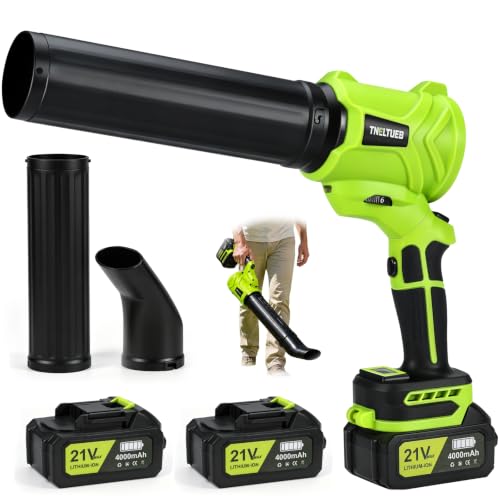
- Six selectable speed settings spanning 100 to 200 MPH
- 180-degree rotating handle facilitates versatile blowing angles
- Includes two 21V 4.0Ah rechargeable battery packs
- Comes equipped with two interchangeable nozzle attachments
- Ultralight 2-pound build allows easy one-handed maneuvering
Cons
- Battery runtime drops considerably when using higher speed modes
- Requires swapping batteries during large property cleanups

Pros
- Includes two 20V 2.0Ah batteries and a fast charger
- Extremely lightweight design at just 3.4 pounds
- Two selectable speed modes match light and heavier tasks
- Ergonomic non-slip grip allows comfortable one-handed use
- Comes with an extension nozzle for targeted airflow
Cons
- Runtime decreases significantly at the higher speed setting
- Best suited for light residential cleanup rather than dense debris
Corded vs. Cordless: Choosing the Right Power Source for Compact Spaces
The primary decision when selecting a small electric leaf blower is whether you prioritize unlimited runtime or complete mobility. Corded blowers draw steady electrical current from a wall outlet, eliminating concerns about fading battery cells or charging cycles. However, managing a heavy-duty extension cord around garden beds, corners, and patio furniture can be cumbersome and restricts your working radius.
Cordless blowers, such as the YUQUESEN Cordless Leaf Blower or the SEYVUM Leaf Blower 20V Cordless, offer total maneuverability across driveways, steps, and distant fencelines. The major trade-off is finite run duration; high-speed modes consume power rapidly, making extra battery packs essential if your cleaning takes longer than a quick sweep.
Weight and Ergonomics: When Ounces Matter for Overhead and Patio Work
Lighter tools significantly reduce wrist strain during repetitive sweeping motions and overhead jobs like clearing gutters or porch rafters. Compact electric blowers range from just over two pounds to around four and a half pounds. The wanvzo Cordless Leaf Blower is listed at an ultra-light 2.28 pounds, making it suitable for one-handed operation by users seeking minimal arm fatigue.
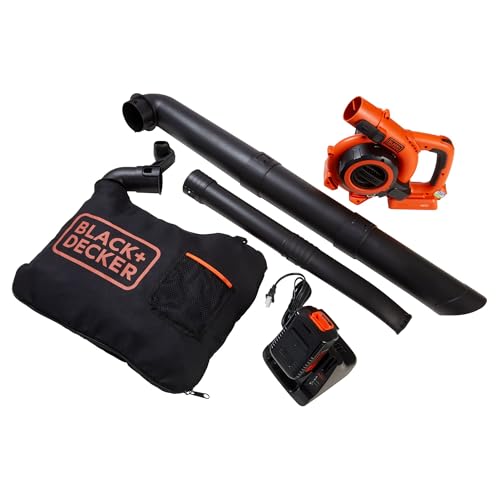
In contrast, corded units like the BLACK+DECKER Electric Leaf Blower (LB700) weigh 4.4 pounds, while the Grasstigon Electric Leaf Blower Corded weighs 4 pounds. While slightly heavier than their bare-tool cordless peers, corded units maintain a consistent center of gravity because they do not require a heavy battery pack seated on the handle base.
Air Volume and Speed: Evaluating Advertised CFM and MPH Ratings
Cleaning effectiveness relies on two complementary metrics: cubic feet per minute (CFM) and miles per hour (MPH). Air speed (MPH) provides the force needed to peel damp debris off pavement, while air volume (CFM) dictates how large a pile of dry leaves the tool can push simultaneously. For broad yard jobs, higher CFM ratings generally result in faster sweeping.
Manufacturer claims vary significantly across this category. The corded BLACK + DECKER Electric Leaf Blower (BEBL750) advertises an axial fan design producing up to 450 CFM and 140 MPH, alongside a built-in scraper to loosen stuck material. Meanwhile, the SENIX 6 AMP Corded Electric Leaf Blower advertises 260 CFM and 155 MPH. Cordless options like the wanvzo Cordless Leaf Blower advertise up to 500 CFM via a high-RPM turbine motor. Note that extreme claims regarding motor RPMs or hurricane-level speeds reflect manufacturer testing scenarios rather than standardized real-world field conditions.
Managing Work Time: Extension Cords vs. Dual-Battery Swaps
For large driveways and deep leaf piles, your tool’s power endurance dictates how efficiently you finish the chore. Corded tools provide continuous power without throttle fade, but you must account for extension cord management and storage. Tools like the BLACK+DECKER models incorporate built-in cord retention hooks to stop the power cable from accidentally unplugging during sudden tugs.
For cordless setups, running out of juice mid-cleanup is avoided by choosing bundles that include multiple battery packs. The Electric Leaf Blower Cordless with Battery from VIBOGEN includes two 21V 4.0Ah batteries, and the Leaf Blower Cordless, Leaf Blower with Battery from RYAHT comes with two 20V 2.0Ah packs. Alternating between two batteries allows one to charge while the other is in use, although rapid-discharge usage on turbo modes can still outpace typical recharge rates.
Frequently Asked Questions About Small Electric Leaf Blowers
Do corded small electric leaf blowers include an extension cord?
Most corded models do not include an extension cord. For example, the manufacturer specifications for the BLACK+DECKER Electric Leaf Blower (LB700) explicitly state that an extension cord is not included. Buyers must supply an outdoor-rated extension cord compatible with the tool's amperage rating.
What is the difference between CFM and MPH when clearing debris?
Miles per hour (MPH) measures the velocity of the air leaving the nozzle, which helps loosen stubborn, wet, or stuck debris. Cubic feet per minute (CFM) measures the total volume of air pushed out, which determines how wide an area you can sweep and how much leaf mass you can push in a single pass.
How to Choose the Best Small Electric Leaf Blower for Your Yard
To choose the right small electric leaf blower, assess the perimeter of your outdoor space and the proximity of exterior outlets. If your primary task is blowing light grass clippings, sawdust, or stray leaves off a standard two-car driveway or attached patio within 100 feet of an outlet, corded tools provide maximum power at lower prices without battery degradation concerns. For detached sheds, long paths, or multi-level decks, a battery-powered model offers unmatched convenience.
For homeowners wanting dependable, budget-friendly power without downtime, the Grasstigon Electric Leaf Blower Corded, 7-Amp is the standout choice for small properties due to its lightweight 4-pound frame and advertised 390 CFM output. Its main limitation is the tether of an outdoor extension cord. If you require unrestricted mobility to reach far fences or clean vehicle interiors, consider the wanvzo Cordless Leaf Blower, which trades unlimited corded endurance for a highly portable 2.28-pound build and dual-battery capability.