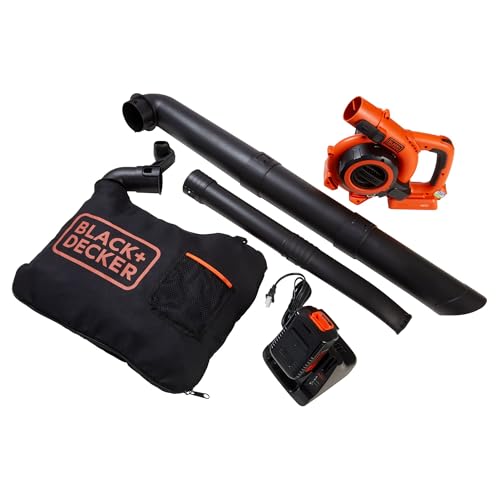
If you need to sweep wide driveways and wet lawn debris, a high-volume unit like the outdoor blower configuration provides the necessary push, though it adds physical bulk. For tight electronic crevices or car detailing, an ultra-compact duster offers unmatched precision while sacrificing the broad airflow required for garden cleanups.

Pros
- High-speed motor reaches up to 130,000 RPM
- Includes 5 interchangeable cleaning nozzles
- Built-in LED light for illuminating dark crevices
- Up to 240 minutes runtime on the lowest setting
Cons
- Maximum speed runtime is limited to 25 minutes
- Audible operation reaches up to 82.5 dB
- Requires a 10-minute cooldown period before charging
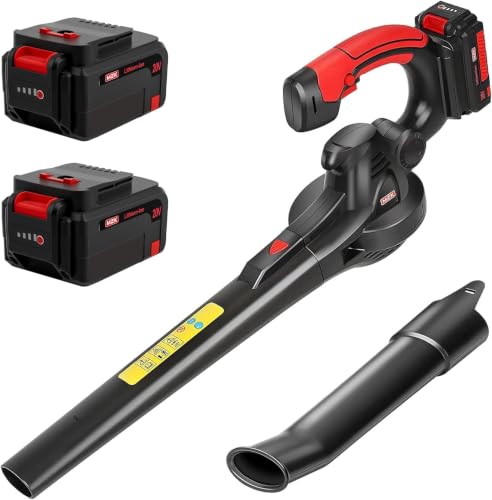
Pros
- Weighs only 3.9 pounds for light handling
- Rated airflow up to 450 CFM
- Cordless design allows unrestricted mobility
- Convenient one-hand trigger operation
- No gas mixing or cord management required
Cons
- Runtime varies significantly by power output
- Battery charging intervals required
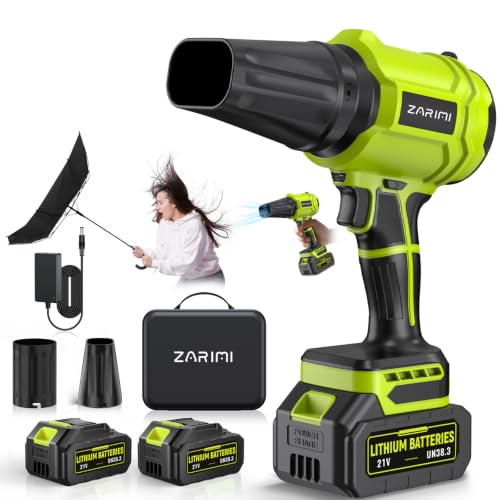
Pros
- Extremely lightweight at only 2.8 pounds for low-fatigue use
- Reaches stated air speeds over 50 m/s (110+ MPH)
- Comes with two batteries and charger for alternating use
- Includes a concentrated narrow nozzle for detailed edging
- Compact footprint stores easily in tight spaces or vehicle trunks
Cons
- Limited runtime of only about 13 minutes per battery
- Not designed for moving heavy or deep piles of wet leaves

Pros
- Airflow rated up to 650 CFM using advanced turbo technology
- Comes with two high-capacity 20V 5.2Ah batteries and fast charger
- Three selectable speed modes for delicate to heavy-duty jobs
- Includes an adjustable shoulder strap to reduce arm fatigue
- Includes blower tube and extension nozzle attachments
Cons
- Maximum 150-minute runtime applies only to low-speed mode
- Heavier battery packs may add weight during prolonged handheld use

Pros
- Includes two 21V 4.0Ah batteries for extended runtime
- Delivers up to 420 CFM airflow and 150 MPH air speed
- Lightweight design weighs under 3 lbs bare tool for low fatigue
- Comes with both round and flat interchangeable nozzles
- Two adjustable speed settings for varying cleanup tasks
Cons
- Limited to two preset airflow speeds
- Best suited for dry leaves and light debris rather than heavy wet waste

Pros
- Includes two 20V 2.0Ah batteries and a fast charger
- Extremely lightweight design at just 3.4 pounds
- Two selectable speed modes match light and heavier tasks
- Ergonomic non-slip grip allows comfortable one-handed use
- Comes with an extension nozzle for targeted airflow
Cons
- Runtime decreases significantly at the higher speed setting
- Best suited for light residential cleanup rather than dense debris

Pros
- Weighs only 2.6 pounds for easy one-handed handling
- Includes two 2.0Ah rechargeable batteries and a charger
- Manufacturer-rated airflow reaches up to 130 MPH and 180 CFM
- Two interchangeable tubes accommodate floor or tabletop work
- Rated for over 30 minutes of total operating time across packs
Cons
- Not intended for heavy, wet leaf piles
- Modest 180 CFM output limits heavy-duty yard clearing

Pros
- Lightweight, maneuverable design at just 4.6 pounds
- Reaches up to a rated 500 CFM and 200 MPH
- Includes two 2.0Ah batteries and a charger
- Dual air duct design with quick-release latch
Cons
- Reaching 80 minutes requires swapping both batteries
- Two preset speed levels provide limited fine adjustments
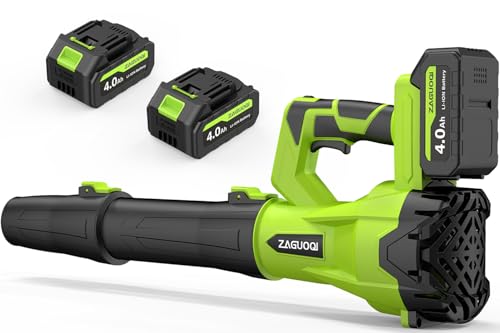
Pros
- Brushless motor rated up to 280,000 RPM
- Includes two 4.0Ah lithium-ion battery packs
- Six adjustable speed modes for versatile cleaning control
- Rated for up to 650 CFM and 288 MPH maximum output
- Lightweight handheld design weighing under 3 pounds
Cons
- Battery life decreases rapidly on higher speed modes
- Requires full initial charging before first use
Handheld Detail Dusters vs. Full-Sized Yard Blowers
Your primary buying decision hinges on whether you need targeted air velocity for electronics or broad air movement for outdoor debris. Precision cleaning tools, such as the Compressed Air Duster, 130000RPM Super Power, use narrow nozzles to direct intense air streams at keyboards, auto consoles, and workshop equipment. While the manufacturer advertises up to 130,000 RPM, the tiny nozzle diameter limits coverage to a few square inches at a time.
By contrast, dedicated tools built for leaf blowers yard work rely on wide ducts to sweep broad swaths of grass and pavement. Models like the YOOVL Leaf Blower Cordless, 650CFM Electric Leaf Blowers deliver an advertised 650 CFM, enabling users to move bulky piles of leaves or grass clippings. However, these garden blowers are completely unsuited for delicate indoor electronics due to their bulky chassis and unshielded air volume.
Airflow Volume and Airspeed Trade-Offs
Airflow volume (CFM) dictates how much material a blower moves, whereas airspeed (MPH) determines its ability to dislodge stubborn, wet debris. Units balancing both ratings allow you to tailor power to the task. For example, the Electric Leaf Blower Cordless with Battery advertises 420 CFM alongside a 150 MPH top speed across two selectable settings, making it effective for scouring dry sidewalks without immediately scattering lighter mulch everywhere.
Higher velocity options, such as the Leaf Blower Cordless with 2 Battery and Charger claiming 200 MPH and 500 CFM, offer extra force for stuck debris. The trade-off is battery drain: operating at maximum velocity drastically shortens overall working time. Conversely, the JAGROM Leaf Blower Cordless with 2.0Ah Battery & Charger advertises a more modest 180 CFM and 130 MPH; it maneuvers easily across hard surfaces but lacks the raw pushing power required for dense, rain-soaked leaf cover.
Managing Runtime With Single vs. Dual-Battery Systems
Continuous clearing operations require either large-capacity cells or swappable dual-battery setups to prevent workflow interruptions. Several models address runtime constraints by shipping with two swappable battery packs right in the box. The YOOVL kit bundles two 20V 5.2Ah batteries, which the manufacturer states can offer up to 150 minutes of lower-intensity operation.
Other setups prioritize affordability over capacity. The Leaf Blower Cordless, Leaf Blower with Battery includes two 2.0Ah batteries, with an advertised runtime reaching up to 60 minutes on low speed. The MZK 20V Cordless Leaf Blower takes a single-pack approach, advertising up to 75 minutes of operation. Relying on a single battery, however, means work stops entirely once the charge is depleted until the unit can be plugged in again.
Weight, Ergonomics, and Handling Fatigue
A lighter chassis allows comfortable one-handed operation, but heavier blowers often incorporate higher-capacity motors and larger battery packs. If maneuverability is your top priority, lightweight designs minimize arm strain significantly. The JAGROM blower weighs just 2.6 pounds, and the YUQUESEN Cordless Leaf Blower comes in at an advertised 2.8 pounds, making them practical options for cleaning elevated surfaces like patio steps or gutters.
Larger units provide more structural stability and airflow, but they require better ergonomic aids to avoid operator fatigue. The sunchers Leaf Blower Cordless with 2 Battery and Charger weighs 4.6 pounds, which is noticeably heavier during extended use. To address this issue on high-capacity models, the YOOVL unit incorporates an adjustable shoulder strap to distribute motor and battery weight across your torso, mitigating arm fatigue during longer yard maintenance sessions.
Frequently Asked Questions About Wireless Blowers
Can a mini electric air duster replace a full-sized cordless leaf blower?
No. Compact dusters like the CAGIWIRU unit spin at up to an advertised 130,000 RPM to create focused, high-pressure streams for keyboards, car interiors, and small workbenches. They lack the wide-diameter airflow volume needed to push leaf piles across a lawn.
Why do many cordless leaf blowers include two batteries instead of one?
High-draw electric blowers can deplete compact battery packs rapidly on their highest settings. A dual-battery package lets you cycle one pack in a charger while continuing yard work with the other, effectively reducing downtime.
How to Choose the Right Wireless Blower for Your Property
Selecting the right wireless blower comes down to matching motor capacity and form factor to your specific clearing environment. If your routine maintenance involves sweeping open patios, large gravel driveways, or damp fall foliage, prioritize broad CFM output and larger battery capacity over pocket-sized portability.
For general suburban properties, the Leaf Blower Cordless, 650CFM Electric Leaf Blowers is the best fit for homeowners needing strong clearing power, backed by an advertised 650 CFM and dual 5.2Ah batteries to handle demanding yard debris. Its primary limitation is the heavier footprint, which requires the shoulder strap for extended comfort. For shoppers who only need to clean compact desks, workshop benches, or vehicle interiors, the Compressed Air Duster, 130000RPM Super Power provides a dedicated, lightweight alternative suited for detailed dusting rather than lawn care.