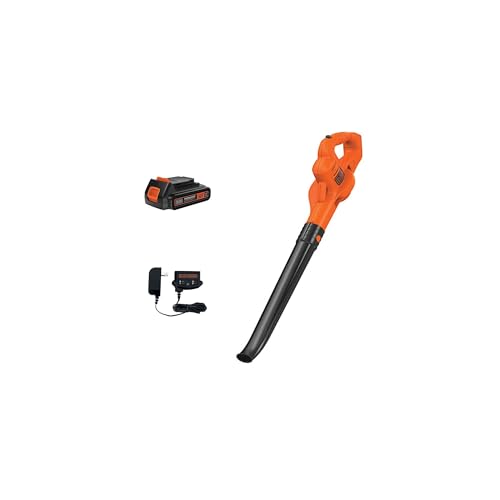
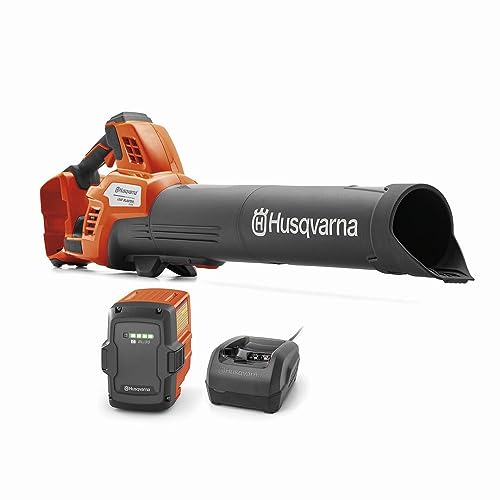
For property owners managing routine seasonal cleanups near exterior power outlets, a corded electric leaf blower and vacuum provides dependable, uninterrupted runtime at the expense of managing an extension cord. Meanwhile, battery-powered 40V models grant unrestricted yard mobility, but operate under finite battery runtimes that require scheduled recharging during large cleanup projects.

Pros
- Delivers up to 450 CFM airflow and 158 MPH airspeed
- 15:1 mulching ratio compresses waste into a 40L bag
- Lightweight 5.5 lb body includes support wheels and a shoulder strap
- Tool-free switching between blowing, vacuuming, and mulching
- Nested tube and square buckle connector reduce debris buildup
Cons
- Tethered corded operation restricts movement across larger yards
- Intended primarily for dry leaves and light debris

Pros
- Instant switch between blow and vacuum modes
- High 18:1 mulch ratio maximizes bag capacity
- Rated up to 350 CFM and 210 MPH air output
- Variable-speed control for different debris types
- Includes 42L debris collection bag
Cons
- Corded design limits overall yard reach
- Weighs 9.3 pounds before debris accumulates

Pros
- High-output airflow rated up to 600 CFM and 160 MPH
- Includes two 4.0Ah batteries for cordless runtime
- Efficient 15:1 mulching ratio reduces disposal volume
- Tool-free easy-clean access gate for clearing clogs
- Height-adjustable wheels and anti-static handle for user comfort
Cons
- Turbo Boost and top speeds will deplete battery runtimes quickly
- Weighs 10 pounds, which may tire some users during extended sessions

Pros
- Brushless motor delivers up to 700 CFM and 180 MPH
- 3-in-1 tool-free blowing, vacuuming, and mulching
- Stated 15:1 mulch ratio with a 40L collection bag
- Adjustable support wheels help carry the tool's weight
- Includes two 4.0Ah batteries and a quick-access clean gate
Cons
- Total runtime is limited to up to 30 minutes
- Turbo blast mode is restricted to 10-second bursts

Pros
- Combines blowing, vacuuming, and mulching in one unit
- Rated up to 500 CFM airflow and 167 MPH air speed
- 15:1 mulching reduction ratio saves bag space
- Integrated support wheels help reduce arm fatigue
- Includes collection bag and cord retainer
Cons
- Requires an extension cord and nearby electrical outlet
- Weighs 6.6 lbs, which can be heavy during long sessions
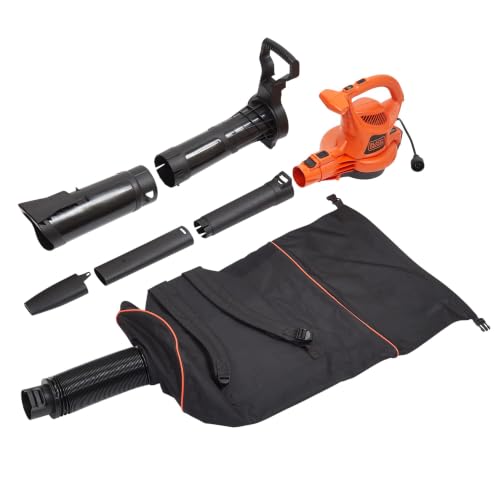
Pros
- High performance delivering up to 250 MPH and 400 CFM
- POWERBOOST button supplies extra power on demand
- Hands-free backpack collection bag doubles standard capacity
- Zipper-free bag design with wide opening for easy emptying
- Flexible tube improves maneuverability during vacuum mode
Cons
- Corded design requires an extension cord and limits total range
- Heavier build at 11.1 pounds before collecting leaves

Pros
- 2-in-1 blower and vacuum with quick-change switch
- Delivers up to 460 CFM and 167 MPH airflow
- Anti-jam internal suction tube and secure snap buckle
- Includes 40L collection bag with 15:1 mulch ratio
Cons
- Tethered cord limits working range
- Requires an outdoor extension cord (not included)

Pros
- Delivers up to 600 CFM of blowing output
- Tool-free switch between blow and vac modes
- 16:1 mulch ratio compacts collected leaves
- Large 50L collection bag included
- Variable-speed control for tailored airflow
Cons
- Requires an extension cord and nearby power source
- Weighs 9.1 pounds before filling collection bag

Pros
- 12-amp motor achieves up to 250 MPH and 400 CFM
- High-impact metal fan prevents clogs and offers 16:1 mulch ratio
- Includes a disposable tie-and-toss leaf bag system
- Two speed settings suited for delicate flower beds or stuck debris
- Built-in cord retainer keeps extension cords secured
Cons
- Corded design restricts cleaning area to cord length
- Disposable bags will require replacement purchases once used
Corded Continuous Power vs. Cordless Mobility for Yard Cleanups
Deciding between corded and battery setups determines your overall reach and working stamina during autumn lawn chores. Corded tools like the WORX Trivac 3-in-1 Electric Leaf Blower/Leaf (WG509) and the BLACK+DECKER Leaf Blower Leaf Vacuum and Leaf (BV6000) draw power directly from standard 12-amp household connections. This configuration lets you blow and vacuum large leaf piles for hours without pausing to recharge, making it ideal for standard suburban yards where outdoor electrical outlets are readily accessible.
Conversely, cordless models such as the MZK 40V Leaf Vacuum Mulcher and the HEYWORK 40V Yard Blower Vacuum provide total freedom from trailing cords, allowing you to venture beyond garden fences and remote fence lines. The trade-off is runtime management: the MZK 40V includes dual 4.0Ah batteries that deliver a manufacturer-advertised runtime of up to 30 minutes under continuous use. When tackling sprawling lots, you must plan your sessions around recharging cycles, which can be further informed by consulting general resources on what leaf blower is the best for various lot sizes.
Balancing Airflow (CFM) and Air Speed (MPH) in Vacuum Mode
Airflow volume (CFM) dictates how much material a tool can vacuum per minute, whereas air speed (MPH) provides the forceful velocity needed to dislodge wet, matted debris from lawn turf. The MZK 40V Leaf Vacuum Mulcher advertises an impressive 700 CFM airflow with speeds up to 180 MPH, enabling it to ingest wide swaths of loose leaves quickly. Similarly, the corded WORX Trivac 3-in-1 Electric Leaf Blower/Leaf (WG512) balances volume with an advertised 600 CFM capacity, making fast work of large gatherings on open lawns.
On the other end of the spectrum, models like the BLACK+DECKER Leaf Blower (BEBL7000) prioritize high velocity, delivering up to 250 MPH alongside 400 CFM. This velocity-heavy approach helps peel stubborn debris off damp driveways and out of low-cut turf, although narrower nozzle openings trade away some vacuuming surface area compared to high-CFM alternatives.
Mulch Reduction Ratios and Waste Bag Ergonomics
Higher shredding efficiency minimizes the physical effort required to carry and empty collected yard waste. The WORX Trivac WG509 offers an advertised 18:1 mulch ratio, shredding 18 bags of gathered foliage into a single 42L collection bag. The WORX WG512 steps up the collection volume with a 50L bag paired with a 16:1 ratio, while budget-conscious options like the Heywork 3-in-1 Leaf Vacuum Mulcher and NEWBULIG 3-in-1 Electric Leaf Blower Vacuum offer 15:1 reduction into 40L bags.
Ergonomics heavily influence comfort as bags fill with shredded debris. Units such as the BLACK+DECKER BEBL7000 shift the weight directly onto the user’s back using an easy-to-wear backpack bag, significantly reducing wrist and shoulder fatigue. By comparison, models relying on side-hanging bags often incorporate support wheels at the base of the suction tube—like those on the NEWBULIG 3-in-1—to allow the operator to roll the intake across flat ground rather than carrying the complete load.
Anti-Jam Tube Engineering and Clog Prevention
Suction clogs remain the primary obstacle when vacuuming damp leaves, making internal tube design and impeller durability essential buying criteria. The MZK 2-in-1 Electric Leaf Blower Vacuum Mulcher and the HEYWORK 40V Yard Blower Vacuum both feature nested suction tubes designed to fit seamlessly together, eliminating internal ledges where leaves and sticks frequently lodge. Additionally, the HEYWORK 40V incorporates a dedicated tool-free access gate to let users clear occasional obstructions swiftly without disassembling the housing.
Impeller construction also dictates how well a machine handles stray debris. The BLACK+DECKER BV6000 integrates a high-impact metal fan explicitly built to grind down mulch while preventing catastrophic blade damage from small twigs. While polymer impellers help keep tools like the 5.5-pound Heywork 3-in-1 exceptionally lightweight, metal components provide added resilience against accidental gravel or hard organic waste intake.
Frequently Asked Questions About Electric Leaf Blower Vacuums
How does an electric leaf vacuum mulching ratio work?
The mulching ratio reflects how many bags of whole leaves are shredded into a single bag of fine mulch. A 15:1 or 18:1 ratio means the internal impeller cuts leaves down significantly, reducing bag disposal frequency and making debris easier to compost.
Can an electric leaf vacuum handle wet leaves and twigs?
Light damp leaves can be processed by units with higher airflow or metal impellers, but thick, soggy debris and large twigs often lead to suction clogs. For best results, clear sticks first and vacuum when yard waste is mostly dry.
What is the primary trade-off between corded and cordless blower vacuums?
Corded models deliver continuous electrical power without downtime, but require extension cord management within roughly 100 feet of an outlet. Cordless battery units provide total maneuverability across fences and large lots, but work sessions are constrained by battery capacity.
Choosing the Best Electric Leaf Blower and Vacuum for Your Yard
Selecting the best electric leaf blower and vacuum comes down to aligning power source convenience, yard size, and physical handling preferences. For general homeowner maintenance within reachable range of an outdoor outlet, the WORX Trivac 3-in-1 Electric Leaf Blower/Leaf (WG509) represents the most reliable overall package, offering 12-amp continuous power, tool-free mode switching via a simple lever, and an efficient 18:1 mulching ratio. Its main trade-off is the corded restriction, which limits your working boundary to the reach of your extension cord.
If your property demands unhindered mobility away from electrical outlets, the MZK 40V Leaf Vacuum Mulcher stands as the leading cordless alternative, pairing dual 4.0Ah batteries with an advertised 700 CFM airflow and integrated anti-jam suction tubes. Exploring specialized options across the broader leaf blowers category will help verify which balance of weight, capacity, and power delivery best addresses your seasonal cleanup needs.