Selecting the right gas air blower depends primarily on property scale: a lightweight handheld unit offers fast maneuverability for paved walkways but lacks the sweeping volume needed for heavy fall cleanup, while a backpack blower delivers substantial air output at the expense of added physical weight and ongoing fuel mixing.

Pros
- Lightweight 9.4-pound design offers easy handheld maneuvering
- Reduced-resistance recoil system eases engine pull starts
- Translucent fuel tank allows quick monitoring of gas levels
- Cushioned anti-vibration handle helps dampen arm strain
- Capable of up to 380 CFM and 180 MPH airflow
Cons
- Requires mixing 2-cycle gas and oil at a 50:1 ratio
- Modest 380 CFM output is best suited for lighter debris

Pros
- Delivers up to 550 CFM and 230 MPH for moving wet yard debris
- Lightweight 17-pound backpack design with cushioned straps
- Thumb throttle includes cruise control for steady blowing
- 33.8 fl oz fuel tank yields up to 45 minutes of run time
- Operating temperature range spans 14°F to 104°F
Cons
- Requires 2-cycle fuel mixing and engine maintenance
- 550 CFM is modest for a backpack-class gas blower

Pros
- 4-cycle engine eliminates fuel and oil mixing
- Delivers up to 410 CFM and 125 MPH clearing power
- Automatic compression release for easier pull starts
- Lubricates in all directions without stalling or leaks
Cons
- Not available for purchase or delivery in California
- Requires routine gas engine maintenance and oil checks
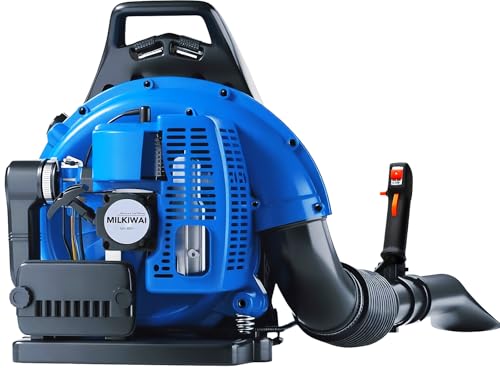
Pros
- Rated output reaches up to 665 CFM and 205 MPH wind speed
- Padded backpack harness with 3-point spring stabilization system
- Variable speed throttle includes cruise control for steady operation
- Manufacturer claims up to 50 minutes of runtime at full throttle
Cons
- Substantial 19-pound unit weight can tire users during prolonged work
- Requires manual 2-stroke gas and oil mixing for engine operation

Pros
- 63cc 2-cycle engine produces 665 CFM and 205 MPH
- 1.7-liter fuel tank enables extended sessions between refills
- Cruise control locks in throttle to reduce hand strain
- Padded harness and vibration reduction improve carry comfort
- Tool-free access simplifies two-stage air filter maintenance
Cons
- Substantial 21-pound dry weight requires physical stamina
- Requires ongoing 2-stroke oil and gasoline mixing

Pros
- High manufacturer-rated output up to 1020 CFM and 240 MPH
- Powerful 75.6cc 2-cycle gas engine for large properties
- Padded backpack harness designed to lessen operator fatigue
Cons
- Heavy 32.8 lb weight requires more effort to mount and carry
- Gas 2-cycle engine requires standard fuel and oil mixing

Pros
- 2.7kW 63cc two-stroke engine delivers up to 6,800 RPM
- Multi-directional air outlet adjusts vertically and horizontally
- 0.47-gallon fuel tank enables long runs between top-offs
- Constant speed switch holds chosen throttle effortlessly
- Backpack harness features heat-insulating back padding
Cons
- Substantial 22-pound dry weight adds strain on long sessions
- Requires manual two-stroke oil and gasoline mixing
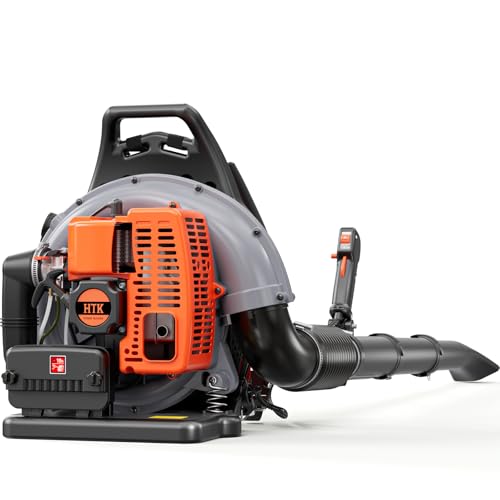
Pros
- 63cc 2-stroke engine delivers 665 CFM and 205 MPH airspeed
- Padded ergonomic backpack harness balances weight across shoulders
- Cruise control locks throttle to relieve trigger finger strain
- Generous 1.7L fuel tank supports extended property maintenance
- Manufacturer-rated sound level of 71 dB for quieter operation
Cons
- Requires ongoing two-cycle oil-to-gasoline fuel mixing
- Bulkier footprint demands sufficient garage or shed storage
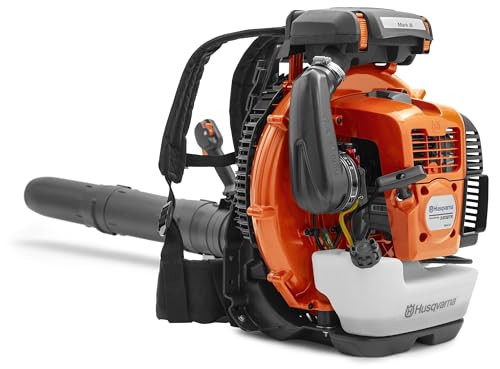
Pros
- Strong rated output of 1000 CFM, 220 MPH, and 47 N blow force
- Ventilated ergonomic harness with load-distributing hip belt
- Two-stage intake air filtration protects engine in dusty jobs
- Intuitive tube-mounted throttle control
Cons
- Substantial 34-pound weight can lead to operator fatigue
- Requires ongoing 2-cycle fuel mixing and maintenance

Pros
- Claims up to 1,110 CFM airflow and 220 MPH air speed
- Generous 1.89-liter fuel tank allows 50 to 60 minutes of runtime
- Padded harness and shock-absorption system reduce vibration
- Cruise control locks throttle for continuous operation
- Includes earmuffs, maintenance tools, and fuel mixing bottle
Cons
- Heavy 26.46-pound total weight can fatigue operators
- Requires mixing 2-cycle gas and oil fuel
Handheld vs. Backpack Gas Air Blowers: Which Design Fits Your Yard?
Handheld gas air blowers provide agile control for clearing tight spaces, patios, and short sidewalks, whereas backpack models transfer engine weight to your shoulders to make prolonged cleanup across expansive lawns manageable.
Handheld models, such as the Getell 26cc Gas Leaf Blower and the SENIX 4QL 26.5cc 4-Cycle Handheld Gas Leaf Blower, keep equipment weight centered in the operator’s hands. The Getell 26cc delivers an advertised 380 CFM and 180 MPH using a 26cc 2-cycle engine and a reduced-resistance recoil starter designed to cut pull effort by 50%. While this setup is nimble enough to clear garden borders, stairs, and decks without encumbering the operator, holding the machine manually can tire arms during extended yard cleanups.
Backpack blowers shift the engine’s mass to your back with padded harnesses. The Thalorus 52cc Gas Backpack Leaf Blower weighs 17 lb and produces an advertised 550 CFM and 230 MPH, while the Getell 63CC Gas Backpack Leaf Blower weighs 21 lb and steps output up to 665 CFM. By distributing engine weight across your torso, backpack blowers allow you to guide airflow through a flexible tube with minimal wrist strain. When deciding whether your layout favors a handheld or backpack frame, assessing typical ground conditions—such as choosing a dedicated leaf blower for driveway and hardscape clearing—helps pinpoint the right balance between mobility and clearing power.
2-Cycle vs. 4-Cycle Engines: The Fuel Mixing Trade-Off
Choosing between a 2-cycle and a 4-cycle gas air blower comes down to whether you prioritize raw power-to-weight performance or the convenience of pouring straight gasoline into the tank.
Most outdoor blowers use 2-cycle (2-stroke) engines, requiring you to blend gasoline with 2-cycle engine oil in a set proportion, such as the 50:1 mix specified for the Getell 26cc. These engines are mechanically simple, lightweight, and generate high engine speeds relative to their displacement. However, keeping fresh mixed fuel on hand adds routine maintenance friction, and accidental use of unmixed gas will quickly destroy the cylinder.
In contrast, the SENIX 4QL 26.5cc Handheld Gas Leaf Blower uses a 4-cycle full crank engine. This design requires no pre-mixing of gas and oil, draws straight gasoline, and includes a 2 oz bottle of engine oil in the box. Its 4QL engine provides all-directional lubrication to avoid stalls when tilting the blower at odd angles. The trade-off is geographic availability and sheer velocity: the SENIX 4QL is explicitly not available in California due to emissions standards, and its advertised 125 MPH top air speed is lower than comparable 2-cycle units that reach 180 to 205 MPH.
Airflow vs. Airspeed: Comparing 63cc Engines to Commercial 75.6cc Units
Air volume measured in cubic feet per minute (CFM) determines how wide a swath of leaves you can sweep, while air velocity in miles per hour (MPH) dictates your ability to unstick wet, matted debris from turf and hard ground.
The popular 63cc displacement class balances budget and performance for large residential properties. Models like the HTK Gas Backpack Leaf Blower, Milkiwai 63CC Gas Backpack Leaf Blower, and Getell 63CC Gas Backpack Leaf Blower all share identical advertised ratings of 665 CFM and 205 MPH. These specifications provide ample force to dislodge soaked foliage and sweep pine needles into organized windrows. Meanwhile, the HASANEN Backpack Gas Powered Leaf Blower advertises 850 CFM from its 63cc 4.3HP engine, and the VEVOR 63CC Gas Backpack Leaf Blower claims an output of 1110 CFM and 220 MPH.
For demanding commercial tasks or heavy estate management, moving up to a 75.6cc engine delivers a substantial jump in clearing capability. The PRORUN 75.6cc Gas-Powered 2-Cycle backpack blower produces an advertised 1020 CFM at 240 MPH. Stepping further into professional hardware, the Husqvarna 580BTS Gas Backpack Leaf Blower delivers 1000 CFM and 220 MPH, generating an advertised 47 N of blowing force powered by its 4.59-HP X-TORQ engine and a commercial-grade 2-stage air intake. The trade-off is financial: commercial 75.6cc models range from $314.10 for the PRORUN up to $649.00 for the Husqvarna 580BTS, whereas mid-range 63cc blowers generally list between $85 and $170.
Harness Ergonomics, Vibration, and Fuel Runtime During Extended Cleanup
Carrying a high-displacement engine for prolonged cleanup requires a supportive harness and effective vibration damping, as engine vibration and awkward weight distribution cause operator fatigue faster than fuel depletion.
Suspension features vary noticeably across budget and commercial designs. The Husqvarna 580BTS incorporates a ventilated ergonomic harness with a wide, padded hip belt that transfers machine weight directly to the operator’s hips. In mid-tier models, comfort relies on isolated chassis mountings; for example, the Milkiwai 63CC incorporates a 3-point spring stabilization system to reduce motor vibration against the user’s back, while the Thalorus 52cc uses wide shoulder straps to distribute its 17 lb dry weight.
Tank capacity also determines how many refill interruptions you experience across a large lot. The Thalorus 52cc features a 33.8 fl oz tank with an advertised runtime of up to 45 minutes, while the VEVOR 63CC includes a 1.89-liter fuel tank claiming 50 to 60 minutes of continuous operation. The HTK 63CC and Getell 63CC provide 1.7-liter tanks, and the HASANEN blower carries a 1.8-liter (0.47 gal) reservoir. Note that running continuously at full throttle will exhaust fuel faster than advertised figures, making throttle cruise control—featured on the Thalorus, Getell, Milkiwai, and HTK units—essential for maintaining an efficient cruising pace.
Gas Air Blower FAQ: Fuel Ratios, Sound Levels, and Restrictions
Do all gas air blowers require mixing oil with fuel?
No. While standard two-cycle models like the Getell 26cc require a precise fuel-to-oil mix (such as 50:1), four-cycle blowers like the SENIX 4QL use separate reservoirs for engine oil and gasoline, letting you fill up with straight unleaded fuel.
Why are certain gas air blowers restricted in California?
Some gasoline leaf blowers, including the SENIX 4QL, are not available in California due to strict state emissions standards set by the California Air Resources Board (CARB). Always verify local municipal and state environmental regulations before purchasing outdoor power tools.
How noisy are residential and commercial gas blowers?
Gas blowers generate substantial engine and wind noise during operation. While some designs feature stated decibel ratings—such as the HTK 63CC at 71 dB—and others like the VEVOR 63CC include noise-reducing earmuffs in the box, wearing dedicated hearing protection is recommended for all gas-powered models.
Choosing the Right Gas Air Blower for Your Yard Needs
Selecting the best gas air blower comes down to matching your property’s acreage and debris density to an engine configuration you can comfortably manage without unnecessary strain.
Before purchasing, consider your routine cleanup demands. If your yard work consists primarily of clearing sidewalks and hardscapes after mowing, a high-displacement backpack unit adds excessive bulk and storage footprint. Reviewing broader market formats in our guide on what leaf blower is the best can provide further perspective on matching blower designs to specific lawn profiles.
For homeowners managing medium to large residential properties with recurring autumn debris, the Getell 63CC Gas Backpack Leaf Blower delivers the most practical balance of high-volume airflow (665 CFM at 205 MPH), extended fuel capacity, and backpack load distribution. Its primary trade-off is its 21 lb dry weight and the requirement to mix 2-cycle fuel for every tank. If your yard requires only routine patio and driveway clearing where fuel mixing and heavy harnesses are unwanted, the SENIX 4QL 26.5cc 4-Cycle Handheld Gas Leaf Blower offers an easier-to-handle alternative, provided you do not need it shipped to California.