

For homeowners who need gas-clearing power without the shoulder strain of a manual pull cord, the LawnMaster No-Pull Backpack Leaf Blower 31cc provides push-button electric starting, though you must keep its starter battery charged and it cannot be sold in California. Buyers who want to eliminate engine maintenance altogether can choose corded or battery-powered electric blowers that start instantly with a switch, trading away continuous gas run time for lighter, simpler handling.

Pros
- Lightweight 4 lb build minimizes arm fatigue
- Delivers up to 390 CFM airflow and 210 MPH speed
- Continuous corded power eliminates recharging pauses
- Two-speed switch toggles between light and full force
- Nested two-piece tube design for full assembly
Cons
- Requires an extension cord and nearby wall outlet
- Tubes ship nested and must be pulled apart before use

Pros
- Delivers up to 550 CFM and 230 MPH for moving wet yard debris
- Lightweight 17-pound backpack design with cushioned straps
- Thumb throttle includes cruise control for steady blowing
- 33.8 fl oz fuel tank yields up to 45 minutes of run time
- Operating temperature range spans 14°F to 104°F
Cons
- Requires 2-cycle fuel mixing and engine maintenance
- 550 CFM is modest for a backpack-class gas blower
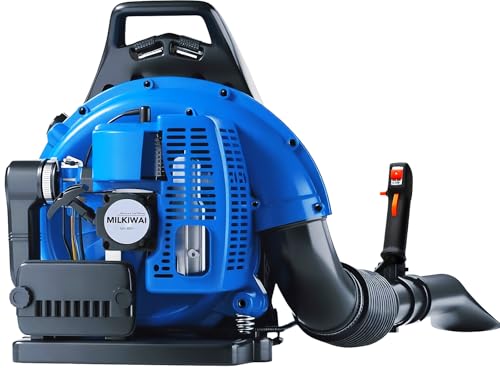
Pros
- Rated output reaches up to 665 CFM and 205 MPH wind speed
- Padded backpack harness with 3-point spring stabilization system
- Variable speed throttle includes cruise control for steady operation
- Manufacturer claims up to 50 minutes of runtime at full throttle
Cons
- Substantial 19-pound unit weight can tire users during prolonged work
- Requires manual 2-stroke gas and oil mixing for engine operation

Pros
- 63cc 2-cycle engine produces 665 CFM and 205 MPH
- 1.7-liter fuel tank enables extended sessions between refills
- Cruise control locks in throttle to reduce hand strain
- Padded harness and vibration reduction improve carry comfort
- Tool-free access simplifies two-stage air filter maintenance
Cons
- Substantial 21-pound dry weight requires physical stamina
- Requires ongoing 2-stroke oil and gasoline mixing

Pros
- Push-button electric start eliminates pull cords
- Outputs up to 470 CFM and 175 MPH air performance
- Locking cruise control reduces hand fatigue
- Padded ventilated harness with anti-vibration mount
- Automatic choke for convenient engine starting
Cons
- Weighs 18.5 pounds
- Not available for purchase or shipping to California

Pros
- Lightweight design at only 4.4 pounds
- 7-Amp motor rated up to 180 MPH and 180 CFM
- Built-in cord retention prevents unplugging
- Zero emissions with instant push-button start
- Simple, low-maintenance corded design
Cons
- Extension cord is not included
- Operating range is limited by cord reach
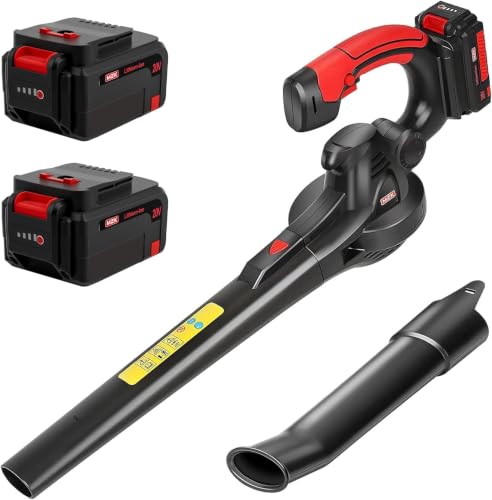
Pros
- Weighs only 3.9 pounds for light handling
- Rated airflow up to 450 CFM
- Cordless design allows unrestricted mobility
- Convenient one-hand trigger operation
- No gas mixing or cord management required
Cons
- Runtime varies significantly by power output
- Battery charging intervals required

Pros
- Delivers up to 600 CFM and 110 MPH airflow
- Continuous corded power eliminates recharging and gas mixing
- Variable-speed control adjusts airflow to the task
- Lightweight design weighs just 6.4 pounds
Cons
- Operating range is tethered to an electrical outlet

Pros
- Airflow rated up to 650 CFM using advanced turbo technology
- Comes with two high-capacity 20V 5.2Ah batteries and fast charger
- Three selectable speed modes for delicate to heavy-duty jobs
- Includes an adjustable shoulder strap to reduce arm fatigue
- Includes blower tube and extension nozzle attachments
Cons
- Maximum 150-minute runtime applies only to low-speed mode
- Heavier battery packs may add weight during prolonged handheld use

Pros
- Lightweight build suitable for one-handed operation
- Operates at a relatively quiet 65 dB
- Rated up to 200 MPH and 600 CFM output
- Cordless battery platform allows flexible movement
- Versatile for dry debris, sawdust, and car drying
Cons
- Runtime decreases significantly at maximum output
- Single included battery limits extended sessions
- Not suited for heavy, wet leaf accumulations
How Push-Button Gas Engines Eliminate Pull-Start Frustration
Push-button gas leaf blowers eliminate recoil pull cords by using a small onboard electric motor and dedicated rechargeable battery to turn over the engine automatically. Pull-starting standard 2-cycle outdoor power equipment often requires significant upper-body effort, multiple pulls, and careful choke manipulation, which can become frustrating in cold weather or after off-season storage.
The LawnMaster No-Pull Backpack Leaf Blower 31cc resolves this issue with an integrated electric push-start button powered by an included 7.2V rechargeable battery. The manufacturer advertises that this battery provides up to 150 starts on a single charge. To further simplify operation, the engine includes an automatic choke, removing the manual priming steps typically required by small 2-cycle motors.
However, electric start gas equipment still requires standard engine care. Operators must mix 2-cycle oil with gasoline, clean air filters, and ensure the 7.2V starter battery stays charged between seasons. Additionally, this specific unit is restricted from sale in California due to state emissions regulations, meaning buyers in that region must look strictly at pure electric alternatives.
Electric Start Gas Blowers vs Pure Electric Blowers: Matching Yard Size to Power
Choosing between an electric-start gas model and a pure electric (corded or cordless) leaf blower comes down to property acreage, required mobility, and your willingness to maintain a fuel system. Pure electric tools offer true push-button starting with zero fuel mixing or exhaust, while gas blowers provide uninterrupted mobility across large grounds.
Corded blowers, such as the WORX 12 Amp Turbine Electric Leaf Blower for Daily, deliver instant push-button startup and an advertised 600 CFM airflow without gas refills or battery charging. The main trade-off is the power cord, which generally tethers your cleanup radius to within 100 feet of an outdoor outlet. For open yards requiring full mobility, cordless models like the Leaf Blower Cordless, 650CFM Electric Leaf Blowers supply portable electric power using two included 20V 5.2Ah batteries, advertising up to 150 minutes of run time across lower speed settings.
When yards expand beyond standard suburban lots, continuous gas output becomes valuable. Large manual-start gas blowers, such as the Getell 63CC Gas Backpack Leaf Blower and the 63CC Gas Backpack Leaf Blower, 2-Stroke Engine, move heavy wet debris using 1.7 L fuel tanks and 665 CFM output, but they require a traditional 3- to 8-pull recoil startup. The LawnMaster No-Pull 31cc provides a balanced compromise by offering the mobility of a 950 mL gas fuel tank combined with electric ignition. For broader context on choosing motor formats for different spaces, consult our guide on what leaf blower is the best.
Airflow and Airspeed: Deciding Between CFM and MPH for Yard Debris
Cubic feet per minute (CFM) measures the overall volume of air an engine pushes through the nozzle, while miles per hour (MPH) measures the velocity of that air stream. Balancing these two ratings ensures you have enough volume to herd wide leaf piles and sufficient air speed to scour wet debris off hard surfaces.
For sweeping broad turf areas covered in soaked foliage or pine needles, high CFM is essential. The Getell 63CC and the 63CC Gas Backpack Leaf Blower, 2-Stroke Engine both advertise 665 CFM at 205 MPH, creating a broad, high-speed swath that moves dense debris across open ground. In contrast, the LawnMaster No-Pull 31cc generates an advertised 470 CFM and 175 MPH, which provides adequate sweeping force for routine residential lawns while keeping the overall engine displacement at a manageable 31cc.
When clearing tight walkways, patios, or driveways, airspeed often takes precedence over sheer air volume. The Grasstigon Electric Leaf Blower Corded, 7-Amp delivers 210 MPH airspeed alongside 390 CFM, focusing high-speed airflow to loosen caked dirt and wet grass clippings from hard pavement. Homeowners targeting paved surfaces can review our advice on selecting a leaf blower for driveway cleaning to understand how focused airspeed prevents excessive blowback.
Backpack Harnesses vs Handheld Units for Extended Cleanups
Backpack blowers shift the weight of the motor and fuel system from your arms to your shoulders and core, making them significantly more comfortable for prolonged yard maintenance, whereas handheld blowers offer quick maneuverability for lighter jobs.
Large gas backpack blowers carry substantial weight. For example, the Thalorus 52cc Gas Backpack Leaf Blower, 550 CFM weighs 17 lb, while the Getell 63CC weighs 21 lb. To keep operators comfortable during long sessions, both units rely on wide, padded shoulder harnesses, anti-vibration engine mounts, and cruise control throttles that eliminate finger fatigue during continuous runs. The Thalorus model features a 33.8 fl oz fuel tank providing an advertised run time of up to 45 minutes, allowing you to cover extensive ground before taking a break.
By comparison, handheld units like the MZK 20V Cordless Leaf Blower weigh only 3.9 lbs and operate at a quiet 65 dB sound level, making them effortless to carry one-handed around steps, decks, and garages. The trade-off is upper-body endurance: holding even a lightweight blower in one hand for an hour will eventually fatigue your wrist and forearm, whereas a backpack harness evenly distributes heavier loads over your entire torso.
Frequently Asked Questions About Electric Start Leaf Blowers
How does an electric push-button start work on a gas leaf blower?
An electric-start gas leaf blower features a small internal electric starter motor powered by a dedicated rechargeable battery, such as the 7.2V pack on the LawnMaster 31cc. Pressing the start button engages the motor to spin the engine flywheel automatically, removing the need to pull a manual recoil rope.
Do electric start gas leaf blowers still require fuel mixing?
Yes. Electric start systems on gas blowers only automate the engine ignition process. If the machine uses a 2-cycle engine, you must still mix gasoline with 2-cycle engine oil at the manufacturer-recommended ratio and carry out regular maintenance like air filter cleaning.
What is the primary trade-off between corded electric and battery cordless blowers?
Corded electric blowers provide continuous, unlimited runtime and consistent blowing power without battery degradation, but your working area is limited by extension cord reach. Cordless battery blowers provide complete freedom of movement anywhere on your property, but run times depend on battery capacity and throttle settings.
Choosing the Right Electric Start Leaf Blower for Your Yard
Selecting the best electric start leaf blower requires balancing your yard size, physical requirements, and willingness to maintain small engines. A push-button gas unit delivers long-lasting power across larger landscapes without recoil strain, whereas corded and cordless electric models offer instant starting, lightweight frames, and clean, maintenance-free operation for smaller lots.
For property owners managing medium to large yards who require gas-powered runtime without the physical strain of pull cords, the LawnMaster No-Pull Backpack Leaf Blower 31cc is our recommended choice due to its convenient push-button electric start, automatic choke, and balanced backpack harness. Its main limitations are the ongoing maintenance demands of a 2-cycle gas engine, the necessity of keeping its 7.2V starter battery charged, and its restriction from sale in California. If you prefer a completely maintenance-free tool for a suburban lot with accessible outdoor outlets, the WORX 12 Amp Turbine Electric Leaf Blower for Daily serves as a capable alternative, delivering instant electric starts and high-volume 600 CFM airflow without fuel mixing or battery degradation.


