

For homeowners managing expansive lawns or heavy autumn debris, a hand gas blower provides continuous power without the runtime limits of batteries, though it demands hands-on engine maintenance and fuel preparation.

Pros
- Lightweight 9.4-pound design offers easy handheld maneuvering
- Reduced-resistance recoil system eases engine pull starts
- Translucent fuel tank allows quick monitoring of gas levels
- Cushioned anti-vibration handle helps dampen arm strain
- Capable of up to 380 CFM and 180 MPH airflow
Cons
- Requires mixing 2-cycle gas and oil at a 50:1 ratio
- Modest 380 CFM output is best suited for lighter debris

Pros
- 4-cycle engine eliminates fuel and oil mixing
- Delivers up to 410 CFM and 125 MPH clearing power
- Automatic compression release for easier pull starts
- Lubricates in all directions without stalling or leaks
Cons
- Not available for purchase or delivery in California
- Requires routine gas engine maintenance and oil checks

Pros
- Lightweight design at only 4.4 pounds
- 7-Amp motor rated up to 180 MPH and 180 CFM
- Built-in cord retention prevents unplugging
- Zero emissions with instant push-button start
- Simple, low-maintenance corded design
Cons
- Extension cord is not included
- Operating range is limited by cord reach

Pros
- 26cc 2-stroke engine produces up to 425 CFM and 156 mph
- Converts between a leaf blower and a lawn vacuum
- Includes collection bag, suction tubes, and full tool kit
- Cruise control throttle lock maintains steady airflow speeds
- Supplied earmuffs help reduce noise during yard work
Cons
- Requires ongoing 2-stroke gas and oil fuel mixing
- Manual pull-start operation can require physical effort
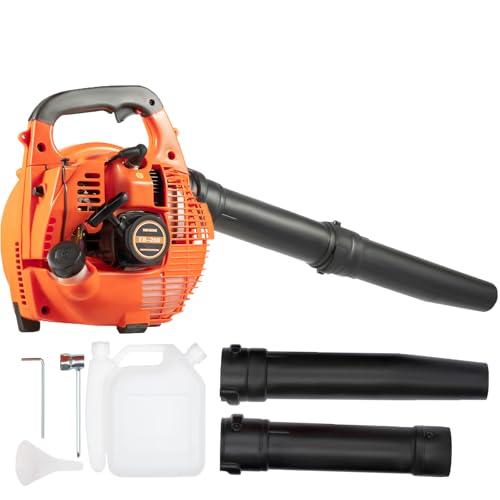
Pros
- Cordless gas operation eliminates battery recharging and cord limits
- Rated up to 7,000 RPM from a 25.4cc 2-stroke gas engine
- 360-degree protective mesh housing helps block debris intake
- Handle integrates both throttle control and engine stop switches
- Lightweight handheld build weighs approximately 7.62 lbs
Cons
- Requires manual mixing of 2-stroke fuel and oil
- Manual hand-pull start mechanism

Pros
- 28cc 1.1-HP 2-stroke gas engine
- Rated up to 280 MPH and 490 CFM
- Quick-start ignition mechanism
- 0.65-liter translucent fuel tank
- Lightweight 9.5-pound bare tool weight
Cons
- Requires 2-cycle gas and oil mixing
- Produces engine noise and emissions

Pros
- Lightweight 8.3 lb design for simple handheld clearing
- Rated up to 7,000 RPM impeller speed for brisk clearing
- Integrated switch enables one-handed machine control
- Translucent 0.2-gallon tank allows quick fuel checks
- 360-degree protective covers help block debris intake
Cons
- Shoulder strap is not included in the package
- Produces up to 90 dB(A) operating noise

Pros
- 28cc 2-stroke engine up to 200 MPH
- Rated air volume up to 475 CFM
- Weighs under 10 pounds for one-hand use
- Variable speed trigger provides adjustable output
- Durable plastic and metal construction
Cons
- Requires ongoing gas and oil mixing
- Produces standard small-engine emissions

Pros
- 28-cc engine delivers up to 470 CFM and 170 MPH
- Cruise control function enables comfortable sustained operation
- Air purge system removes air from carburetor for easier starting
- Auto-return stop switch automatically resets to the on position
- Adjustable soft-grip handle engineered to reduce strain
Cons
- Requires 2-cycle fuel and oil mixing
- Produces engine exhaust emissions and engine noise
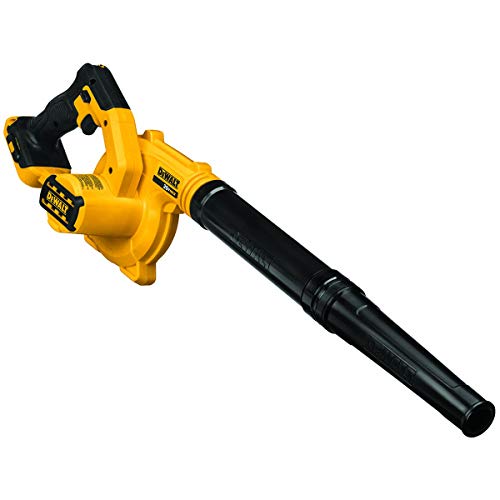
Pros
- Lightweight 2.5-pound design fits into tight spaces
- 3-speed variable switch plus variable speed trigger
- Trigger lock-on reduces hand fatigue during continuous use
- Includes 3 nozzle attachments for different clearing tasks
Cons
- Sold as a bare tool without battery or charger
- 100 CFM airflow is strictly intended for jobsite debris
2-Cycle vs. 4-Cycle Engines for Handheld Gas Blowers
Choosing between a 2-cycle and a 4-cycle engine determines how much maintenance effort you will face before every yard cleanup. A standard 2-cycle engine, such as the 28cc unit on the Husqvarna 125B or the 26cc engine on the Getell 26cc Gas Leaf Blower, offers a higher power-to-weight ratio and mechanical simplicity, but it strictly requires mixing 2-cycle oil into gasoline (typically at a 50:1 ratio). Forgetting oil or mismeasuring the blend will permanently seize the engine.
In contrast, a 4-cycle model like the SENIX 4QL 26.5cc eliminates fuel mixing entirely by utilizing separate oil and fuel reservoirs. This lets you fill the fuel tank with straight pump gas just like a lawnmower. The primary trade-off with 4-cycle engines is mechanical complexity: they incorporate internal oil sumps and valvetrains, which can add weight and require periodic oil level checks. Furthermore, certain models like the SENIX 4QL carry geographic shipping restrictions and cannot be sold in California due to regional emissions rules.
Balancing Airflow Volume (CFM) Against Air Speed (MPH)
Effective yard clearing relies on the balance between air speed (MPH) and air volume (CFM), rather than relying on a single advertised number. Air volume, measured in cubic feet per minute, defines how wide a pile of leaves you can sweep across open turf. Air speed, measured in miles per hour, provides the concentrated punch required to dislodge damp lawn clippings, wet leaves, or stubborn dirt stuck to asphalt.
For example, the Husqvarna 125B advertises 470 CFM at 170 MPH, providing a balanced stream that lifts heavy debris while maintaining a broad clearing path. Budget options like the Elementool 28 CC Gas Leaf Blower advertise peak specs of 490 CFM and 280 MPH, whereas the SENIX 4QL prioritizes volume with 410 CFM at a lower 125 MPH. When working on standard driveways and walkways, a higher velocity helps strip stuck debris, while broader lawns benefit more from higher CFM to gather scattered foliage efficiently. For broader advice on matching power output to your space, review our guide to evaluating leaf blowers.
Husqvarna 125B vs. SENIX 4QL: Comparing Maintenance and Usability
Comparing the Husqvarna 125B and the SENIX 4QL illustrates the fundamental trade-off between ergonomic refinement and fueling simplicity. The Husqvarna 125B retails around $199.99 and features a 28cc 2-stroke engine that puts out 470 CFM and 170 MPH. It incorporates refined user-comfort details such as an air purge bulb for reliable starting, an auto-return stop switch that resets to the “on” position, and cruise control to ease finger fatigue on long sweeps. However, it requires premixed 2-cycle fuel and represents a higher initial investment.
The SENIX 4QL sells at a lower price point ($89.00) and solves the mixing hassle with its 26.5cc 4-cycle engine running on straight gas. It produces a respectable 410 CFM, though its top air speed is limited to 125 MPH, making it slightly slower at peeling damp, compacted leaves off wet grass. Buyers choosing the SENIX gain hassle-free fueling at an accessible price, but they accept lower maximum air speed, a 3-year limited warranty envelope, and no availability for California residents.
Multi-Function Options: When Debris Vacuuming Matters
A multi-function gas blower is ideal for yards with tight landscaping beds where blowing debris into piles simply scatters mulch. The VEVOR Gas Leaf Blower addresses this by pairing its 26cc 2-cycle engine (425 CFM, 156 MPH) with an included vacuum kit. Rather than simply blowing leaves onto the lawn, you can attach the collection elbow, suction tubes, and collection bag to shred and gather debris in place.
The trade-off for this versatility is physical bulk and assembly time. Switching between blower tubes and vacuum pipes requires manual reconfiguration using hand tools. Additionally, handling the loaded vacuum bag alongside the 2-cycle powerhead increases total working weight, making it less practical for quick, routine driveway clearing where a streamlined, dedicated blower like the eaizybuk Gas Leaf Blower (weighing just 8.3 lbs) would be far easier to swing one-handed.
Frequently Asked Questions About Hand Gas Blowers
Do all handheld gas leaf blowers require mixing oil with gasoline?
No. Two-cycle (2-stroke) models require mixing two-cycle oil into gasoline at manufacturer-specified ratios (commonly 50:1). Four-cycle models, such as the SENIX 4QL, have separate engine oil and fuel systems, allowing you to use straight unleaded gasoline directly from the pump.
What is the practical difference between CFM and MPH on a gas blower?
CFM (cubic feet per minute) measures the total volume of air moving through the tube, which determines how much debris you can push in a single pass. MPH (miles per hour) measures the velocity of that air, which is critical for dislodging wet, heavy leaves or packed dirt from hard surfaces.
Why are some handheld gas blowers restricted from sale in California?
Certain gas-powered small engines do not meet state-specific emissions standards set by the California Air Resources Board (CARB). For example, the SENIX 4QL explicitly states it is not available for purchase in California due to regional compliance restrictions.
How to Choose the Right Hand Gas Blower for Your Property
Selecting the best hand gas blower comes down to evaluating your physical comfort, tolerance for fuel mixing, and yard size. Lightweight budget models, like the eaizybuk or GOSHET 25.4cc blowers, keep purchase costs low and physical weight down to around 8 to 9 pounds, but they lack advanced ergonomic adjustments and depend on careful 2-stroke oil measuring. High-output units push heavy debris quickly but generate more vibration and noise.
For most homeowners seeking a dependable, well-balanced tool for regular seasonal cleanups, the Husqvarna 125B Gas Leaf Blower is the top recommendation due to its proven 470 CFM output, built-in cruise control, and intuitive starting system. Its primary limitation is the requirement to premix 2-cycle fuel and its higher initial price. If you prefer to bypass fuel mixing entirely and want a budget-friendly alternative, the SENIX 4QL 26.5cc 4-Cycle Handheld Gas Leaf Blower provides straight-gas convenience at a lower cost, provided you reside outside California.




