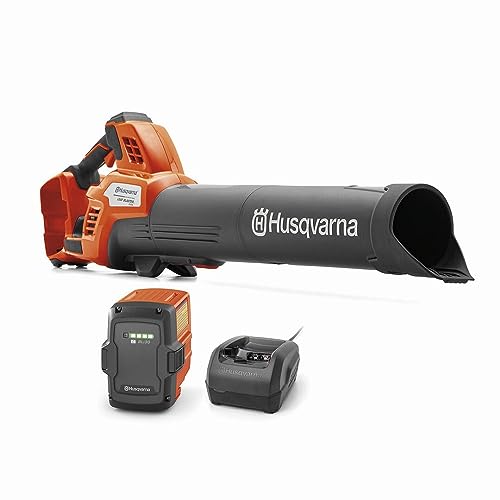
For homeowners managing medium to large outdoor cleanup, the EGO POWER+ Cordless Electric Leaf Blower, 530 CFM offers reliable 56V platform power, though it comes at a significantly higher upfront cost. Buyers needing quick patio sweeps or ultra-compact cleanup can find lighter, more affordable alternatives, but will sacrifice heavy-duty moving power.

Pros
- Includes two 4.0Ah batteries and a fast charger
- Stepless variable-speed trigger with safety lock
- Comes with two detachable nozzle tubes and a shoulder strap
- Stated wind speed capability reaching up to 65 m/s
- Includes storage toolbox and protective earplugs
Cons
- Claimed 30-minute runtime per battery is limited to low speed
- Conflicting weight figures listed between specs and description
Pros
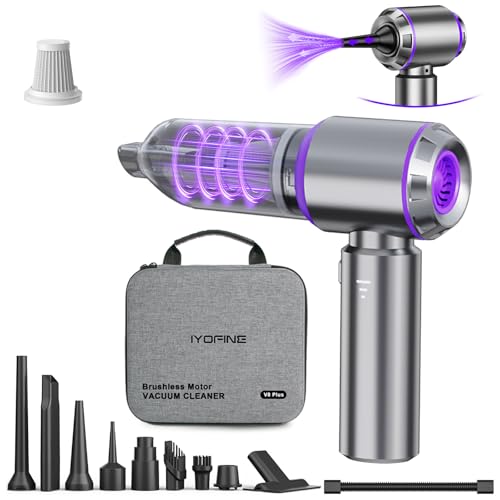
- Combines vacuuming, blowing, inflating, and bag deflation
- Brushless motor rated up to 80,000 RPM and 21,000 Pa suction
- Includes 6 attachment tips and a dedicated storage case
- 6000mAh battery recharges in approximately 2 hours via USB-C
Cons
- Compact dust reservoir needs frequent emptying during extended cleanups

Pros
- Lightweight design at only 4.4 pounds
- 7-Amp motor rated up to 180 MPH and 180 CFM
- Built-in cord retention prevents unplugging
- Zero emissions with instant push-button start
- Simple, low-maintenance corded design
Cons
- Extension cord is not included
- Operating range is limited by cord reach

Pros
- Includes two 21V 4.0Ah batteries for extended runtime
- Delivers up to 420 CFM airflow and 150 MPH air speed
- Lightweight design weighs under 3 lbs bare tool for low fatigue
- Comes with both round and flat interchangeable nozzles
- Two adjustable speed settings for varying cleanup tasks
Cons
- Limited to two preset airflow speeds
- Best suited for dry leaves and light debris rather than heavy wet waste

Pros
- Delivers up to a stated 930 CFM airflow and 197 MPH
- Includes two 4.0Ah batteries and a fast charger
- Six variable-speed settings with a constant-speed lock
- Tool-free assembly with included blower tubes
Cons
- Stated dual-battery runtime is limited to 30–60 minutes

Pros
- Includes two 20V 2.0Ah batteries and a fast charger
- Extremely lightweight design at just 3.4 pounds
- Two selectable speed modes match light and heavier tasks
- Ergonomic non-slip grip allows comfortable one-handed use
- Comes with an extension nozzle for targeted airflow
Cons
- Runtime decreases significantly at the higher speed setting
- Best suited for light residential cleanup rather than dense debris

Pros
- Turbo mode delivers up to 530 CFM and 110 MPH
- Up to 75 minutes of stated runtime per charge
- Brushless motor reduces vibration and tool wear
- Fast 50-minute battery recharge with included charger
- Variable speed dial with a lock-on trigger button
Cons
- High turbo output significantly reduces battery runtime
- Requires extra batteries for prolonged high-power jobs

Pros
- Lightweight, maneuverable design at just 4.6 pounds
- Reaches up to a rated 500 CFM and 200 MPH
- Includes two 2.0Ah batteries and a charger
- Dual air duct design with quick-release latch
Cons
- Reaching 80 minutes requires swapping both batteries
- Two preset speed levels provide limited fine adjustments

Pros
- 270-degree pivoting head for direct aim
- Up to 289 CFM across 3 speed settings
- Two built-in grounded power outlets
- Integrated circuit breaker with reset button
- 10-foot power cord with 3-prong plug
Cons
- Lacks widespread oscillating coverage
- Targeted primarily for directional airflow
Understanding Airflow Volume Versus Velocity
Cubic feet per minute (CFM) measures the overall volume of air a blower displaces, while miles per hour (MPH) indicates the speed at which air exits the nozzle. For heavy yard debris, higher CFM is generally more helpful for sweeping wide areas, whereas high MPH helps dislodge wet or stuck leaves. For deeper context on yard maintenance tools, check our guide on what leaf blower is the best.
For example, the 930CFM Electric Leaf Blower Cordless with 2 X 4.0 advertises an impressive 930 CFM and 197 MPH, designed for blasting wide paths of leaves and light snow. In contrast, the BLACK+DECKER Electric Leaf Blower generates an advertised 180 CFM at 180 MPH. While the BLACK+DECKER tool focuses its stream into a high-speed jet, its low CFM means it clears a narrower swath per pass compared to higher-volume outdoor units.
Cordless Freedom Versus Continuous Corded Power
A cordless battery-powered blower provides total mobility around expansive properties, but working time is strictly bounded by battery capacity. Conversely, corded blowers offer endless power at the expense of range and cord management. If you are exploring tight-space tools, read about finding a small rechargeable leaf blower.
The BLACK+DECKER Electric Leaf Blower relies on a standard 7-amp corded electric motor. It eliminates battery management and charging downtime entirely, making it ideal for standard suburban lots where an extension cord can easily reach walkways. However, you must navigate cord snagging and stay within reach of an outlet. Battery-powered alternatives like the Leaf Blower Cordless Handheld Blower with 2×4.0Ah allow you to walk anywhere freely, supplying two 4.0Ah battery packs so one can recharge while the other runs, though continuous full-throttle runtime remains finite.
Evaluating Battery Voltage and Multi-Battery Bundles
When selecting a cordless blower, the electrical platform and battery quantity determine both cutting-edge power and practical job continuity. Single-battery kits can leave you stranded mid-cleanup, making dual-battery bundles a practical baseline for yard work.
The Electric Leaf Blower Cordless with Battery and Leaf Blower Cordless Handheld Blower with 2×4.0Ah both supply two 4.0Ah packs in the box, giving users an immediate swap option to prolong their session. On the premium side, the EGO POWER+ Cordless Electric Leaf Blower, 530 CFM operates on a robust 56V ARC Lithium platform and includes one 2.5Ah battery that recharges in an advertised 50 minutes. While EGO provides cross-compatibility with a broader ecosystem of outdoor power equipment, budget dual-pack models focus primarily on keeping initial purchase costs low.
Physical Weight and Handling Strain
Total tool weight directly impacts operator fatigue, particularly when clearing large driveways, gutters, or seasonal leaf fall. The lightest units are effortless to maneuver overhead, but heavier tools often carry larger, more capable motors.
Extremely lightweight options, such as the Leaf Blower Cordless Handheld Blower with 2×4.0Ah listed at just 1.12 pounds or the Leaf Blower Cordless, Leaf Blower with Battery at 3.4 pounds, allow effortless one-handed control on stairs and patios. On the heavier end, the 930CFM Electric Leaf Blower Cordless with 2 X 4.0 weighs 7.5 pounds with the battery installed. While RAXONE incorporates a constant-speed lock button to relieve trigger fatigue, the added mass requires greater arm strength during extended yard sessions.
Compact Electronics Cleaners Versus Outdoor Blowers
Not all portable power blowers are designed for yard cleanup; compact handheld dusters target precision indoor jobs and vehicle detailing where outdoor blowers are too destructive or bulky.
The Vacuum/Air Duster Super Power Mini Car Vacuum uses an 80,000 RPM brushless motor to deliver targeted blowing, vacuuming, and inflating. Weighing a fraction of lawn tools and charging via USB-C, it is tailored for keyboards, car consoles, and camp gear. However, it cannot move yard debris or clear wet grass from hardscapes. Matching the blower type to your environment prevents buying a tool that is either grossly underpowered for grass or far too forceful for sensitive interiors.
Utility Blowers for Targeted Air Circulation and Drying
Pivoting utility air movers serve an entirely separate function from debris-clearing leaf blowers, focusing on stationary ventilation, shop drying, and continuous airflow.
The Lasko Pivoting High Velocity Portable Utility Fan provides up to 289 CFM of focused air movement across three speeds and features a 270-degree pivoting head. Designed for drying wet floors, airing out paint fumes, or cooling work areas, it includes built-in accessory outlets and a 10-foot cord. However, because it lacks a directional extension nozzle and handheld wand, it cannot replace an outdoor leaf blower for sweeping driveways or clearing garden beds.
Frequently Asked Questions About Portable Power Blowers
What is the difference between CFM and MPH when choosing a blower?
CFM (cubic feet per minute) indicates the volume of air pushed out, which determines how wide of a debris path the tool can sweep. MPH (miles per hour) measures how fast that air travels, dictating the force used to dislodge stuck or heavy debris. Balanced ratings ensure both sweeping efficiency and lifting power.
Can mini air dusters be used for lawn care tasks?
No. Mini air dusters like the IYOFINE 4-in-1 are designed for tight spaces, electronic dust removal, vehicle interior detailing, and light inflation. They lack the nozzle diameter, airflow volume, and reach required to move leaves, mulch, or outdoor debris across a yard.
How should I evaluate battery runtime before buying a cordless blower?
Check the battery amp-hour (Ah) rating, system voltage, and whether extra packs are included. Many advertised runtimes apply only to the lowest speed setting. High-speed or turbo modes consume significantly more power, making dual-battery kits advantageous for uninterrupted work.
Choosing the Right Portable Power Blower for Your Needs
Selecting the best portable power blower comes down to the scale of your workspace, power source proximity, and overall physical comfort requirements. If you are clearing large lawns and seek established platform reliability, the EGO POWER+ Cordless Electric Leaf Blower, 530 CFM is the recommended choice, provided you accept its higher price tag and single-battery configuration. If your tasks are strictly limited to small hard surfaces near an outlet, the corded BLACK+DECKER Electric Leaf Blower provides consistent blowing performance at a much lower cost without any battery upkeep.