

For homeowners managing large lots with wet leaves, a backpack unit provides superior clearing power and shoulder-supported weight distribution, though it requires routine two-cycle fuel mixing and carries a higher price tag than a compact handheld tool.

Pros
- Lightweight 9.4-pound design offers easy handheld maneuvering
- Reduced-resistance recoil system eases engine pull starts
- Translucent fuel tank allows quick monitoring of gas levels
- Cushioned anti-vibration handle helps dampen arm strain
- Capable of up to 380 CFM and 180 MPH airflow
Cons
- Requires mixing 2-cycle gas and oil at a 50:1 ratio
- Modest 380 CFM output is best suited for lighter debris

Pros
- Delivers up to 550 CFM and 230 MPH for moving wet yard debris
- Lightweight 17-pound backpack design with cushioned straps
- Thumb throttle includes cruise control for steady blowing
- 33.8 fl oz fuel tank yields up to 45 minutes of run time
- Operating temperature range spans 14°F to 104°F
Cons
- Requires 2-cycle fuel mixing and engine maintenance
- 550 CFM is modest for a backpack-class gas blower
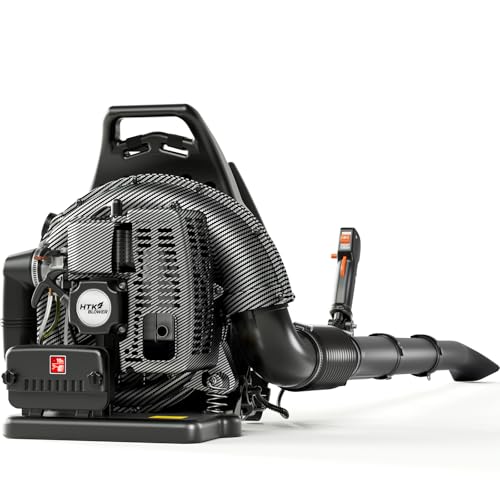
Pros
- 63CC 2-stroke engine provides up to 665 CFM and 205 MPH
- Fully padded ergonomic backpack harness
- Variable-speed throttle with built-in cruise control
- Generous 1.7 L fuel tank for extended yard sessions
Cons
- Requires 2-stroke fuel mixing and gas engine maintenance

Pros
- Engine rated at 63cc delivering up to 665 CFM and 205 MPH
- Generous 1.7-liter fuel tank extends running time between refills
- Cruise control and variable speed dial enable hands-free throttle
- Tool-free two-stage air filter simplifies routine maintenance
- Padded backpack harness evenly distributes weight during operation
Cons
- Weighs 22 pounds before adding fuel
- Requires mixing 2-cycle oil and gasoline

Pros
- High rated output up to 700 CFM and 200 MPH
- 1200W brushless motor provides strong airflow
- Includes two 5.2Ah batteries and a fast charger
- Three speed modes for delicate to heavy tasks
- Handheld design suited for year-round cleanup
Cons
- High-speed runtime is limited to about 40 minutes
- No extension pole included for high gutter reach

Pros
- 65cc engine delivers a high-volume 850 CFM at 205 MPH
- Includes both fan and concentrator nozzle attachments
- 1.7-liter fuel tank reduces frequent stopping for refills
- Backpack harness features ventilated backrest for comfort
- Variable throttle with cruise control simplifies steady operation
Cons
- Requires 2-stroke fuel mixing and routine engine upkeep
- At 70.8 inches long assembled, storage requires ample space

Pros
- 1200W brushless motor delivers up to 700 CFM and 200 MPH
- Includes two 5.2Ah batteries and a fast charger
- Three speed modes adapt to dusting or heavy clearing
- Claimed runtime reaches up to 160 minutes on low speed
Cons
- Weighs 7.7 pounds, which may tire arms during long tasks
- Runtime drops to 40 minutes at maximum speed setting

Pros
- Claims up to 1,110 CFM airflow and 220 MPH air speed
- Generous 1.89-liter fuel tank allows 50 to 60 minutes of runtime
- Padded harness and shock-absorption system reduce vibration
- Cruise control locks throttle for continuous operation
- Includes earmuffs, maintenance tools, and fuel mixing bottle
Cons
- Heavy 26.46-pound total weight can fatigue operators
- Requires mixing 2-cycle gas and oil fuel

Pros
- 51cc 2-cycle engine produces up to 765 CFM and 270 MPH
- Padded harness and hip belt provide balanced load distribution
- Air purge system removes fuel line air for easier starting
- Variable speed throttle includes cruise control functionality
- Proven X-Torq engine technology maintains high clearing force
Cons
- Heavier 22-pound build can cause fatigue on extended jobs
- Requires routine 2-cycle gas and oil fuel maintenance

Pros
- 28-cc engine delivers up to 470 CFM and 170 MPH
- Cruise control function enables comfortable sustained operation
- Air purge system removes air from carburetor for easier starting
- Auto-return stop switch automatically resets to the on position
- Adjustable soft-grip handle engineered to reduce strain
Cons
- Requires 2-cycle fuel and oil mixing
- Produces engine exhaust emissions and engine noise
Handheld vs. Backpack Form Factors for Different Lot Sizes
Handheld gas blowers suit modest suburban yards with routine walkway and patio debris, whereas backpack blowers are necessary when you must move deep drifts or wet piles across extensive turf. The primary trade-off comes down to arm strain versus machine bulk.
Handheld models like the Getell 26cc Gas Leaf Blower and the Husqvarna 125B Gas Leaf Blower rely on smaller displacement engines (26cc to 28cc) that keep total tool weight directly in your grip. They allow quick maneuvering around patio furniture, narrow garden beds, and steps. If your outdoor chores focus primarily on paved surfaces, a specialized leaf blower for driveway use often requires only a handheld unit. However, supporting a handheld machine for more than 20 minutes can fatigue your wrist and forearm.
Backpack models, including the Thalorus 52cc Gas Backpack Leaf Blower, 550 CFM and the Husqvarna 150BT Gas Backpack Leaf Blower, mount larger 51cc to 65cc engines onto an integrated frame. The backpack configuration shifts the mechanical weight onto your torso and hips. While this form factor takes more space to store and requires wriggling into shoulder straps, it frees your arm to guide only the lightweight directional tube, which is essential for larger acreages.
Airflow Volume vs. Velocity: Interpreting CFM and MPH Claims
Cubic feet per minute (CFM) measures the overall volume of air pushed through the nozzle, while miles per hour (MPH) indicates how fast that air stream travels. High CFM moves large piles, while high MPH breaks up stuck, wet debris.
Manufacturer-advertised ratings across these gas tools demonstrate distinct engineering targets. The Getell 26cc lists 380 CFM at 180 MPH, providing balanced force suited for sweeping lawn clippings and loose twigs. Stepping up into backpack models increases these metrics considerably. The HTK Gas Backpack Leaf Blower, 63CC 2-Stroke advertises 665 CFM at 205 MPH, while the VEVOR 63CC Gas Backpack Leaf Blower lists 1110 CFM at 220 MPH.
It is important to remember that these ratings represent manufacturer claims rather than standardized independent laboratory tests. A blower claiming massive CFM figures may consume fuel faster or use a wider nozzle diameter that reduces concentrated scraping force. For dense, wet leaf layers, look for a balance of at least 500 CFM paired with 200 MPH or higher to keep debris rolling across the lawn without stalling.
Starting Mechanisms and Fuel Mixture Upkeep
All two-cycle gas engines require a pre-mixed fuel solution and periodic carburetor maintenance, but modern starting aids substantially reduce the physical effort needed to crank the engine. The trade-off is that two-stroke engines demand consistent fuel freshness and clean air filters to prevent starting failures.
Features like air-purge bulbs and reduced-resistance pull cords help address the historical difficulty of starting gas tools. The Husqvarna 125B, Husqvarna 150BT, and HTK 63CC all incorporate air-purge systems designed to draw fuel directly into the carburetor while purging air bubbles from the fuel line. Similarly, the Getell 26cc features a reduced-resistance recoil starter designed to lessen pull resistance, and the Thalorus 63CC Backpack Leaf Blower, 665 CFM advertises engine ignition within three to five pulls.
Regardless of starter aids, two-cycle engines cannot run on pure gasoline. Models like the Getell 26cc require a precise 50:1 gas-and-oil mix. Users must also manage fuel storage: leaving ethanol-blended fuel in the carburetor over winter can degrade internal gaskets and clog tiny fuel jets, necessitating fuel stabilizer or off-season draining.
Weight, Vibration, and Harness Support During Extended Cleaning
Carrying an engine on your back or in your hand generates vibration and physical fatigue, making ergonomic harness construction and vibration damping critical for multi-hour yard cleanups.
Dry weights for backpack blowers are significantly higher than handheld alternatives. For instance, the Thalorus 52cc weighs an advertised 17 lb, while the Getell 65CC Backpack Leaf Blower, Gas Powered lists a dry weight of 17.5 lb. Adding a full tank of fuel—such as the 1.7-liter capacity found on the HTK 63CC or the 1.89-liter tank on the VEVOR 63CC—adds several pounds of liquid weight during operation.
To offset this burden, backpack models incorporate padded shoulder straps, back cushions, and shock-absorbing mounts. Husqvarna includes a hip belt and weight-leveling harness on the 150BT to prevent the machine from shifting as you turn. Sound output also impacts operator comfort. HTK advertises a 71 dB rating for its 63CC model, and Getell rates its 65CC model at 75 dB. Operating sound levels naturally climb at wide-open throttle, so understanding the real-world sound of leaf blower machinery is essential for planning neighborhood use and wearing proper hearing protection.
Frequently Asked Questions About New Gas Blowers
What gas-to-oil fuel ratio do these new gas blowers require?
Two-cycle engines require a pre-mixed fuel solution. For example, the Getell 26cc specifies a 50:1 gasoline-to-oil ratio. Always confirm the manufacturer's exact fuel ratio requirements in the documentation before filling the tank.
Is a handheld gas blower sufficient for clearing heavy, wet leaves?
A handheld blower offering 380 to 470 CFM can clear light yard litter and dry leaves from hard surfaces, but thick, wet turf debris generally requires the higher volume and displacement found in 50cc to 65cc backpack models.
How noisy are new gas leaf blowers during operation?
Reported noise levels vary by design; the HTK 63CC lists a 71 dB rating, while the Getell 65CC lists 75 dB. Because noise increases with full-throttle operation, hearing protection is always recommended regardless of stated decibel ratings.
Which New Gas Blower Is Right for Your Property?
Selecting the right gas leaf blower requires matching the tool’s form factor and engine displacement to your physical property layout, the typical moisture level of your debris, and your willingness to maintain small engines.
Small to medium suburban properties with defined hardscapes and light leaf cover are best served by compact handheld options that store easily on a garage hook. Conversely, extensive properties with multiple mature trees, ditch lines, or persistent wet conditions require the high airflow volume, large fuel tanks, and ergonomic support of a 50cc or higher backpack unit.
The Husqvarna 150BT Gas Backpack Leaf Blower is the recommended choice for property owners facing heavy seasonal leaf fall who prioritize proven build quality and an ergonomic harness system that distributes weight onto the hips. Its main limitation is its higher purchase price compared to budget imports. For buyers maintaining smaller residential lots on a tighter budget, the Getell 26cc Gas Leaf Blower offers a practical, lightweight handheld alternative that eliminates the bulk of a backpack frame.


