Quick Answer
Constant 100% speed increases mechanical friction, slightly shortening lifespan. Ball bearings handle continuous maximum RPM well; ambient heat, dust ingress, and lubricant degradation drive failures faster than pure velocity. Run balanced PWM fan curves instead. Dynamic curves maintain thermal margins while preventing needless acoustic noise and accelerated bearing fatigue.

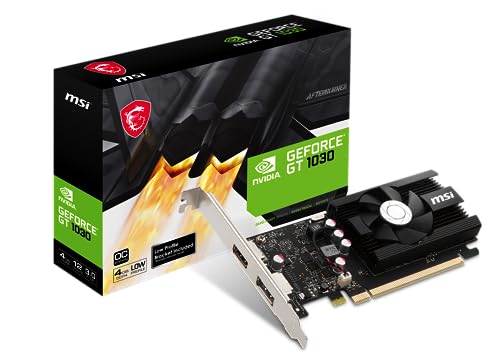
Pros
- Blackwell architecture and DLSS 4 support, per the listing
- Dual BIOS switch for Quiet or Performance profiles
- GPU Tweak III software for tuning and thermal monitoring
- Dual-ball fan bearings listed to last longer than sleeve bearings
Cons
- 2.5-slot design; check case clearance before buying
- AI TOPS and clock speeds are manufacturer-stated figures

Pros
- 12GB GDDR6 memory on a 192-bit interface
- 1710 MHz GPU and 1807 MHz memory clocks (listed)
- Three DisplayPort 1.4a outputs plus one HDMI 2.1
- PCIe 4 interface with Torx Twin Fan design
Cons
- No benchmark, temperature, or noise data supplied
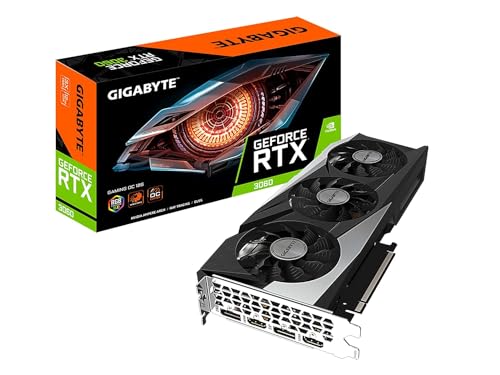
Pros
- 12GB GDDR6 memory on a 192-bit interface
- Three WINDFORCE fans listed
- 2nd-generation RT cores and 3rd-generation Tensor cores
- Based on NVIDIA Ampere streaming multiprocessors
- Gaming OC model name indicates a factory-overclocked variant
Cons
- 11.1-inch card length needs considerable case clearance
How Fan Bearings Age
Ball bearing assemblies contain inner ring, outer ring, rolling elements (AISI 52100 chrome steel or silicon nitride ceramic), stamped steel or polyamide cage, and synthetic grease. Aging occurs via two mechanisms: mechanical rolling-contact fatigue and lubricant degradation.
Mechanical fatigue follows standard ISO 281 L10 life formulation:
L10 = (1,000,000 / (60 * n)) * (C / P)^p
Variable n represents rotational speed (RPM). C represents dynamic load rating (typically 800 N to 1200 N for miniature fan bearings). P represents equivalent dynamic bearing load (thrust and radial load from impeller mass, aerodynamic resistance, static unbalance). Exponent p equals 3 for ball bearings. Because fan blade mass exerts radial and axial loads under 2.0 N, dynamic load quotient (C / P) remains exceptionally high. Structural fatigue of steel races rarely kills fan bearings. Lubricant failure kills them.
Grease consists of base oil (synthetic hydrocarbon or ester) suspended inside thickener matrix (lithium soap, polyurea). Rotational shearing degrades thickener network. Base oil bleeds out, oxidizes, evaporates. Dry contact creates micro-spalling on raceway surface, increases torque resistance, accelerates catastrophic cage failure.
Speed, Heat and Dust: What Actually Matters
Running fan at 100% speed doubles cycle accumulation rate versus 50% speed. 3,000 RPM completes 4.32 million revolutions per day. 1,500 RPM completes 2.16 million. Cycle count impacts wear, but environmental factors scale failure rates exponentially.
Primary degradation variables ranked by impact severity:
- Operating Temperature: Grease degradation follows Arrhenius reaction rate rule. Every 10°C increase in bearing core temperature halves lubricant life. Stator motor copper losses (
I^2 * R) and iron core losses dissipate directly through center shaft into inner bearing ring. Constant 100% duty cycle at 12.0V increases winding temperature by 15°C to 25°C above ambient. Bearing operating at 70°C experiences grease dry-out four times faster than bearing at 50°C. - Abrasive Particulates: Miniature bearings use stamped metal shields (ZZ) or rubber contact seals (2RS). Metal shields prevent macro-debris ingress but permit sub-micron particulate penetration. Mineral dust mixes with liquid grease. Formed compound acts as lapping paste. Abrasive wear erodes bearing sphericity, increases internal clearance (radial play), spikes acoustic noise output.
- Dynamic Load from Imbalance: Centrifugal force from unbalance scales with speed squared:
F = m * r * omega^2. Blade dust accumulation or factory unbalance (>0.5 g-mm) generates excessive alternating radial loads at maximum RPM. Accelerates raceway fretting. - Rotational Velocity: Velocity matters least until thermal ceiling reached. Under 4,000 RPM, shear forces in NLGI Grade 2 greases remain well inside mechanical limits. Speed accelerates wear only by driving temperature rise and revolution cycles.
Practical Fan Curve Advice
Technical analysis confirms 100% continuous PWM duty cycle yields poor thermal return for accelerated component degradation. Airflow CFM scales sub-linearly against fan speed; static pressure curves flatten; motor heat and bearing shear rise sharply.
Optimization rules for industrial and compute applications:
- Cap maximum continuous duty at 75% to 80%: Provides ~85% of maximum rated CFM while reducing electrical power consumption and motor heat dissipation by ~40%. Preserves lubricant reserves.
- Enforce 3°C to 5°C thermal hysteresis: Rapid PWM ramping causes thermal cycling between inner ring and outer ring. Temperature deltas alter internal radial clearance, causing intermittent ball skidding. Deadbands stabilize bearing operating temperature.
- Set minimum RPM floor at 30% duty (600 to 800 RPM): Never run ball bearing below hydrodynamic stabilization limits. Extremely low speeds under high ambient heat cause boundary lubrication regime, increasing metal-to-metal contact during axial pre-load shifts.
- Trigger 100% speed only at emergency thresholds: Reserve full 12.0V / 100% PWM for junction temperatures within 5°C of thermal throttle limits.
When to Replace Old Fans
Monitor specific physical indicators to diagnose failed or failing ball bearing fans prior to system thermal collapse:
- Acoustic Signature Change: Healthy dual ball bearings emit uniform broadband hum with slight high-frequency hiss. Worn raceways produce mechanical ticking, grinding, or tonal peak between 1 kHz and 4 kHz. Indicates raceway spalling or particulate contamination.
- Tachometer Instability: Sensor IC reports erratic RPM readouts fluctuating >100 RPM at fixed PWM duty cycle. Caused by irregular rotational drag torque as balls pass over spalled raceway sectors.
- Abnormal Coast-Down Time: Cut power at operational speed. Healthy bearing spins freely for 4 to 8 seconds under inertia. Compromised bearing with dried, polymerized grease stops abruptly within 1 to 2 seconds.
- Current Draw Creep: Motor draws >20% over rated label amperage at 12V. Mechanical drag forces driver IC to deliver higher stall-recovery current, elevating stator temperature further.
- Excessive Axial or Radial Play: Push fan hub gently along motor shaft axis. Axial end-play exceeding 0.3 mm or detectable radial wobble confirms cage breakdown or significant ball wear. Replace assembly immediately.
For related maintenance and equipment benchmarks, review our technical guides on best gaming pcs, examine vr gaming pc specifications, and compare desktop gaming systems. You can also reference our analyses on 4k gaming desktops and multitasking gaming pcs. For industry engineering standards, consult PCI-SIG specification standards.
Frequently Asked Questions
Does running fans at full speed shorten their life?
Yes. 100% fan speed shortens operating life through thermal degradation and accelerated cycle accumulation. Running continuously at maximum RPM increases stator coil heat, raising inner ring temperature and causing grease oxidation. Manufacturer documentation specifies L10 life reductions of 30% to 50% when continuous operating temperature rises from 40°C to 70°C at max speed.
What fan bearing type lasts the longest?
Dual ball bearings provide longest operational life in high-temperature (>50°C), harsh, or non-horizontal mounting orientations (50,000 to 100,000 hours at 40°C). Fluid dynamic bearings (FDB) achieve higher lifespans (100,000 to 150,000 hours) strictly within moderate temperatures (<40°C) and controlled environments. For machinery exposed to heat, vibration, and multi-axis loading, dual ball bearings remain industrial standard for durability.
How do I tell if a fan bearing is failing?
Execute three diagnostic checks. First, spin fan manually without power: sudden braking or friction resistance indicates grease dry-out. Second, listen for high-pitch chirping, metallic scraping, or rumbling: indicates surface fatigue on steel balls or raceways. Third, check monitoring telemetry: fluctuating RPM readouts at static PWM duty cycle confirm irregular friction torque.