

Quick Answer
Yes. Mixing RAM brands and speeds works, but motherboard downclocks modules to slowest stick frequency and loosest timings. DDR generation and operating voltage must match. System instability, boot failure, or broken dual-channel operation risk remains. Matched kits ensure stability. Check motherboard QVL before combining mismatched parts.
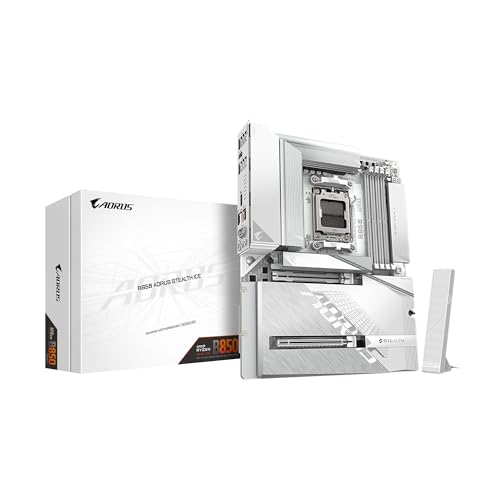
Pros
- Reverse-connect design is listed for a cableless-looking outlook
- Digital Twin 14+2+2 power phase listed by the manufacturer
- Four M.2 slots and 5GbE LAN listed in the product title
- Four DIMM slots with AMD EXPO memory support listed
- White finish suits light-colored builds
Cons
- Listing gives no case or cooler clearance details; verify fit before buying

Pros
- Listed support for Intel Core Ultra Series 2 processors
- Four DDR5 DIMM slots with XMP support
- Four M.2 slots with M.2 EZ-Latch
- Thunderbolt 4, WIFI7, and 2.5GbE LAN
- Listed 5-year warranty
Cons
- Power and thermal claims are manufacturer-stated, not verified

Pros
- Supports Intel Core Ultra Series 2 processors on LGA 1851
- Comprehensive VRM with 22+2+1+2 power stages
- Equipped with high-speed Wi-Fi 7 and 5Gb LAN
- Provides four onboard M.2 slots and PCIe 5.0 capability
- Features ASUS AI Overclocking, AI Cooling II, and AI Networking II
Cons
- Full capabilities rely on flagship Intel Series 2 platform hardware
Can You Mix Different RAM Brands and Speeds? Engineering Overview
Mixing DRAM modules from different manufacturers, or with different rated speeds, is electrically possible on most modern platforms. The result is rarely optimal, and occasionally it is unstable. The memory controller integrated into the CPU must train every populated DIMM to one shared set of frequency, timing and voltage parameters. Any module that cannot meet those parameters becomes the limiting factor for the whole memory subsystem, or it causes training failure, boot loops and intermittent faults under load.
Manufacturer documentation specifies that only kits sold together are validated as a set. Mixed configurations fall outside that validation. This guide covers the mechanisms behind mixed-memory behavior, the voltage and compatibility constraints, a diagnostic procedure for instability, and the criteria that justify replacing mismatched modules with a matched kit.


