Quick Answer
Chainsaw chain stretch is elongation caused by friction wear on rivets and drive link holes, not metal elasticity. Fix: loosen guide bar nuts, turn tensioner screw until tie straps seat flush. Replace chain when adjustment screw bottoms out. Inspect drive sprocket for wear; replace if grooved.

Pros
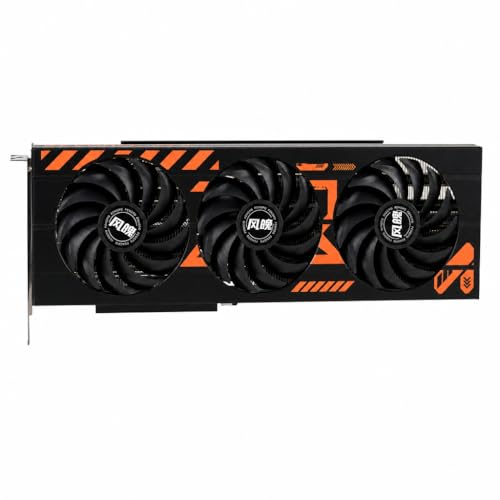
- 16GB GDDR7 memory on a 256-bit interface listed
- Listed 2580 MHz extreme clock speed
- Three DisplayPort 2.1a and one HDMI 2.1b output listed
- Nickel-plated copper baseplate listed for heat transfer
Cons
- Listed dimensions are large; confirm case clearance
- Cooling and quiet-operation claims are manufacturer-stated only

Pros
- 16GB GDDR7 memory with 256-bit interface per listing
- Listed as a 2-slot, SFF-ready design
- IceStorm 2.0 cooling with three 90mm BladeLink fans
- Includes three DisplayPort 2.1b and one HDMI 2.1b outputs
Cons
- Listed 12-inch length requires case clearance check
- Cooling and performance claims are manufacturer-stated only

Pros
- 16GB GDDR7 on a 256-bit bus at 28 Gbps
- IceStorm 3.0 cooling with vapor chamber and three 90mm fans
- SPECTRA RGB lighting for a white build
- Bundled GPU support stand and metal backplate
- Three DisplayPort 2.1b and one HDMI 2.1b outputs
Cons
- 2.5-slot, 11.9-inch card needs ample case clearance
- Cooling performance is manufacturer-described, not tested
Chainsaw Chain Stretch: Mechanism, Diagnosis, and Correction
Chainsaw chain “stretch” is a common term for a measurable increase in the effective loop length of a saw chain. It is not elastic stretching of the steel. Technical analysis of roller-type and saw-chain assemblies shows that the elongation comes from three sources: wear at the rivet and drive-link bore interfaces, thermal expansion during operation, and break-in seating of a new chain. Distinguishing these sources determines whether the correct action is a routine tension adjustment or retirement of the chain.
What Chain Stretch Is
A saw chain is an articulated assembly of cutters, tie straps, and drive links joined by hardened steel rivets. Each joint is a pin-and-bore bearing. Under cutting load, tensile force in the loaded chain span is cyclically applied while the rivet rotates in the bore as the chain wraps the drive sprocket and the bar nose. Abrasive contamination (sawdust, sap, silica from bark and soil) and marginal lubrication accelerate material removal at these surfaces. Every joint gains a small amount of clearance, and the sum of that clearance across the loop becomes measurable elongation.
A worked example shows the multiplication effect. A 20-inch bar commonly runs a 3/8-inch pitch chain with 72 drive links. Nominal loop length is 72 × 0.375 in = 27.0 in (686 mm). If each joint gains only 0.001 in (0.025 mm) of wear, the loop grows by 0.072 in (1.8 mm). That is enough to move the chain from correct seating to visible sag on the underside of the bar. A 1% elongation corresponds to approximately 0.27 in (6.9 mm) on this loop, which is beyond the practical adjustment range of many tensioners once the bar has also been repositioned several times.
Three Sources of Apparent Elongation
- Break-in seating: New chains show rapid initial slack as rivet surfaces bed in and the chain’s lubricant film establishes. Most of this occurs in the first several minutes of cutting, and the chain typically needs re-tensioning after the first 3-5 cuts.
- Thermal expansion: Carbon steel expands at roughly 11-12 µm/m
For related maintenance and equipment benchmarks, review our technical guides on best gaming pcs, examine vr gaming pc specifications, and compare desktop gaming systems. You can also reference our analyses on 4k gaming desktops and multitasking gaming pcs. For industry engineering standards, consult PCI-SIG specification standards.