Quick Answer
Trimmer line diameter must match engine displacement and trimmer head design. Use 0.065 to 0.080 inch line for light grass on small electric trimmers. Use 0.085 to 0.105 inch line for dense weeds on gas units. Heavy line causes clutch failure and engine drag. Check manual for exact supported sizes.

Pros
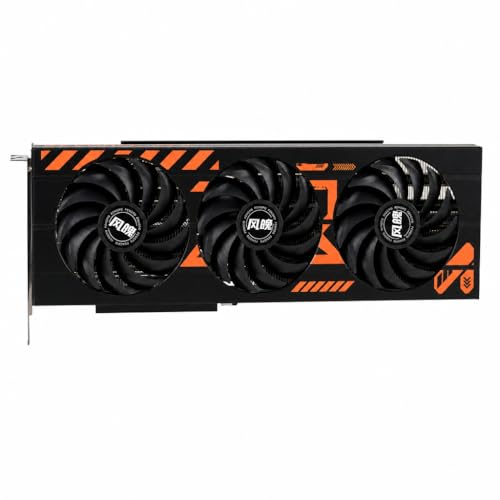
- 16GB GDDR7 with 256-bit memory interface per listing
- PCIe 5.0 support listed
- Listed as NVIDIA SFF-ready
- WINDFORCE cooling system named in the product title
Cons
- Listing offers limited cooling and port detail
- Listed 11.97-inch length requires case clearance check

Pros
- 24GB GDDR6 on a 384-bit memory bus (listed)
- Three DisplayPort 2.1 outputs and one HDMI 2.1 output
- Metal backplate and reinforced frame listed
- Polychrome SYNC RGB lighting compatibility
Cons
- Seller recommends an 800W minimum power supply
- 0dB silent cooling is a manufacturer claim

Pros
- BTF design for ASUS BTF ATX motherboards
- 16GB GDDR6X memory and PCIe 4.0 (manufacturer-stated)
- Lists DLSS 3 and 4th-gen Tensor Cores
- OC edition lists 2670 MHz OC-mode boost clock
- Listed in a white color finish
Cons
- Listing says it supports only ASUS BTF motherboards
- No customer reviews to confirm real-world performance
Why Line Size Matters
Trimmer line is a consumable, but it is also the final link in a rotating mechanical system. The line diameter sets how much mass the powerhead must accelerate, how much centrifugal tension the line root must withstand, how much aerodynamic drag the motor or engine must overcome, and how much energy each strike delivers to vegetation. A diameter mismatch shows up as lost RPM, overheating, premature line breakage, excess vibration, or accelerated wear on the head, shaft, and clutch.
Line mass scales with cross-sectional area, which scales with the square of the diameter. Moving from 0.065 in (1.65 mm) to 0.080 in (2.0 mm) increases line area by about 51%. Moving from 0.080 in to 0.095 in (2.4 mm) adds roughly 41%. Moving from 0.065 in to 0.095 in more than doubles the area, an increase of about 114%. Centrifugal load at the line root rises in the same proportion, and aerodynamic drag rises with both diameter and exposed length.
Tip speed is the other governing factor. A trimmer spinning at 7,000 rpm with a 16 in (406 mm) cutting swath produces a line tip speed of about 149 m/s (roughly 330 mph). Cutting performance depends on this speed. A line that is too heavy for the powerhead pulls the rotor below its designed operating band, so tip speed drops and the line crushes and tears stems instead of shearing them.
Load Effects by Powerhead Type
- Gas two-stroke and four-stroke units (25-35 cc, about 0.7-1.2 kW): Operating speed is typically 6,500-8,500 rpm at wide-open throttle, with idle near 2,800-3,200 rpm and centrifugal clutch engagement around 3,800-4,500 rpm. Excess line drag causes the engine to bog under load, and sustained clutch slip generates heat in the clutch shoes and drum.
- Battery units (18 V, 20 V max, 36 V, 40 V, 56 V, 60 V max): No-load head speeds are generally 5,000-7,500 rpm. Heavier line raises motor current, and the controller may respond with thermal or overcurrent protection, which appears as stuttering or shutdown under load.
- Corded electric units (120 V AC, roughly 4-6.5 A): Brushed universal motors are sensitive to overload. Excess drag raises armature current and winding temperature, which shortens brush and insulation life.
For related maintenance and equipment benchmarks, review our technical guides on best gaming pcs, examine vr gaming pc specifications, and compare desktop gaming systems. You can also reference our analyses on 4k gaming desktops and multitasking gaming pcs. For industry engineering standards, consult PCI-SIG specification standards.