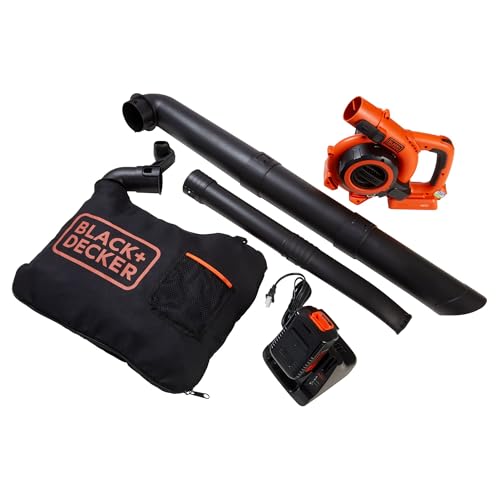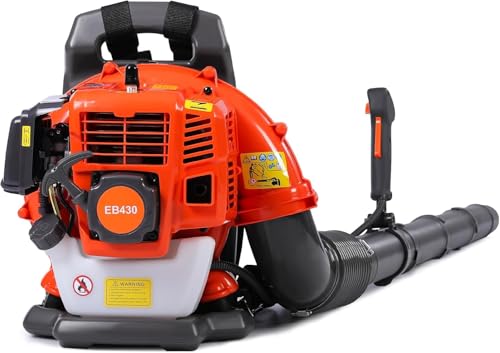
For quick porch, garage, and walkway sweeping, the Electric Leaf Blower Cordless with Battery from VIBOGEN offers an affordable package with two included 4.0Ah batteries and dual nozzles, though its higher CFM numbers are manufacturer-rated and high-speed runtime remains limited.
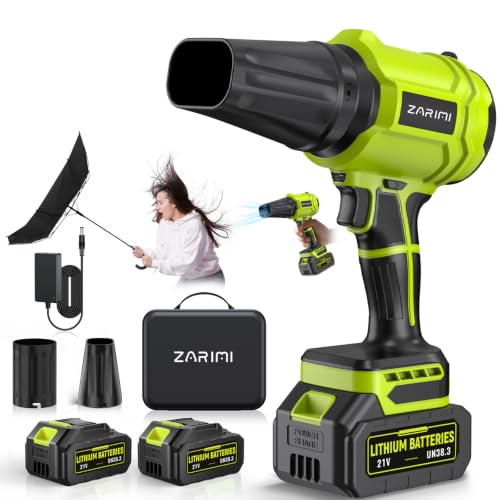
Pros
- Extremely lightweight at only 2.8 pounds for low-fatigue use
- Reaches stated air speeds over 50 m/s (110+ MPH)
- Comes with two batteries and charger for alternating use
- Includes a concentrated narrow nozzle for detailed edging
- Compact footprint stores easily in tight spaces or vehicle trunks
Cons
- Limited runtime of only about 13 minutes per battery
- Not designed for moving heavy or deep piles of wet leaves

Pros
- Includes two 21V 4.0Ah batteries for extended runtime
- Delivers up to 420 CFM airflow and 150 MPH air speed
- Lightweight design weighs under 3 lbs bare tool for low fatigue
- Comes with both round and flat interchangeable nozzles
- Two adjustable speed settings for varying cleanup tasks
Cons
- Limited to two preset airflow speeds
- Best suited for dry leaves and light debris rather than heavy wet waste

Pros
- Claims up to 450 CFM and 150 MPH for efficient debris clearing
- Lightweight 3.8-pound body reduces arm fatigue
- Includes two batteries and a charger for extended sessions
- Two selectable speed modes match different cleaning tasks
- Simple assembly requiring only nozzle and battery attachment
Cons
- Runtime reaches up to 30 minutes per battery only on low speed
- High-speed battery consumption significantly shortens run times
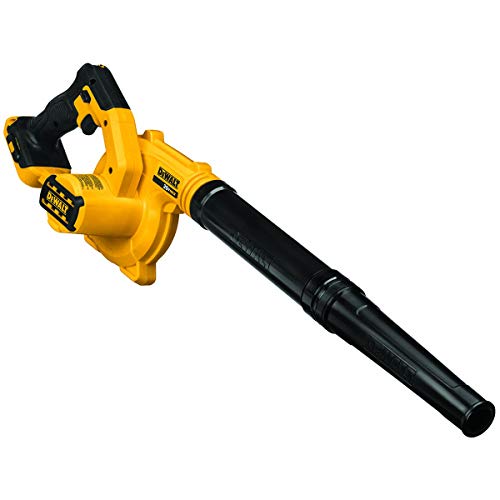
Pros
- Lightweight 2.5-pound design fits into tight spaces
- 3-speed variable switch plus variable speed trigger
- Trigger lock-on reduces hand fatigue during continuous use
- Includes 3 nozzle attachments for different clearing tasks
Cons
- Sold as a bare tool without battery or charger
- 100 CFM airflow is strictly intended for jobsite debris
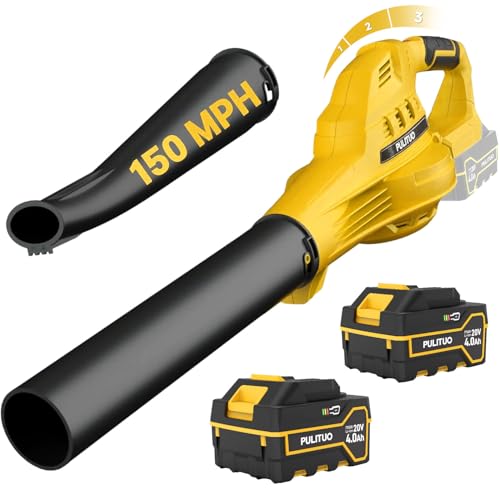
Pros
- Ultra-lightweight 3.4-pound frame for effortless one-handed use
- Includes two 4.0Ah batteries and a fast charger
- Three variable speed settings ranging up to 150 MPH
- Compatible with Makita 18V battery platform
- Detachable tubes allow compact storage
Cons
- Low 180 CFM air volume limits heavy-duty leaf moving
- Requires a 20-30 minute battery cooldown before recharging
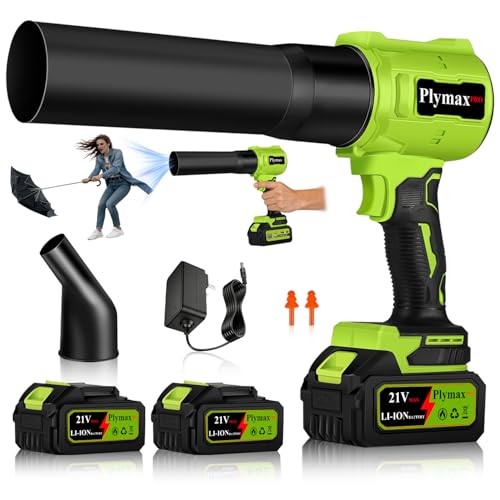
Pros
- Includes two 21V 4.0Ah lithium batteries and a charger
- Motor rated up to 800,000 RPM for focused air speeds
- Includes both a wide nozzle and a precision jet nozzle
- Suitable for outdoor patios, garage dusting, and car drying
- Compact, lightweight handheld design minimizes fatigue
Cons
- Compact frame less suited for expansive lawn leaf clearing
- Airflow volume specifications are not provided

Pros
- Includes two 20V 3000mAh rechargeable batteries
- Motor reaches up to 24,000 RPM for spot tasks
- Air velocity up to 55 MPH safely blows off vehicle water
- Compact handheld build reduces arm fatigue
- Round nozzle concentrates airflow into tight spaces
Cons
- Rated top speed of 55 MPH is limited for heavy yard work
- Brushed DC motor rather than brushless design
How Airflow and Airspeed Differ for Mini Cordless Blowers
Airspeed, measured in miles per hour (MPH), determines how effectively a blower can dislodge wet leaves, gravel, or stuck debris from hard surfaces, while airflow volume, measured in cubic feet per minute (CFM), dictates the total volume of air moving to sweep wide piles of dry leaves across open ground.
When selecting the best mini cordless leaf blower, buyers often confuse these two metrics. For instance, the Electric Leaf Blower Cordless with Battery from VIBOGEN advertises a high 420 CFM alongside a 150 MPH top speed, designed to clear wider swaths on driveways and patios. By comparison, the PULITUO Leaf Blower Cordless with 2X 4.0Ah Batteries advertises 180 CFM and 150 MPH, and the bare-tool DEWALT 20V MAX Blower delivers a manufacturer-rated 100 CFM. While the lower CFM of the DEWALT unit might seem like a drawback for expansive lawns, its focused air volume and three-speed variable switch excel at targeted work, such as tuck pointing, jobsite cleanup, and blowing sawdust out of workbenches without scattering items across the entire room. If your primary goal is wide pavement maintenance, pairing high CFM with balanced air speed is key; you can read more about surface-specific options in our guide to choosing a leaf blower for driveway cleanup.
The trade-off with high CFM in compact blowers is energy consumption: drawing large volumes of air through miniature fan housings depletes small battery packs rapidly, making maximum CFM settings practical only for brief bursts.
Weight and Single-Hand Handling: Why Every Pound Matters
A true mini cordless leaf blower must remain lightweight enough to operate effortlessly with one hand for elevated or overhead tasks without causing wrist fatigue.
Weight specifications vary across compact tools, and buyers must differentiate between bare-tool weight and operational weight with the battery attached. The VIBOGEN blower advertises a bare-tool weight of 2.74 pounds, while the YUQUESEN Cordless Leaf Blower lists a complete operating weight of 2.8 pounds with an ergonomic, vibration-suppressed grip. On the heavier end of the compact spectrum, the WOLFMEN Leaf Blower weighs 3.8 pounds, and the PULITUO cordless model weighs 3.4 pounds. For light tasks such as blowing cobwebs from gutters, clearing patio furniture, or clearing vehicle roofs, a weight difference of just one pound becomes noticeable after ten minutes of continuous overhead maneuvering. If ultra-lightweight portability is your main requirement, exploring a dedicated small rechargeable leaf blower can help pinpoint models optimized for handheld comfort.
The trade-off for ultra-lightweight designs is housing durability. Blowers that keep weight under three pounds often use lightweight plastic housings and compact fan assemblies, which can feel less rugged than contractor-grade handheld equipment.
Dual-Battery Kits vs. Bare Tools: Convenience Versus Ecosystem
Purchasing a complete dual-battery kit provides immediate value for homeowners who do not own power tool batteries, whereas buying a bare tool offers higher commercial durability for those already invested in an existing tool line.
Models like the PULITUO Leaf Blower Cordless ($44.99) and VIBOGEN Electric Leaf Blower ($49.97) include two 4.0Ah lithium-ion battery packs and a dedicated charger in the box. PULITUO also advertises cross-compatibility with standard Makita 18V batteries, giving users extra flexibility if they already own that charging setup. In contrast, the DEWALT 20V MAX Blower (DCE100B) sells as a bare tool for $98.00, meaning you must already own DEWALT 20V MAX batteries and a compatible charger. For someone who already has several DEWALT contractor tools, the DCE100B provides proven trigger ergonomics, variable speed control with a trigger lock, and three specialized nozzle attachments. However, for a user starting from scratch, purchasing a brand battery and charger separately can easily double or triple the total investment. For broader buying considerations across different price points, consult our general overview of leaf blowers.
The trade-off with bundled dual-battery kits from value brands is long-term pack replacement: finding genuine, high-quality replacement batteries years later can be more difficult than sourcing packs from mainstream tool manufacturers.
Managing Real-World Battery Runtime and Motor Cooldowns
Continuous high-speed operation depletes compact lithium batteries in 10 to 15 minutes, making thermal management and battery rotation critical for completing outdoor tasks.
Manufacturers often report runtimes based on their lowest speed settings. For example, WOLFMEN claims up to 30 minutes per battery on low speed, and PULITUO claims up to 60 minutes on low speed but notes that high-speed runtime drops to approximately 30 minutes across two batteries. YUQUESEN advertises 13+ minutes of continuous strong airflow per pack, yielding roughly 26+ minutes total by swapping between its two included batteries. Crucially, PULITUO notes in its specifications that its built-in overheat protection requires a 20- to 30-minute cool-down period before a freshly depleted battery can safely recharge. This cool-down period is standard for dense lithium cells subjected to high discharge rates, but it directly impacts workflow if you attempt to clean a yard continuously. If your property demands sustained runtime without forced pauses, stepping up to standard cordless battery leaf blowers with larger pack capacities or higher-output systems like high-powered leaf blowers is advisable.
The primary trade-off is productivity: while alternating two packs keeps you working initially, depleted batteries cannot always be cycled immediately back onto the charger without waiting for internal cell temperatures to drop.
Frequently Asked Questions About Mini Cordless Leaf Blowers
Can a mini cordless leaf blower move wet leaves and heavy debris?
Mini cordless blowers are primarily engineered for dry leaves, dust, grass clippings, and hard surfaces such as decks and driveways. While models advertising high airspeeds up to 150 MPH can dislodge small patches of damp debris, their compact air volume (CFM) struggles against thick, waterlogged leaf piles across open lawns.
What is the difference between a bare-tool blower and a dual-battery kit?
A bare-tool model, such as the DEWALT DCE100B, includes only the blower body and nozzle attachments, requiring you to provide compatible batteries and a charger. Dual-battery kits, like those from VIBOGEN or PULITUO, include two batteries and a charger in the box for an all-in-one purchase.
Choosing the Best Mini Cordless Leaf Blower for Your Space
Choosing the best mini cordless leaf blower requires matching the tool’s airflow profile, weight, and battery format to your specific yard size and cleaning habits.
If your routine involves clearing dry grass clippings, pine needles, and dust from hard surfaces like porches, garage bays, and small decks, an affordable dual-battery package provides the simplest setup. Budget-conscious kits eliminate the hassle of cords and gas while giving you an extra battery pack ready to swap when the first one drains. On the other hand, if you require a rugged, high-precision blower for a workshop, jobsite vehicle, or tight detailing around construction joints, a bare-tool blower with specialized nozzles delivers superior trigger finesse and mechanical durability.
For most homeowners seeking a lightweight, ready-to-use sweeper for patios and garage floors, we recommend the Electric Leaf Blower Cordless with Battery from VIBOGEN. It suits residential buyers wanting complete dual-battery convenience at a low initial cost, though its plastic construction and manufacturer-advertised airflow figures are suited for light seasonal upkeep rather than heavy, wet lawn raking. If you already own compatible 20V contractor batteries and want a durable tool for workbench and jobsite cleanups, the bare-tool DEWALT 20V MAX Blower, 100 CFM Airflow is the better alternative.