For property owners managing heavy, damp yard debris without wrestling an extension cord, the MTKOALA 1200W brushless cordless model delivers the strongest clearing force, though its higher price makes it excessive for light indoor dusting.
Pros
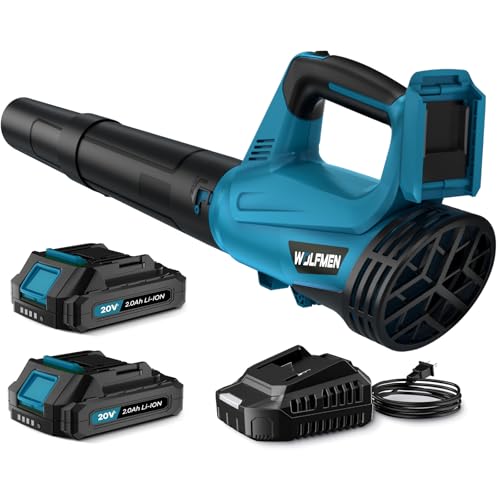
- Extremely lightweight handheld frame at just 3.8 lbs
- Delivers manufacturer-rated output up to 450 CFM and 150 MPH
- Includes two 20V 2.0Ah batteries and a charger for alternating use
- Two selectable speed modes for hardscapes and dust clearing
- Straightforward assembly with two snap-on nozzles
Cons
- 2.0Ah batteries provide limited high-speed continuous runtime
- Not built for heavy, wet leaf piles or large acreage

Pros
- Airflow reaches up to a manufacturer-stated 650 CFM
- Includes two 20V 5.2Ah batteries for reduced downtime
- Offers three adjustable speed settings for varying debris
- Includes a shoulder strap to minimize arm fatigue
- Comes complete with an extension nozzle and fast charger
Cons
- Higher speeds deplete the battery much faster than low mode

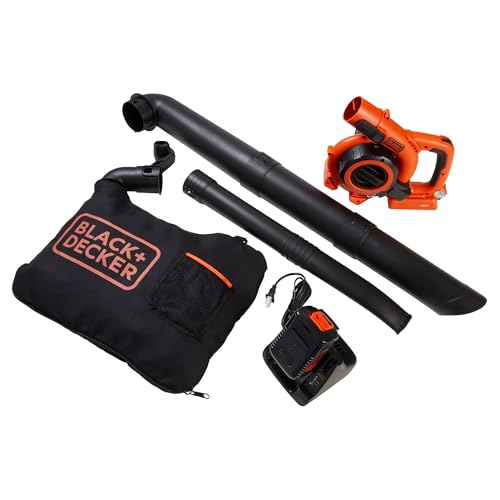
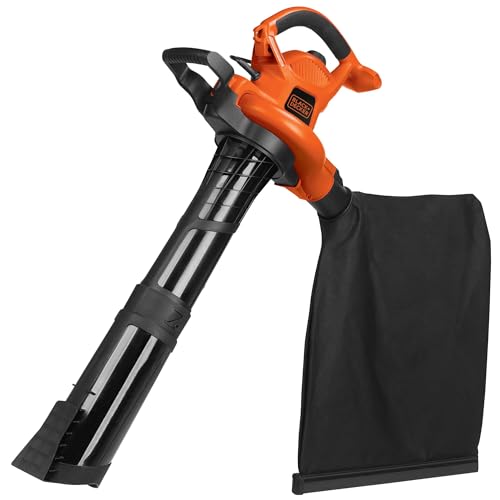
Pros
- Lightweight design at only 4.4 pounds
- 7-Amp motor rated up to 180 MPH and 180 CFM
- Built-in cord retention prevents unplugging
- Zero emissions with instant push-button start
- Simple, low-maintenance corded design
Cons
- Extension cord is not included
- Operating range is limited by cord reach

Pros
- Delivers up to a rated 700 CFM airflow and 200 MPH air speed
- Includes two 5.2Ah rechargeable batteries and a fast charger
- Features 3 speed modes for delicate dusting to heavy clearing
- Upgraded 1200W brushless motor boosts energy efficiency
- Weighs roughly 5.5 pounds for manageable handheld operation
Cons
- High-speed runtime is limited to roughly 40 minutes total
- Lacks fine, continuously variable speed adjustments
Pros
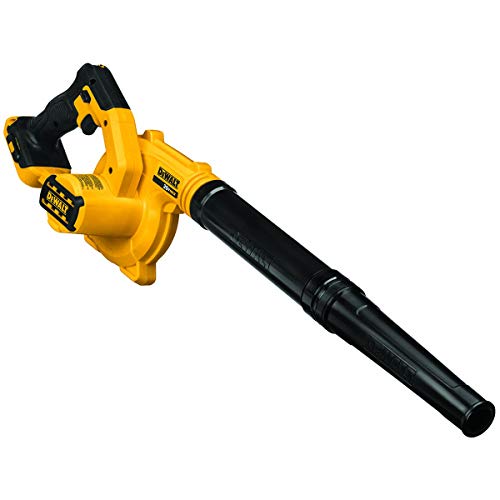
- Lightweight 2.5-pound design fits into tight spaces
- 3-speed variable switch plus variable speed trigger
- Trigger lock-on reduces hand fatigue during continuous use
- Includes 3 nozzle attachments for different clearing tasks
Cons
- Sold as a bare tool without battery or charger
- 100 CFM airflow is strictly intended for jobsite debris
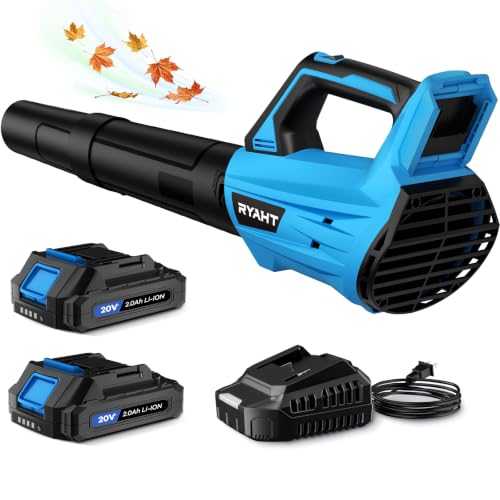
Pros
- Lightweight 3.4 lb design with ergonomic grip
- Includes two interchangeable 20V 2.0Ah batteries
- Fast charger included for minimal downtime
- Two selectable wind speed settings
- Comes with blower tube and extension nozzle
Cons
- Maximum runtime is limited to low-speed mode
- Compact battery packs may limit heavy yard clearing

Pros
- Weighs only 3.4 pounds with battery installed
- Includes two 2.0Ah lithium-ion batteries
- Two modular tube sections adapt to different tasks
- Delivers up to a stated 350 CFM and 150 MPH
- Detachable components allow compact storage
Cons
- Runtime tops out around 25 minutes on high speed
- Requires cool-down time before charging batteries
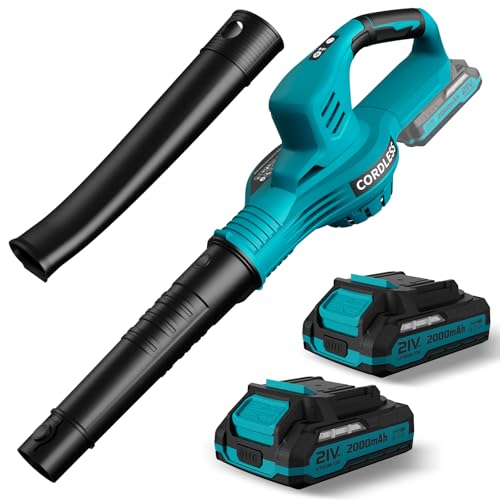
Pros
- Includes two 21V 2.0Ah batteries and a 1-hour fast charger
- Rated for air speeds up to 150 MPH using turbo mode
- Lightweight build weighs approximately 3.5 lbs
- Ergonomic handle with non-slip rubber grip
- Built-in overheat protection for battery safety
Cons
- Runtime is limited to 10 minutes on high per battery
- High-power turbo mode drains battery packs quickly
- Manufacturer recommends a 5-minute cooldown after use
Airflow and Motor Design: CFM Versus MPH for Yard Debris
Air volume (CFM) dictates how effectively a blower moves wide piles of leaves across turf, whereas air speed (MPH) determines its ability to dislodge stuck, wet debris from hard surfaces. When clearing a large yard, CFM is typically the more critical specification because sweeping high-volume leaf scatter requires moving substantial masses of air at once.
The Leaf Blower Cordless, New Upgraded 1200W Brushless advertises a top output of 700 CFM and 200 MPH driven by an upgraded 1200W brushless motor, positioning it for wet leaves and stubborn outdoor waste. By comparison, the BLACK+DECKER Electric Leaf Blower generates an advertised 180 CFM and 180 MPH from its 7-Amp motor. While the BLACK+DECKER maintains enough concentrated velocity to scour driveways, its lower CFM means pushing scattered leaves across an open lawn requires more passes. Meanwhile, the DEWALT 20V MAX Blower, 100 CFM Airflow is rated at an advertised 100 CFM, reflecting its focus on tight workspaces and job-site debris rather than sweeping broad turf areas. For dedicated walkway sweeping, choosing a specialized leaf blower for driveway applications can streamline routine maintenance.
Battery Capacity and Real-World Yard Coverage: 2.0Ah vs 5.2Ah
Blowers packaged with 5.2Ah battery packs provide the capacity necessary for continuous lawn maintenance, whereas 2.0Ah packs trade working stamina for rapid recharging and lighter handling. Battery amp-hour ratings define the fuel tank of a cordless tool, and high-demand turbo blowers exhaust smaller cells rapidly.
Both the MTKOALA and the Leaf Blower Cordless, 650CFM Electric Leaf Blowers come equipped with two 20V 5.2Ah batteries. YOOVL claims its setup offers up to 150 minutes of cumulative runtime across speeds, while MTKOALA advertises up to 160 minutes on low speed and 40 minutes on its highest setting. In contrast, compact kits like the Leaf Blower, Electric Cordless Leaf Blower with 2 and Leaf Blower Cordless 21V Electric with 2 Batteries rely on dual 2.0Ah packs. LAZYBOI explicitly states that each 2.0Ah battery delivers approximately 10 minutes on high or 15 minutes on low, providing roughly 20 to 30 minutes of total alternating work. Homeowners seeking a small rechargeable leaf blower must balance the lower physical fatigue of lightweight 2.0Ah tools against the need to recharge frequently during large cleanups.
Cordless Portability Versus Corded Endless Power
Cordless blowers deliver complete freedom of movement around gardens and property perimeters, but corded electric blowers eliminate battery degradation and run out of power only when unplugged. While battery models remove the restriction of cords, they require charging discipline and long-term cell management.
At a price of $42.00, the corded BLACK+DECKER Electric Leaf Blower provides consistent, uninterrupted power through its 7-Amp motor, completely bypassing battery cycle limitations. However, the manufacturer notes that an extension cord is not included, and operating radius remains strictly tethered to an electrical outlet. Cordless alternatives such as the Leaf Blower Cordless, Leaf Blower with Battery ($99.99) and SEYVUM Leaf Blower 20V Cordless ($39.99) allow users to roam freely around remote fence lines, vehicle parking pads, and sheds. Deciding between corded reliability and battery convenience is a primary factor when evaluating what leaf blower is the best match for your property layout.
Weight Distribution and Handling Ergonomics Across Models
Tools weighing under four pounds enable comfortable single-handed operation, but heavier high-output blowers require ergonomic straps to counter arm fatigue during sustained yard sessions. Total tool weight directly impacts how long an operator can work overhead or across expansive driveways without physical strain.
The SEYVUM Leaf Blower 20V Cordless and Leaf Blower Cordless, Leaf Blower with Battery both weigh an advertised 3.4 pounds, while the LAZYBOI cordless blower weighs approximately 3.5 pounds and the WOLFMEN blower weighs 3.8 pounds. These compact profiles make quick patio dusting, gutter blowing, and garage sweeping practically effortless with one hand. On the other hand, higher-output blowers like the YOOVL unit feature larger internal impellers and heavier battery packs; to offset this additional bulk, YOOVL includes an adjustable shoulder strap to distribute weight across the torso during lengthy lawn care sessions.
Frequently Asked Questions About Blue Leaf Blowers
What is the practical difference between CFM and MPH on a leaf blower?
CFM (cubic feet per minute) measures the total volume of air pushed out, which determines how wide of a leaf pile you can move across a lawn. MPH (miles per hour) measures the velocity of the air stream, which is crucial for loosening wet, compacted debris stuck to driveways or grass.
Why do many cordless leaf blowers include two batteries?
Electric leaf blowers operate under heavy power draw, especially at high speed. Dual-battery kits—such as those included with WOLFMEN, LAZYBOI, and MTKOALA blowers—allow operators to switch to a fully charged battery or rotate packs on the charger to prevent interruptions during yard work.
Which Leaf Blower Fits Your Property Maintenance Routine?
Selecting the ideal leaf blower requires balancing the physical size of your lot against the type of debris you encounter throughout the seasons. Smaller hardscape areas like patios and walkways require moderate airspeed rather than extreme air volume, whereas damp lawn thatch and heavy autumn leaves demand high CFM and substantial battery reserves.
For homeowners managing expansive lawns with dense foliage and wet debris, the Leaf Blower Cordless, New Upgraded 1200W Brushless is the recommended choice due to its high-capacity dual 5.2Ah batteries and manufacturer-advertised 700 CFM output. Its primary trade-off is its premium $129.99 price point, which may be unnecessary for basic surface dusting. For property owners seeking dependable power on a budget for driveways and patios close to an exterior outlet, the corded BLACK+DECKER Electric Leaf Blower serves as an economical alternative that eliminates battery runtime concerns entirely.