Do Leaf Sweepers Work? A Direct Answer
Yes, leaf sweepers are effective tools for collecting leaves and light debris. They provide a quicker, less labor-intensive alternative to raking for maintaining lawns, driveways, and sidewalks. Their real-world performance, however, varies based on key factors: the type of sweeper (manual vs. motorized), the terrain of your yard, and the condition of the debris (dry vs. wet).
How Do Leaf Sweepers Work? The Basic Mechanism
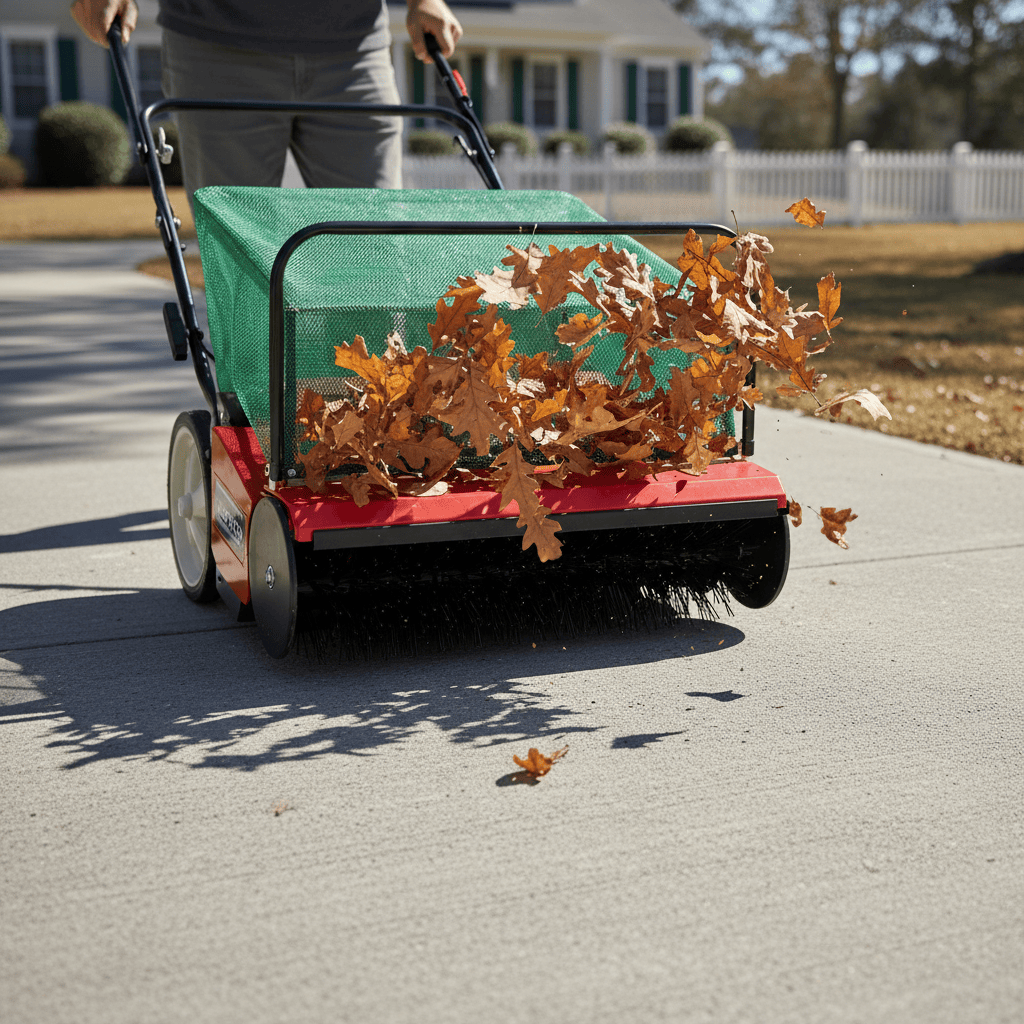
At their core, leaf sweepers use a rotating brush or a series of brushes to sweep debris off the ground and into an attached collection bag or hopper. The process is straightforward: as you push or drive the sweeper forward, the brushes spin, flicking leaves, grass clippings, and other light debris upward and backward into the container.

Pros
- Two-stroke 52cc engine rated at 1.7 kW and 2.3 HP
- Includes interchangeable sweeping drum and blower attachment
- Throttle handle allows adjustable roller brush speed
- Integrated protective guard shields against flying debris
- Front handle aids handheld maneuverability
Cons
- Requires two-stroke gas and oil fuel mixing
- 71.65-inch length can be cumbersome to store
Pros
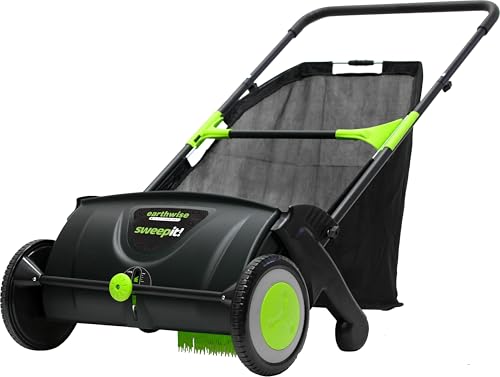
- Manual push design operates quietly without gasoline, cords, or batteries
- Four-brush pickup mechanism covers a 21-inch sweeping path
- Adjustable brush height tailors contact to lawn conditions
- Features a removable 2.6-bushel collection bag
Cons
- Not recommended for wet debris, sticks, pinecones, or tall grass
- Requires multiple passes or manual emptying during heavy leaf drops
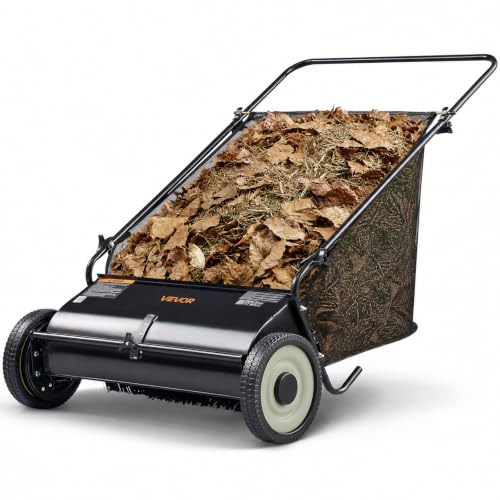
Pros
- Wide 26-inch clearing path sweeps broad swaths of lawn in fewer passes
- Large 7 cu. ft. hopper bag reduces the frequency of disposal stops
- Tool-free manual adjustment knob easily calibrates brush ground height
- Rugged steel frame provides dependable structural stability
Cons
- Weighs 33 pounds before adding debris, requiring manual pushing effort
- Takes up considerable storage space due to its 56-inch length
Main Components of a Leaf Sweeper
- Brushes: The primary working component, usually made of durable nylon or polypropylene bristles.
- Collection Hopper/Bag: A large container that catches the swept debris. Its capacity determines how often you need to empty it.
- Wheels and Axle: On manual models, the wheels are connected to the brush mechanism via gears. As you push the sweeper, the wheels turn the brushes.
- Handle: For manual push sweepers, this is where you apply force to move the unit.
Manual Push vs. Motorized/Powered Models
- Manual Push Sweepers: These are the most common and affordable type. They rely entirely on your pushing power to rotate the brushes. They are best suited for flat, open areas like driveways, sidewalks, and level lawns.
- Motorized/Powered Sweepers: These models use a small gas engine or electric motor to drive the brushes, providing more consistent and powerful sweeping action. They are often mounted on a wheeled chassis you can walk behind or, in larger commercial versions, sit on. They excel at handling larger volumes of debris and tougher conditions.
Effectiveness: Do They Actually Get the Job Done?
The effectiveness of a leaf sweeper is not a simple yes/no; it’s conditional. Understanding these conditions is key to setting realistic expectations.
Optimal Conditions for Peak Performance
- Dry Debris: Leaf sweepers work best on dry, loose leaves and grass clippings. Dry leaves are lightweight and easily flicked into the hopper.
- Flat, Open Terrain: Manual sweepers, in particular, perform flawlessly on smooth, flat surfaces like concrete driveways, asphalt, and closely mown, level lawns.
- Light to Moderate Debris Load: They are ideal for regular maintenance, collecting weekly grass clippings or a light dusting of fallen leaves.
Limitations and Challenging Scenarios
- Wet or Matted Leaves: This is the biggest challenge. Wet leaves are heavy, sticky, and tend to clump together. They can clog the brushes, fail to lift into the hopper, or simply be pushed along the ground.
- Uneven or Rough Terrain: Bumpy lawns, areas with thick thatch, or ground with many obstacles (like tree roots or rocks) can prevent the brushes from making consistent contact with the ground, leaving debris behind.
- Heavy or Mixed Debris: Leaf sweepers are not designed for heavy debris like large branches, acorns, pinecones, or stones. These can jam the mechanism or damage the brushes.
- Thick Grass or Tall Weeds: If the grass is high, it can impede the sweeper’s movement and prevent the brushes from reaching the debris on the ground.
Leaf Sweepers vs. Raking: A Practical Comparison
Choosing between a leaf sweeper and a rake depends on your specific needs, yard size, and physical ability.
| Factor | Leaf Sweeper | Raking |
|---|---|---|
| Speed & Labor | Significantly faster and requires less bending and upper body strain. Ideal for larger areas. | Slower and more physically demanding, especially on large lawns. Can cause back and arm fatigue. |
| Best For | Large, flat lawns; regular maintenance of grass clippings; collecting leaves from driveways and sidewalks. | Small yards; areas with many obstacles (flower beds, shrubs); detail work around edges; collecting wet, matted leaves. |
| Effectiveness on Wet Leaves | Poor. Wet leaves clog brushes and are difficult to collect. | Superior. A rake can gather and lift wet, heavy leaves effectively. |
| Initial Cost | Higher upfront cost for the tool. | Very low cost for a basic rake. |
| Mobility & Access | Less maneuverable in tight spaces or around delicate garden beds. | Highly maneuverable and precise. |
Key Factors to Consider When Using a Leaf Sweeper
To maximize the effectiveness of your leaf sweeper, focus on these practical considerations.
1. Yard Terrain and Layout
Assess your yard. A flat, open lawn is a perfect candidate for a sweeper. If your yard is hilly, has many trees with low-hanging branches, or is dotted with flower beds and garden ornaments, a rake may be more practical for those specific areas. You can use a sweeper for the open sections and a rake for the details.
2. Sweeping Technique and Pattern
For best results, work in a systematic pattern. Start at the perimeter of the area and sweep inward in straight, overlapping lines, similar to mowing the lawn. This ensures you don’t miss spots and efficiently moves debris toward a central collection point. Maintain a steady, moderate walking pace, pushing too fast can reduce the brushes’ effectiveness.
3. Area Preparation
Before sweeping, do a quick walkthrough to pick up any large sticks, stones, or toys that could jam the sweeper. For manual sweepers, ensure the grass is dry and relatively short. Mowing the lawn a day or two before a major leaf cleanup can help loosen debris and make sweeping more efficient.
Common Limitations and Troubleshooting
Even the best tool has its quirks. Here’s how to address common issues. For troubleshooting and reliability insights, consult our in-depth marshall stanmore iii vs harman kardon onyx studio 8 report.
- Missed Debris or Trails: This often happens if the brushes are worn, set too high, or if you’re moving too fast. Check your brush height adjustment (if available) and ensure the brushes are making firm contact with the ground. Slow your pace.
- Handling Wet Leaves or Mixed Debris: If you must tackle damp leaves, try to wait for a dry, windy day to let them crisp up. For mixed debris like twigs and acorns, a leaf sweeper may not be the right tool. Consider using a lawn vacuum or a combination of a blower to gather debris into a pile and a rake to collect it.
- Maintenance for Longevity: After each use, empty the hopper and remove any debris tangled in the brushes. Periodically check for worn bristles and replace them if necessary. Lubricate any moving parts on motorized models according to the manufacturer’s instructions.
Everything You Need to Know: Do Leaf Sweepers Work FAQ
Can a leaf sweeper be used on gravel driveways?
It is generally not recommended. The rotating brushes will likely pick up gravel along with the leaves, which can damage the sweeper’s mechanism and the gravel itself. For gravel surfaces, a leaf blower is often a more effective and safer choice.
How do leaf sweepers compare to lawn vacuums?
Leaf sweepers use brushes to flick debris into a bag, while lawn vacuums use suction to pull debris in. Sweepers are typically better for dry, loose debris on flat surfaces and are often less expensive. Vacuums can handle a wider variety of debris, including some wet material, but may struggle on very tall grass and are often louder and more expensive. Readers comparing setup options can review our technical analysis on dyson v8 cyclone vs bissell featherweight stick.
What size leaf sweeper do I need for my yard?
As a general rule, a wider sweeper (24-30 inches) is more efficient for large, open lawns as it covers more ground with each pass. A narrower model (18-21 inches) may be more maneuverable for smaller yards or areas with more obstacles. Consider the size of your collection hopper as well; a larger hopper means fewer trips to empty it.
Are leaf sweepers worth the investment?
For homeowners with medium to large, relatively flat lawns who perform regular yard maintenance, a leaf sweeper can be a worthwhile investment. It saves significant time and physical effort compared to raking, especially during peak fall leaf season. If you have a very small yard or mostly deal with wet, heavy debris, the cost may not justify the benefit over a simple rake. For complementary field maintenance guidelines, examine our breakdown of bissell crosswave hydrosteam vs shark stainforce.
Related Maintenance and Operating Guides
To keep your equipment running at peak operating efficiency, explore our related technical walkthroughs and maintenance tutorials:
- Consult our detailed breakdown on cordless stick vacuum buyer guide.
- Consult our detailed breakdown on robotic pool cleaner comparison guide.
Technical Standards and Compliance
Mechanical safety standards, operational tolerances, and protective gear guidelines align with benchmark specifications established by the American National Standards Institute (ANSI).