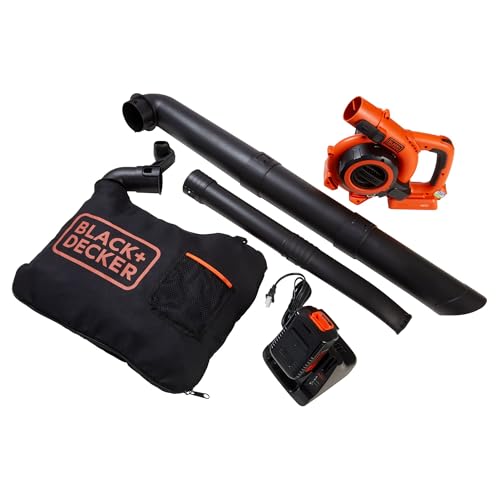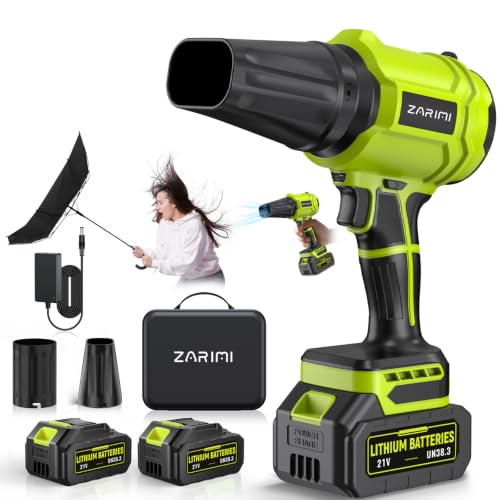
For homeowners managing typical suburban lawns, a handheld gas powered blower delivers easy maneuvering around tight beds and hardscaping, though prolonged use puts all engine weight directly onto your forearm. Larger properties demand backpack configurations that redistribute weight to your shoulders, sacrificing compact storage for extended clearing capability.

Pros
- Lightweight 9.4-pound design offers easy handheld maneuvering
- Reduced-resistance recoil system eases engine pull starts
- Translucent fuel tank allows quick monitoring of gas levels
- Cushioned anti-vibration handle helps dampen arm strain
- Capable of up to 380 CFM and 180 MPH airflow
Cons
- Requires mixing 2-cycle gas and oil at a 50:1 ratio
- Modest 380 CFM output is best suited for lighter debris
Pros
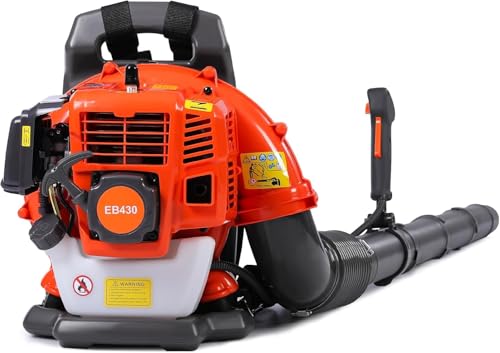
- Delivers up to 550 CFM and 230 MPH for moving wet yard debris
- Lightweight 17-pound backpack design with cushioned straps
- Thumb throttle includes cruise control for steady blowing
- 33.8 fl oz fuel tank yields up to 45 minutes of run time
- Operating temperature range spans 14°F to 104°F
Cons
- Requires 2-cycle fuel mixing and engine maintenance
- 550 CFM is modest for a backpack-class gas blower

Pros
- 63cc 2-cycle engine produces 665 CFM and 205 MPH
- 1.7-liter fuel tank enables extended sessions between refills
- Cruise control locks in throttle to reduce hand strain
- Padded harness and vibration reduction improve carry comfort
- Tool-free access simplifies two-stage air filter maintenance
Cons
- Substantial 21-pound dry weight requires physical stamina
- Requires ongoing 2-stroke oil and gasoline mixing

Pros
- 2.7kW 63cc two-stroke engine delivers up to 6,800 RPM
- Multi-directional air outlet adjusts vertically and horizontally
- 0.47-gallon fuel tank enables long runs between top-offs
- Constant speed switch holds chosen throttle effortlessly
- Backpack harness features heat-insulating back padding
Cons
- Substantial 22-pound dry weight adds strain on long sessions
- Requires manual two-stroke oil and gasoline mixing
Pros
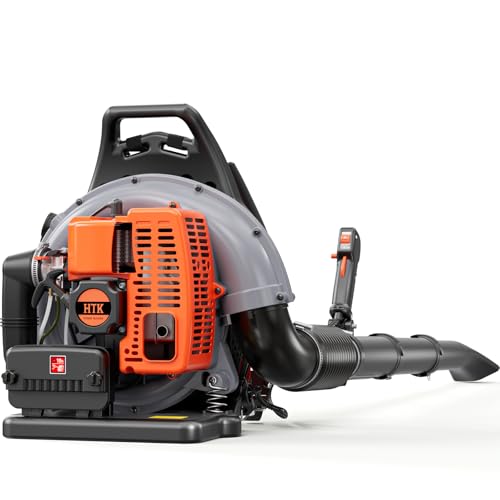
- 63cc 2-stroke engine delivers 665 CFM and 205 MPH airspeed
- Padded ergonomic backpack harness balances weight across shoulders
- Cruise control locks throttle to relieve trigger finger strain
- Generous 1.7L fuel tank supports extended property maintenance
- Manufacturer-rated sound level of 71 dB for quieter operation
Cons
- Requires ongoing two-cycle oil-to-gasoline fuel mixing
- Bulkier footprint demands sufficient garage or shed storage

Pros
- 51cc 2-cycle engine produces up to 765 CFM and 270 MPH
- Padded harness and hip belt provide balanced load distribution
- Air purge system removes fuel line air for easier starting
- Variable speed throttle includes cruise control functionality
- Proven X-Torq engine technology maintains high clearing force
Cons
- Heavier 22-pound build can cause fatigue on extended jobs
- Requires routine 2-cycle gas and oil fuel maintenance

Pros
- 28-cc engine delivers up to 470 CFM and 170 MPH
- Cruise control function enables comfortable sustained operation
- Air purge system removes air from carburetor for easier starting
- Auto-return stop switch automatically resets to the on position
- Adjustable soft-grip handle engineered to reduce strain
Cons
- Requires 2-cycle fuel and oil mixing
- Produces engine exhaust emissions and engine noise

Pros
- 26cc engine rated at up to 180 MPH and 380 CFM
- Recoil system designed to reduce pull resistance by 50%
- Lightweight 7.7 lb dry weight for handheld maneuverability
- Soft-grip handle designed to mitigate vibration at 5.6 m/s
- Continuous gas operation eliminates battery recharging delays
Cons
- Requires 2-cycle gas and oil fuel mixing
- Routine engine and fuel maintenance required
Handheld Vs Backpack: Which Chassis Matches Your Property Size?
Choosing between a handheld and backpack gas powered blower depends entirely on property acreage, obstacle density, and how long you must carry the engine. Handheld units excel at quick cleanup tasks on decks, driveways, and small borders, whereas backpack blowers are built for sweeping expansive turf.
Handheld options like the leaf blower for driveway chores—such as the Husqvarna 125B Gas Leaf Blower or the Relxxon Gas Leaf Blower 26cc, 2-Cycle, Handheld—provide immediate directional agility. The Relxxon lists a dry weight of just 7.7 pounds, allowing you to quickly navigate patio stairs and fence lines. However, holding an engine in one hand leads to arm strain after 15 to 20 minutes of continuous sweeping.
Backpack blowers shift the engine weight to a padded harness. Models like the Thalorus 52cc Gas Backpack Leaf Blower, 550 CFM weigh in at 17 pounds, while the Getell 63CC Gas Backpack Leaf Blower reaches 21 pounds. While a backpack lets you work across a half-acre or more without localized arm exhaustion, the bulkier frame is noticeably more awkward to store and operate in tight breezeways or shed entrances.
Airflow Volume And Velocity: Evaluating CFM Against MPH Claims
Airflow volume (CFM) determines the breadth of debris you can push in a single sweep, while air speed (MPH) provides the scouring force needed to break loose wet, matted leaves and stubborn gravel.
Higher displacement backpack units advertise substantial performance numbers. The Husqvarna 150BT Gas Backpack Leaf Blower claims up to 765 CFM and 270 MPH from its 51-cc engine, generating an advertised 22 Newtons of blowing force. Budget backpack alternatives, such as the Backpack Gas Powered Leaf Blower from HASANEN, claim an even higher 850 CFM from a 63CC engine, while the HTK Gas Backpack Leaf Blower, 63CC 2-Stroke advertises 665 CFM at 205 MPH.
By contrast, compact handheld units offer narrower clearing paths. The Getell 26cc Gas Leaf Blower states 380 CFM and 180 MPH, which is sufficient for light autumn leaves and dry grass clippings but will struggle against saturated debris piles. It is critical to recognize that manufacturer specifications represent peak factory claims; unverified ratings on lesser-known listings mean real-world pushing power may vary under thick lawn conditions.
Engine Displacement And Weight: The Balance Between Power And Fatigue
Engine displacement directly dictates clearing speed, but every increase in cubic centimeters adds physical mass and vibration that the operator must manage.
Entry-level 26cc to 28cc engines power machines like the Husqvarna 125B (28cc, 1.1 HP) and the Getell 26cc. These smaller engines keep dry weight low and fuel consumption modest, making them suitable for casual weekend maintenance. The obvious trade-off is reduced clearing speed, requiring you to make multiple passes across dense leaf covers.
Heavy-duty 52cc to 63cc models, including the Thalorus 52cc and the HTK 63CC, supply between 2 and 4 advertised horsepower to blast through damp debris. However, this extra output comes at the expense of carrying roughly 17 to 21 pounds on your back. If a machine lacks an ergonomic harness with load-balancing hip belts—features explicitly highlighted on established models like the Husqvarna 150BT—that extra engine power can quickly translate into lower-back fatigue during prolonged yard sessions.
Fuel Mix Ratios And Starting Systems: What Maintenance Requires
Unlike plug-in models or a cordless battery leaf blower, every two-stroke gas powered blower requires manual fuel preparation and periodic carburetor maintenance to ensure reliable starts.
Most two-cycle engines featured here, such as the Getell 26cc and the Husqvarna 125B, utilize a standard 50:1 gas-to-oil fuel ratio. Forgetting to mix two-cycle oil into fresh unleaded gasoline will cause irreversible engine seizure. To combat the common frustration of stubborn pull-cords, manufacturers incorporate assisted starting hardware. The Relxxon 26cc and Getell 26cc both claim reduced-resistance recoil systems that cut pull effort by 50%, while the Husqvarna models and HTK 63CC employ air purge bulbs to clear air bubbles from the fuel line prior to cranking.
Fuel tank capacity also affects your workflow. Handheld tanks are compact to preserve balance, whereas backpack models feature larger reservoirs—such as the 33.8 fluid ounce tank on the Thalorus 52cc or the 1.7-liter tanks on the HTK and Getell 63CC models—to sustain runtimes up to 45 minutes between fill-ups. Note that verified customer feedback across several newer brand entries currently stands at zero reviews, meaning long-term carburetor durability and pull-cord longevity remain undocumented by independent buyers.
Frequently Asked Questions About Gas Powered Blowers
What type of fuel does a 2-cycle gas powered blower require?
Two-cycle gas blowers require fresh unleaded gasoline mixed with dedicated two-stroke engine oil, typically at a 50:1 ratio. Running straight gasoline without oil will permanently ruin the engine, and using fuel with more than 10% ethanol can degrade internal fuel lines over time.
How loud is a typical gas powered blower during operation?
Gas powered blowers generate significant engine and airflow noise. While specific models like the HTK 63CC advertise operating sound levels around 71 dB, actual noise levels vary depending on throttle settings and distance, making hearing protection strongly recommended for all gas units.
When should I choose a backpack blower over a handheld model?
A backpack blower is best for properties larger than a half-acre or yards with heavy, wet leaf fall, as the harness supports the 17-to-21-pound engine on your shoulders. Handheld blowers are preferable for smaller lots, quick patio sweeping, and navigating tight garden beds where bulky frames are cumbersome.
Choosing The Right Gas Blower For Your Yard
Finding the right gas powered blower requires matching your physical comfort and yard layout against the ongoing maintenance that two-cycle engines demand. If your property features narrow pathways, flowerbeds, and routine paved surfaces, prioritizing lightweight handheld agility prevents unnecessary fatigue. Conversely, if you are managing sprawling lawns with mature trees, a backpack platform is essential to finish cleanup before exhaustion sets in.
For standard residential properties requiring reliable, balanced clearing, the Husqvarna 125B Gas Leaf Blower is the most well-rounded choice due to its proven brand pedigree, 470 CFM output, and manageable handheld format. Its main limitation is that clearing wet, heavily layered leaves across large areas will take substantial time and arm effort. Homeowners facing expansive acreage or dense seasonal leaf drops should consider an alternative like the Husqvarna 150BT Gas Backpack Leaf Blower, which trades handheld simplicity for harness-supported backpack power and a high-velocity 765 CFM airstream.