A high-displacement backpack gas powered leaf blower delivers the volume and clearing force needed for sprawling lawns and wet leaves, but you trade away the nimble handling and light storage footprint of a compact handheld model.

Pros
- Lightweight 9.4-pound design offers easy handheld maneuvering
- Reduced-resistance recoil system eases engine pull starts
- Translucent fuel tank allows quick monitoring of gas levels
- Cushioned anti-vibration handle helps dampen arm strain
- Capable of up to 380 CFM and 180 MPH airflow
Cons
- Requires mixing 2-cycle gas and oil at a 50:1 ratio
- Modest 380 CFM output is best suited for lighter debris
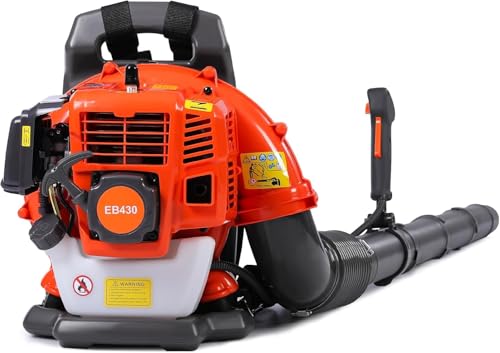
Pros
- Delivers up to 550 CFM and 230 MPH for moving wet yard debris
- Lightweight 17-pound backpack design with cushioned straps
- Thumb throttle includes cruise control for steady blowing
- 33.8 fl oz fuel tank yields up to 45 minutes of run time
- Operating temperature range spans 14°F to 104°F
Cons
- Requires 2-cycle fuel mixing and engine maintenance
- 550 CFM is modest for a backpack-class gas blower
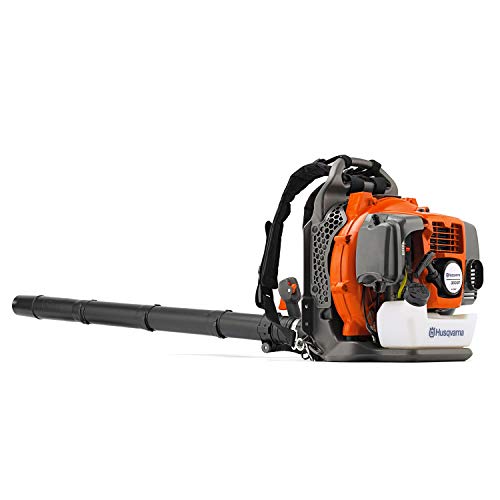
Pros
- 50.2-cc 2.1-HP X-Torq engine
- Rated blowing force of 692 CFM and 180 MPH
- LowVib technology dampens machine vibrations
- Air purge primer simplifies engine starts
- Ergonomic harness with offset control handle
Cons
- Weighs 22 pounds before fuel is added
- Requires ongoing two-stroke fuel mixing

Pros
- 63cc 2-cycle engine produces 665 CFM and 205 MPH
- 1.7-liter fuel tank enables extended sessions between refills
- Cruise control locks in throttle to reduce hand strain
- Padded harness and vibration reduction improve carry comfort
- Tool-free access simplifies two-stage air filter maintenance
Cons
- Substantial 21-pound dry weight requires physical stamina
- Requires ongoing 2-stroke oil and gasoline mixing

Pros
- 2.7kW 63cc two-stroke engine delivers up to 6,800 RPM
- Multi-directional air outlet adjusts vertically and horizontally
- 0.47-gallon fuel tank enables long runs between top-offs
- Constant speed switch holds chosen throttle effortlessly
- Backpack harness features heat-insulating back padding
Cons
- Substantial 22-pound dry weight adds strain on long sessions
- Requires manual two-stroke oil and gasoline mixing

Pros
- 28cc 1.1-HP 2-stroke gas engine
- Rated up to 280 MPH and 490 CFM
- Quick-start ignition mechanism
- 0.65-liter translucent fuel tank
- Lightweight 9.5-pound bare tool weight
Cons
- Requires 2-cycle gas and oil mixing
- Produces engine noise and emissions

Pros
- 65cc engine delivers a high-volume 850 CFM at 205 MPH
- Includes both fan and concentrator nozzle attachments
- 1.7-liter fuel tank reduces frequent stopping for refills
- Backpack harness features ventilated backrest for comfort
- Variable throttle with cruise control simplifies steady operation
Cons
- Requires 2-stroke fuel mixing and routine engine upkeep
- At 70.8 inches long assembled, storage requires ample space
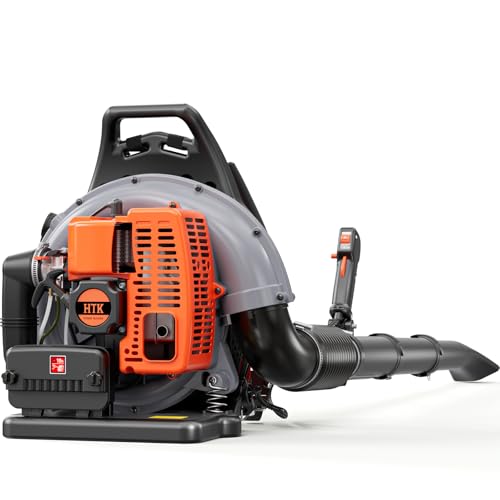
Pros
- 63cc 2-stroke engine delivers 665 CFM and 205 MPH airspeed
- Padded ergonomic backpack harness balances weight across shoulders
- Cruise control locks throttle to relieve trigger finger strain
- Generous 1.7L fuel tank supports extended property maintenance
- Manufacturer-rated sound level of 71 dB for quieter operation
Cons
- Requires ongoing two-cycle oil-to-gasoline fuel mixing
- Bulkier footprint demands sufficient garage or shed storage

Pros
- 28cc 2-stroke engine up to 200 MPH
- Rated air volume up to 475 CFM
- Weighs under 10 pounds for one-hand use
- Variable speed trigger provides adjustable output
- Durable plastic and metal construction
Cons
- Requires ongoing gas and oil mixing
- Produces standard small-engine emissions

Pros
- Claims up to 1,110 CFM airflow and 220 MPH air speed
- Generous 1.89-liter fuel tank allows 50 to 60 minutes of runtime
- Padded harness and shock-absorption system reduce vibration
- Cruise control locks throttle for continuous operation
- Includes earmuffs, maintenance tools, and fuel mixing bottle
Cons
- Heavy 26.46-pound total weight can fatigue operators
- Requires mixing 2-cycle gas and oil fuel
Handheld vs. Backpack: Matching the Frame to Yard Size
Choosing between a handheld and backpack gas powered leaf blower depends on whether your yard work involves quick touch-ups on hard surfaces or extended sweeps across open turf. Handheld models prioritize maneuvering ease, while backpack frames shift the engine weight off your arms during long cleaning sessions.
For modest lots, patios, and driveways, handheld units like the 28 CC Gas Leaf Blower, 490 CFM 280 MPH from Elementool weigh just 9.5 pounds, allowing easy single-handed control around delicate flowerbeds. Similarly, the Getell 26cc Gas Leaf Blower delivers an advertised 380 CFM and 180 MPH in a compact handheld chassis designed to reduce arm strain.
Conversely, when clearing acreage or thick ground cover, carrying an engine by hand causes rapid fatigue. Backpack units such as the 17-pound Thalorus 52cc Gas Backpack Leaf Blower, 550 CFM or the 21-pound Getell 63CC Gas Backpack Leaf Blower distribute engine mass across padded shoulder harnesses. The trade-off is footprint: backpack blowers require significantly more storage space and require mounting the harness each time you start work.
Understanding CFM and Airspeed Claims in Real Clearing
Cubic feet per minute (CFM) measures the total volume of air pushed out, while miles per hour (MPH) measures how fast that air exits the nozzle. High MPH dislodges stubborn, matted leaves, but high CFM sweeps large swaths of debris into neat piles with fewer passes.
Manufacturer claims vary significantly across displacement categories. For example, the Getell 65CC Backpack Leaf Blower, Gas Powered advertises up to 850 CFM at 205 MPH from its 65cc engine, providing broad air dispersal for sprawling turf. The VEVOR 63CC Gas Backpack Leaf Blower claims an output of up to 1,110 CFM and 220 MPH, designed for heavy-duty yard debris and light snow.
However, these performance numbers reflect manufacturer testing rather than standardized third-party evaluations. Handheld blowers like the 28CC Gas Leaf Blower, 495 CFM 200 MPH Handheld trade raw air volume for focused directional speed, concentrating its airflow to lift debris from concrete cracks without overwhelming operator control.
Husqvarna 350BT vs. Budget Backpack Blowers
Premium commercial-heritage blowers justify higher price points through refined anti-vibration damping, proven engineering, and durable engine components, whereas budget alternatives offer higher paper specifications at lower initial costs.
The Husqvarna 350BT Gas Leaf Blower retails at $429.99 and features a 50.2cc X-Torq engine that outputs 692 CFM at 180 MPH with 21 N of blowing force. It focuses heavily on operator comfort with LowVib vibration isolation, an integrated air purge system, and an offset handle that prevents arm pull-down. Husqvarna also claims up to 60% reduced emissions and 20% increased fuel efficiency over older two-stroke designs.
In contrast, units like the HTK Gas Backpack Leaf Blower, 63CC 2-Stroke ($152.99) and the HASANEN Backpack Gas Powered Leaf Blower ($85.99) provide larger 63cc displacement engines at a fraction of the cost. While they feature functional harnesses and cruise control throttles, they lack established widespread service networks and third-party validation for their stated vibration damping and low-noise claims (such as HTK’s stated 71 dB rating). Buyers on tight budgets gain raw engine displacement but assume greater long-term durability trade-offs.
Fuel Tank Capacity and Continuous Run Times
Tank capacity directly dictates how much territory you can clear before stopping to remix two-cycle oil and gasoline. Larger tanks keep you productive on broad properties but add wet weight to the frame.
VEVOR 63CC Gas Backpack Leaf Blower lists a 1.89-liter fuel tank and a manufacturer-stated continuous runtime of 50–60 minutes. The supplied listing does not specify the throttle setting used for that estimate. Treat tank capacity and advertised runtime as separate buying criteria, and consider the added weight of fuel when comparing backpack models.
Handheld gas blowers trade the bulk of a backpack assembly for a tool carried in one hand. Compare the stated tank capacity, fuel mixture, and filled weight where documented. The supplied data does not establish a comparable runtime for every handheld model, so do not assume that a smaller or larger tank guarantees a particular number of working minutes.
Frequently Asked Questions About Gas Powered Leaf Blowers
What fuel mixture do two-cycle gas leaf blowers require?
Most two-stroke gas blowers require a precise blend of fresh unleaded gasoline and two-cycle engine oil, such as a 50:1 ratio specified by brands like Getell. Always verify the exact manufacturer-recommended fuel-to-oil ratio before fueling.
Are advertised CFM and MPH ratings measured under the same standards?
No single independent standard is shared across all budget manufacturers. Advertised figures represent maximum airflow and speed under manufacturer test conditions, so focus on engine displacement (cc) alongside CFM to gauge real clearing muscle.
Is a backpack gas leaf blower always better than a handheld model?
Not necessarily. Backpack blowers handle larger properties and wet debris with less arm strain, but handheld models like the 9.5-pound Elementool 28 CC are much easier to maneuver in tight garden beds and store on garage shelves.
Choosing the Right Gas Blower for Your Property
Matching a blower to your property requires balancing your physical tolerance for weight against the volume of wet debris you face each season. For larger properties covered in damp leaves or pine needles, the Husqvarna 350BT Gas Leaf Blower is the standout recommendation for buyers seeking proven build quality, refined anti-vibration ergonomics, and durable clearing power. Its primary limitation is its substantial $429.99 investment compared to entry-level alternatives. Buyers managing smaller suburban lots who want quick cleanup without shoulder harnesses should consider the lightweight, handheld 28 CC Gas Leaf Blower, 490 CFM 280 MPH instead.