Quick Answer
Lower leaf blower noise: run battery electric models instead of gas, minimize throttle speed, and attach sound-diffusing nozzles. Restrict operation to allowed daytime hours. Query municipal code through city council databases or local government websites to check decibel caps and restricted operational windows. Local ordinances maintain final legal authority.

Pros
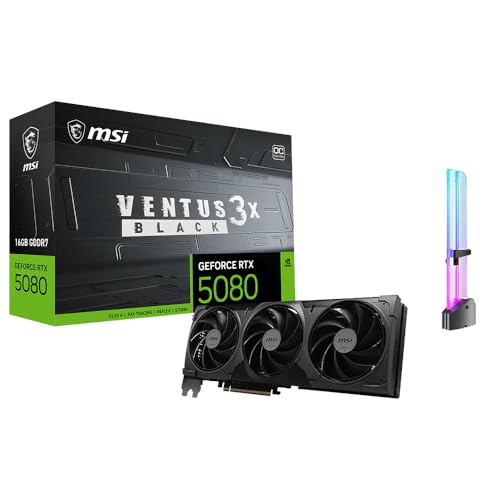
- 16GB GDDR7 memory, per the product title
- Axial-Tech fans and steam chamber for listed cooling
- Dual BIOS offers performance and silent modes
- Tweak III software for monitoring and tuning
- DLSS 4 support listed by the manufacturer
Cons
- 2.5-slot, roughly 12-inch card needs case clearance
- Listing pairs it with 850W Gold PSUs; check your power supply

Pros
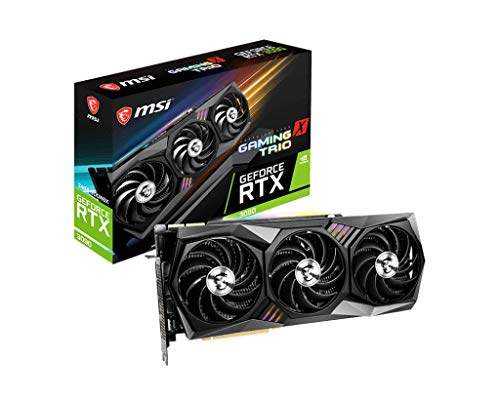
- Very large 24GB frame buffer for demanding workloads and future-facing gaming setups.
- Strong ray tracing and AI acceleration from 2nd Gen RT Cores and 3rd Gen Tensor Cores.
- Durable TUF build with military-grade components and dual ball fan bearings.
- Includes HDMI 2.1 and DisplayPort 1.4a for modern high-resolution displays.
Cons
- This is a high-end, premium-class GPU that will be excessive for casual or 1080p-only gaming.
- The product data does not list dimensions, power requirements, or included accessories, so build planning may require extra checking.
- Tuning software is included, but the card may still demand a capable cooling and power setup in a well-prepared system.
Overview & Design: The ASUS TUF Gaming NVIDIA GeForce RTX 3090 is a flagship-class graphics card built around NVIDIA Ampere architecture. It is positioned for users who want a high-end GPU with a focus on durability, cooling design, and long-term stability.
Performance & Key Features: With 24GB of GDDR6X memory, 2nd Generation RT Cores, and 3rd Generation Tensor Cores, this card is designed for demanding gaming and creative workloads. It is well suited to 4K and 8K output, ray tracing, and AI-assisted features such as DLSS, while HDMI 2.1 and DisplayPort 1.4a support modern display setups.
Drawbacks & Considerations: Based on the product data, this is clearly a premium, high-performance GPU, which makes it more card than many users need for everyday gaming. The listing also does not provide dimensions, power draw, or accessory details, so buyers should confirm system compatibility before purchase.
Verdict: The TUF RTX 3090 is best for enthusiasts, creators, and power users who want top-tier GPU memory capacity and strong cooling-focused construction. If you need a durable high-end card for heavy workloads or high-resolution gaming, it is a compelling option.

Pros
- High-end RTX 5080 performance platform with 16GB GDDR7 memory.
- Quad-fan cooling and vapor chamber design focus on stronger thermal control.
- Protective PCB coating adds practical durability benefits.
- Factory OC profile reaches up to 2790 MHz in OC mode.
- Backed by a 3-year warranty.
Cons
- The quad-fan cooler may be less suitable for compact cases, so fitment should be checked carefully.
- As a flagship-class GPU, it is most appropriate for users who truly need top-tier performance.
- The listing does not provide full compatibility details such as dimensions, power requirements, or display outputs.
Overview: The ASUS ROG Astral NVIDIA GeForce RTX 5080 16GB GDDR7 White OC Edition is a premium graphics card aimed at enthusiast gaming and advanced PC builds. Its white finish and quad-fan cooling solution give it a distinctive look while signaling a focus on thermal performance.
Performance: Built on NVIDIA Blackwell and supporting DLSS 4, this model is positioned for demanding gaming and GPU-heavy workloads. ASUS lists a boost of up to 2790 MHz in OC mode, 1899 AI TOPS, and 16GB of GDDR7 memory, while the quad-fan design is intended to improve airflow and pressure by up to 20%.
Considerations: This is a large, high-end card, so buyers should confirm case space and overall system compatibility before purchase. The raw listing does not include full details such as dimensions, power draw, or port layout, so those specifications should be checked separately.
Verdict: For users building a premium gaming or creator system that can benefit from strong cooling, modern memory, and RTX 5080-class performance, this ASUS ROG Astral model is a strong candidate. It is best suited to enthusiasts who want a feature-rich card with a focus on sustained thermal control.
Why Leaf Blowers Are Loud
Leaf blower acoustic emission stem from two distinct sources: internal combustion engine (ICE) thermodynamics and impeller fluid dynamics. In two-stroke engines (displacement 25cc to 75cc), exhaust gas exit cylinder port at blowdown pressure between 40 PSI and 60 PSI (2.75 to 4.13 bar) at gas temperatures exceeding 650°C. Pressure differential generate loud, low-to-mid-frequency pressure waves (100 Hz to 500 Hz). Rapid piston reciprocation at 7,000 to 9,000 RPM vibrate crankcase and uninsulated plastic shrouds. Thin polymer chassis act as acoustic transducer, radiating sound outward.
Impeller generate broadband vortex shedding and discrete tones. Fan blade pass frequency (BPF) govern tonal peak:
BPF = (RPM × Blade Count) / 60
Impeller running at 7,500 RPM with 24 blades produce primary tonal spike at 3,000 Hz. Human ear exhibit highest sensitivity in 2,000 Hz to 5,000 Hz band due to ear canal resonance. Air exit velocity at nozzle tip often exceed 80 m/s (180 MPH). Turbulent shear layer between high-speed discharge jet and ambient stationary air create continuous, high-amplitude acoustic noise. Dipole source strength scale with fifth power of air velocity (v⁵). Small increase in velocity yield large increase in radiated sound.
Practical Ways to Reduce Noise
Throttle position dictate exit velocity. Drop engine throttle 20% to 30%. Air velocity drop reduce dipole noise generation by 3 dB(A) to 6 dB(A). Half throttle often provide adequate dynamic pressure (inches water column) to clear dry debris without maximum acoustic penalty.
Nozzle choice alter shear gradient. Replace narrow concentrator nozzle with flared, wide-mouth attachment. Wide nozzle drop discharge velocity, increase volumetric flow (CFM), preserve kinetic boundary layer sweep, lower high-frequency turbulence noise.
Mechanical vibration isolation cut structural noise:
- Check all chassis fasteners. Loose steel bolts in plastic housing rattle. Torque M4 and M5 chassis screws to manufacturer specification (typically 2.5 Nm to 4.0 Nm).
- Inspect elastomeric anti-vibration engine mounts. Hardened, oil-soaked, or cracked rubber transfer crankcase energy straight to blower housing. Replace worn isolators.
- Decarbonize spark arrestor screen. Clogged arrestor increase backpressure, alter exhaust pulse timing, cause high-pitched hiss at muffler exit. Clean screen with wire brush or propane torch.
- Inspect radial impeller for blade nick, crack, or balance loss. Unbalanced rotating assembly induce bearing vibration, raise ambient mechanical hum across all frequency bands.
Control direct acoustic path. Direct nozzle away from hard, reflective surfaces like concrete retaining walls, brick facades, metal garage doors. Hard barriers reflect acoustic wavefronts with zero attenuation, increase sound pressure level by 3 dB(A) via constructive interference. Blow parallel or away from vertical structures.
Hearing Protection and Safety
WARNING: Exposure to sound pressure levels exceeding 85 dB(A) without attenuation causes irreversible sensorineural hearing damage. Two-stroke blowers generate between 95 dB(A) and 115 dB(A) at the operator ear position. Permissible exposure time at 100 dB(A) under NIOSH criteria is fifteen minutes before permanent cochlear hair cell loss occurs.
Single hearing protection (earplugs or earmuffs) often insufficient for continuous commercial operation. Dual protection required when continuous A-weighted sound level exceed 100 dB(A). Apply standard OSHA derating formula to determine real-world attenuation of equipment:
Protected Exposure dB(A) = Operating dB(A) - [ (Noise Reduction Rating - 7) / 2 ]
Earmuff with 30 NRR rating provide approximately 11.5 dB real-world field attenuation. Operating unit at 102 dB(A) with this earmuff yield 90.5 dB(A) at eardrum. Value still exceed 85 dB(A) safe threshold. Pair custom-molded silicone earplugs (NRR 26+) under high-attenuation passive earmuffs (NRR 31) for heavy-duty gas blower maintenance and operation.
How to Check Local Rules
Follow standard regulatory compliance steps to verify equipment legality within targeted operating zones:
- Locate municipal code via digital public repositories (e.g., Municode, American Legal Publishing, or city clerk database).
- Query search terms: “noise disturbance”, “leaf blower”, “internal combustion landscape equipment”, “decibel limits”.
- Identify measurement standard applied. Municipal codes usually reference ANSI B175.2 standard: sound rating measured at 50 feet (15.2 meters) distance across hard and soft ground configurations. Standard residential cutoff is 65 dB(A) or 70 dB(A) at 50 feet.
- Verify temporal operating constraints. Note exact weekday versus weekend operational windows.
- Inspect local air quality management district (AQMD) rules. Check for bans on two-stroke small off-road engines (SORE) based on particulate and emission criteria rather than acoustic limits.
For related maintenance and equipment benchmarks, review our technical guides on best gaming pcs, examine vr gaming pc specifications, and compare desktop gaming systems. You can also reference our analyses on 4k gaming desktops and multitasking gaming pcs. For industry engineering standards, consult PCI-SIG specification standards.
Frequently Asked Questions
Are battery blowers quieter than gas ones?
Yes. Technical analysis confirms total acoustic output drops significantly. Gas-powered commercial blowers operate between 95 dB(A) and 110 dB(A) at operator ear, 72 dB(A) to 82 dB(A) at 50 feet. Brushless battery blowers (56V to 80V architectures) measure 75 dB(A) to 88 dB(A) at ear, 55 dB(A) to 65 dB(A) at 50 feet. Battery systems eliminate combustion stroke, high-pressure exhaust pulse, and structural engine rattle. Electric tools still produce high-frequency aerodynamic impeller noise, but overall sound energy drops by factor of 10 or more.
Are leaf blowers banned in some cities?
Yes. Over 200 municipalities in North America enforce partial or complete prohibitions on gas-powered blowers. California regulations under CARB dictate phase-outs of new SORE gas unit sales. Specific urban centers ban gas-powered equipment completely, mandate transition to zero-emission equipment (ZEE), and enforce noise infractions with civil fines ranging from $100 to $1,000 per violation.
What hours can I run a leaf blower?
Municipal code dictates permissible operating hours. Typical residential standard allow machinery operation from 08:00 to 18:00 Monday through Friday, 09:00 to 17:00 on Saturdays. Many jurisdictions ban motorized lawn equipment on Sundays and public holidays. Commercial zoning codes vary; some urban business districts mandate maintenance activity terminate before 07:00 to avoid street pedestrian traffic.