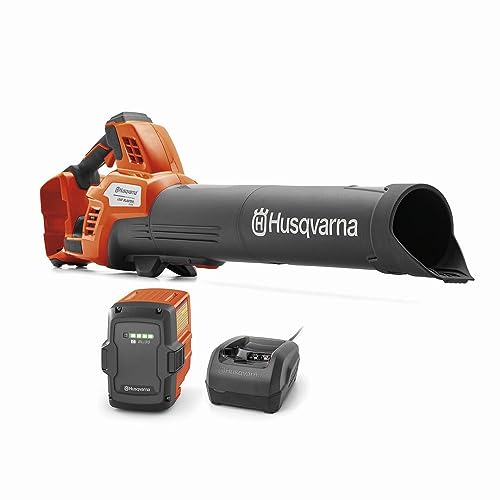
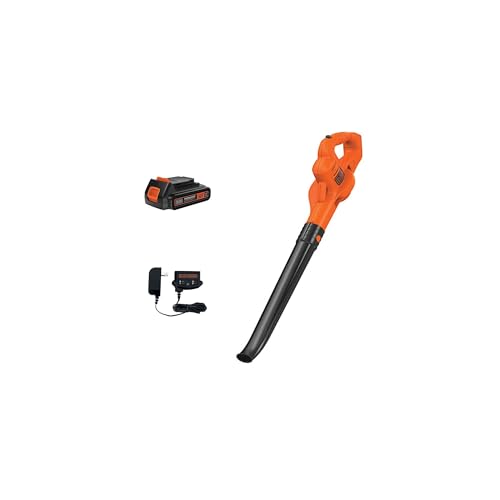
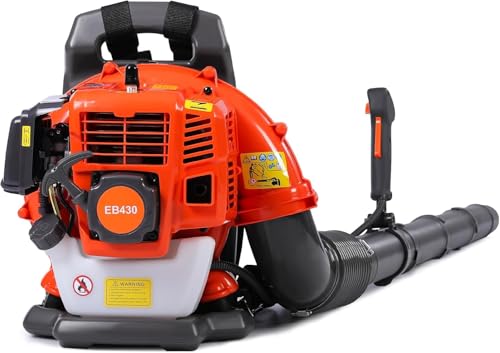
For homeowners managing heavy autumn leaf drop, a high-ratio corded unit like the WORX Trivac WG509 handles large volume reductions without battery limits, though you must stay tethered to an extension cord. Buyers needing untethered mobility across larger lots can turn to cordless options, accepting finite battery runtimes and higher initial equipment costs.
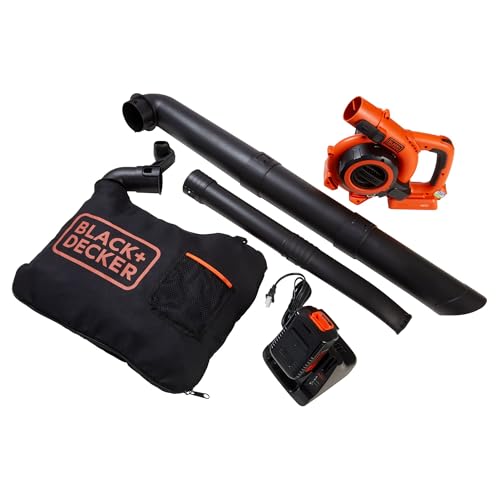
Pros
- Lightweight design at 5.4 lbs in blow mode and 6.9 lbs in vac mode
- 40V MAX battery with built-in state of charge indicator
- Mulching fan shreds up to 6 bags of leaves down to 1 bag
- Built-in scraper on the tube helps loosen stuck debris
- 6-speed Powercommand dial tailors airflow to the task
Cons
- Modest 120 mph maximum air velocity intended for hard surfaces
- Lower mulching ratio compared to larger yard units

Pros
- Delivers up to 450 CFM airflow and 158 MPH airspeed
- 15:1 mulching ratio compresses waste into a 40L bag
- Lightweight 5.5 lb body includes support wheels and a shoulder strap
- Tool-free switching between blowing, vacuuming, and mulching
- Nested tube and square buckle connector reduce debris buildup
Cons
- Tethered corded operation restricts movement across larger yards
- Intended primarily for dry leaves and light debris

Pros
- Tool-free conversion among blow, vac, and mulch modes
- Air speeds up to 230 mph with 2-speed settings
- Vortex impeller grinds up to 10 bags down to 1
- Built-in cord retainer helps prevent accidental unplugging
- Includes concentrator, blow/vacuum tubes, and bag
Cons
- Requires constant extension cord tether
- Two fixed speeds offer less fine-tuned control

Pros
- Instant switch between blow and vacuum modes
- High 18:1 mulch ratio maximizes bag capacity
- Rated up to 350 CFM and 210 MPH air output
- Variable-speed control for different debris types
- Includes 42L debris collection bag
Cons
- Corded design limits overall yard reach
- Weighs 9.3 pounds before debris accumulates

Pros
- High-output airflow rated up to 600 CFM and 160 MPH
- Includes two 4.0Ah batteries for cordless runtime
- Efficient 15:1 mulching ratio reduces disposal volume
- Tool-free easy-clean access gate for clearing clogs
- Height-adjustable wheels and anti-static handle for user comfort
Cons
- Turbo Boost and top speeds will deplete battery runtimes quickly
- Weighs 10 pounds, which may tire some users during extended sessions
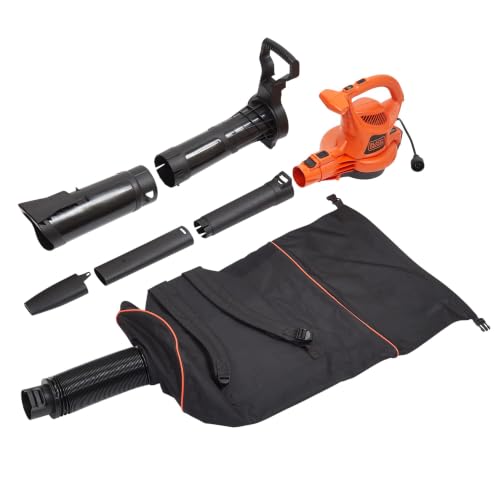
Pros
- High performance delivering up to 250 MPH and 400 CFM
- POWERBOOST button supplies extra power on demand
- Hands-free backpack collection bag doubles standard capacity
- Zipper-free bag design with wide opening for easy emptying
- Flexible tube improves maneuverability during vacuum mode
Cons
- Corded design requires an extension cord and limits total range
- Heavier build at 11.1 pounds before collecting leaves

Pros
- Powerful 12-amp motor generating up to 260 MPH and 450 CFM
- Hands-free 55-liter backpack collection bag for easy carrying
- Tool-free conversion between blower, vacuum, and mulcher
- Wide-mouth bag opening enables quick emptying
Cons
- Requires an extension cord for power, limiting yard reach
- Weighs 11.27 pounds without debris in the collection bag

Pros
- Delivers up to 600 CFM of blowing output
- Tool-free switch between blow and vac modes
- 16:1 mulch ratio compacts collected leaves
- Large 50L collection bag included
- Variable-speed control for tailored airflow
Cons
- Requires an extension cord and nearby power source
- Weighs 9.1 pounds before filling collection bag

Pros
- 12-amp motor achieves up to 250 MPH and 400 CFM
- High-impact metal fan prevents clogs and offers 16:1 mulch ratio
- Includes a disposable tie-and-toss leaf bag system
- Two speed settings suited for delicate flower beds or stuck debris
- Built-in cord retainer keeps extension cords secured
Cons
- Corded design restricts cleaning area to cord length
- Disposable bags will require replacement purchases once used
Corded Versus Cordless Power in Leaf Vacuums and Mulchers
Choosing between corded electric and battery-powered leaf blowers comes down to continuous runtime versus untethered range. Corded models such as the WORX Trivac WG509 and the BLACK+DECKER BV6000 pull sustained 12-amp power from a standard wall outlet. This allows you to tackle extensive mulching sessions without pausing to recharge, making them dependable for small to medium yards where an extension cord can easily reach.
Conversely, cordless systems like the BLACK+DECKER 40V LSWV36 and the HEYWORK 40V Yard Blower Vacuum provide total freedom of movement around fences, outbuildings, and landscaping beds. The primary trade-off is runtime: battery charge depletes faster under high-demand vacuuming and mulching tasks compared to light blowing. If you choose cordless convenience, you must balance power usage or keep spare charged packs on hand, as explored in our guide to cordless battery leaf blowers.
Mulch Reduction Ratios and Waste Management
Mulch reduction ratios determine how significantly a tool can compress dry leaves, directly cutting down how many times you must empty the collection bag. The WORX Trivac WG509 advertises an 18:1 mulch ratio, while the BLACK+DECKER BV6000 advertises grinding up to 16 bags down to one using a metal fan. Higher reduction ratios produce fine shredding that accelerates composting and optimizes waste bin space. For troubleshooting and reliability insights, consult our in-depth small rechargeable leaf blower report.
More compact units, such as the Heywork 3-in-1 Leaf Vacuum Mulcher and HEYWORK 40V, state a 15:1 ratio, whereas the BLACK+DECKER 40V cordless unit reduces up to 6 bags into one. The trade-off with higher advertised ratios often involves working with bulkier collection tubes or metal impellers that require steady feeding to prevent clogs. If your yard produces primarily dense, damp foliage, higher shredding ratios help maximize bag space but demand slower feeding speeds to prevent jamming the intake.
Collection Bag Styles: Shoulder Bags Versus Backpack Designs
The method you use to carry collected mulch impacts fatigue and physical strain during yard work. Traditional models like the BLACK+DECKER BV3600 hang the collection bag directly off the unit or across one shoulder via a strap. While lightweight when empty, single-shoulder bags pull unevenly on your torso as they fill up with dense leaf mulch. Readers comparing setup options can review our technical analysis on blower para soplar hojas.
To distribute weight more evenly, backpack designs such as the CRAFTSMAN CMEBL7000 and BLACK+DECKER BEBL7000 shift the load to both shoulders. The CRAFTSMAN backpack bag holds up to 55 liters, while the WORX Trivac WG512 utilizes a 50-liter bag. Distributing the mulched debris across your back keeps your hands free to guide the vacuum nozzle, though maneuvering in tight corners between shrubs requires extra awareness of the pack profile.
Clearing Clogs and Tool-Free Conversion Convenience
Switching between blowing and mulching should not require tools or complex disassembly in the middle of a job. Models like the WORX Trivac line feature an integrated switch or lever to flip immediately between vacuuming and blowing without swapping out intake tubes. This saves substantial time when corralling scattered leaves into piles before vacuuming them up. For complementary field maintenance guidelines, examine our breakdown of blower at lowes.
In contrast, modular 3-in-1 systems require detaching the blow tube and clicking on a wider vacuum tube and collection bag. While modular designs like the Heywork corded blower include a nested tube to curb debris buildup, clearing an unexpected clog means stopping the motor and manually detaching components. Tools with dedicated access gates, such as the HEYWORK 40V, simplify clearing wet debris, but damp leaves will challenge any impeller regardless of tool-free features.
Leaf Blower and Mulcher Frequently Asked Questions
Can a leaf blower and mulcher vacuum up wet leaves and twigs?
While these tools can process damp leaves, wet material significantly increases the risk of clogs along the intake tube and impeller. Sticks, rocks, and thick branches should be avoided, as hard debris can crack plastic fan blades or jam metal impellers.
How do I choose between an integrated lever and tube-swap conversion?
Integrated levers, like those on the WORX Trivac series, allow immediate switching between blow and vac modes without carrying extra parts. Tube-swap designs require manually replacing the narrow blower pipe with a wide vacuum tube, which takes more effort but often yields a lighter handheld tool in blower mode.
What extension cord is needed for a 12-amp corded leaf mulcher?
A 12-amp motor requires a properly rated outdoor extension cord to prevent voltage drop and motor overheating. Consult the manufacturer's manual, but generally, 14-gauge cords are recommended for lengths up to 50 feet, and heavier 12-gauge cords for distances up to 100 feet.
Which Leaf Blower and Mulcher Should You Buy?
Your ideal yard tool depends strictly on your property size, access to electrical outlets, and leaf volume. For budget-conscious homeowners maintaining compact spaces, entry-level corded options like the Heywork 3-in-1 Leaf Vacuum Mulcher provide an economical entry point with built-in rolling wheels to support the nozzle. For larger spaces clear of cords, dual-battery models provide substantial airflow without fuel exhaust, similar to performance requirements seen in a high powered leaf blower.
For most routine residential yard maintenance, the WORX Trivac WG509 is the recommended choice due to its high 18:1 advertised mulching ratio, continuous 12-amp power, and instant single-lever mode switching. Its primary trade-off is the operational boundary imposed by an extension cord. Homeowners managing remote fence lines or expansive, uneven acreage should alternatively consider the cordless HEYWORK 40V Yard Blower Vacuum, which eliminates cord restrictions while including dual 4.0Ah batteries and adjustable rolling support wheels.
Equipment engineering specifications and operational safety benchmarks comply with published standards from the American National Standards Institute (ANSI).