

For clearing hard surfaces like patios, porches, and driveways without arm fatigue, a compact cordless option suits homeowners who prioritize maneuverability over commercial-grade clearing force. However, ultra-light builds inherently trade away heavy-duty wet leaf moving capability and unlimited operating endurance.
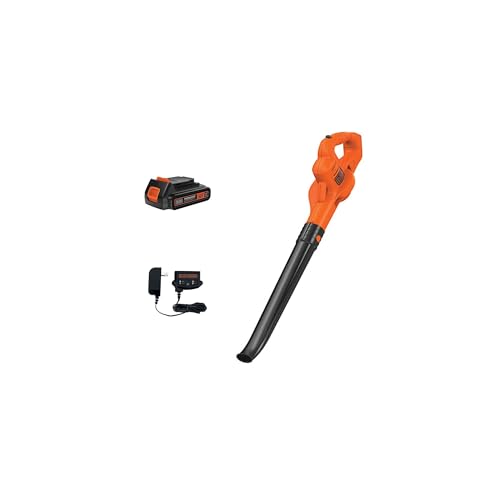
Pros
- Weighs only 3.7 pounds for easy maneuvering
- Reaches up to 130 MPH sweeping speed
- Compatible with the BLACK+DECKER 20V MAX system
- Includes 20V MAX 1.5Ah lithium-ion battery and charger
Cons
- Small 1.5Ah battery is best suited for light sweeping tasks

Pros
- Lightweight design at only 4.4 pounds
- 7-Amp motor rated up to 180 MPH and 180 CFM
- Built-in cord retention prevents unplugging
- Zero emissions with instant push-button start
- Simple, low-maintenance corded design
Cons
- Extension cord is not included
- Operating range is limited by cord reach
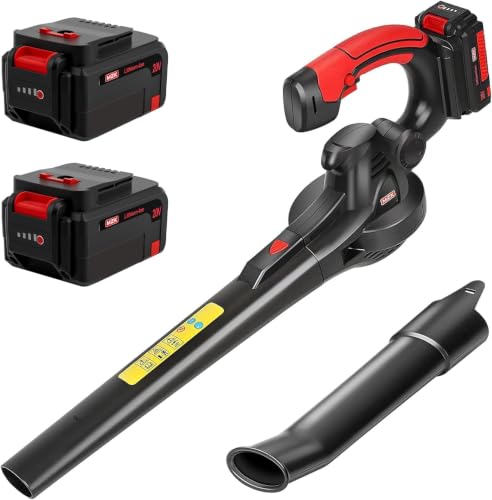
Pros
- Weighs only 3.9 pounds for light handling
- Rated airflow up to 450 CFM
- Cordless design allows unrestricted mobility
- Convenient one-hand trigger operation
- No gas mixing or cord management required
Cons
- Runtime varies significantly by power output
- Battery charging intervals required
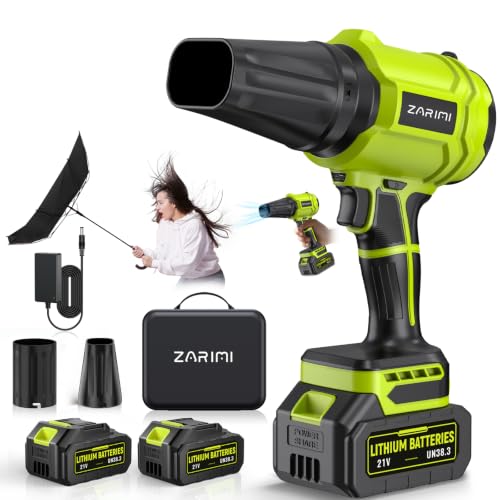
Pros
- Extremely lightweight at only 2.8 pounds for low-fatigue use
- Reaches stated air speeds over 50 m/s (110+ MPH)
- Comes with two batteries and charger for alternating use
- Includes a concentrated narrow nozzle for detailed edging
- Compact footprint stores easily in tight spaces or vehicle trunks
Cons
- Limited runtime of only about 13 minutes per battery
- Not designed for moving heavy or deep piles of wet leaves

Pros
- Weighs only 2.28 lbs for easy one-handed operation
- Includes two 21V 4000mAh lithium batteries
- Variable speed trigger provides precise airflow control
- Comes with an extension tube and flat nozzle attachment
Cons
- Rated runtime tops out at roughly 30 minutes
- Not designed for large properties or heavy wet debris

Pros
- Includes two 21V 4.0Ah batteries for extended runtime
- Delivers up to 420 CFM airflow and 150 MPH air speed
- Lightweight design weighs under 3 lbs bare tool for low fatigue
- Comes with both round and flat interchangeable nozzles
- Two adjustable speed settings for varying cleanup tasks
Cons
- Limited to two preset airflow speeds
- Best suited for dry leaves and light debris rather than heavy wet waste

Pros
- Includes two 2.0Ah lithium-ion batteries and a fast charger
- Lightweight build weighs only 3.4 pounds with battery attached
- Modular two-section tube adjusts for different clearing heights
- Rated for up to 350 CFM and 150 MPH air performance
Cons
- Estimated runtime reaches up to 25 minutes at high speed
- Batteries must cool down before recharging
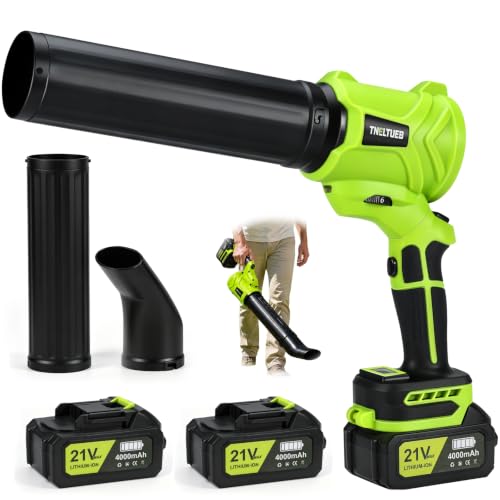
Pros
- Six selectable speed settings spanning 100 to 200 MPH
- 180-degree rotating handle facilitates versatile blowing angles
- Includes two 21V 4.0Ah rechargeable battery packs
- Comes equipped with two interchangeable nozzle attachments
- Ultralight 2-pound build allows easy one-handed maneuvering
Cons
- Battery runtime drops considerably when using higher speed modes
- Requires swapping batteries during large property cleanups

Pros
- Includes two 20V 2.0Ah batteries and a fast charger
- Extremely lightweight design at just 3.4 pounds
- Two selectable speed modes match light and heavier tasks
- Ergonomic non-slip grip allows comfortable one-handed use
- Comes with an extension nozzle for targeted airflow
Cons
- Runtime decreases significantly at the higher speed setting
- Best suited for light residential cleanup rather than dense debris

Pros
- Claims up to 450 CFM and 150 MPH for efficient debris clearing
- Lightweight 3.8-pound body reduces arm fatigue
- Includes two batteries and a charger for extended sessions
- Two selectable speed modes match different cleaning tasks
- Simple assembly requiring only nozzle and battery attachment
Cons
- Runtime reaches up to 30 minutes per battery only on low speed
- High-speed battery consumption significantly shortens run times
Weight Versus Airflow in Compact Handheld Blowers
Handheld blowers weighing under 4 pounds dramatically reduce muscle strain during routine cleanup, but their compact housings and smaller fans limit how much heavy, wet debris they can move in a single sweep.
In this category, tools like the wanvzo Cordless Leaf Blower specify an ultra-light weight of just 2.28 pounds, while the YUQUESEN Cordless Leaf Blower measures 2.8 pounds. These ultra-light weights make lifting, maneuvering along steps, and overhead cleaning on porches significantly easier than working with bulkier garden tools. Manufacturer specifications for these compact models often claim high peak speeds—such as 110+ mph or 500 CFM—derived from narrow nozzles and high-RPM motors. However, buyers should treat these peak figures as advertised metrics rather than independently measured yard performance.
The primary trade-off with reducing motor and fan housing size is air volume distribution. A very light unit generates a focused stream ideal for dry leaves, dust, and grass clippings on asphalt or concrete, but it requires significantly more passes when pushing dense, soaked leaf piles across damp turf.
Corded Continuous Power Versus Cordless Freedom
Corded electric blowers eliminate battery anxiety and deliver consistent blowing power at lower price points, whereas cordless models provide untethered mobility at the expense of finite runtimes.
The BLACK+DECKER Electric Leaf Blower represents the corded approach, weighing 4.4 pounds and drawing continuous power via a 7-Amp motor that outputs an advertised 180 MPH and 180 CFM. Because it draws power straight from an outlet, it does not lose blowing force mid-chore and avoids the degradation associated with aging lithium-ion cells. The noticeable drawback is boundary restriction: corded models require a heavy-duty outdoor extension cord (which is not included in the box) and built-in cord retention, limiting your cleaning radius to within reach of an exterior receptacle.
In contrast, cordless units like the MZK 20V Cordless Leaf Blower (3.9 pounds) or the SEYVUM Leaf Blower 20V Cordless (3.4 pounds) grant complete freedom of movement. You can take them to the far corners of a garden, into detached garages, or up onto roof edges without snagging cords, but you must plan around battery charging cycles.
Battery Setups and Real-World Cleaning Coverage
A dual-battery configuration provides the practical flexibility needed to complete multi-zone yard cleanups, whereas single-pack entry-level units require you to pause your work while recharging.
For example, the BLACK+DECKER Cordless Leaf Blower with Battery weighs 3.7 pounds and operates on the established 20V MAX platform, but it comes equipped with a single 1.5Ah battery pack. A 1.5Ah capacity is sufficient for quick sweeps of a standard patio or sidewalk, but larger tasks can deplete the charge before the cleanup is finished. In contrast, models like the Leaf Blower Cordless, Leaf Blower with Battery by RYAHT include two 2.0Ah batteries, and the Cordless Leaf Blower Lightweight Handheld Blowers by TNELTUEB ships with two 4.0Ah batteries.
While larger capacity battery packs extend operational time, they also contribute additional weight to the tool’s base. Buyers seeking the lightest possible in-hand feel must weigh the convenience of larger 4.0Ah packs against the fatigue reduction offered by smaller, lighter 1.5Ah or 2.0Ah batteries.
Frequently Asked Questions About Light Weight Blowers
How much does a typical light weight leaf blower weigh?
In this category, handheld blowers generally weigh between 2.28 pounds and 4.4 pounds. Cordless bare tools sit at the lower end of that range, while adding a battery pack or corded motor assembly brings the working weight closer to 3.5 to 4.4 pounds.
Are corded blowers heavier than cordless blowers?
Corded blowers do not carry heavy on-board battery packs, but their motors and housings still result in weights around 4.4 pounds. Some compact cordless models actually weigh less in the hand, though corded options never lose power due to a draining battery.
Why do several cordless blowers include two batteries?
Lightweight blower motors draw substantial current to generate high air speeds, which can drain compact batteries relatively quickly. Including two batteries allows you to charge one pack while using the other, helping you avoid stopping work in the middle of a project.
Choosing the Right Light Weight Blower for Your Yard
Selecting the right light weight blower comes down to identifying whether your priority is physical comfort, boundary-free movement, or non-stop clearing performance across large hardscape surfaces.
For property owners seeking an easy-to-handle cordless option for routine residential yard maintenance, the SEYVUM Leaf Blower 20V Cordless provides a strong balance with its 3.4-pound operating weight and dual-battery kit. Its primary limitation is moderate clearing power when tackling wet, embedded lawn debris. Buyers with larger properties who need continuous, uninterrupted blowing power on a budget should consider the corded BLACK+DECKER Electric Leaf Blower instead, provided they are comfortable managing an extension cord.


