Quick Answer
Store lithium-ion tool packs partly charged at moderate temperatures. Hot vehicles and freezing garages permanently degrade cell capacity. Charge only with matching vendor charger to prevent thermal runaway. Inspect packs often. Safely retire swollen, cracked, or compromised units by dropping them off at certified hazardous waste collection points.

Pros
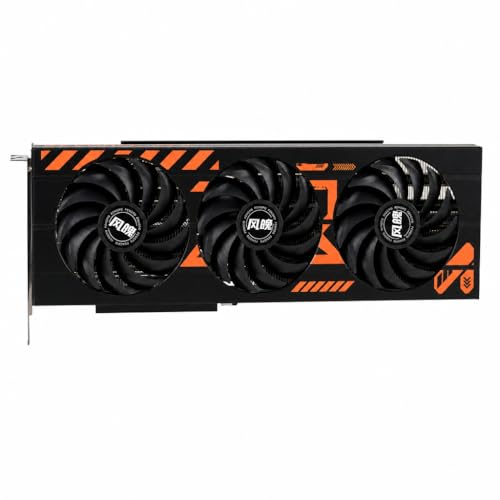
- Blackwell architecture with DLSS 4 support is listed
- Dual BIOS lets you switch between Quiet and Performance profiles
- 2-slot design is listed for smaller chassis
- Dual ball fan bearings described as longer-lasting
- GPU Tweak III software is listed for tuning and monitoring
Cons
- No benchmark or verified performance results are listed
- Case clearance should be checked against listed dimensions

Pros
- 12GB GDDR6 memory, per manufacturer specifications
- Lists ray tracing support and AMD Infinity Cache
- PCI Express 4.0 interface and HDMI 2.1 output listed
- AMD RDNA 2 architecture named in the listing
Cons
- Renewed condition; the listing gives no condition details
- Listed weight of 1.1 lb conflicts with 4 lb package weight
- No customer reviews listed to verify performance

Pros
- 12GB GDDR6 memory, per manufacturer specifications
- AMD RDNA 2 architecture named in the listing title
- HDMI plus three DisplayPort outputs for multi-display setups
Cons
- Renewed condition; the listing gives no condition details
- No feature bullets or customer reviews listed to verify claims
Lithium-ion packs are the most expensive consumable component in a cordless outdoor tool platform. A 5 Ah, 18 V-nominal pack stores roughly 90 Wh and often costs as much as the bare tool it powers. Manufacturer documentation and published cell research agree that pack lifespan depends less on brand than on three variables: temperature history, state-of-charge (SoC) history, and discharge current. This guide describes the failure mechanisms behind those variables and the operating practices that follow from them.
How Lithium-Ion Packs Age
Most cordless tool packs use cylindrical 18650 or 21700 cells with NMC (nickel-manganese-cobalt) or NCA cathodes and graphite anodes. Each cell has a nominal voltage of about 3.6 to 3.7 V, a full-charge voltage of 4.20 V (±0.05 V), and a discharge cutoff of roughly 2.5 to 3.0 V. A “20V MAX” pack is a 5S configuration: 18 V nominal, 21.0 V fully charged. A 10S pack is 36 V nominal and 42.0 V fully charged.
Capacity loss follows two parallel pathways, calendar aging and cycle aging.
- Solid electrolyte interphase (SEI) growth: The SEI layer on the graphite anode thickens continuously. This consumes cyclable lithium and raises internal resistance. Growth accelerates at high temperature and at high SoC, because a fully charged anode sits at a lower potential versus lithium.
- Lithium plating: Charging at low temperature or at high rates can deposit metallic lithium on the anode surface instead of intercalating it. Plating causes irreversible capacity loss and can form dendrites that compromise the separator.
- Cathode degradation: Repeated high-rate cycling causes particle microcracking and transition-metal dissolution, particularly above 4.20 V per cell or above
For related maintenance and equipment benchmarks, review our technical guides on best gaming pcs, examine vr gaming pc specifications, and compare desktop gaming systems. You can also reference our analyses on 4k gaming desktops and multitasking gaming pcs. For industry engineering standards, consult PCI-SIG specification standards.