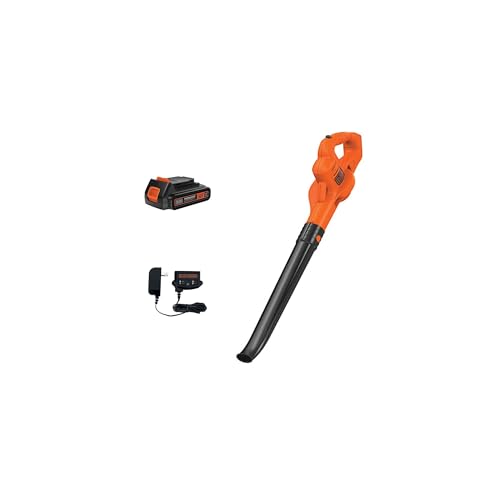
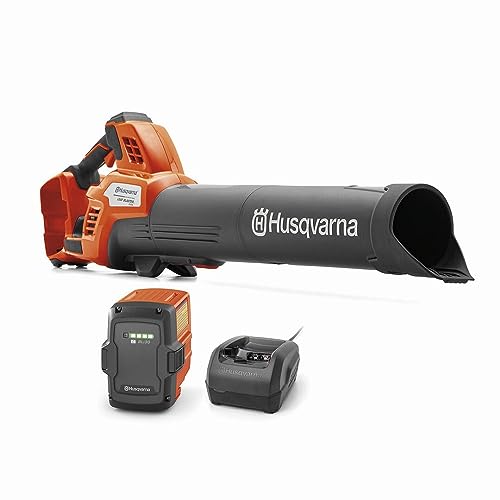
For homeowners managing extensive properties with wet, stubborn debris, a high-displacement gas unit like the Thalorus 52cc Gas Backpack Leaf Blower, 550 CFM delivers continuous power without battery downtime, though it requires routine two-stroke fuel mixing and produces louder engine exhaust. Battery and corded models offer instant, push-button operation and zero emissions for typical residential yards, but they trade off either limited runtime per charge or physical cord reach.

Pros
- Delivers up to 550 CFM and 230 MPH for moving wet yard debris
- Lightweight 17-pound backpack design with cushioned straps
- Thumb throttle includes cruise control for steady blowing
- 33.8 fl oz fuel tank yields up to 45 minutes of run time
- Operating temperature range spans 14°F to 104°F
Cons
- Requires 2-cycle fuel mixing and engine maintenance
- 550 CFM is modest for a backpack-class gas blower

Pros
- High-volume airflow rated up to 680 CFM
- Includes two 21V batteries and a charger
- 5-speed variable control for delicate or heavy debris
- Lightweight build at just 3.6 pounds
- Ergonomic handle with anti-slip grip
Cons
- Battery life drops faster at maximum speed
- Requires swapping and charging batteries
Pros
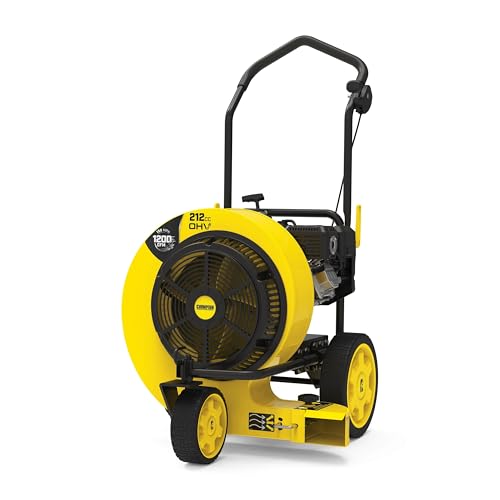
- Rated for up to 1200 CFM of air volume
- 3-position wind vane plus forward air attachment
- Large 12-inch never-flat rear wheels
- Lockable 360-degree front swivel wheel
- Ergonomic handle features height adjustment
Cons
- Weighs 104 pounds without power propulsion
- Gas engine requires fuel and oil upkeep
- Bulky frame requires ample storage space
Pros
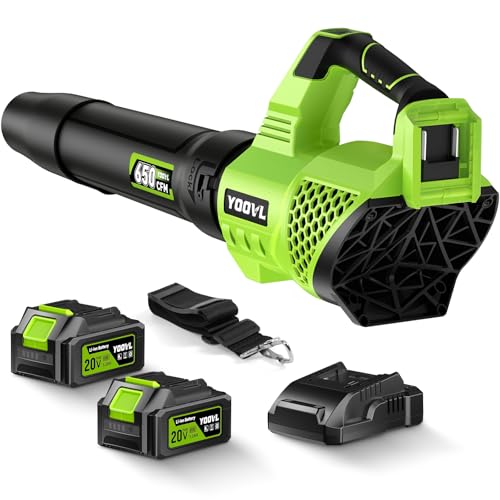
- Airflow rated up to 650 CFM using advanced turbo technology
- Comes with two high-capacity 20V 5.2Ah batteries and fast charger
- Three selectable speed modes for delicate to heavy-duty jobs
- Includes an adjustable shoulder strap to reduce arm fatigue
- Includes blower tube and extension nozzle attachments
Cons
- Maximum 150-minute runtime applies only to low-speed mode
- Heavier battery packs may add weight during prolonged handheld use

Pros
- Weighs only 4 lbs for low user fatigue
- Generates up to 210 MPH airspeed and 390 CFM
- Dual speed modes for sweeping or heavy blowing
- Continuous corded power without battery limits
Cons
- Requires an outdoor extension cord
- Tubes are nested upon arrival and require manual assembly

Pros
- Brushless motor delivers rated airflow up to 650 CFM and 180 MPH
- Includes two 20V 4.0Ah batteries and a fast charger
- Six adjustable speed settings ranging from 80 to 180 MPH
- Comes with an ergonomic shoulder strap and two detachable nozzles
- Includes a storage bag to keep components organized
Cons
- Stated 30-minute runtime is restricted to low-speed operation
- High-speed settings will deplete battery charge more rapidly

Pros
- Turbo mode delivers up to 530 CFM and 110 MPH
- Up to 75 minutes of stated runtime per charge
- Brushless motor reduces vibration and tool wear
- Fast 50-minute battery recharge with included charger
- Variable speed dial with a lock-on trigger button
Cons
- High turbo output significantly reduces battery runtime
- Requires extra batteries for prolonged high-power jobs

Pros
- Integrated 82-foot extra-long power cord
- Delivers up to 580 CFM and 210 MPH air output
- 6 variable speed settings for tailored control
- Durable copper motor with turbine fan technology
Cons
- Total package weighs 10 lbs with the attached cord
- Bulky cord management can be cumbersome to wind
Gas vs. Battery vs. Corded Power Blowers: Which Power Source Fits Your Yard?
Your ideal power source depends directly on your lot size, proximity to electrical outlets, and your willingness to maintain an engine. When evaluating power blowers from a consumer perspective, the trade-offs between mobility, runtime, and maintenance define each category.
Corded electric blowers, such as the Grasstigon Electric Leaf Blower Corded, 7-Amp or the Leaf Blower, 3000W High Power Turbine Handheld, provide uninterrupted runtime at an affordable price point. Weighing between 4 and 6.6 pounds without cords, they eliminate battery degradation and fuel stabilization chores. However, cord management restricts mobility. Even with the 82-foot cord featured on the Cardmap model, your working radius remains anchored to an exterior receptacle or extension cord, making them best suited for patios, decks, and small suburban perimeters. For focused driveway cleanups, learning more about choosing a leaf blower for driveway applications can help clarify cord limits.
Cordless battery blowers remove the tether while avoiding gas engine upkeep. Handheld platforms like the EGO POWER+ Cordless Electric Leaf Blower, 530 CFM run on high-voltage 56V lithium systems with brushless motors, providing quiet operation and easy storage. The main limitation is runtime; high-output turbine modes drain standard batteries quickly, requiring spare packs or rapid chargers to complete larger properties.
Gas-powered options, including the Thalorus 52cc Gas Backpack Leaf Blower, 550 CFM, remain practical for acreage where electrical outlets are out of reach and recharging batteries would cause repeated delays. The trade-off is physical weight (17 pounds for the Thalorus) and ongoing mechanical care, such as mixing two-stroke oil and winterizing the fuel system.
Understanding CFM vs. MPH Claims in Real-World Yard Work
Air volume (CFM) measures how much debris a blower can push forward at once, while airspeed (MPH) determines the force available to dislodge wet leaves, matted grass, and pine needles from hard surfaces. Independent consumer evaluations consistently caution against viewing either metric in isolation.
Manufacturer-advertised ratings represent peak output under controlled parameters rather than everyday operating averages. For example, the Cordless Leaf Blower, 680 CFM High Power Battery advertises up to 680 CFM, emphasizing a wide, high-volume air column for broad sweeping across lawns and driveways. In contrast, the Grasstigon Electric Leaf Blower Corded, 7-Amp advertises a lower 390 CFM volume but pairs it with an advertised 210 MPH air velocity, concentrating the airstream to lift debris stuck along pavement seams.
When selecting a power blower, prioritize higher CFM ratings if you regularly move broad leaf drifts over open turf. Prioritize high MPH ratings if you deal with wet, sticky debris on textured concrete, cobblestone, or gravel where scouring force matters more than sweep width.
Walk-Behind Blowers vs. Backpack Blowers for Large Properties
Walk-behind blowers provide commercial-level clearing volume for expansive driveways and open turf, whereas backpack blowers prioritize maneuverability around fences, garden beds, and uneven slopes.
The Champion Power Equipment 212cc 1200 CFM walk-behind unit utilizes a 212cc gas engine to produce an advertised 1200 CFM—more than double the output of typical handheld or backpack units. Equipped with 12-inch never-flat rear wheels, an adjustable 3-position wind vane, and an ergonomic handle, it allows operators to clear heavy accumulation across long driveways without carrying engine weight. The trade-off is physical bulk, higher upfront cost ($579.00), and storage requirements, as a wheeled machine cannot easily traverse stairs, steep inclines, or tight garden gates. If you are comparing equipment sources, check our guide on where can I buy A leaf blower for vendor options.
Conversely, the Thalorus 52cc Gas Backpack Leaf Blower, 550 CFM carries its 17-pound operating weight directly on padded shoulder straps. While its advertised 550 CFM output is lower than a walk-behind machine, the flexible tube and thumb throttle allow the operator to direct airflow beneath shrubs, around parked vehicles, and across multi-tiered landscaping where wheels cannot go.
Cordless Handheld Blowers: Managing Battery Voltage and Working Runtime
Cordless blowers deliver immediate start-up and quiet operation, but battery runtimes decrease rapidly when using higher speed settings or turbo functions.
Entry-tier dual-battery packages, such as the Leaf Blower Cordless, 650CFM Electric Leaf Blowers with two 20V 5.2Ah packs and the Leaf Blower Cordless 650CFM with 2×4.0Ah Battery, mitigate downtime by including two batteries and a charger in the box. Manufacturer claims note runtimes of up to 30 to 150 minutes; however, these advertised figures reflect operation at the lowest baseline speeds. Engaging maximum speed or turbo modes to dislodge damp yard waste substantially reduces battery duration.
Higher-tier cordless systems take a different approach. The EGO POWER+ Cordless Electric Leaf Blower, 530 CFM uses an advanced 56V ARC Lithium platform with a brushless motor, backed by a 5-year tool warranty. The advertised 75-minute runtime corresponds to low-speed cruising; pushing the turbo button provides 530 CFM at 110 MPH to shift stubborn yard waste, but consumes battery charge quickly. Buyers must weigh whether a dual-pack budget blower meets their needs or if investing in an expandable 56V platform makes better long-term sense.
Frequently Asked Questions About Power Blowers
How do consumer reports evaluate CFM and air speed ratings?
Consumer analyses emphasize that CFM measures overall air volume to move large piles across lawns, while MPH measures velocity to break loose wet leaves and dirt. Manufacturer specifications indicate maximum unverified peaks, meaning actual clearing ability depends on nozzle design and continuous operating speeds.
Is a gas leaf blower always more powerful than a battery blower?
Not necessarily. Walk-behind gas blowers like the Champion 212cc deliver substantially higher air volume (advertised 1200 CFM) than battery units, but modern 56V cordless blowers like the EGO POWER+ (530 CFM) rival handheld gas blowers in standard yard tasks without fuel mixing or exhaust.
What maintenance is required for cordless battery blowers compared to gas blowers?
Cordless blowers require minimal maintenance beyond keeping intake vents clear and storing lithium batteries at moderate temperatures. Gas blowers require regular fuel stabilization, fresh 2-stroke oil mixing, spark plug checks, and air filter cleaning to maintain reliable starting.
Which Power Blower Is Right for Your Property?
Selecting the right power blower involves balancing property acreage, noise tolerance, and physical carrying capacity against fuel, battery, and cord limitations. Small patios and townhome decks benefit from lightweight corded tools or entry-level battery blowers, while expansive lots require higher CFM platforms with extended run capability. For broader guidance across diverse residential yard layouts, review our overview on what leaf blower is the best.
For most typical residential properties, the EGO POWER+ Cordless Electric Leaf Blower, 530 CFM stands out for suburban homeowners who want reliable clearing power, variable-speed throttle control, and brushless motor durability without handling gas or extension cords. Its primary limitation is the single included 2.5Ah battery, which requires disciplined throttle management or a second pack for large yards. Homeowners managing long driveways, wooded acreage, or continuous fall cleanups should instead consider the Thalorus 52cc Gas Backpack Leaf Blower, 550 CFM, which provides continuous gas-powered runtime on a wearable harness.