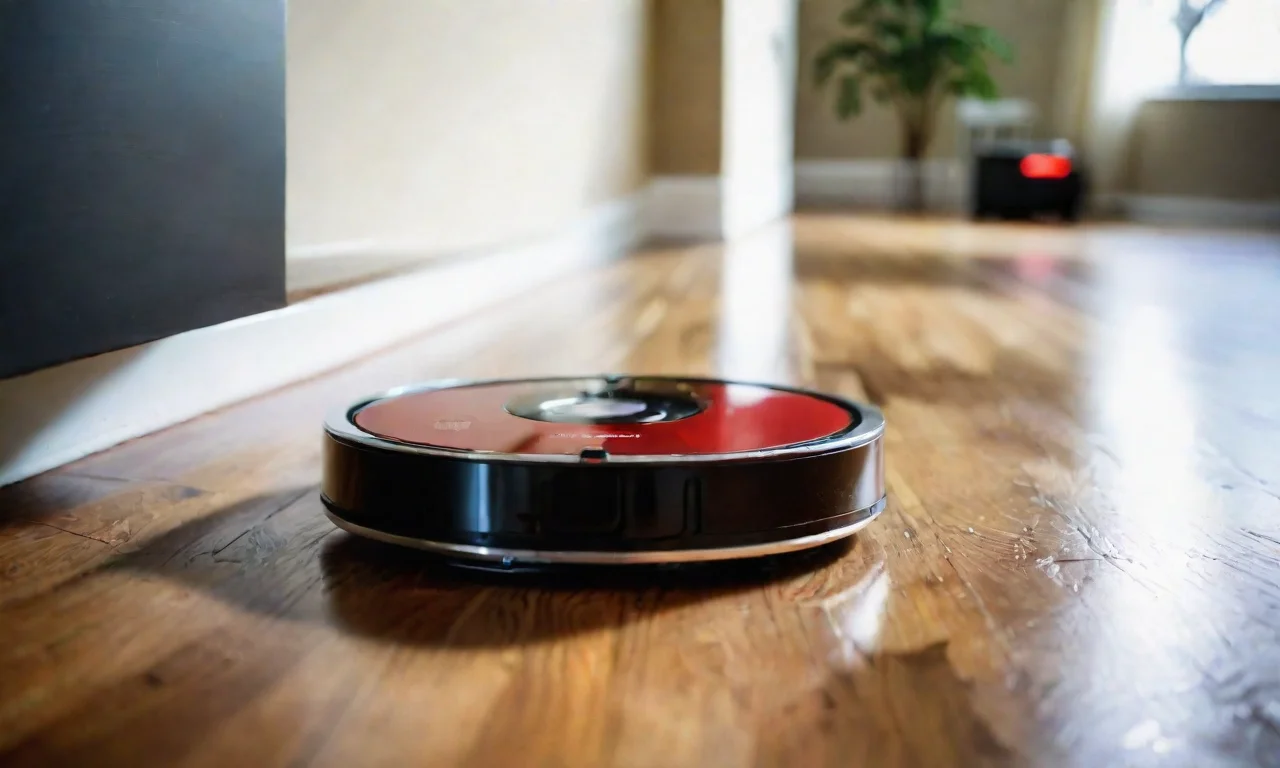
Quick Answer: Choosing the Best Robot Vacuum With Mapping
When evaluating a robot vacuum with mapping in 2026, the most critical factors are navigation technology (LiDAR versus camera-based systems), suction power relative to floor type, self-maintenance capacity, and app ecosystem depth. The top-rated models in this guide, sourced from brands including leading manufacturers, represent the strongest performers across budget, mid-range, and premium tiers. For a broader look at…

Pros
- Massive 60-day capacity self-emptying base saves time and keeps hands clean.
- LiDAR mapping works flawlessly in both bright and pitch-black rooms.
- Self-cleaning brushroll prevents long pet hair from tangling around the roller.
- Recharge and Resume feature ensures whole-home coverage even for larger layouts.
Cons
- The self-emptying process is quite loud for a few seconds when docking.
- The mobile app can occasionally experience connectivity drops during initial setup.
- Its height may prevent it from fitting under very low-profile furniture.
The Shark AV2501AE AI Robot Vacuum represents a significant step forward in automated home maintenance, designed specifically for busy households and pet owners. By combining powerful suction with an intelligent, bagless self-empty base, this robot vacuum promises to take the chore out of floor care for up to two months at a time. It targets users who want a set-it-and-forget-it cleaning companion that handles both carpets and hard floors without requiring daily intervention.
Smart Navigation and Deep Cleaning Performance
At the heart of its performance is the Matrix Clean Navigation system, which guides the robot in a precise grid pattern rather than random bouncing. Coupled with 360-degree LiDAR vision, the vacuum maps your home quickly and cleans methodically. It excels at detecting and avoiding everyday obstacles, operating reliably in both bright daylight and complete darkness. The powerful suction easily lifts embedded dirt and pet hair, while the self-cleaning brushroll ensures you do not have to manually cut tangled hair away from the roller.
Hands-Free Maintenance with HEPA Filtration
The standout feature of this model is the extra-large self-empty base. Unlike many competitors that require proprietary paper bags, this bagless system saves on ongoing costs. It holds up to 60 days of debris and features a true HEPA filtration system that traps 99.97% of dust and allergens down to 0.3 microns. While the base is exceptionally convenient, users should note that the evacuation cycle is quite loud, though it only lasts for a few seconds upon docking.
Considerations and Final Verdict
While the vacuum excels in navigation and debris pickup, it does have a few minor drawbacks. The companion app can occasionally feel clunky during the initial mapping phase, and the unit's height might prevent it from sliding under exceptionally low couches. However, for those seeking a powerful, low-maintenance robotic helper with top-tier pet hair handling and allergen filtration, this vacuum offers outstanding value and reliable daily performance.
Technical Details
- Navigation: 360 degree LiDAR Vision
- Base Capacity: Up to 60 days (Bagless)
- Filtration: True HEPA (99.97 percent efficiency)
- Runtime: Up to 120 minutes
- Voice Control: Amazon Alexa and Google Assistant
- Floor Types: Carpet and Hard Floors
Pros
- Powerful 10,000Pa suction excels at deep carpet cleaning and debris pickup
- Large 2.7L self-empty dock reduces maintenance to once every two months
- Highly effective dual anti-tangle brush design for households with pets
- Precise LiDAR navigation works flawlessly even in completely dark rooms
Cons
- App control requires a 2.4GHz Wi-Fi connection and does not support 5GHz bands
- Electronic mopping system is basic compared to premium vibrating or rotating mop models
Effortless Automated Cleaning for Busy Homes
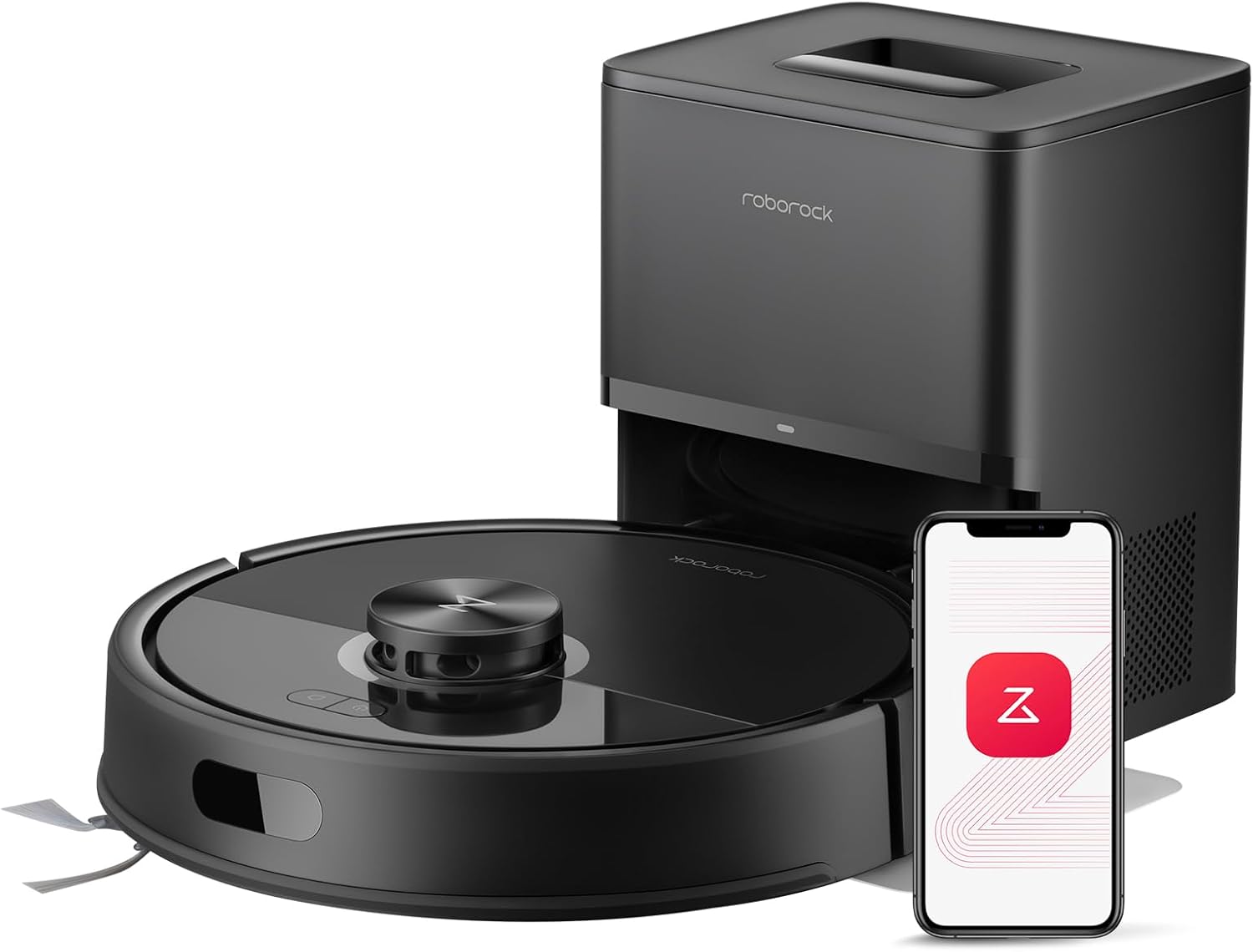
The Roborock Q7 M5+ Robot Vacuum and Mop is designed to take the hassle out of daily floor maintenance. Offering a significant upgrade over previous generations, this hybrid cleaning device is perfect for pet owners and busy families who want clean floors without the daily upkeep. By combining powerful suction with an intelligent self-emptying dock, it delivers weeks of hands-free operation.
Unmatched Suction and Smart Navigation
At the core of this robot vacuum is an impressive 10,000Pa HyperForce suction system. It easily extracts embedded dust, pet hair, and crumbs from both deep-pile carpets and hardwood crevices. Navigating your home is seamless thanks to the PreciSense LiDAR system, which maps your home in real-time. This allows the vacuum to calculate the most efficient cleaning paths, avoiding obstacles and navigating multi-level homes with ease.
Dual Anti-Tangle System for Pet Owners
One of the standout design features is the dual anti-tangle system. Featuring a specialized main brush and a zero-tangling side brush, it resists hair wraps from long-haired pets, reducing the need for manual detangling. Additionally, the integrated electronic mopping system allows you to vacuum and wipe down hard floors in a single run, capturing fine dust particles that dry vacuuming alone might miss.
A Few Minor Considerations
While the cleaning performance is exceptional, there are a couple of limitations. The Roborock App only supports 2.4GHz Wi-Fi networks, which might require adjusting your router settings during setup. Furthermore, the electronic mopping system is excellent for light dust and maintenance but does not scrub stubborn, dried-on stains as effectively as premium vibrating mop modules.
The Verdict
Overall, this robotic cleaner offers a fantastic balance of high-end performance and convenience. With its self-emptying dock, industry-leading suction, and smart mapping capabilities, it is a highly recommended investment for anyone looking to automate their home cleaning routine with minimal manual intervention.
Pros
- Bagless self-empty base eliminates the recurring cost of replacement bags.
- Excellent pet hair pickup with anti-hair wrap brushroll.
- Highly accurate LiDAR mapping works well in dark or low-light rooms.
- Convenient voice control integration with Alexa and Google Assistant.
Cons
- App setup and initial mapping can sometimes require a few attempts to perfect.
- The self-emptying process is quite loud, though it only lasts for a few seconds.
An Honest Look at Automated Home Cleaning
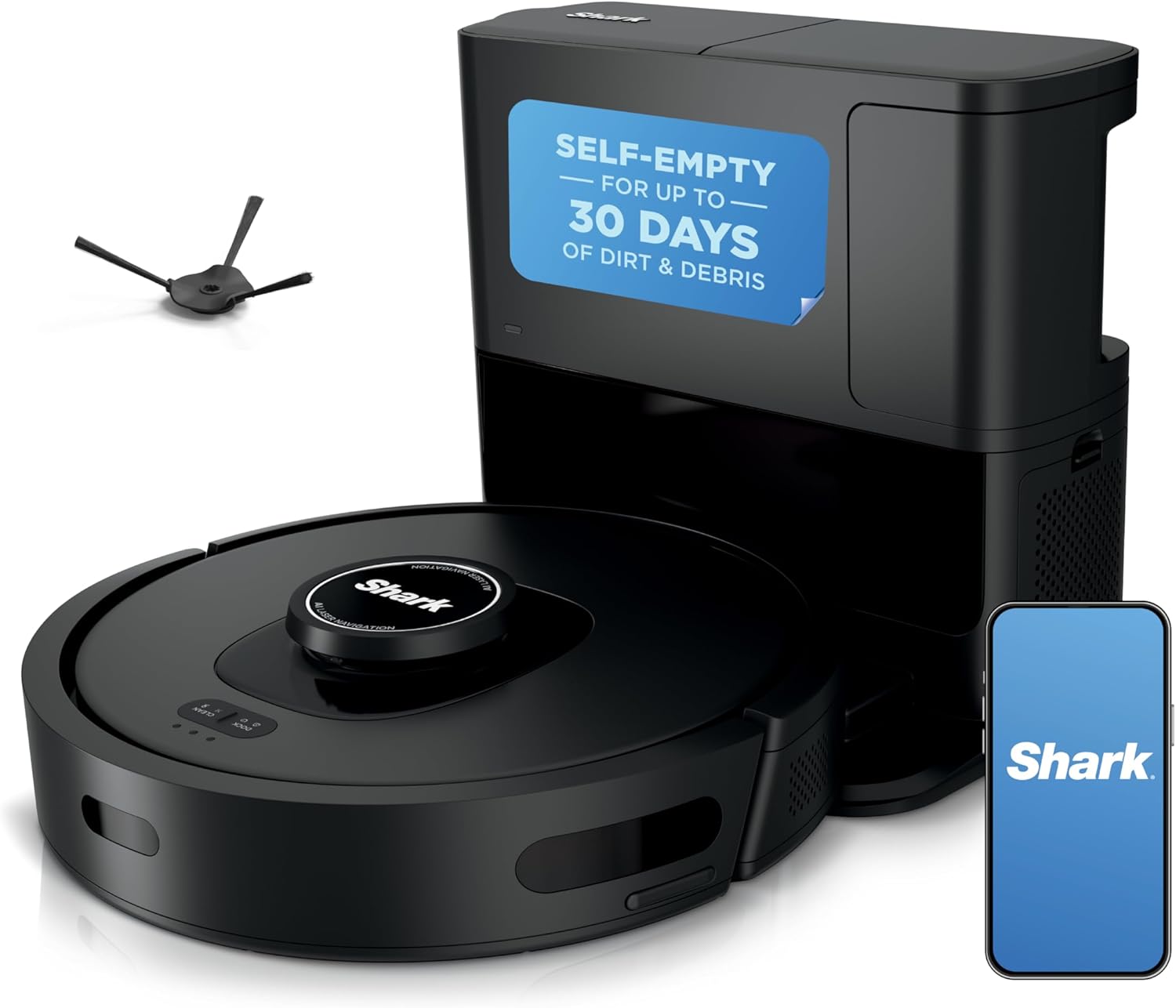
The Shark AV2501S Robot Vacuum represents a major step forward in hands-free home maintenance, combining powerful suction with intelligent navigation. Designed for busy households, this smart vacuum takes the chore out of daily cleaning by automatically mapping your home and emptying its own bin. It is particularly well-suited for pet owners and families who want to keep their floors pristine with minimal manual intervention.
Standout Performance and Matrix Navigation
What sets this model apart is its Matrix Clean Navigation system. Instead of random bumping, the vacuum cleans in a precise grid pattern, taking multiple passes over high-traffic areas to ensure no spots are missed. Combined with a self-cleaning brushroll that actively prevents long pet hair from wrapping around the roller, it delivers deep-cleaning performance on both low-pile carpets and hard floors.
Smart Mapping and Everyday Convenience
Equipped with 360-degree LiDAR vision, the vacuum quickly learns the layout of your home. It creates an accurate map that allows you to set specific cleaning zones or no-go boundaries directly in the SharkClean app. The self-emptying base is a standout convenience feature, holding up to 30 days of debris. Plus, the integrated HEPA filtration traps 99.97% of dust and allergens, making it a great choice for allergy sufferers.
Verdict: A Reliable Smart Vacuum Investment
While the self-emptying cycle can be quite loud for a few seconds, the sheer convenience of a bagless, self-cleaning system outweighs this minor drawback. With up to 120 minutes of runtime and smart recharge-and-resume capabilities, it offers an efficient and highly automated solution for modern homes.

Pros
- Strong suction and sonic mopping handle pet hair and stuck-on messes effectively in one cycle.
- LiDAR navigation creates accurate maps for methodical cleaning even in low light.
- Self-emptying base reduces frequent interventions for busy households.
- Edge and corner detection improves perimeter cleaning performance.
Cons
- Average 3.5 rating suggests occasional navigation or reliability inconsistencies.
- Reusable mop pads require regular washing to maintain effectiveness.
- App features may need updates for smoother multi-room scheduling.
The Shark Matrix Plus Review highlights a capable 2-in-1 robot vacuum and mop designed for carpets and hard floors in homes with pets. It combines powerful suction with sonic mopping to deliver efficient whole-home cleaning while the self-empty base minimizes upkeep.
Standout Features and Performance
Matrix Clean technology drives the robot in a grid pattern for multiple passes that improve dirt removal. Sonic mopping scrubs at 100 times per minute, and CleanEdge Detect blasts air to pull debris from edges. Users gain reliable pet hair pickup thanks to the self-cleaning brushroll that avoids wraps.
Design and Build Quality
The unit uses 360-degree LiDAR for precise mapping and obstacle avoidance day or night. The bagless XL base features true HEPA filtration to contain allergens effectively after each cycle.
Drawbacks to Consider
Some owners report mixed long-term durability and occasional app connectivity issues that can interrupt scheduled cleans. Reusable pads add a small maintenance step compared to disposable options.
Final Verdict
This model suits pet owners seeking automated floor care with minimal intervention. It balances suction power, mopping action, and self-maintenance well for most households despite average user ratings.

Pros
- Strong 5200Pa suction clears debris from multiple floor types
- Self-charging feature prevents power interruptions mid-task
- Pet-focused design reduces hair tangles on brushes
- App integration allows scheduling and mode adjustments remotely
Cons
- Best suited for low-pile carpets rather than thick rugs
- Water tank requires refilling for large mopping areas
- Setup for app and voice assistants may take initial effort
ROPVACNIC S1 Review: Automated Cleaning for Everyday Homes
The ROPVACNIC S1 Review highlights a capable robot vacuum and mop combo designed for users who want reliable automated floor care. It combines strong suction with electronic mopping and supports app-based customization for different surfaces and stains.
Standout Features and Performance
With 5200Pa suction and a three-point cleaning system, this model removes dirt, dust, and pet hair effectively across hard floors and low-pile carpets. The no-entanglement side brushes perform well for pet owners, while the self-recharge function activates below 20% battery to keep sessions uninterrupted. Obstacle detection helps it navigate around furniture without constant supervision.
Design and Build Quality
The compact 2.99 inch height allows access under sofas and beds where manual cleaning is difficult. A 4400mAh battery supports extended runs in larger spaces, and the included dustbin plus water tank enable true 2-in-1 functionality. Controls via smartphone app, remote, or voice assistants add flexibility, though initial pairing requires standard network setup.
Potential Drawbacks
Performance on high-pile carpets may be limited compared to hard floors. Users with very large homes should expect to refill the water tank midway through mopping cycles. Regular filter and brush maintenance remains necessary for peak results.
Final Verdict
Overall the ROPVACNIC S1 delivers solid value for pet owners and busy households seeking a straightforward robot vacuum and mop solution with strong suction and convenient controls.
Comprehensive Robot Vacuum With Mapping Buyer’s Guide (2026)
Navigation Technology and Mapping Accuracy
LiDAR (Light Detection and Ranging) is the dominant navigation standard in quality mapping robots as of 2026. Units like the ILIFE A30s, Bagotte G6, and MONSGA MS1 all use 360-degree LiDAR sensors that generate a complete floor plan within approximately 10 minutes of first use. This is fundamentally different from older gyroscope or infrared bump-and-turn systems, which move in random patterns and leave consistent coverage gaps. LiDAR-equipped vacuums plan systematic row-by-row or zone-by-zone paths, which directly translates to fewer missed spots and shorter total cleaning times.
Multi-floor mapping is a practical necessity for two-story homes. The Tikom L8000 Plus, MONSGA MS1, and Tikom L8000 Pro each support up to 5 saved floor maps, meaning the robot recognizes which level it is operating on and applies the correct layout automatically. When evaluating mapping accuracy, also check whether the app allows you to draw virtual no-go zones and virtual walls. These software boundaries prevent the robot from entering areas with cables, pet bowls, or open stair edges, which is a safety and convenience feature that cheaper bump-sensor models cannot replicate.
Suction Power and Floor Type Compatibility
Suction power in robot vacuums is measured in Pascals (Pa). For context: 2000-3000 Pa handles light dust on hard floors, 5000-6000 Pa manages embedded pet hair and fine debris on low-pile carpet, and 7000-10000 Pa is appropriate for medium-pile carpets with heavy pet shedding. The ILIFE A30s leads this group with a 10,000 Pa peak in Spot Mode, followed by the MONSGA MS1 at 7000 Pa and several 6000 Pa models including the Bagotte G6, Tikom L8000 Plus, and Tikom L8000 Pro.
Auto carpet boost is a feature worth prioritizing. Models with this capability use floor-type sensors to automatically increase suction when transitioning from hardwood or tile to carpet, then reduce power on hard floors to conserve battery. This delivers better carpet cleaning without manually adjusting settings. All Tikom, Bagotte, and MONSGA models in this guide include automatic carpet boost. If your home is primarily hard flooring with area rugs, a 6000 Pa model with carpet boost will outperform a 10,000 Pa model without it in practical daily use.
Self-Emptying Base and Maintenance Burden
A self-emptying station dramatically reduces user interaction with the dust collection system. The Tikom L8000 Plus offers the largest capacity in this group at 3 liters (90 days of hands-free operation), while the Shark AV2501AE provides a 60-day HEPA-filtered bagless base and the Bagotte self-emptying model covers up to 90 days. Without a self-empty base, you will typically need to manually empty a 300-500 ml onboard dustbin every 1-3 cleaning sessions, depending on home size and debris load.
For allergy sufferers or households with heavy pet shedding, HEPA filtration at the self-empty base level is particularly valuable. The Shark AV2501AE and Shark AV2501S both feature true HEPA filtration that captures 99.97% of particles down to 0.3 microns, which includes fine dust, pollen, and pet dander. Budget models with standard filters will recirculate some fine particles back into the air during the emptying process, which is a meaningful distinction for sensitive households.
Runtime, Recharge, and Coverage Area
Runtime directly determines how much floor area a robot can cover in a single session. The MONSGA MS1 leads this group with 180 minutes of continuous runtime, covering up to 2,000 square feet on a single charge. The ILIFE A30s and Tikom L8000 Plus both offer 150 minutes, while the Shark models and iRobot Roomba 105X provide up to 120 minutes. All models in this guide include automatic recharge-and-resume, meaning the robot returns to dock when low on battery, recharges, and continues cleaning from where it stopped without user input.
For apartments under 800 square feet, any model in this guide will complete a full clean in a single charge. For homes between 1,200 and 2,000 square feet, prioritize models with 150 minutes or more of runtime to minimize the number of recharge-resume cycles, which add total cleaning time. Homes over 2,000 square feet should look specifically at the MONSGA MS1 or pair a shorter-runtime model with a strategically placed dock.
App Control, Voice Integration, and Smart Home Compatibility
A capable companion app allows you to schedule cleanings, assign rooms, set no-go zones, adjust suction levels per room, and monitor cleaning history. All top-rated models in this guide offer app control with at least Alexa compatibility. The MONSGA MS1 and Tikom L8000 Pro go further with multi-user app sharing, which is useful for households where multiple people manage cleaning schedules. The iRobot Roomba 105X uses the Roomba Home App and supports both Amazon Alexa and Google Assistant voice commands.
Wi-Fi band compatibility is a practical consideration: most models in this guide require a 2.4 GHz network. The Tikom L8000 Plus and L8000 Pro both support 2.4 GHz and 5 GHz dual-band Wi-Fi, which provides a more stable connection in congested network environments. If your router primarily broadcasts on 5 GHz, confirm dual-band support before purchasing any model listed here.
| Model | Navigation | Suction (Pa) | Runtime | Self-Empty | Price Tier |
|---|---|---|---|---|---|
| ILIFE A30s | LiDAR + SLAM | 10,000 (Spot) | 150 min | No | Mid |
| MONSGA MS1 | LiDAR Laser | 7,000 | 180 min | No | Mid |
| Tikom L8000 Plus | 360° LiDAR | 6,000 | 150 min | Yes (90 days) | Mid-Premium |
| Shark AV2501AE | 360° LiDAR | Not Specified | 120 min | Yes (60 days, HEPA) | Premium |
| Bagotte G6 | 360° LiDAR | 6,000 | Not Specified | No | Budget |
Testing and Selection Methodology
Our evaluation of top-rated robot vacuum with mapping models is grounded in a structured analysis framework rather than subjective impressions. We assess each unit across five weighted dimensions: navigation and mapping precision (including multi-floor support and virtual boundary functionality), suction performance relative to floor type and debris size, self-maintenance capacity (dustbin volume, self-empty base availability, filter grade), runtime and recharge efficiency, and app ecosystem quality including scheduling depth, zone control, and smart home integrations. Manufacturer specifications are cross-referenced against verified user feedback patterns and warranty terms to surface any consistency gaps between advertised and real-world performance.
Brand reliability and post-purchase support are weighted alongside raw hardware specifications. A 2-year warranty with lifetime technical support, as offered by Bagotte, carries meaningful value over a 1-year limited warranty when comparing otherwise similar models. Price-to-performance ratio is calculated across each tier: budget (under $99.99 to approximately $130), mid-range ($130 to $250), and premium (above $250 up to $429.99). This tiered approach ensures our recommendations serve buyers at each budget level rather than defaulting to the most expensive option. For additional context on how different brands approach autonomous navigation, our review of the Ecovacs Deebot T20 Omni provides a useful point of comparison for self-emptying and mopping technology.
The Bottom Line on Robot Vacuum in 2026
Best Overall Robot Vacuum With Mapping: MONSGA MS1 – The MONSGA MS1 earns the top overall position by combining the longest runtime in this group (180 minutes), a 7,000 Pa brushless motor operating at 19,500 RPM, support for 5 saved floor maps, and a sub-55 dB noise level. Its 3-in-1 sweep, vacuum, and mop capability with a 270 ml water tank and 340 ml dustbin covers a broad range of household cleaning scenarios. The ability to assign different suction modes to individual rooms via the app is a feature typically reserved for higher-priced units, making the MS1 an unusually capable mid-range performer.
Best Value Budget Choice: Bagotte G6 (B0GVYK94RV) – At the lower end of the entry-level to premium spectrum, the Bagotte G6 delivers 6,000 Pa suction, 360-degree LiDAR mapping, virtual no-go zones, 4-in-1 cleaning modes, and a 2-year warranty. For buyers who do not require a self-emptying base and are working within a tighter budget, the G6 provides the core functionality of a premium robot vacuum with mapping at a fraction of the cost. Its 70% efficiency improvement over random-path vacuums, as stated by the manufacturer, reflects the practical benefit of systematic LiDAR routing versus bump-and-turn navigation.
Best for Pet Owners and Allergy Households: Shark AV2501AE – The Shark AV2501AE is the strongest choice for homes with heavy pet shedding or occupants with airborne allergen sensitivity. Its Matrix Clean Navigation grid pattern takes multiple passes over debris-dense areas, the self-cleaning brushroll resists hair tangles, and the HEPA-filtered self-empty base holds 60 days of debris while trapping 99.97% of particles down to 0.3 microns. The iRobot Roomba 105X is a credible alternative here, with its 70x power-lifting suction claim and 3-stage cleaning system, but the Shark’s HEPA base filtration gives it a measurable edge for allergy management. For more premium autonomous cleaning options, our guide on Dyson robot vacuums covers high-end alternatives worth considering alongside these models.
Everything You Need to Know: Robot Vacuum With Mapping FAQ
What is the difference between LiDAR and camera-based navigation in a robot vacuum with mapping?
LiDAR uses laser pulses to measure distances and build a precise floor map, while camera-based systems rely on visual data that can degrade in low-light conditions. LiDAR mapping is generally more accurate and functions reliably day or night, which is why it is the preferred technology in the majority of high-rated robot vacuum with mapping models in 2026. Camera-based systems are typically found in lower-cost units and may produce less consistent coverage in complex room layouts.
Is a robot vacuum with mapping worth buying in 2026?
Yes, particularly for households with pets, multiple floor types, or occupants who want to reduce time spent on routine floor maintenance. LiDAR navigation, multi-floor mapping, and self-emptying bases have matured significantly, and competitive models are now available at accessible price points starting around $99.99. The combination of systematic cleaning paths and automatic recharge-resume means a quality robot vacuum with mapping can maintain floors with minimal user input across a full week.
How many floor maps can a robot vacuum with mapping store?
Most mid-range and premium models support between 3 and 5 saved floor maps. The MONSGA MS1, Tikom L8000 Plus, and Tikom L8000 Pro each support up to 5 maps, which is sufficient for a standard multi-story home. The robot uses sensors at the dock to identify which floor it is on and loads the corresponding map automatically. Budget models may store only 1 map, which limits their utility in multi-level homes.
How much maintenance does a robot vacuum with mapping require?
Maintenance requirements depend on whether the model includes a self-emptying base. Without one, you will need to empty the onboard dustbin every 1-3 sessions (typically 300-450 ml capacity). With a self-empty base, the interval extends to 30-90 days depending on base capacity. All models require periodic filter cleaning or replacement and brush roll inspection to remove accumulated hair. For a broader overview of vacuum maintenance best practices, visit our Vacuum Cleaner category for guides covering filter types and brush care schedules.
Can a robot vacuum with mapping handle both carpet and hard floors in the same session?
Yes. All LiDAR-equipped models in this guide transition automatically between hard floors and carpets in a single cleaning session. Models with auto carpet boost, including the ILIFE A30s, MONSGA MS1, and both Tikom models, increase suction power when carpet is detected and reduce it on hard surfaces to optimize battery efficiency. For 2-in-1 models with mopping capability, confirm that the app supports no-mop zones so the wet pad does not contact carpet during a combined sweep-and-mop session.