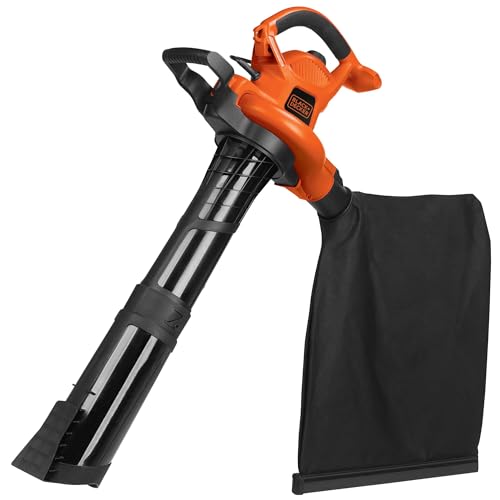
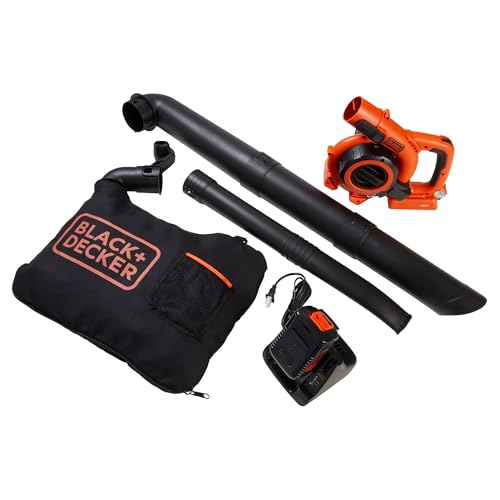
For clearing patios, workbenches, and tight walkways without the physical strain of a bulky outdoor tool, a mini model like the KIMO Leaf Blower Cordless with Battery delivers effortless one-handed handling at only 2.2 pounds, though its compact battery restricts extended runtimes on large properties.

Pros
- 4-in-1 capability functions as blower, vacuum, inflator, and deflator
- Weighs only 2.2 pounds for easy one-handed operation
- Panel control offers 3 speed settings up to a rated 190 MPH
- Includes 2.0Ah battery, charger, collection bag, and 3 nozzle adapters
Cons
- Modest suction power of 2,000 Pa is limited to light debris
- Single 2.0Ah battery may require frequent recharging on large jobs

Pros
- Multi-function design blows, vacuums, inflates, and deflates
- Includes battery, fast charger, and 3 inflation adapter nozzles
- Compatible with third-party Makita 18V batteries
- Lightweight 2-pound build with battery level indicator
Cons
- Stated runtime is limited to approximately 10 minutes on high speed
- Low airflow rating of 64 CFM restricts use to small, light debris

Pros
- Lightweight design at only 4.4 pounds
- 7-Amp motor rated up to 180 MPH and 180 CFM
- Built-in cord retention prevents unplugging
- Zero emissions with instant push-button start
- Simple, low-maintenance corded design
Cons
- Extension cord is not included
- Operating range is limited by cord reach
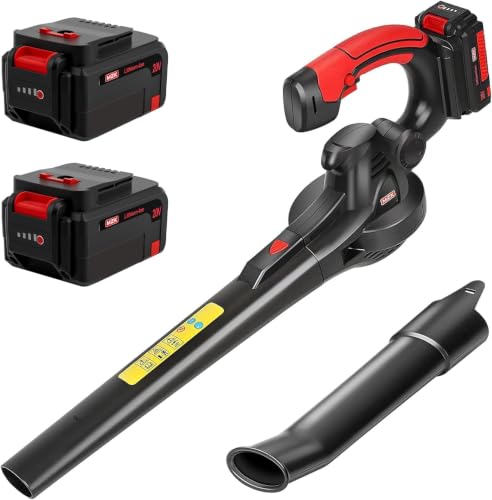
Pros
- Weighs only 3.9 pounds for light handling
- Rated airflow up to 450 CFM
- Cordless design allows unrestricted mobility
- Convenient one-hand trigger operation
- No gas mixing or cord management required
Cons
- Runtime varies significantly by power output
- Battery charging intervals required
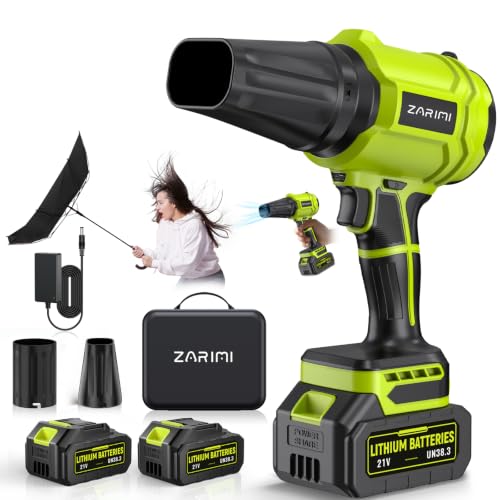
Pros
- Extremely lightweight at only 2.8 pounds for low-fatigue use
- Reaches stated air speeds over 50 m/s (110+ MPH)
- Comes with two batteries and charger for alternating use
- Includes a concentrated narrow nozzle for detailed edging
- Compact footprint stores easily in tight spaces or vehicle trunks
Cons
- Limited runtime of only about 13 minutes per battery
- Not designed for moving heavy or deep piles of wet leaves
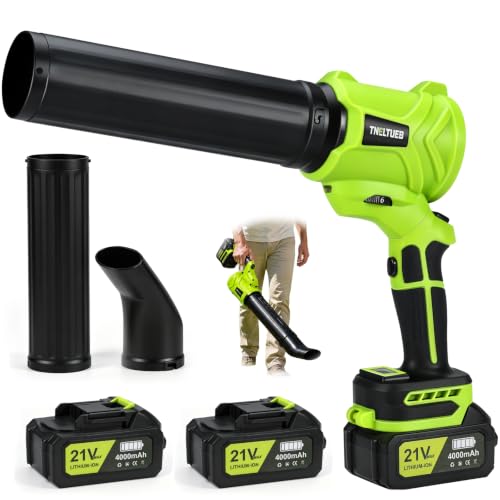
Pros
- Six selectable speed settings spanning 100 to 200 MPH
- 180-degree rotating handle facilitates versatile blowing angles
- Includes two 21V 4.0Ah rechargeable battery packs
- Comes equipped with two interchangeable nozzle attachments
- Ultralight 2-pound build allows easy one-handed maneuvering
Cons
- Battery runtime drops considerably when using higher speed modes
- Requires swapping batteries during large property cleanups

Pros
- Weighs only 2.6 pounds for easy one-handed handling
- Includes two 2.0Ah rechargeable batteries and a charger
- Manufacturer-rated airflow reaches up to 130 MPH and 180 CFM
- Two interchangeable tubes accommodate floor or tabletop work
- Rated for over 30 minutes of total operating time across packs
Cons
- Not intended for heavy, wet leaf piles
- Modest 180 CFM output limits heavy-duty yard clearing
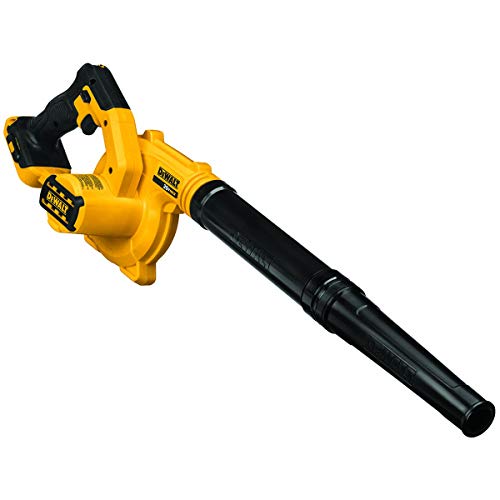
Pros
- Lightweight 2.5-pound design fits into tight spaces
- 3-speed variable switch plus variable speed trigger
- Trigger lock-on reduces hand fatigue during continuous use
- Includes 3 nozzle attachments for different clearing tasks
Cons
- Sold as a bare tool without battery or charger
- 100 CFM airflow is strictly intended for jobsite debris

Pros
- Weighs just 0.2 pounds with a 6-inch body
- Plugs into standard USB adapters and computers
- Battery-free operation with included USB cable
- Ergonomic styling mimics full-sized equipment
Cons
- Requires an active USB power source to run
- Intended for light desktop dusting, not outdoor yards

Pros
- Reaches up to 110,000 RPM for efficient dust removal
- Ultra-compact, lightweight body weighs just 0.45 lbs
- Includes four specialized nozzles and a lanyard
- Recharges in roughly 3.5 hours via USB Type-C
- Sustainable alternative to disposable canned air
Cons
- Max speed runtime is significantly shorter than low gear
- Recharge time takes roughly 3.5 hours
How Weight And Form Factor Define A True Mini Blower
A true miniature blower trades wide sweeping swaths for lightweight maneuverability, with handheld models typically weighing between 2 and 4 pounds. When shopping for a small blower cordless tool, total weight determines whether you can easily clean overhead gutters, patio furniture, and garage corners without arm fatigue. The KIMO Leaf Blower Cordless with Battery leads the ultra-lightweight category at an advertised 2.2 pounds, while the Leaf Blower Cordless with 2.0Ah Battery & Charger from JAGROM weighs 2.6 pounds. Slightly larger alternatives, such as the YUQUESEN Cordless Leaf Blower at 2.8 pounds and the MZK 20V Cordless Leaf Blower at 3.9 pounds, offer sturdier frames but add noticeable carrying mass.
At the most extreme end of the scale, micro devices like the WOLFBOX MegaFlow 50 Compressed Air Duster weigh just 0.45 pounds, though their tiny form factor is built for electronics, keyboards, and car interiors rather than outdoor leaf removal. The primary operational trade-off of an ultra-lightweight chassis is a smaller fan housing, which naturally limits the total air volume the motor can push in a single pass.
Airspeed Versus Air Volume On Compact Sweepers
High airspeed dislodges damp leaves and grit from crevices, but low air volume requires more passes across open surfaces. Selecting an effective leaf blower for driveway chores requires understanding how velocity (MPH) and volume (CFM) interact on compact frames. For example, the corded BLACK+DECKER Electric Leaf Blower features a 7-amp motor advertised to generate 180 MPH and 180 CFM, giving it sufficient volume to sweep broader driveways and walkways.
In contrast, ultra-compact cordless blowers often direct power into concentrated jets. The NEWONE Small Leaf Blower Cordless Compatible lists an advertised airspeed of 157 MPH but pairs it with an air volume of only 64 CFM. Similarly, the DEWALT 20V MAX Blower, 100 CFM Airflow outputs 100 CFM. While these narrow airstreams effortlessly sweep sawdust off a workbench or blow dry debris out of car door sills, clearing an expansive yard or dense lawn with sub-100 CFM airflow will take considerably more time and effort.
Multi-Function Attachments Versus Dedicated Blowers
Several miniature leaf blowers serve dual roles by reversing airflow for vacuuming or accepting narrow nozzles for inflating recreational gear. The KIMO Leaf Blower Cordless with Battery functions as a 4-in-1 blower, vacuum, inflator, and deflator, incorporating three nozzle adapters and an advertised 2,000 Pa vacuum suction mode for light dirt and pet hair. Likewise, the NEWONE Small Leaf Blower Cordless Compatible converts into a vacuum cleaner by attaching its blow tube to the air inlet and placing a collection bag over the outlet.
While versatile for auto detailing or inflating camping mattresses, these multi-function conversions have clear limitations. Small collection bags fill up rapidly, and narrow intake ports can clog when handling wet, clumpy yard waste. Dedicated sweepers like the DEWALT 20V MAX Blower, 100 CFM Airflow forgo suction entirely, investing instead in a 3-speed variable trigger, lock-on switch, and three directional nozzle attachments tailored specifically for sweeping jobsite debris and clearing surface dust.
Runtime Constraints And Dual-Battery Setups
Compact lithium-ion batteries keep tool weight manageable, but sustained high-speed operation drains small packs rapidly. When purchasing a small rechargeable leaf blower, verifying battery capacity and the number of included packs is critical for uninterrupted work. The NEWONE Small Leaf Blower Cordless Compatible advertises approximately 10 minutes of working time on a full charge at top speed, which is suitable only for short sweeps.
To mitigate runtime anxiety, several manufacturers package two batteries in the box. The Leaf Blower Cordless with 2.0Ah Battery & Charger provides two 2.0Ah batteries, with an advertised total operating time exceeding 30 minutes when swapping packs. The YUQUESEN Cordless Leaf Blower also includes two batteries, advertising 13+ minutes of continuous output per pack for a combined 26+ minutes. By comparison, corded models like the BLACK+DECKER Electric Leaf Blower provide continuous runtime, but require you to supply your own outdoor extension cord and stay tethered to an outlet.
Tiny Leaf Blower Frequently Asked Questions
Can a tiny leaf blower move wet leaves on an open lawn?
Compact blowers generally output lower air volume (CFM) than standard outdoor tools, making them best suited for hard surfaces like patios, decks, and driveways. Pushing dense, wet leaves across grass typically requires higher CFM than a miniature housing can generate.
What is the practical difference between CFM and MPH on a mini blower?
Airspeed (MPH) indicates how fast the air exits the nozzle to lift stuck dirt, while air volume (CFM) measures the overall volume of air moving debris forward. A mini blower with high MPH but low CFM acts like a focused jet, requiring narrower, more precise sweeping passes.
Deciding Which Compact Blower Fits Your Space
Choosing the right miniature blower comes down to balancing portability against the size and nature of your cleaning space. For tight work environments, vehicle detailing, and quick patio clearing, a sub-3-pound cordless blower provides unmatched freedom of movement without the burden of heavy machinery. However, you must accept shorter continuous runtimes and narrower airflow coverage compared to full-sized outdoor blowers.
For most homeowners seeking an ultra-portable yard helper, the KIMO Leaf Blower Cordless with Battery offers the strongest overall utility with its 2.2-pound carrying weight, multi-nozzle inflator kit, and vacuum functionality. Its main trade-off is the limited capacity of its single 2.0Ah battery during heavy clearing. If you have immediate access to an electrical outlet and prioritize continuous power over untethered range, the corded BLACK+DECKER Electric Leaf Blower provides a stronger 180 CFM airflow without any battery limitations.