For homeowners managing small lots or noise-sensitive areas, electric and battery options eliminate gas engine exhaust noise, but high-airflow motors still produce significant air-rush sound and require trade-offs between battery runtime and corded reach.

Pros
- Multi-function design blows, vacuums, inflates, and deflates
- Includes battery, fast charger, and 3 inflation adapter nozzles
- Compatible with third-party Makita 18V batteries
- Lightweight 2-pound build with battery level indicator
Cons
- Stated runtime is limited to approximately 10 minutes on high speed
- Low airflow rating of 64 CFM restricts use to small, light debris

Pros
- Lightweight design at only 4.4 pounds
- 7-Amp motor rated up to 180 MPH and 180 CFM
- Built-in cord retention prevents unplugging
- Zero emissions with instant push-button start
- Simple, low-maintenance corded design
Cons
- Extension cord is not included
- Operating range is limited by cord reach

Pros
- Weighs only 2.28 lbs for easy one-handed operation
- Includes two 21V 4000mAh lithium batteries
- Variable speed trigger provides precise airflow control
- Comes with an extension tube and flat nozzle attachment
Cons
- Rated runtime tops out at roughly 30 minutes
- Not designed for large properties or heavy wet debris

Pros
- Delivers up to 600 CFM and 110 MPH airflow
- Continuous corded power eliminates recharging and gas mixing
- Variable-speed control adjusts airflow to the task
- Lightweight design weighs just 6.4 pounds
Cons
- Operating range is tethered to an electrical outlet
Pros
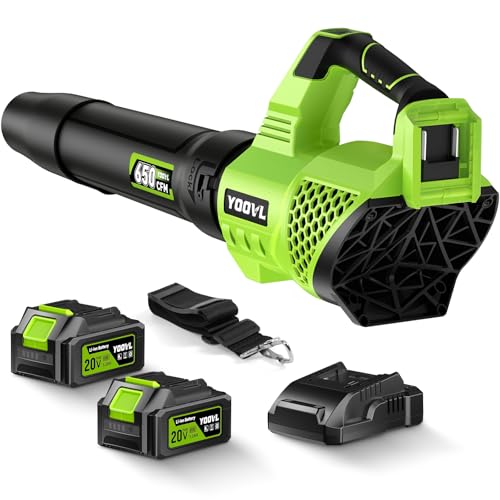
- Airflow rated up to 650 CFM using advanced turbo technology
- Comes with two high-capacity 20V 5.2Ah batteries and fast charger
- Three selectable speed modes for delicate to heavy-duty jobs
- Includes an adjustable shoulder strap to reduce arm fatigue
- Includes blower tube and extension nozzle attachments
Cons
- Maximum 150-minute runtime applies only to low-speed mode
- Heavier battery packs may add weight during prolonged handheld use

Pros
- Includes two 21V 4.0Ah batteries for extended runtime
- Delivers up to 420 CFM airflow and 150 MPH air speed
- Lightweight design weighs under 3 lbs bare tool for low fatigue
- Comes with both round and flat interchangeable nozzles
- Two adjustable speed settings for varying cleanup tasks
Cons
- Limited to two preset airflow speeds
- Best suited for dry leaves and light debris rather than heavy wet waste

Pros
- Brushless motor delivers rated airflow up to 650 CFM and 180 MPH
- Includes two 20V 4.0Ah batteries and a fast charger
- Six adjustable speed settings ranging from 80 to 180 MPH
- Comes with an ergonomic shoulder strap and two detachable nozzles
- Includes a storage bag to keep components organized
Cons
- Stated 30-minute runtime is restricted to low-speed operation
- High-speed settings will deplete battery charge more rapidly
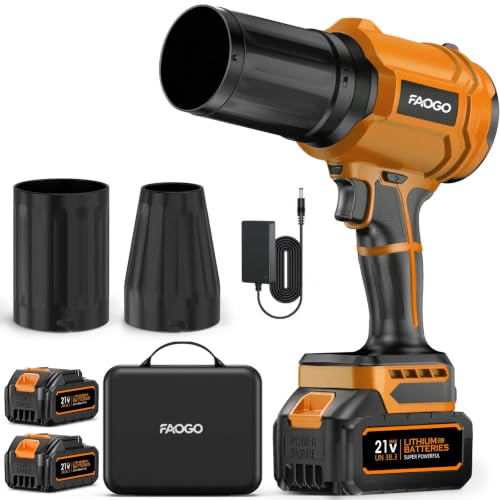
Pros
- Lightweight and compact design for comfortable one-handed use
- Includes two batteries and charger for uninterrupted swapping
- Comes with two extended interfaces for reach in tight spaces
- Storage bag included for convenient organization
Cons
- Total battery life is rated at roughly 26+ minutes across both packs

Pros
- Includes two 20V 2.0Ah batteries and a fast charger
- Extremely lightweight design at just 3.4 pounds
- Two selectable speed modes match light and heavier tasks
- Ergonomic non-slip grip allows comfortable one-handed use
- Comes with an extension nozzle for targeted airflow
Cons
- Runtime decreases significantly at the higher speed setting
- Best suited for light residential cleanup rather than dense debris

Pros
- Claims up to 450 CFM and 150 MPH for efficient debris clearing
- Lightweight 3.8-pound body reduces arm fatigue
- Includes two batteries and a charger for extended sessions
- Two selectable speed modes match different cleaning tasks
- Simple assembly requiring only nozzle and battery attachment
Cons
- Runtime reaches up to 30 minutes per battery only on low speed
- High-speed battery consumption significantly shortens run times
Noise Trade-Offs: How Electric Blowers Avoid Gas Engine Clatter
Electric leaf blowers provide a noticeable acoustic relief compared to two-stroke gas engines, but they are not completely silent. While gas models generate harsh combustion clatter, electric tools rely on electric motors and high-speed fans. However, moving air at speeds upwards of 110 to 180 MPH creates mechanical whine and wind turbulence.
For example, the wanvzo Cordless Leaf Blower explicitly markets a noise-reducing motor and provides earplugs in the box, acknowledging that high-RPM turbofans still require ear protection during extended use. Decibel levels are rarely published in verified manufacturer data, making motor type and fan speed the primary clues for overall disturbance.
Cordless Freedom vs. Continuous Power: CFM and Runtime Limits
Deciding between corded and cordless tools comes down to whether you prioritize untethered movement or limitless running time. Cordless models run on swappable batteries but require downtime or spare packs for larger jobs.
The Leaf Blower Cordless, 650CFM Electric Leaf Blowers includes two 20V 5.2Ah batteries, offering dual-battery rotation to minimize work stoppages. In contrast, the corded WORX 12 Amp Turbine Electric Leaf Blower for Daily delivers continuous power without battery degradation, though your cleaning zone is limited by the reach of an extension cord (which is not included with the unit).
Airflow Ratings: Matching CFM and Speed to Yard Size
Airflow volume (measured in CFM) dictates how much material a tool can push, while air speed (MPH) determines how well it loosens stuck-on debris. Compact utility blowers work well for dry patios, but larger lawns require higher airflow ratings to clear damp leaves.
For quick workshop or garage cleanups, the NEWONE Small Leaf Blower Cordless Compatible produces an advertised 64 CFM and 157 MPH, functioning also as an inflator and light vacuum. However, for pushing heavy yard piles, higher-capacity options like the Leaf Blower Cordless 650CFM with 2×4.0Ah Battery push up to an advertised 650 CFM, moving significantly more debris across open grass at the expense of higher energy consumption.
Ultra Quiet Leaf Blower FAQ: Real-World Expectations
Are electric leaf blowers truly silent?
No electric leaf blower is completely silent. While electric and battery motors eliminate the loud exhaust rumble of two-stroke gas engines, the high-speed fan and forced air stream still produce mechanical noise and air rush.
What affects battery runtime on handheld cordless models?
Runtime depends heavily on the motor speed setting and amp-hour battery capacity. High-speed settings draw significantly more power, dropping operating time quickly unless you alternate between spare battery packs.
Final Decision: Selecting the Right Low-Noise Yard Blower
Matching the tool to your property size ensures you avoid dead batteries or unreachable corners mid-cleanup. Lightweight cordless handhelds excel at porches, decks, and vehicle drying, whereas corded electric blowers remain practical workhorses for suburban lots where electrical outlets are easily accessible.
For buyers seeking an untethered, high-capacity cleaner for broad residential turf, the Leaf Blower Cordless, 650CFM Electric Leaf Blowers provides strong airflow and includes dual 5.2Ah battery packs, though running it at full blast will drain batteries faster than lower-output tools. If you instead prefer limitless runtime on a budget and do not mind managing a power cable, the BLACK+DECKER Electric Leaf Blower offers a lightweight, corded alternative for clearing standard walkways and driveways.