Quick Answer
Intensive memory loads expose marginal stability missed during brief benchmarks. XMP and EXPO profiles push memory controllers beyond stable tolerances. Sustained saturation triggers bit flips from heat and Vdroop. Inspect crash logs. Run extended memory stress tests. Mitigate by reducing clock speed or adjusting DRAM voltage within safe limits.

Pros
- 128GB total from four 32GB modules
- ECC UDIMM with 2Rx8 rank listed
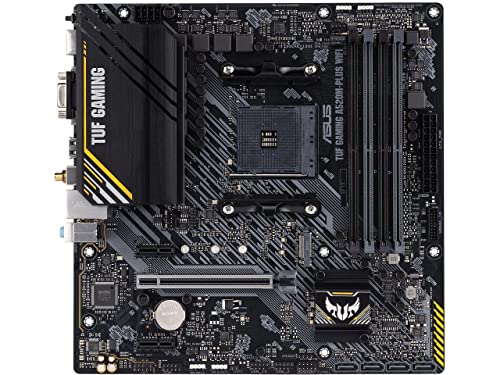
- Lists many ROG, TUF, and B850 boards
- Manufacturer-stated lifetime replacement warranty
Cons
- Board capacity limits and slot rules must be confirmed
- Compatibility and speed are manufacturer-stated claims

Pros
- Very large 128GB capacity is ideal for power users, creators, and advanced multitasking.
- Rated DDR5-6400 speed with CL36 latency offers strong enthusiast-class specifications.
- Includes both JEDEC default profile and Intel XMP 3.0 for easier setup on supported systems.
- Matched 2-module kit is engineered for stability when used as sold.
Cons
- Requires a compatible motherboard and a 2025-or-newer BIOS with 64GB module support.
- Achieving the rated XMP speed depends on CPU, motherboard, and overall system compatibility.
- Non-ECC memory may not be the right choice for users who need error-correcting workstation or server RAM.
Overview & Design: The G.SKILL Trident Z5 RGB F5-6400J3644F64GX2-TZ5RK is a high-capacity DDR5 desktop memory kit built around two 64GB modules. It uses a matte black Trident Z5 RGB design and follows the standard 288-pin U-DIMM form factor for compatible desktop systems.
Performance & Key Features: On paper, this kit is aimed at demanding Intel-based builds that can take advantage of DDR5-6400 speeds and CL36 timings. The included Intel XMP 3.0 profile can simplify setup in supported BIOS versions, while the 128GB capacity is well suited to heavy multitasking, large project files, virtual machines, and content creation workloads.
- 128GB total capacity from a matched 2x64GB kit
- DDR5-6400 rated speed with CL36-44-44-102 timings
- 1.35V operation with JEDEC default fallback profile
- Intel XMP 3.0 support for compatible systems
Drawbacks & Considerations: This is not a plug and play speed upgrade for every PC. The 64GB module requirement means motherboard BIOS support is important, and the rated XMP speed still depends on the CPU and motherboard combination. It is also non-ECC memory, so it is not intended for users who need error-correcting RAM.
Verdict: For builders who need very high memory capacity and want fast DDR5 performance on a compatible Intel platform, this kit is a strong fit. It makes the most sense for enthusiast desktops, creator workstations, and advanced multitasking setups rather than basic everyday PCs.

Pros
- Very large 128GB capacity in a 2-module configuration.
- Strong DDR5-6000 CL34 specification for a high-capacity kit.
- Supports both AMD EXPO and Intel XMP 3.0.
- Uses a matched kit design to reduce stability issues versus mixing memory kits.
Cons
- Requires a compatible motherboard and a BIOS update dated 2025 or newer with 64GB module support to reach the rated profile.
- XMP or EXPO must be enabled manually in BIOS to approach advertised speeds.
- Non-ECC desktop memory, so it is not intended for systems that require error-correcting RAM.
Overview: The G.SKILL Flare X5 F5-6000J3444F64GX2-FX5 is a 128GB DDR5 U-DIMM kit made from 2x64GB modules with a matte black finish. It is designed for desktop systems that need very high memory capacity in a standard 288-pin format.
Performance and features: This kit is rated for DDR5-6000 with timings of CL34-44-44-96 at 1.35V, which gives it strong bandwidth for demanding workloads on supported platforms. It includes JEDEC default settings plus AMD EXPO and Intel XMP 3.0 profiles, so compatible users can enable the tuned profile in BIOS for higher performance.
Drawbacks and considerations: Compatibility is important here because the kit requires a motherboard BIOS update dated 2025 or newer with 64GB module support. As with any performance memory kit, it should not be mixed with other RAM kits, and rated speeds depend on the motherboard and CPU combination.
- Non-ECC design, so it is not aimed at systems that require error correction.
- Desktop DDR5 U-DIMM only, so it is not suitable for laptops or SODIMM-based systems.
- XMP or EXPO must be enabled manually in BIOS to reach the advertised overclock profile.
Verdict: This is a strong option for enthusiasts, creators, and power users who want a large, matched DDR5 kit and have verified motherboard support. It makes the most sense in high-capacity gaming builds, workstation-style desktops, and heavy multitasking PCs.
Why XMP or EXPO Profiles Crash in Memory-Heavy Games: Technical Overview
XMP (Intel Extreme Memory Profile) and EXPO (AMD Extended Profiles for Overclocking) are not JEDEC-certified operating points. They are vendor-programmed overclock presets stored in the module SPD. A DDR5 module that boots at the JEDEC baseline of 4800 MT/s at 1.10 V VDD/VDDQ (1.8 V VPP) is operating inside a validated envelope. The same module running DDR5-6000 CL30 at 1.35 V is running outside the memory-controller specification published by the CPU vendor. Manufacturer documentation specifies that profile-based operation is not covered by the processor’s rated memory support, so stability depends on the individual
For related maintenance and equipment benchmarks, review our technical guides on gaming desktop memory, examine multitasking ram benchmarks, and compare pc desktop motherboards. You can also reference our analyses on 4k gaming memory configs and high speed memory setups. For industry engineering standards, consult JEDEC memory standards.