Quick Answer: WORX Landroid Vision vs Gardena SILENO City, Which Should You Buy in 2026?

Pros
- Manufacturer says no boundary wire or lawn mapping is needed for setup
- Landroid app manages scheduling, cutting heights, and multi-zone mowing
- Self-leveling deck is designed for uneven lawns, per manufacturer
- Included FiatLux headlight supports night mowing
- RFID tags and magnetic strip barriers included for multi-zone yards
Cons
- Rated for lawns up to 1/2 acre only
- Weighs 34.8 pounds, per manufacturer specifications
Pros
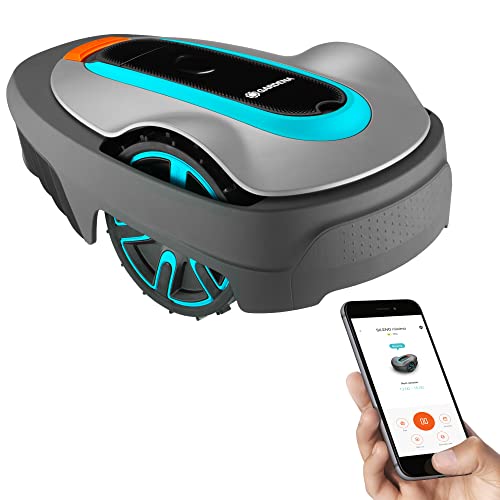
- Manufacturer-rated noise of 57 dBA, one of the quietest in class
- Bluetooth EasyApp control with Auto-Schedule and EasyConfig
- Boundary wire keeps mowing within the areas you set
- Collision sensors support safer operation, per listing
- Installation videos and instructions are listed as included
Cons
- Requires boundary wire installation before mowing
Specifications Side-by-Side
| Specification | WORX Landroid Vision WR208 | Gardena SILENO City 15001-41 |
|---|---|---|
| Brand | WORX | Gardena |
| Product type | Wire-free robotic lawn mower | Automatic robotic lawn mower with boundary wire |
| Model | WR208 | 15001-41 |
| Maximum stated lawn area | Up to 1/5 acre | Up to 2,700 square feet |
| Navigation and boundary system | AI deep learning and HDR camera; no boundary wire required | Boundary wire |
| Obstacle avoidance | Active obstacle avoidance; camera-based grass recognition | Safe and reliable boundary-wire navigation |
| Connectivity | WiFi and Bluetooth; app control | Bluetooth app and EasyApp Control |
| Scheduling | Automatic scheduling; customizable schedule | Auto-Schedule |
| Multi-zone mowing | Supported in the supplied feature description | Not specified |
| Cutting motor speed | Not specified | 2,670 rpm |
| Noise level | Not specified | 57 dBA |
| Navigation characteristics | Identifies grassy areas to cut and stays within bounds | Traverses narrow spaces and tight corners |
| Country or production description | Not specified | Made in Europe |
| Rating | 4.2/5 | 4.0/5 |
| Listed price | Unavailable in manufacturer specifications | $519.59 |
Performance
Core Performance
These mowers are aimed at small residential lawns, but they take different approaches to the job. The WORX Landroid Vision WR208 is rated for up to 1/5 acre. Its main performance advantage is not a published cutting-speed figure; it is the way the mower determines where to work. The onboard AI deep-learning system and HDR camera are intended to recognize grassy areas, cut those areas, and stay within the lawn without a perimeter wire or a preliminary lawn-mapping process.
The Gardena SILENO City is specified for lawns up to 2,700 square feet. Its cutting motor runs at 2,670 rpm, and Gardena identifies patented streak-free technology as part of the design. That gives the SILENO City the clearer published cutting specification in this comparison. If your priority is a documented motor speed and a clean, streak-free mowing approach, Gardena has the stronger evidence. If your priority is avoiding a wire-based installation, the WORX has the more convenient design. Before finalizing equipment decisions, refer to our comprehensive robotic lawn mower rtk vs vision boundary wire comparison.
Neither product’s manufacturer specifications includes a measured mowing time, battery capacity, recharge time, cutting width, cutting-height range, maximum slope, or wet-grass performance result. Those omissions matter when comparing real-world throughput. The stated coverage figures should therefore be treated as the products’ intended lawn-size limits rather than a promise of a particular number of hours per mowing cycle.
Handling & Ergonomics
The Landroid Vision is the easier machine to get started with on paper. WORX describes setup as “just unbox and mow,” with no boundary-wire installation and no lawn mapping required. That removes the most labor-intensive part of installing a traditional robotic mower: defining the working area with a perimeter cable. Its camera-based system also provides active obstacle avoidance, which is useful for owners who do not want to plan the lawn around a buried or pinned boundary wire. For broader ecosystem context, read through our operational guide on roborock rockmow x120h vs mammotion yuka mini 2.
The SILENO City takes more preparation because its safe operating area is defined by a boundary wire. Once that boundary is installed, the system is intended to follow a controlled route inside it. Gardena specifically highlights travel through narrow spaces and tight corners, making this mower a logical fit for compact gardens with passages or awkward turns. The manufacturer information does not say how much wire is included, how it should be installed, or whether the mower can avoid every object in the lawn, so those details should be checked before purchase.
Both mowers can be managed without repeatedly standing beside the machine. WORX lists WiFi, Bluetooth, app control, automatic scheduling, and a customizable mowing schedule. Gardena provides Bluetooth EasyApp Control and Auto-Schedule. The difference is that the WORX description emphasizes remote management over WiFi as well as Bluetooth, while the Gardena listing specifically identifies Bluetooth connectivity. For troubleshooting and reliability insights, consult our in-depth ecovacs goat o1000 vs worx landroid s report.
Runtime / Fuel & Maintenance
Both are battery-powered robotic lawn mowers, but the supplied research does not provide battery capacity, runtime, charging duration, or a quantified area completed per charge for either model. It is therefore not possible to name a runtime winner or calculate energy cost from the available data. Both products are designed to mow automatically according to a schedule, so the practical expectation is repeated mowing rather than one long, manually supervised session.
The main installation-related maintenance distinction is straightforward. The WORX has no boundary wire to install or maintain. The Gardena depends on a boundary wire, which adds an installation component and creates another part of the system to inspect if the mower stops recognizing its working area. Conversely, the Gardena’s wire-based boundary provides a defined physical operating zone, while the WORX relies on its vision system to identify grass and remain within bounds. Readers comparing setup options can review our technical analysis on dreame a3 awd vs segway navimow i206.
Neither listing supplies a blade-replacement interval, battery-replacement schedule, service price, blade price, charging-station maintenance requirement, or weather limitation. Those consumable and servicing costs cannot be calculated fairly from manufacturer specifications. Owners should plan to follow the manufacturer’s maintenance instructions and verify the availability and price of replacement parts before ordering.
Best Use Cases
- WORX Landroid Vision: small lawns up to 1/5 acre where avoiding boundary-wire work is a priority; yards where app control, automatic scheduling, active obstacle avoidance, and multi-zone mowing are useful.
- Gardena SILENO City: lawns up to 2,700 square feet where a defined boundary-wire installation is acceptable; compact spaces with narrow sections and tight corners; owners who value a stated 57 dBA noise level.
- Neither is an obvious large-property choice: the supplied capacity figures place both products in the small-yard category, and no evidence here supports using either beyond its stated coverage.
Maintenance & Running Costs
The ongoing running-cost comparison is limited because neither product listing provides electricity consumption, battery size, replacement-blade pricing, or service intervals. The best-supported difference is installation. The WORX avoids boundary-wire installation entirely, which can save time and reduce the chance of troubleshooting a perimeter cable later. Its Vision system instead depends on the mower’s AI and HDR camera to distinguish grassy areas and remain inside the intended area.
The Gardena requires a boundary wire, but the supplied product description presents that wire as part of its safe and reliable navigation system. A correctly defined perimeter can be reassuring in a garden with clearly separated lawn areas. It also means the owner should account for the work of placing the wire and for possible inspection if the boundary is disturbed. The data does not state whether the wire is supplied, how it is secured, or whether installation is above ground or buried.
For both machines, the practical maintenance checklist should include keeping the cutting area and sensors clear, checking the charging area, and replacing worn cutting components according to the manufacturer’s guidance. These are general ownership considerations rather than model-specific claims; the supplied research does not provide a detailed service schedule for either mower.
Features & Usability
The WORX offers the more ambitious feature set. Its HDR camera and AI deep learning are used for grass recognition and active obstacle avoidance. The mower can automatically schedule operation, and the Landroid app lets owners manage it remotely and customize the schedule. WiFi and Bluetooth connections are listed, and the product description includes multi-zone mowing. Most importantly for setup, WORX says that no boundary wire or lawn mapping is required.
That wire-free approach is a major convenience, but it also makes the quality of the result dependent on the mower’s ability to interpret the lawn correctly. manufacturer specifications does not include a test result for missed grass, false boundaries, obstacle-recognition accuracy, or performance in shaded conditions. The feature is compelling, but buyers should not treat the camera description as a quantified navigation guarantee.
The Gardena SILENO City is more conventional but has a clear usability pitch. Its Bluetooth EasyApp Control provides app-based management, while Auto-Schedule automates mowing times. Gardena highlights its ability to navigate narrow spaces and tight corners, and the mower’s 57 dBA rating is unusually specific compared with the WORX listing. The SILENO City also uses patented streak-free technology and is described as one of the quietest in its class.
There is no universal winner in setup philosophy. The WORX minimizes physical installation; the Gardena uses a defined wire boundary and emphasizes quiet, precise movement. Owners who would rather configure an app than install a perimeter will likely find the WORX more approachable. Owners who prefer a clearly marked operating area and a published noise figure may prefer the Gardena.
Price & Value Analysis
Gardena’s listed price is $519.59. The WORX Landroid Vision price is shown as $NULL in manufacturer specifications, so there is no responsible way to calculate the price premium, savings, or value gap between these exact listings. The product ratings are close: 4.2/5 for the WORX and 4.0/5 for the Gardena, but ratings alone do not establish lower ownership cost or better performance.
The Gardena is worth considering at its known price when the lawn is no larger than 2,700 square feet, a boundary-wire installation is acceptable, and quiet operation is important. Its 57 dBA specification, 2,670-rpm cutting motor, narrow-space navigation, app control, and automatic scheduling give the price a concrete feature basis.
The WORX is worth paying for when its actual selling price is competitive with the Gardena and the wire-free installation materially improves the ownership experience. A capacity of up to 1/5 acre is also a better fit for a lawn that exceeds 2,700 square feet but remains within that limit. WiFi, Bluetooth, camera-based obstacle avoidance, automatic scheduling, and multi-zone mowing further strengthen its value for owners who want more connected control.
Before purchasing, compare the live price of the WORX with the Gardena’s $519.59 listing and confirm what installation materials are included. The missing WORX price is the single biggest limitation in this value comparison.
Which Should You Buy?
Choose WORX Landroid Vision if…
- You want to avoid installing a boundary wire.
- Your lawn is up to 1/5 acre.
- You want camera-based active obstacle avoidance and AI grass recognition.
- You want both WiFi and Bluetooth connectivity with app control.
- You need automatic scheduling with a customizable timetable.
- You may benefit from multi-zone mowing.
- You prefer a higher supplied customer rating of 4.2/5 over the Gardena’s 4.0/5.
Choose Gardena SILENO City if…
- Your lawn is up to 2,700 square feet.
- You are comfortable installing and using a boundary wire.
- Quiet operation is a major priority; the mower is rated at 57 dBA.
- You want a mower with a specified 2,670-rpm cutting-motor speed.
- Your garden contains narrow spaces and tight corners.
- You value the listed patented streak-free cutting technology.
- You want a known listed price of $519.59 rather than comparing against an unavailable WORX price.
Consider a different model if…
- Your lawn is larger than the stated coverage of either mower.
- Your property needs a verified slope rating, but neither manufacturer listing provides one.
- You need published runtime, charging-time, cutting-width, or cutting-height figures before buying.
- Your yard requires quantified performance under heavy tree cover, on steep slopes, or in difficult grass conditions.
- You want a documented long-term servicing plan, consumable price, or battery-replacement cost that is not supplied here.
Not sure between these two? Our complete guide to Best Robot Lawn Mowers covers more options at every price point.
Everything You Need to Know: Worx Landroid Vision Vs Gardena Sileno City FAQ
Does the WORX Landroid Vision need a boundary wire?
No. The supplied WORX description says the Landroid Vision requires no boundary-wire installation and no lawn mapping. It uses AI deep learning and an HDR camera to identify grassy areas and stay within bounds.
Does the Gardena SILENO City need a boundary wire?
Yes. The SILENO City is described as a boundary-wire robotic mower. The wire defines the mowing area and is part of the model’s safe and reliable navigation approach.
Which mower is quieter?
The Gardena SILENO City. Its listed noise level is 57 dBA, and Gardena describes it as one of the quietest in its class. manufacturer specifications does not provide a noise rating for the WORX Landroid Vision.
Which mower covers the larger lawn?
The WORX has the larger stated capacity in the manufacturer listings: up to 1/5 acre. The Gardena SILENO City is specified for lawns up to 2,700 square feet. Because the two figures use different units, compare your measured lawn area carefully before buying.
Related Comparisons
- Best Robotic Lawn Mowers
- Robotic Lawn Mower Buying Guide
- Roborock Lawn Mower Reviews and Comparisons
Outside Reading for Mower Buyers
Mowers equipped with cameras raise questions about how their electronics are designed and used at home. The American National Standards Institute (ANSI) discusses general electronics safety at a broad level. Neither robot is discussed in it.