Corded electric blowers provide dependable, continuous power for homeowners with compact yards near outdoor electrical outlets, though your operating radius is strictly tethered to an extension cord. In contrast, multi-battery cordless systems grant unrestricted mobility across broad lawns and driveways, but they trade away endless runtime in exchange for higher upfront costs and ongoing battery management.

Pros
- Lightweight 4 lb build minimizes arm fatigue
- Delivers up to 390 CFM airflow and 210 MPH speed
- Continuous corded power eliminates recharging pauses
- Two-speed switch toggles between light and full force
- Nested two-piece tube design for full assembly
Cons
- Requires an extension cord and nearby wall outlet
- Tubes ship nested and must be pulled apart before use

Pros
- Ultra-lightweight 1.62 lb compact build
- Comes with two 4.0Ah batteries and fast charger
- Includes 3 nozzles, extension hose, and safety gear
- Variable-speed trigger for adaptable airflow
Cons
- Runtime maxes out at 30 to 40 minutes
- Better suited for light to medium debris than heavy wet leaves

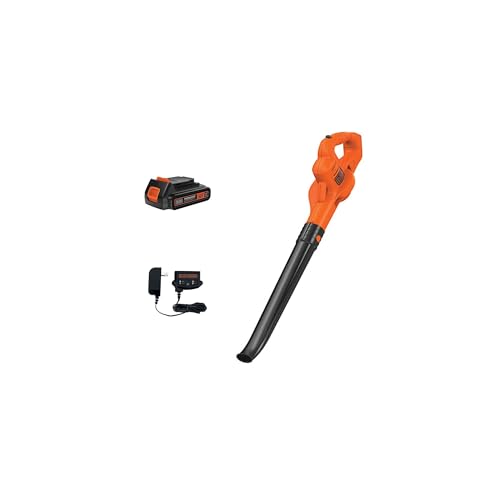
Pros
- Lightweight design at only 4.4 pounds
- 7-Amp motor rated up to 180 MPH and 180 CFM
- Built-in cord retention prevents unplugging
- Zero emissions with instant push-button start
- Simple, low-maintenance corded design
Cons
- Extension cord is not included
- Operating range is limited by cord reach
Pros
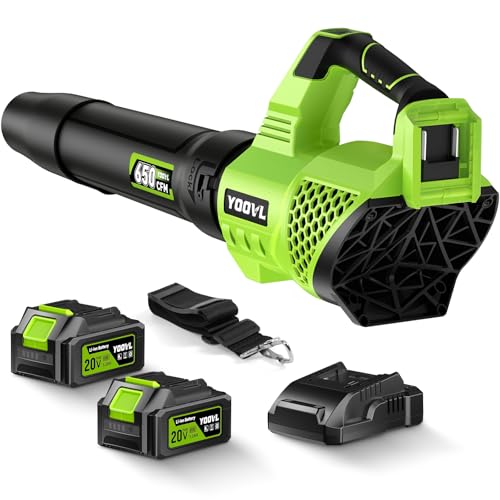
- Airflow rated up to 650 CFM using advanced turbo technology
- Comes with two high-capacity 20V 5.2Ah batteries and fast charger
- Three selectable speed modes for delicate to heavy-duty jobs
- Includes an adjustable shoulder strap to reduce arm fatigue
- Includes blower tube and extension nozzle attachments
Cons
- Maximum 150-minute runtime applies only to low-speed mode
- Heavier battery packs may add weight during prolonged handheld use

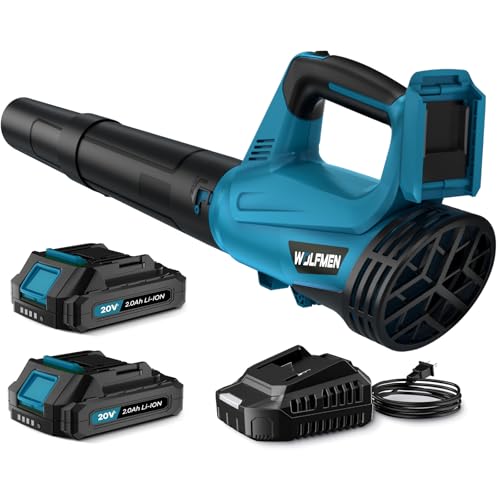
Pros
- Includes two 2.0Ah lithium-ion batteries and a fast charger
- Lightweight build weighs only 3.4 pounds with battery attached
- Modular two-section tube adjusts for different clearing heights
- Rated for up to 350 CFM and 150 MPH air performance
Cons
- Estimated runtime reaches up to 25 minutes at high speed
- Batteries must cool down before recharging

Pros
- Delivers up to a rated 650 CFM of airflow
- Includes two 20V 5.0Ah batteries and a fast charger
- Lightweight 4.4 lb body includes a shoulder strap
- Three selectable speed levels for varied cleanups
Cons
- Batteries are not compatible with DeWalt systems
- Maximum runtime decreases on higher speed settings
Pros
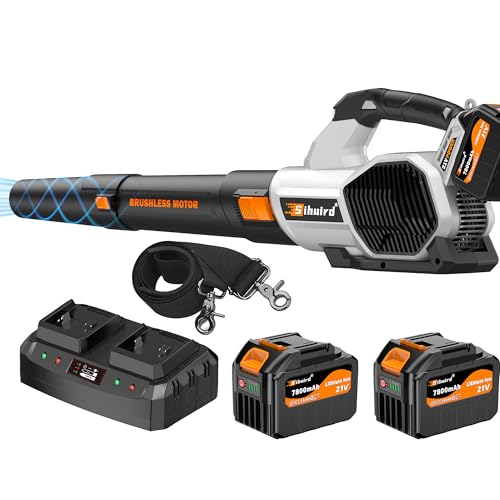
- Claimed output up to 765 CFM and 290 MPH with Turbo mode
- Includes two 7.8Ah high-capacity batteries and a dual fast charger
- Brushless motor paired with an axial fan design
- Built-in LED lighting aids cleanup in low-light conditions
- Three wind speeds with automatic speed locking
Cons
- Turbo mode automatically shuts off after 15 seconds per press
- Bulkier footprint compared to smaller handheld models
Pros
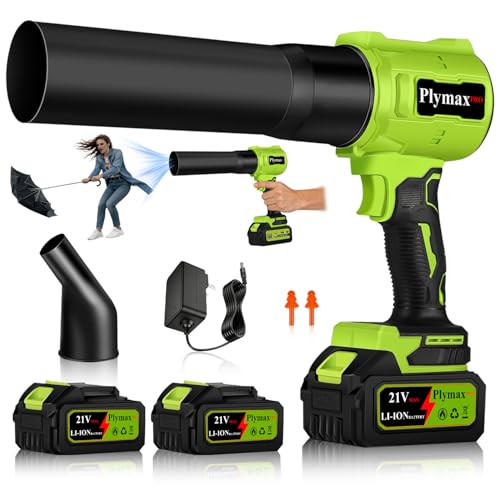
- Includes two 21V 4.0Ah lithium batteries and a charger
- Motor rated up to 800,000 RPM for focused air speeds
- Includes both a wide nozzle and a precision jet nozzle
- Suitable for outdoor patios, garage dusting, and car drying
- Compact, lightweight handheld design minimizes fatigue
Cons
- Compact frame less suited for expansive lawn leaf clearing
- Airflow volume specifications are not provided

Pros
- Includes two 20V 3000mAh rechargeable batteries
- Motor reaches up to 24,000 RPM for spot tasks
- Air velocity up to 55 MPH safely blows off vehicle water
- Compact handheld build reduces arm fatigue
- Round nozzle concentrates airflow into tight spaces
Cons
- Rated top speed of 55 MPH is limited for heavy yard work
- Brushed DC motor rather than brushless design
Corded Versus Cordless Power: Deciding Between Unlimited Runtime and Mobility
Corded electric blowers deliver continuous, fade-free power for uninterrupted yard work, whereas cordless models eliminate tripping hazards and extension cord tangles at the expense of finite battery cycles. If your clearing duties center on a small porch, deck, or paved apron adjacent to the house, a corded unit avoids the hassle of charging schedules and long-term battery degradation.
For example, corded tools such as the Grasstigon Electric Leaf Blower Corded, 7-Amp and the BLACK+DECKER Electric Leaf Blower both draw from reliable 7-amp motors. They operate as long as they stay plugged in, making them practical for quick routine cleanups where reach is not an issue. The BLACK+DECKER model includes built-in cord retention to prevent accidental disconnection, though buyers must supply their own exterior-rated extension cord. Conversely, cordless options like the Sihuird Leaf Blower Cordless and the Leaf Blower Cordless, 650CFM Electric Leaf Blowers grant absolute freedom of movement around fence lines, gardens, and remote perimeters without dragging a heavy cable. When deciding where to focus your budget, understanding your yard’s layout helps determine if an untethered leaf blower for driveway work is necessary or if a simple corded setup suffices.
Airflow Volume and Airspeed: Evaluating Advertised CFM and MPH Claims
Air volume (measured in CFM) determines how wide a swath of debris a blower can push across open turf, while airspeed (measured in MPH) dictates how effectively the jet can loosen matted or damp leaves from hard surfaces. Balancing these two metrics is essential, as neither figure tells the complete story on its own.
Among corded units, manufacturer ratings differ substantially: the Grasstigon model advertises an output of up to 390 CFM and 210 MPH across two selectable speed modes, while the BLACK+DECKER LB700 specifies up to 180 CFM and 180 MPH. For heavy-duty cordless clearing, models like the Sihuird blower claim up to 765 CFM and 290 MPH utilizing axial fan technology and a brushless motor, backed by an auxiliary turbo mode. Meanwhile, YOOVL and LOSART both advertise 650 CFM outputs with multi-speed throttles designed to manage everything from delicate porch dust to damp grass clippings.
At the opposite end of the spectrum, specialized mini turbo blowers prioritize concentrated air velocity over wide coverage. Tools such as the Cordless Leaf Blower, 800,000 RPM Electric from CurioToy and the Bullseye Blower Cordless Leaf Blower are engineered with narrow nozzles and high-speed motors. The Bullseye blower advertises up to 55 MPH (70 m/s) specifically tuned for drying car seams, mirrors, and tight patio crevices rather than sweeping broad lawn surfaces. Homeowners evaluating what leaf blower is the best must remember that CFM and MPH ratings represent manufacturer specifications rather than standardized independent laboratory tests.
Battery Capacity and Real-World Yard Work Demands
Total battery capacity, measured in amp-hours (Ah), dictates whether a cordless blower can finish your property on a single charge or leave you stranded midway through cleanup. High-speed and turbo modes drastically increase current draw, making dual-battery kits standard for practical outdoor use.
Battery kit configurations vary significantly among available models:
- Sihuird Leaf Blower: Includes two 7.8Ah high-capacity batteries and a dual rapid charger advertised to recharge in approximately 2.5 hours.
- LOSART & YOOVL: Both provide two 5.0Ah or 5.2Ah 20V battery packs, giving users a spare pack to swap while the other charges.
- CurioToy & Plymax: Supply two 4.0Ah packs to power their high-RPM handheld motors for intermediate patio and driveway sweeping.
- SEYVUM 20V Cordless: Employs two 2.0Ah batteries, keeping the total tool footprint light for short maintenance intervals.
While manufacturers often state maximum runtimes under low-speed conditions—such as up to 150 or 180 minutes—running a blower on maximum output or turbo mode will drain smaller 2.0Ah to 4.0Ah batteries in a fraction of that time. Buyers with expansive properties or heavy leaf fall should prioritize higher amp-hour ratings to minimize frustrating pauses for recharging.
Weight, Balance, and Comfort for Extended Clearing Tasks
A blower’s total operating weight and physical balance directly impact user fatigue, particularly during extended autumn leaf cleanups that require continuous sweeping motions across walkways and turf. Ergonomic handles and weight-support accessories help mitigate arm strain over long sessions.
For quick spot-cleaning and overhead tasks, ultra-lightweight options hold a noticeable advantage. The CurioToy mini blower weighs just 1.62 lbs, while the SEYVUM 20V unit registers at 3.4 lbs with battery installed, making them accessible for one-handed operation. Corded units like the Grasstigon (4 lbs) and BLACK+DECKER (4.4 lbs) also remain nimble because they carry no onboard battery weight. In contrast, higher-output cordless blowers carry substantial dual-battery configurations; to counter the added mass, models from YOOVL, LOSART, and Sihuird include adjustable shoulder straps to distribute the tool’s load evenly across your torso. If lightweight handling is your primary priority, exploring a small rechargeable leaf blower can prevent unnecessary physical strain.
Frequently Asked Questions About Leaf Blowers
Can battery-powered leaf blowers handle wet leaves and light snow?
Cordless blowers with high advertised air volumes, such as 650 CFM or 765 CFM, can move damp leaves and powdery snow using high or turbo modes. However, clearing wet, compacted debris significantly increases motor strain and drains battery charge much faster than sweeping dry grass or leaves.
Why do corded electric blowers rarely include an extension cord?
Most corded blowers, including models from BLACK+DECKER and Grasstigon, feature a short built-in plug pigtail with a cord retention hook. This design allows users to attach an outdoor-rated extension cord of appropriate gauge and length tailored to their specific yard size and the machine's 7-amp rating.
What is the difference between a high-RPM mini jet blower and a standard yard blower?
Mini jet blowers utilize ultra-high motor speeds and narrow nozzles to produce concentrated, high-velocity air in a compact frame under two pounds. They excel at drying vehicles, blowing out garages, and clearing patio furniture, but their narrow air cone lacks the broad CFM volume needed to clear large lawn areas efficiently.
How to Choose the Right Blower for Your Property
Selecting the right leaf blower requires balancing the size of your property, your proximity to power outlets, and the physical effort you want to expend. Small decks, townhome patios, and compact driveways are well served by lightweight mini blowers or affordable corded units that offer quick convenience without battery maintenance. Conversely, large residential properties with mature trees demand substantial airflow volume, variable speed controls, and robust dual-battery systems capable of tackling wet debris across open ground.
For budget-minded homeowners with small to medium yards near an exterior receptacle, the Grasstigon Electric Leaf Blower Corded, 7-Amp is the recommended choice, offering an advertised 390 CFM and 210 MPH along with dual speed settings at an entry-level price point. Its primary limitation is the physical restriction of an extension cord. For buyers who require unconstrained cordless mobility, higher air volume, and extended battery reserves across large lawns, the Sihuird Leaf Blower Cordless serves as the premier alternative, featuring two 7.8Ah batteries and an advertised 765 CFM maximum output at a higher overall investment.