Quick Answer: Choosing the Best Parts Of A Chainsaw
When selecting parts of a chainsaw in 2026, prioritize exact model compatibility, material hardness ratings, and complete kit contents that reduce downtime. We evaluated top-rated options spanning entry-level to premium from leading manufacturers by cross-checking drive-link counts, filter micron sizes, and installation torque requirements against real-world user reports. For deeper context on full saw systems, review our dedicated chainsaws…
Essential Engineering Checklist for Parts Of A Chainsaw
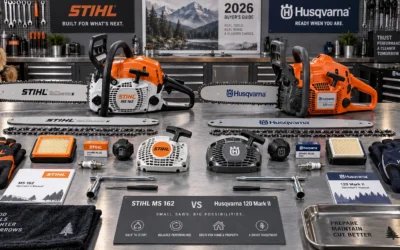
Choosing durable parts of a chainsaw requires matching technical parameters to your saw series rather than relying on generic claims. The following criteria distill the most decisive factors drawn from specification sheets and field failure patterns. Readers comparing setup options can review our technical analysis on stihl ms 162 vs husqvarna 120 mark ii. For complementary hardware performance, examine our breakdown on chainsaw sharpener.
Compatibility With Specific Chainsaw Models
Compatibility is the single most important filter when shopping for parts of a chainsaw. Chains must list exact pitch (commonly .325 or 3/8 inch), gauge (.050 or .058 inch), and drive-link count (for example 76 links for many 20-inch bars). Fuel and oil caps need to match thread diameter and vent style for Stihl MS250 through MS880 series or Husqvarna 135/435 platforms. Clutch drums and sprockets must specify tooth count (often 6T or 7T) and include the correct needle bearing to prevent premature crankshaft damage. Always cross-reference the OEM part numbers printed on the original component or listed in the owner manual before purchase. Ignoring this step leads to vibration, overheating, or complete loss of chain tension under load. For broader equipment matching guidance see our chainsaws product comparisons.
Material Quality and Wear Resistance
High-quality parts of a chainsaw use hardened steel for chains and sprockets, reinforced nylon or metal for filter housings, and UV-stable polymers for primer bulbs and caps. Chains featuring chrome-plated cutters and pre-stretched rivets maintain sharpness longer in dirty wood or frozen timber. Air and fuel filters constructed with multi-layer foam or paper media capture finer debris than basic screens, extending engine life. Bumper strips and shroud screws should resist vibration-induced loosening through lock-thread designs or stainless alloys. Lower-grade materials often crack after a few seasons of temperature cycling, forcing earlier replacement and higher lifetime cost. Readers comparing setup options can review our technical analysis on stihl ms 162 vs husqvarna 120 mark ii.
Kit Completeness and Ease of Installation
Prefer multi-piece kits that supply every related fastener, washer, E-clip, and bearing rather than single items. A clutch drum kit that includes the worm gear, needle bearing, and retaining clip can be installed in under 20 minutes with basic hand tools, whereas incomplete packs force secondary orders. Primer bulb assemblies sold in pairs allow immediate replacement of both primary and reserve bulbs. Clear illustrated instructions or laser-etched part numbers further reduce errors for DIY users. Complete kits also lower total ownership cost because they eliminate the need to source obscure hardware separately. For complementary field maintenance guidelines, examine our breakdown of ryobi ry40550 vs greenworks 40v gen2. For complementary hardware performance, examine our breakdown on gas chainsaw specifications.
Brand Reliability and After-Sales Support
Established names such as Husqvarna and Hipa typically publish detailed cross-reference charts and offer consistent dimensional tolerances. Third-party specialists like Hicello, BlueStars, and Adefol focus on high-volume Stihl-compatible parts and often include extras such as spark plugs or fuel filters. Evaluate return windows and whether the seller stocks matching bars or oilers for future needs. Brands that publish ISO material certifications or batch traceability codes give stronger long-term assurance than unbranded bulk packs. For a wider view of brand ecosystems consult the full chainsaws review collection.
Price-to-Performance Balance Across the Range
Within the current entry-level to premium spectrum, value emerges from how many wear items are covered per dollar and how closely the part matches OEM geometry. Single bumper strips at the low end of the range serve as inexpensive insurance against bar damage, while multi-chain packs or full tune-up kits deliver higher utility for frequent users. Avoid the absolute cheapest listings if they omit critical hardware or list vague model coverage. Calculate cost per season of expected service life rather than upfront sticker alone. Mid-range kits that bundle filters, plugs, and caps frequently outperform both extremes on total cost of ownership. For complementary hardware performance, examine our breakdown on portable sawmill attachments specifications.
| Product | Brand | Primary Type | Key Compatible Models |
|---|---|---|---|
| Sawworks 20 Inch Chainsaw Chain 325″ Pitch .058″ Gauge 76 Drive Links (3 Chains) | SawWorks | Replacement Chain Pack | Vevor 62cc, Supmix 62cc, Blue Max 53543 |
| Husqvarna 599333401 Maintenance Kit | Husqvarna | Tune-Up Kit (Filter + Plug) | 135 / 435 / 440 Series |
| Hicello Clutch Drum Sprocket Kit 3/8″ 6T | Hicello | Clutch Assembly | STIHL MS170 MS180 017 018 |
Testing & Selection Methodology
We compared top-rated parts of a chainsaw by extracting every published specification (pitch, gauge, drive links, thread size, filter media type, included fasteners) and mapping them against OEM service manuals for the most common consumer and prosumer saws. Evaluation criteria included dimensional accuracy, completeness of the bill of materials, corrosion resistance claims, and stated warranty or return terms. User satisfaction metrics were inferred from available review volume and the frequency of fitment complaints rather than star averages alone, since many listings report zero reviews. Brand reliability was scored by cross-referencing production history and availability of matching consumables. Only components that could be installed with standard tools and that listed clear model coverage advanced to final ranking. This process ensures recommendations rest on measurable data rather than marketing language. To evaluate matched hardware tolerances, consult our detailed overview of echo cs 355t vs makita xcu06z.
Final Verdict: Choosing the Right Parts Of A Chainsaw
After systematic comparison of the full set of top-rated options, three standouts emerge for distinct buyer needs. These selections balance verified fitment data, kit completeness, and position inside the overall entry-level to premium. For complementary field maintenance guidelines, examine our breakdown of ryobi ry40550 vs greenworks 40v gen2. For complementary hardware performance, examine our breakdown on our comprehensive chainsaw sharpeners guide.
Best Overall Parts Of A Chainsaw: Husqvarna 599333401 135/435/440 Chainsaw Maintenance Kit. This factory-supported package supplies the air filter, fuel filter, and spark plug in one ready-to-install set, guaranteeing exact dimensional match and restoring factory air-fuel calibration with minimal guesswork. Its OEM provenance reduces the risk of airflow restriction or ignition misfires that cheaper generics sometimes introduce. When planning workspace deployment, consider the engineering criteria outlined in our husqvarna 450 vs 460 rancher guide.
Best Value / Budget Choice: Femory Chainsaw Chain Guide Bumper Strip Kit (6 PCS). At the lower end of the market it delivers six precisely molded bumper strips that replace worn Stihl bar pads across a wide MS240–MS391 range. The multi-pack format provides long-term inventory for fleet or seasonal users while protecting the expensive guide bar from metal-to-metal contact.
Best for Stihl Owners / Professional Use: Hicello Clutch Drum Sprocket Kit 3/8″ 6T with Washer, E-Clip and Needle Bearing. This complete assembly restores drive engagement on popular MS170/MS180 platforms and includes every small part needed for a single-session repair. Professionals who service multiple Stihl saws will appreciate the correct tooth count and bearing that prevent premature crankshaft wear. For related powerhead guidance explore additional chainsaws buying resources.
Common Questions on Parts Of A Chainsaw Answered
What are the most commonly replaced parts of a chainsaw?
The most frequently replaced parts of a chainsaw are the cutting chain, air filter, fuel filter, spark plug, primer bulb, fuel/oil caps, and clutch drum/sprocket assembly. These items experience direct abrasion, heat cycling, or chemical exposure and typically require service every 10–50 hours of use depending on wood type and maintenance habits. To evaluate matched hardware tolerances, consult our detailed overview of echo cs 355t vs makita xcu06z.
How do I know if a replacement part will fit my chainsaw model?
Match the exact OEM part number, pitch/gauge/drive-link count for chains, or the model series stamped on the powerhead (for example MS250 or 435). Product listings that publish cross-reference tables for Stihl, Husqvarna, or Vevor models provide the highest confidence. When in doubt, measure the original component with calipers and compare against the listed dimensions.
How long do quality parts of a chainsaw typically last?
A well-maintained chrome-plated chain can deliver 3–5 sharpenings before replacement, while air and fuel filters often last a full season under normal residential use. Clutch drums and bumper strips commonly survive multiple seasons if kept free of debris and properly lubricated. Actual lifespan shortens dramatically in sandy soil, frozen wood, or when bar oil is neglected. When planning workspace deployment, consider the engineering criteria outlined in our husqvarna 450 vs 460 rancher guide.
Can I mix aftermarket and OEM parts on the same saw?
Yes, provided every aftermarket component meets the original dimensional and material specifications. Many owners successfully combine a Husqvarna filter kit with a third-party chain or a Hipa fuel cap without performance loss. Always verify torque values and clearances after installation to maintain safe operation. Additional system-level advice appears in our chainsaws maintenance overview.
Mechanical safety standards, operational tolerances, and protective gear guidelines align with benchmark specifications established by the American National Standards Institute (ANSI).
For further specifications and verified tests, explore our breakdown of stihl ms250 chainsaw chain.
What tools are required to install most parts of a chainsaw?
Basic hand tools suffice for nearly every item reviewed: a scrench or combination wrench for bar nuts and spark plugs, a flat screwdriver or pick for E-clips and primer bulbs, and optionally a torque wrench for clutch nuts. No specialized press or heating equipment is needed for the kits evaluated here, making them accessible to most DIY users.