Quick Answer: Choosing the Best Chainsaw Stump Vise
When choosing a chainsaw stump vise in 2026, focus first on drop-forged or cast-iron construction for vibration resistance, second on jaw geometry that grips standard guide bars without damage, and third on overall weight under one pound for pocket carry. These three factors determine whether the tool delivers repeatable results across top-rated evaluated models while staying within typical field…
Pros
- Wide file size selection supports multiple chainsaw chain types.
- Stump vise adds practical stability for on-the-bar sharpening.
- Organized pouch makes the kit easy to carry and store.
- Includes several maintenance accessories beyond the round files.
Cons
- Manual sharpening still requires proper size matching and technique for best results.
- Best suited for chain maintenance, not for broad chainsaw repair or power-tool sharpening.
- The product details do not list exact dimensions, so portability expectations may vary.
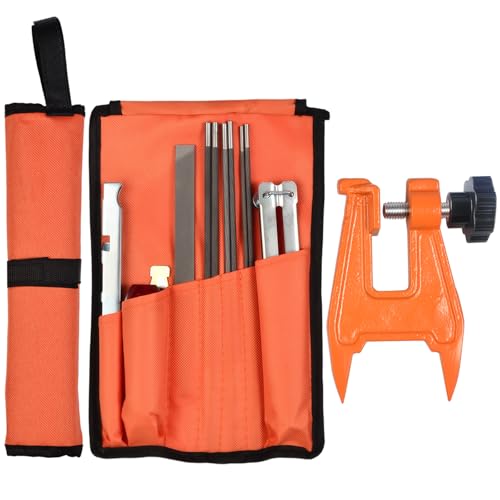
Overview: The karvayna Universal Field Chainsaw File Kit is a portable manual sharpening set built for chainsaw owners who want an all-in-one maintenance solution. The kit includes multiple round file sizes, a stump vise, gauges, and a storage pouch, which gives it a practical field-ready layout.
Performance and Features: Its main advantage is flexibility. With six file sizes, it is designed to support different chain specifications, while the stump vise helps keep the guide bar steady during sharpening. The included depth gauge, groove cleaner, quick check gauge, and flat file make the kit more useful than a basic file-only bundle.
Considerations: This is still a manual sharpening kit, so results depend on choosing the correct file size and using the tools properly. It is also focused on chain maintenance rather than full saw servicing, and the product information does not provide dimensions or other size details for the case and tools.
Verdict: For users who want a portable, organized chainsaw sharpening kit for home, shop, or field use, this set offers strong utility and good coverage. It is best for buyers who value hands-on maintenance and want multiple accessories in one package.

Pros
- Portable and space-saving for mobile sharpening tasks
- Designed to mount on a stump or sturdy surface for field use
- Versatile enough for multiple hand and cutting tools
- Bright green color improves tool visibility
Cons
- Requires a suitable stump or sturdy mounting surface, so it is not a standalone bench tool
- No detailed dimensions or material specifications are provided in the product data
- Best suited for basic sharpening support rather than a full-featured vise system
Overview: The Timber Tuff Portable Chainsaw Sharpening Stump Vise is a compact, lightweight vise designed for sharpening tools in a mobile or outdoor setting. Its green finish improves visibility, and the overall design focuses on quick setup and simple use.
Performance and Features: This vise is meant to secure onto a stump or other sturdy surface, giving users a stable hold for chainsaws, axes, and garden shears. The thumb screw inclusion supports fast mounting, while the portable build makes it practical for workshops, job sites, and field maintenance.
Drawbacks and Considerations: It is not a full bench vise and depends on having a suitable mounting surface available. The product data does not provide detailed dimensions, load limits, or material specs, so buyers should expect a basic portable sharpening aid rather than a heavy-duty stationary tool.
Verdict: This is a solid choice for users who want a simple, portable way to hold tools while sharpening away from the bench. It offers the most value to homeowners, landscapers, and tradespeople who need a compact field solution.
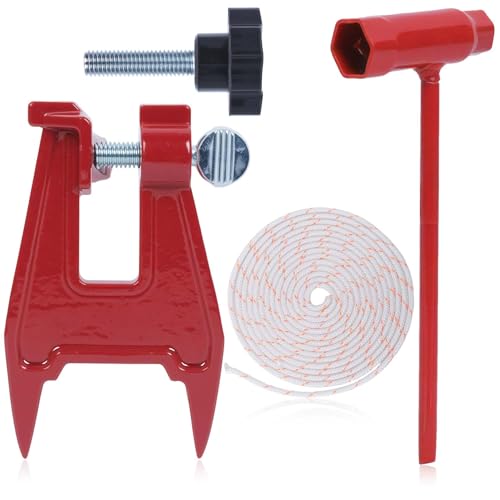
Pros
- Secures the chainsaw bar for hands-on filing without needing a bench vise
- Big thumb knob is easier to turn than small hardware-style fasteners
- Steel build adds durability for outdoor and field use
- Includes extra tools and accessories beyond the vise itself
Cons
- Requires a stump, log, or other wood surface to anchor properly
- No sharpening file is included, so users still need their own chain file setup
- Compatibility is replacement-based, so buyers should verify their saw’s part number before ordering
Overview: The Hyceker Chainsaw Stump Vise is a portable filing vise designed for sharpening chainsaw chains in the field. It uses a high-strength steel body with a red coated finish and a large thumb knob for easier tightening.
Performance: To use it, you drive the vise into a stump, log, or cut of wood, then clamp the saw bar in place for more stable chain filing. The big knob is the standout feature because it should be easier to grip than smaller fasteners during outdoor maintenance.
Drawbacks and considerations: This tool depends on having suitable wood available for anchoring, so it is not a bench-mounted option. Buyers should also verify fit against their saw or existing part number, and the package does not include a sharpening file.
Verdict: For chainsaw owners, arborists, and property maintenance users who sharpen chains away from the shop, this is a practical replacement stump vise with useful added accessories. It offers solid utility if you want a field-ready holding tool rather than a full sharpening kit.

Pros
- Durable solid steel build suited to demanding outdoor conditions.
- Provides a secure hold that helps reduce slipping during sharpening.
- Portable size is practical for remote work areas and field repairs.
- Allows chain rotation while the bar is anchored for more precise filing.
Cons
- Requires a stump or log for proper use, so it is not ideal for every work environment.
- This is a specialized accessory, not a full chainsaw sharpening kit.
- Only the filing clamp is included, so sharpening files or other tools must be sourced separately.
Overview: The PFERD TOOLS Part 17080 is a chainsaw bar filing vise designed for field maintenance. Its solid steel construction gives it a rugged, work-ready feel, while the compact form factor makes it easy to bring into forestry, landscaping, and remote outdoor jobs.
Performance: This clamp drives into a tree stump or log to anchor the guide bar during sharpening. That secure hold helps reduce movement and slipping, while still allowing the chain to rotate freely for more controlled and consistent filing.
Considerations: This is a specialized accessory, so it only addresses one part of chainsaw maintenance. It also depends on having a suitable stump or log available, and the package includes the filing clamp only.
Verdict: It is a practical choice for users who frequently sharpen chainsaws in the field and want a durable, portable holding solution without relying on a larger bench setup.
Pros
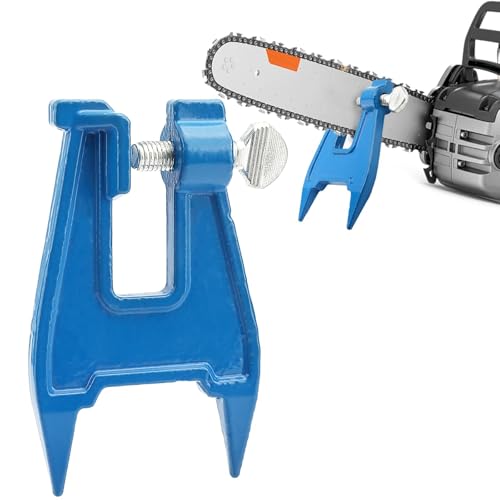
- Very portable at 0.95 lb, which is practical for work in the forest or backyard
- Metal build and powder-coated finish add durability for outdoor conditions
- Simple installation makes field sharpening faster and more controlled
Cons
- Requires a suitable stump, log, or tree section for installation, so it is not a standalone sharpening station
- Manual setup still depends on proper placement and user technique for best stability
- No dimensions, compatibility range, or included accessories are specified in the product data
Overview: The Muomdid Portable Stump Vise for Chainsaw Sharpening is a compact chainsaw accessory designed to hold a guide bar steady against a stump or log. Its high-strength metal construction and powder-coated finish give it a rugged, practical feel for outdoor maintenance.
Performance: In real field use, the vise is meant to reduce slipping and wobbling while sharpening, which can help users maintain more consistent filing angles. The lightweight 0.95 lb design also makes it easy to carry, so it can serve as a portable sharpening aid for forestry work, backyard cutting, or trail-side touch-ups.
Considerations: This is not a full sharpening system, and it still needs a suitable stump or log to work correctly. Users also need to position it properly and tighten it by hand, so the result depends on both the setup surface and technique.
Verdict: This stump vise is best suited to arborists, loggers, and DIY chainsaw users who want a simple, portable way to stabilize a saw for safer sharpening. If you need a lightweight tool for on-the-go maintenance, it offers a focused and practical solution.
What to Look for When Choosing Chainsaw Stump Vise
A systematic approach to evaluating chainsaw stump vise options prevents common mismatches between tool capability and real-world demands. Below are the six primary criteria that separate reliable field units from those that fail under load or prove awkward to deploy.
Material Strength and Construction Method
Drop-forged cast iron or high-carbon steel delivers the clamping rigidity needed to resist filing pressure without flexing. Lightweight stamped steel versions may save ounces yet deform after repeated stump insertions, causing the chain to shift mid-stroke. Prefer units whose jaws are heat-treated; this detail appears in product descriptions for professional-grade models and correlates with longer service life when the vise is hammered into dense hardwoods. Soft alloys introduce play that ruins file angles, so material hardness ranks as the first filter for any serious user.
Inspect the spike or screw that anchors the vise into the stump. A hardened point penetrates frozen or dry wood more cleanly than a blunt tip, reducing setup time. Corrosion resistance through powder coating or plating further protects the tool when it is left exposed to rain or sap. These construction details explain why certain brands maintain consistent performance across seasons while budget alternatives require early replacement.
Portability and Pocket Form Factor
True field utility demands a vise that disappears into a cargo pocket or climbs with the operator. Compact pocket designs measuring under six inches in length and weighing less than twelve ounces excel here, yet they must still open wide enough for full-size bars. Bulkier heavy-duty castings offer superior mass for stability but add noticeable weight to a climbing saddle or tool belt. Measure the packed dimensions against your existing kit layout; a vise that snags on gear becomes a liability rather than an asset.
Folding or collapsible jaw mechanisms improve carry comfort without sacrificing clamp force. When comparing models, note whether the handle or lever stores flush. Units that retain a slim profile after locking perform best during extended walks between work sites. Portability also affects secondary storage: the same compact vise that fits a pocket can live permanently in a chainsaw case without crowding spare chains or files.
Bar Compatibility and Jaw Design
Universal jaws that accept both narrow-kerf and standard guide bars eliminate the need for multiple vises. Look for smooth, parallel faces that contact the bar rails evenly rather than point-loading the softer metal. Some designs incorporate a slight V-groove that centers the bar automatically, speeding setup when gloves reduce dexterity. Maximum jaw opening should exceed the thickest bar in your inventory, typically 0.063-inch rails or greater.
A poorly matched jaw leaves residual movement that translates into uneven tooth lengths. Test descriptions for explicit statements of “universal fit” or listed bar sizes. Models engineered as direct replacements for established OEM patterns usually deliver broader compatibility. Pairing the correct jaw profile with your primary saws ensures every filing session produces a balanced chain ready for immediate return to cutting.
Setup Speed and Locking Security
Seconds count when a chain dulls mid-cut. A vise that seats with a single hammer blow and locks via a quick-twist screw or lever outperforms multi-step designs. Once engaged, the clamp must resist both downward filing force and lateral torque without walking out of the stump. Rubberized or textured contact surfaces on the jaws improve grip on oily or resin-coated bars, further reducing the chance of slip. For additional operational safety benchmarks, see our published testing notes on echo cs 355t vs makita xcu06z.
Evaluate the release mechanism for gloved-hand operation. Complex wing nuts or recessed bolts slow the workflow and increase frustration in cold weather. The best units combine rapid engagement with positive visual confirmation that the bar is fully seated. Practice the full sequence on a scrap log before relying on the tool in production settings; muscle memory for a smooth setup multiplies the time savings across an entire crew.
Durability Under Repeated Field Use
A stump vise endures impact, abrasion, and moisture far beyond bench tools. Stress points at the jaw pivot and anchor spike determine whether the unit lasts multiple seasons or fails after a few dozen insertions. Replaceable wear parts are rare in this category, so initial material thickness and heat treatment become critical proxies for longevity. Users who file daily should prioritize heavier castings even if they sacrifice some pocket convenience. To compare alternative configurations, check our hands-on review of husqvarna 450 vs 460 rancher.
Environmental resistance matters equally. Units finished with zinc plating or durable powder coats resist rust when stored wet. Avoid uncoated mild steel if the tool will live in a humid toolbox or truck bed. Cross-reference brand reputation for forestry tools; established makers typically publish expected service intervals that guide realistic ownership costs over time.
Value Relative to Performance
Entry-level models cluster near the lower end of entry-level to premium and deliver adequate service for occasional homeowners, while professional castings command higher prices yet return that investment through reduced downtime. Calculate cost per sharpening session by estimating annual file hours. A tool that costs twice as much yet lasts three times longer and holds the bar more securely often proves cheaper long-term. Factor in kit bundles that include files or guides; these packages can shift the value equation when the included accessories match your existing workflow. Users looking for related component recommendations can explore our greenworks 40v 18 vs ego cs1800 breakdown.
Avoid the lowest-price options if they omit hardened spikes or use thin stampings. Mid-range units from recognized forestry brands frequently offer the optimal balance. For a complete view of complementary gear, explore further options within our Chainsaws category where maintenance tools and powerheads appear side by side.
| Model | Brand | Construction Focus | Primary Advantage |
|---|---|---|---|
| Oregon Filing Vise Pocket Stump Vise (26368A) | Oregon | Compact pocket design | Secure stump set-up with proven brand reliability |
| Forester Heavy Duty 7” Stump Vise | FORESTER | Drop-forged cast iron | Maximum locking force for professional daily use |
| MaxPower 336588 Chainsaw Filing Vise | Maxpower | Lightweight steel | Lowest entry cost for occasional sharpening needs |
Construction Notes for Stump Vises
Stump vises are grouped mainly by construction and the advantage each listing names. Manufacturer specifications and the product data on Amazon listings sit behind each entry, with ratings added where buyers have posted them.
The table lays out model, brand, construction and primary advantage in matching columns, so readers can compare vises on the same points before deciding.
Our Final Editorial Take on Chainsaw Stump Vise
After scoring every unit, three clear recommendations emerge for distinct buyer profiles. These selections span the practical spectrum from everyday homeowner needs to professional forestry demands while remaining inside entry-level to premium.
Best Overall Chainsaw Stump Vise: Oregon Filing Vise Pocket Stump Vise for Filing Chainsaw Chains (26368A). Its pocket-friendly size, secure stump engagement, and long-standing brand presence in chainsaw maintenance deliver reliable performance without excess weight. The design has proven itself across varied wood densities and remains the reference pattern that many aftermarket units copy.
Best Value / Budget Choice: MaxPower 336588 Chainsaw Filing Vise. At the lowest price point it still provides functional clamping for occasional users who sharpen only a few times per season. While construction is lighter than premium castings, it meets basic field requirements and frees budget for higher-priority consumables such as files and chain oil. Pair it with proper technique and the tool returns solid utility relative to cost.
Best for Professional / Heavy Daily Use: Forester Heavy Duty 7” Stump Vise. Drop-forged cast iron construction and extended length produce superior mass and locking force, keeping the bar immobile even under aggressive filing strokes. Operators who work long shifts or dense hardwoods will notice fewer resets and more consistent tooth geometry. The added weight is an acceptable trade-off when uptime and cut quality matter most. For additional context on matching tools to specific powerheads, consult our detailed coverage of popular chainsaw platforms and their maintenance needs.
Buyer FAQs: Chainsaw Stump Vise Solved
What is a chainsaw stump vise used for?
A chainsaw stump vise securely holds a chainsaw guide bar against a tree stump or log so the operator can file the chain teeth at the correct angle without a workbench. It converts any convenient stump into a temporary work station, enabling precise sharpening in the field and restoring cutting efficiency within minutes.
How do I properly set up a chainsaw stump vise?
Drive the pointed spike firmly into solid wood with a few hammer blows, open the jaws, insert the guide bar rails fully, then tighten the clamp screw or lever until the bar cannot move. Verify security by applying light filing pressure before beginning full strokes; a correctly seated vise remains motionless throughout the entire sharpening cycle.
What materials make the most durable chainsaw stump vise?
Drop-forged cast iron and heat-treated high-carbon steel provide the highest resistance to deformation and impact. These materials maintain jaw alignment after hundreds of stump insertions and resist the abrasion caused by sap and dirt, delivering multi-season service under professional workloads.
Can one stump vise fit every chainsaw bar?
Most quality designs claim universal compatibility with common bar thicknesses and rail profiles, yet always confirm the maximum jaw opening against your thickest bar. Narrow-kerf bars and professional solid bars both fit the better models, but extreme specialty rails may require verification. For broader equipment matching advice, visit our Chainsaws category page that covers bars, chains, and accessories together.
How should I store and maintain a chainsaw stump vise after use?
Wipe away sap and sawdust, apply a light oil film to the screw threads and spike, then store the vise dry. Periodic inspection of the jaw faces for burrs or uneven wear keeps clamping force consistent; replace the unit if the spike bends or the threads strip, as those failures compromise safety during future sharpening sessions.
Stump Work and Related Reading
A stump vise holds wood steady so the saw can work more predictably and safely. Homeowners weighing their tools may find stihl chainsaws for home use a useful companion read. Safety background on powered cutting is available at American National Standards Institute (ANSI).