What Is a Reciprocal Saw Used For?
A reciprocal saw is a versatile power tool that uses a back-and-forth (reciprocal) motion to cut through a wide variety of materials, including wood, metal, plastic, and drywall. It excels at demolition, remodeling, pruning, and rough-cutting tasks where speed and adaptability matter more than precision. The tool’s interchangeable blades and powerful cutting action make it invaluable for contractors, DIYers, and homeowners tackling renovation projects, emergency repairs, or outdoor maintenance.
Understanding the Reciprocal Saw
What Exactly Is a Reciprocal Saw?
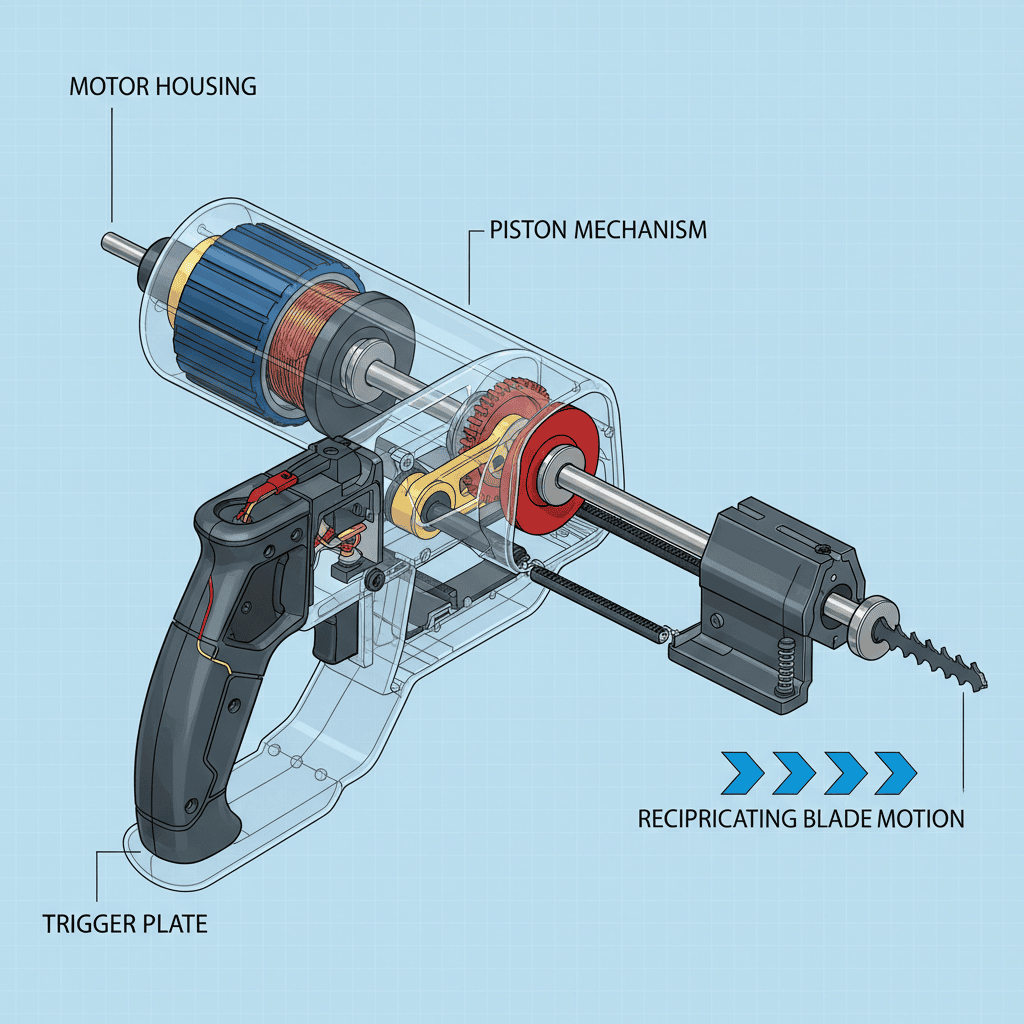
A reciprocal saw, often called a “recipro saw,” is a handheld power tool that cuts by moving its blade rapidly back and forth in a straight line. The motor drives a piston-like mechanism that cycles the blade in and out at speeds typically ranging from 2,500 to 3,000 strokes per minute, depending on the model and setting.
The tool consists of a few key components:
- Motor housing: Contains the power source and driving mechanism
- Blade holder (chuck): Accepts and secures interchangeable blades
- Trigger: Variable-speed control for adjusting cutting speed
- Shoe (base plate): Rests against the workpiece to stabilize the tool
- Handle: Usually includes a secondary grip for control and safety
The reciprocating motion allows the blade to work through material quickly, making the tool particularly effective for rough cutting and demolition work.
Is a “Sawzall” the Same as a Reciprocal Saw?
“Sawzall” is a registered trademark of Milwaukee Electric Tool Corporation, one of the earliest and most popular manufacturers of reciprocal saws. While “Sawzall” is often used generically—similar to how people say “Kleenex” for tissues—it technically refers to Milwaukee’s product line. All Sawzalls are reciprocal saws, but not all reciprocal saws are Sawzalls. In general conversation, the terms are used interchangeably, though using “reciprocal saw” is more technically accurate when referring to the tool category as a whole.
How Does the Blade Move?
The blade moves in a linear, back-and-forth motion perpendicular to the shoe. Some higher-end models feature “orbital action,” which adds a slight forward-and-back movement to the blade’s stroke pattern. This orbital motion increases cutting speed and can reduce binding in certain materials, particularly when cutting through denser woods or metals.
The shoe remains stationary against the workpiece while the blade cycles rapidly, allowing you to guide the tool along your cutting line. This design gives the tool its distinctive aggressive cutting character and makes it ideal for work where precision is secondary to speed.
Primary Uses and Applications
Demolition and Deconstruction
Demolition is perhaps the most common application for reciprocal saws. The tool’s raw cutting power makes it ideal for:
- Removing nails and fasteners: Cut through nailed wood frames and studs without needing to remove individual fasteners
- Taking out walls: Quickly sever studs and framing during renovation or remodeling work
- Cutting through joists and beams: Particularly useful when working with pressure-treated lumber or hardwoods that would dull other tools quickly
- Removing fixtures: Cut through pipes, conduit, and brackets to disconnect old plumbing or electrical systems
- Breaking apart built-in cabinetry: The saw cuts through both wood and the fasteners holding cabinet sections together
The reciprocal saw’s ability to cut regardless of where nails are located makes it dramatically faster than traditional saws or hand tools for demolition projects. A job that might take hours with a handsaw can be completed in minutes.
Remodeling and Renovation
During home renovation projects, reciprocal saws handle many critical tasks:
- Cutting openings for windows and doors: The narrow blade can navigate corners and tight spaces where larger saws cannot fit
- Removing drywall: Specialized drywall blades make quick work of cutting out sections for repairs or to access studs
- Cutting through flooring: Laminate, hardwood, and tile can all be cut with the appropriate blade
- Trimming door frames and jambs: Quickly cut door frames to fit new flooring height or other modifications
- Cutting pipes and tubing: PVC, copper, and metal pipes are no match for a reciprocal saw with the right blade
The tool’s versatility during remodeling comes from its interchangeable blades—you can switch from a wood blade to a metal-cutting blade to a demolition blade within seconds, adapting to whatever material you encounter next.
Outdoor Maintenance and Pruning
Reciprocal saws are increasingly popular for yard work:
- Pruning tree branches: Cut branches up to several inches thick quickly and cleanly
- Removing dead wood: Clear fallen branches or dead trees from your property
- Cutting fence posts: Quickly trim or cut fence components to size
- Cutting hedges and brush: With a pruning blade, the saw handles light landscaping work
Cordless reciprocal saws have made outdoor applications more practical, as users are no longer tethered to an outlet. Battery-powered models offer sufficient runtime for most residential yard maintenance tasks.
Rough Cutting and Material Preparation
Beyond demolition and renovation, reciprocal saws serve as a quick rough-cutting tool:
- Cutting lumber to approximate size: When precision is not required, a reciprocal saw is faster than a circular saw for crosscutting
- Cutting metal stock: Aluminum, steel, and cast iron can be cut with appropriate metal-cutting blades
- Cutting plastic and composite materials: Composite decking, plastic lumber, and similar materials are easily handled
- Cutting ceramic and stone: Specialized blades allow cutting through tile and masonry, though results are rougher than with a wet saw
The tool’s aggressive cutting action makes it ideal when material removal speed is prioritized over finish quality.
Key Considerations When Using a Reciprocal Saw
Advantages of the Reciprocal Saw
Versatility: No other single power tool cuts through as many different materials. With the right blade, a reciprocal saw handles wood, metal, plastic, drywall, and masonry.
Speed: The rapid blade action removes material quickly. Tasks that might take 20-30 minutes with hand tools take 5 minutes with a reciprocal saw.
Accessibility: The narrow blade fits into tight spaces where other saws cannot reach. Cutting interior walls, making window openings, or working in confined spaces is possible with a reciprocal saw.
Portability: Even corded models are relatively lightweight and portable compared to band saws or larger stationary tools. Battery-powered models add even more convenience.
One-handed operation (for smaller models): Lighter reciprocal saws can sometimes be operated one-handed, freeing your other hand to position or support the workpiece.
Cost-effectiveness: Reciprocal saws are moderately priced compared to other specialty cutting tools, and the cost is justified by their utility and durability.
Limitations to Understand
Precision and finish quality: Reciprocal saws produce rougher cuts than table saws, miter saws, or band saws. The aggressive blade action and vibration make fine crosscuts or finish work impractical. Always plan on cleanup, sanding, or trimming after rough cutting.
Blade vibration: The back-and-forth motion creates noticeable vibration, which can be fatiguing during extended use and may cause slight deviation from your intended cutting line. High-quality saws with better dampening vibrate less.
Binding and kickback: When the blade binds in the material, the tool can twist suddenly or jump. Always maintain a firm grip with both hands and keep your body positioned to the side of the potential kickback path.
Blade wastage: The cutting action wears blades faster than some alternatives, particularly when cutting abrasive materials like masonry. Expect to replace blades more frequently than you would with other saws.
Not ideal for thick materials: While reciprocal saws can cut thick wood or metal, they become increasingly inefficient as material thickness increases. For very thick material, a band saw or other cutting tool may be more appropriate.
Dust and debris: The aggressive cutting action generates significant dust and debris. Proper dust collection or a respirator is important for health and visibility.
Safety Precautions
Use both hands: Always grip the tool with both your primary hand on the main trigger handle and your secondary hand on the auxiliary handle. This prevents the tool from twisting if the blade binds.
Secure your workpiece: Clamp or brace your material so it does not move during cutting. Holding material by hand while cutting increases injury risk significantly.
Keep hands clear of the blade: The blade moves fast enough to cause serious injury. Always position your hands well away from the cutting line.
Wear appropriate PPE: Safety glasses protect against flying debris. A dust mask or respirator is important for prolonged use, as reciprocal saws generate significant dust. Hearing protection is recommended, as the tool can reach 80+ decibels.
Check for hidden obstacles: Before cutting into walls or other structures, verify that no electrical wiring, plumbing, or other hazards lie in your cutting path.
Let the blade stop before setting the tool down: Never set a reciprocal saw down while the blade is still moving. Always release the trigger and wait for the blade to come to a complete stop.
Use the correct blade for your material: Different blades are designed for different materials. Using the wrong blade can cause unsafe blade breakage or poor results. Always verify that your blade matches your material.
Maintain proper stance: Keep your feet positioned for balance and stability. Avoid overreaching or positioning yourself where loss of control could cause you to fall or injure yourself against nearby objects.
Choosing the Right Blade
Much of a reciprocal saw’s effectiveness comes down to blade selection. Different blades are optimized for different materials:
- Wood-cutting blades: Coarser teeth designed to cut quickly through softwoods and hardwoods. Look for 6-10 teeth per inch (TPI) for general wood cutting.
- Metal-cutting blades: Finer teeth (18-32 TPI) designed for cutting steel, aluminum, and other metals without binding. Require slower blade speed.
- Demolition or nail-embedded wood blades: Aggressive, irregular tooth patterns designed to cut through wood containing nails or other fasteners. These blades dull faster but are nearly impossible to break through fasteners.
- Drywall and plaster blades: Designed for cutting through drywall and other soft materials. Wider blades reduce flex and vibration.
- Tile and masonry blades: Carbide-grit blades designed to cut through ceramic, porcelain, and concrete. Produce rough cuts but are effective for quick rough work.
- Pruning and branch blades: Curved or serrated blades designed specifically for cutting live wood and branches.
Reciprocal saw blades attach via a quick-release chuck, allowing you to change blades in seconds. Having a variety of blade types on hand ensures you are always prepared for whatever material you encounter.
Reciprocal Saw vs. Other Cutting Tools
vs. Circular Saw: Circular saws excel at crosscutting lumber and make straighter cuts, but reciprocal saws reach into spaces circular saws cannot access and cut through more material types.
vs. Jigsaw: Jigsaws are better for curved cuts and intricate work, while reciprocal saws are faster and more aggressive for straight cuts through thick material.
vs. Band Saw: Band saws provide cleaner cuts and better precision, while reciprocal saws are portable and can work in field conditions without a shop setup.
vs. Miter Saw: Miter saws produce superior crosscuts and angles with precision, but reciprocal saws are versatile across multiple materials and can cut in any direction.
vs. Handsaw: A handsaw is slower but produces finer cuts and requires no power source. Reciprocal saws dramatically speed up work at the cost of cut quality and precision.
Frequently Asked Questions
Can a reciprocal saw cut through metal?
Yes, absolutely. With the appropriate metal-cutting blade (typically 18-32 TPI), a reciprocal saw cuts through aluminum, steel, copper, and other metals effectively. Metal cutting requires slower blade speeds and more patience than wood cutting, as the blade generates heat and can dull more quickly. For thicker metals, a slower blade speed reduces the risk of blade breakage.
Is a reciprocal saw good for cutting wood?
A reciprocal saw is excellent for rough cutting wood quickly, particularly when demolition is involved or when you are cutting wood with nails embedded in it. However, if you need clean, precise crosscuts or finish work, a circular saw or miter saw will produce superior results. Reciprocal saws prioritize speed over finish quality.
What is the difference between corded and cordless reciprocal saws?
Corded reciprocal saws provide unlimited runtime and typically more power, making them ideal for extended demolition work or heavy-duty applications. Cordless (battery-powered) models offer greater portability and no cord management, making them better for lighter tasks and outdoor work. Cordless technology has improved dramatically in recent years, and modern batteries provide sufficient runtime for most residential tasks. Your choice depends on the typical duration and intensity of your projects.
How often should I replace my reciprocal saw blade?
Blade life varies based on the material being cut, the quality of the blade, and your technique. A demolition blade cutting through nail-embedded wood might last 30 minutes, while a metal-cutting blade might last several hours. Most users replace blades when they notice the saw is cutting more slowly, producing rougher results, or binding in the material. Always keep several extra blades on hand so you can switch to a fresh blade rather than struggle with a dull one.
Conclusion
A reciprocal saw is an indispensable tool for anyone tackling demolition, remodeling, pruning, or rough cutting projects. Its combination of versatility, speed, and accessibility makes it valuable whether you are a professional contractor or a homeowner handling occasional projects. While it is not designed for precision work or fine finishes, it excels at the heavy lifting—literally—that comes before finishing work begins. By understanding its strengths, limitations, and proper safety practices, you can use a reciprocal saw effectively and safely for a wide range of cutting tasks.