Understanding the Question: What Makes an Electric Lawn Mower ‘Best’?
The term “best” means different things to different homeowners. For one person, the best mower is the quietest; for another, it’s the most affordable or the most powerful. Electric lawn mowers come in two primary types—corded and cordless—and each serves different use cases.
Core evaluation criteria include:
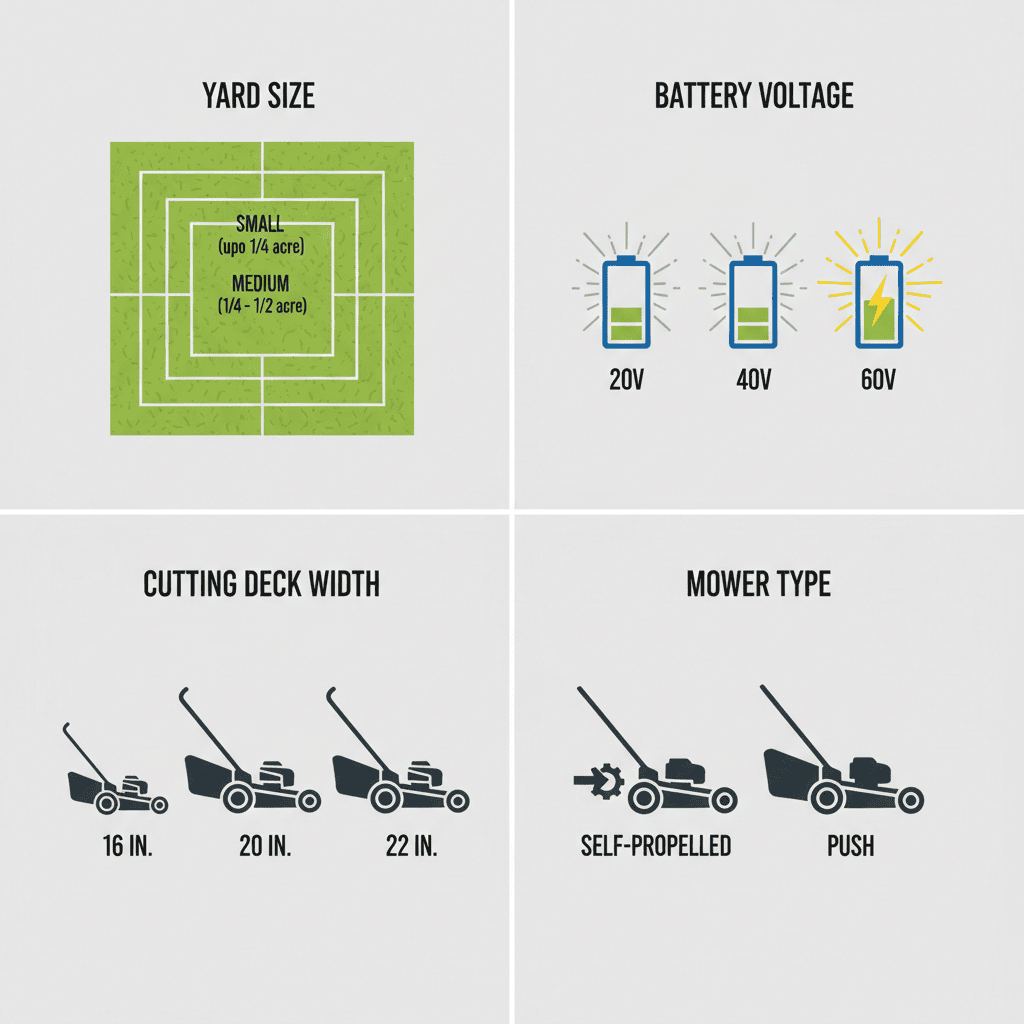
- Yard size: Larger lawns require longer battery runtime or corded access to power outlets.
- Power and motor voltage: Higher voltage (measured in volts) delivers more cutting power for thick grass and dense weeds.
- Cutting deck width: Wider decks cover more ground per pass, reducing mowing time.
- Price: Cordless systems cost more upfront but eliminate gas and oil expenses.
- Ease of use: Weight, noise level, and maintenance requirements affect user experience.
Understanding these factors helps you recognize that the “best” mower is the one that solves your specific problem, not a universal top pick.
Key Factors to Consider When Buying an Electric Lawn Mower
Yard Size and Runtime Requirements
Yard size is the primary driver of mower type. Most manufacturers recommend cordless mowers for lawns up to 0.5 acres (roughly 21,000 square feet). Beyond that, runtime becomes a limiting factor unless you own multiple batteries or a charger that works quickly.
A typical cordless mower battery lasts 30to 60 minutes per charge, depending on voltage and amp-hour rating. If your lawn takes 45 minutes to mow and you have only one battery, you’re cutting it close. A second battery or a corded mower becomes practical.
Battery Voltage and Amp-Hours
Cordless mowers are rated by voltage (20V, 40V, 60V, and higher) and amp-hours (Ah). Voltage roughly correlates to cutting power; amp-hours measure battery capacity and runtime.
- 20V systems: Lightweight, budget-friendly, best for small yards under 0.25 acres.
- 40V systems: The middle ground; powerful enough for most residential lawns and widely available.
- 60V+ systems: Maximum cutting power for dense grass, thick weeds, or larger properties.
A 40V, 4.0Ah battery typically provides 45to 60 minutes of runtime. Doubling the amp-hour rating (e.g., 40V, 8.0Ah) roughly doubles the runtime.
Cutting Deck Width
Cutting deck width (measured in inches) determines how much grass you cut per pass. Common widths range from 16 inches (narrow, lightweight, budget models) to 21 inches (standard residential size) and wider.
- 16–18 inches: Lightweight, easy to maneuver in tight spaces, but require more passes on larger lawns.
- 20–21 inches: The standard residential size, balancing efficiency and maneuverability.
- 22+ inches: Faster coverage for large lawns, but heavier and less nimble in small yards.
Self-Propelled vs. Push Models
Self-propelled mowers drive themselves forward at a set speed, reducing physical effort. Push models require you to supply all forward force. Self-propelled models cost more and ad weight, but they reduce fatigue on larger lawns or hilly terrain.
Mulching, Bagging, and Discharge Options
Mulching chops clippings finely and returns them to the lawn, feeding nutrients back to soil. Bagging collects clippings for disposal or composting. Some mowers offer both, plus side discharge (ejecting clippings to the side).
Choose based on lawn preference: mulching works well for healthy lawns; bagging is cleaner in formal settings or when grass is wet.
Corded vs. Cordless Electric Mowers: Which Should You Pick?
Corded Electric Mowers
Advantages:
- Unlimited runtime—plug in, mow as long as you want.
- Lower upfront cost (typically $150–$400).
- No battery replacement costs.
- Consistent power throughout the mowing session.
- Lighter weight (no heavy battery pack).
Limitations:
- Extension cord required; maximum range is cord length (typically 50–100 feet).
- Cord management adds complexity and safety concerns.
- Not ideal for large lawns or yards far from outlets.
- Tripping hazard in tight spaces or obstacles.
Best for: Small yards (under 0.25 acres) close to a power outlet or with easy outlet access across the lawn.
Cordless Battery-Powered Mowers
Advantages:
- Complete freedom from cords; easier maneuvering in tight spaces.
- No gas, oil, or spark plug maintenance.
- Quiet operation (typically 60–75 decibels vs. 85–95 for gas mowers).
- Battery systems often work with other yard tools (trimmers, leaf blowers) from the same brand.
- Lower long-term maintenance costs.
Limitations:
- Higher upfront cost ($300–$800+ depending on brand and features).
- Battery runtime limits mowing session length.
- Battery replacement can cost $150–$300 after3–5 years of heavy use.
- Charging time (30 minutes to 2 hours, depending on charger speed).
Best for: Most homeowners with lawns up to 0.5 acres who value convenience, quiet operation, and ecosystem compatibility across yard tools.
Battery Replacement and Long-Term Ownership Cost
Cordless mower batteries typically last 3to 5 years of regular use. Replacement cost ranges from $150 to $300, depending on voltage and capacity. However, many homeowners buy a second battery early in ownership for under $200, extending total ownership life and allowing simultaneous charging and mowing.
Step-by-Step: How to Choose the Right Electric Lawn Mower for Your Yard
Step 1: Measure Your Lawn
Estimate yard size in square feet or acres. Online tools (Google Maps or your property deed) provide accurate dimensions. This single measurement guides everything else: corded vs. cordless, battery voltage, and deck width.
Step 2: Calculate Required Runtime
Mow your existing lawn (with a gas or borrowed mower) and note how long it takes. A rough estimate: multiply lawn size (in square feet) by 0.015. For example, a 20,000 sq. ft. lawn takes roughly 30 minutes.
Ad 25% as a buffer for slower cutting in thick grass. If your lawn takes 45 minutes and a single battery lasts 50 minutes, you have a tight margin. Consider a second battery or a corded mower.
Step 3: Decide Between Corded and Cordless
Ask these questions:
- Is your entire lawn within 50–100 feet of a power outlet?
- Are you comfortable managing an extension cord while mowing?
- Is your lawn under 0.25 acres?
If you answered yes to all three, a corded mower is a practical, budget-friendly choice. Otherwise, cordless is more convenient.
Step 4: Select Voltage and Battery Capacity
For cordless mowers, match voltage to your yard’s grass type and size:
- 20V: Small, manicured lawns under 0.25 acres with soft grass.
- 40V: Most residential lawns with typical grass density.
- 60V+: Thick, overgrown lawns or dense weeds; larger properties.
Choose battery amp-hours based on required runtime. A 40V, 4.0Ah battery provides roughly 45–60 minutes. If your lawn takes 45 minutes, a 5.0–6.0Ah battery adds safety margin.
Step 5: Compare Final Candidates
Create a spreadsheet comparing:
| Feature | Model A | Model B | Model C |
|---|---|---|---|
| Type | Cordless | Corded | |
| Voltage / Power | 40V | 56V | 13A |
| Deck Width | 20″ | 21″ | 18″ |
| Self-Propelled | Yes | Yes | No |
| Weight | 78 lbs | 85 lbs | 55 lbs |
| Price | $499 | $699 | $249 |
| Warranty | 3 years | 5 years | 2 years |
Step 6: Check Warranty and Parts Availability
Electric mower brands vary in warranty length (typically 2–5 years) and parts availability. Established brands like Ryobi, EGO, Greenworks, and WORX offer easy replacement parts and strong online support. Verify that replacement blades, batteries, and chargers are readily available and reasonably priced.
Leading Electric Lawn Mower Brands and Their Ecosystems
Several brands dominate the residential electric mower market. They differ in battery voltage standards, ecosystem compatibility, and price point.
Ryobi
Ryobi uses the ONE+ 20V and 40V battery platform. Many Ryobi owners appreciate the wide ecosystem of tools (drills, saws, blowers) that share batteries. Entry-level mowers start under $300, making Ryobi a budget-friendly gateway to cordless yard work. However, some users report that lower-cost Ryobi models are less durable than premium brands.
EGO
EGO specializes in 56V cordless tools and is known for powerful, professional-grade residential mowers. EGO mowers tend to be pricier ($600–$900) but are favored for thick grass and larger lawns. The56V system is proprietary to EGO, so the ecosystem is narrower but highly focused on yard care.
Greenworks
Greenworks offers a 40V platform with competitive pricing ($300–$600). The brand has strong market penetration and good parts availability. Greenworks is often recommended as a balanced choice for homeowners seeking reliability without EGO’s premium price.
WORX
WORX uses a 20V and 40V platform similar to Ryobi and offers unique features (like dual-blade cutting or innovative deck designs) in some models. Pricing is mid-range ($250–$500), and the ecosystem includes many yard tools. WORX is popular among homeowners who want features beyond standard mowing.
All four brands are reputable, widely available, and supported by online communities and service centers. Your choice often depends on budget, yard size, and whether you want to build an ecosystem of yard tools around one brand.
Frequently Asked Questions
Are electric lawn mowers powerful enough for thick or tall grass?
Electric mowers are powerful enough for normal residential grass. However, extremely thick or overgrown lawns (more than 4 inches tall) may challenge even high-voltage models. If your grass is that tall, use a gas-powered mower or a weed whip first, then switch to electric for regular maintenance. For typical lawn care, a 40V or higher cordless mower handles dense grass without issue, especially if you mow weekly before grass becomes overly thick.
How long does an electric mower battery last, and how long does it take to recharge?
Battery runtime depends on voltage, amp-hour capacity, grass density, and deck width. A typical40V, 4.0Ah battery lasts 45–60 minutes. Recharge time varies: fast chargers refill a 4.0Ah battery in 30–45 minutes, while standard chargers take 1–2 hours. High-capacity batteries (6.0–8.0Ah) take proportionally longer. Many cordless mower owners buy a second battery and alternate, so one charges while the other is in use.
Can one battery and charger be shared across multiple yard tools?
Yes, if the tools are from the same brand and use the same voltage platform. Ryobi ONE+ tools (20V and 40V) share batteries. EGO’s 56V system is exclusive to EGO. Greenworks and WORX also cross-compatibility within their 40V platforms. This ecosystem compatibility is a major advantage if you already own a cordless drill, trimer, or blower from the same brand—you can use the same batteries and charger for your new mower.
Are electric mowers quieter and easier to maintain than gas mowers?
Yes, on both counts. Electric mowers typically operate at60–75 decibels compared to 85–95 for gas mowers, making them quieter and more neighbor-friendly. Maintenance is dramatically simpler: no spark plugs, oil changes, air filter cleaning, or seasonal fuel stabilization. Electric mowers require only blade sharpening (annually or as needed) and occasional deck cleaning. Battery-powered systems also produce zero emissions, making them cleaner for both air quality and indoor storage (no hazardous fuel fumes).
Conclusion
The best electric lawn mower is the one that matches your yard size, terrain, and lifestyle. Most homeowners find that a cordless model from Ryobi, EGO, Greenworks, or WORX strikes the right balance of power, convenience, and price. If your lawn is very small or close to a power outlet, a corded mower offers excellent value without battery hassles. Measure your lawn, calculate your mowing time, and compare models side by side using voltage, deck width, runtime, and warranty as your key benchmarks. Electric mowers are now powerful and reliable enough to handle any residential lawn, and their quiet, low-maintenance operation makes them the practical choice for modern homeowners.