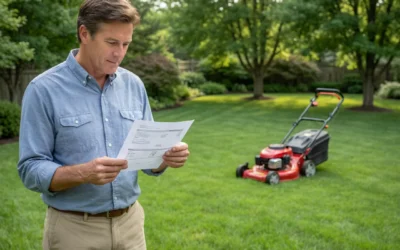
Starting a mower is one of those skills that looks intimidating until you’ve done it a few times. The good news is that the process is simple once you understand the basic controls: fuel, choke, primer, and a starter cord (or key/button). This guide walks you through how to start a mower step by step, covering gas push mowers, riding mowers, and electric models, plus what to do when the engine refuses to fire.
How Do You Start a Mower? (The Short Answer)
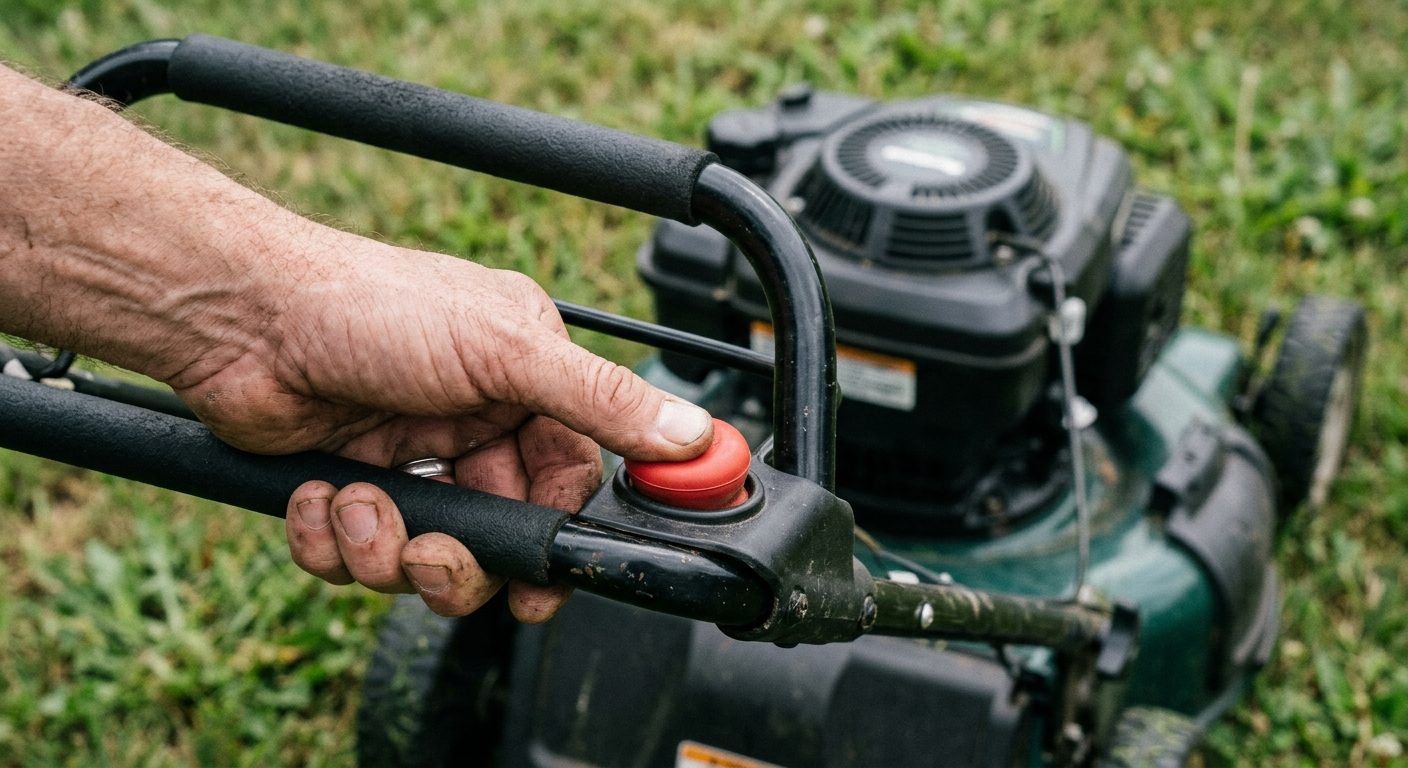
For a typical gas push mower, place the mower on a flat, clear surface outdoors, confirm the fuel and oil levels are good, and make sure the spark plug wire is connected. Hold the safety bar (blade control) against the handle, open the fuel shutoff if your model has one, set the choke to closed for a cold engine, press the primer bulb 3–5 times if equipped, and pull the starter cord briskly until the engine runs. Then gradually open the choke as the engine warms.
Riding mowers follow the same fuel and choke logic but add safety interlocks: you must sit in the seat, engage the parking brake, and often disengage the blades (PTO) before turning the key or pressing a start button. Electric and battery mowers skip fuel entirely — just insert a charged battery (or plug in) and press the start button or pull the safety lever while engaging the blade.
Understanding How a Mower Starts
The Main Types of Mowers and Their Starting Systems
Mowers fall into two broad categories: gas-powered and electric. Gas mowers, including most push and riding models, use a small internal combustion engine. They rely on a pull cord, an ignition key, or a push button to spin the engine over until it fires. Electric mowers use an electric motor powered either by a cord plugged into an outlet or by a rechargeable battery. Because they have no combustion cycle, electric mowers start almost instantly with a button or lever — no choke, no primer, no fuel.
How Pull Cords, Keys, and Start Buttons Work
On a gas push mower, the starter cord (also called a recoil starter) winds around a pulley connected to the engine’s crankshaft. When you pull it briskly, it spins the engine a few revolutions. If the engine has the right mix of fuel and air and a good spark, it fires and keeps running on its own. On riding mowers, the ignition key does the same job by sending power to a starter motor that cranks the engine electrically. Many newer mowers replace the key with a start button, but the principle is identical.
Why Gas Engines Need Choke and Primer (and Electric Motors Don’t)
A cold gas engine needs a richer fuel mixture (more fuel, less air) to start because fuel doesn’t vaporize well when it’s cold. The choke is a plate that restricts airflow to create that richer mixture. The primer bulb does something similar by squirting a small amount of fuel directly into the carburetor. Electric motors need neither, because there is no fuel to mix. That’s why the starting procedure for an electric mower is so much shorter.
Key Factors to Consider Before You Start the Mower
What to Check Before Starting
Before you pull the cord or turn the key, run through this quick checklist:
- Fuel level: Make sure there’s fresh gas in the tank. Old or stale fuel is one of the most common reasons a mower won’t start.
- Oil level: Check the dipstick or sight window. Running an engine low on oil can cause serious damage, and many mowers have a low-oil sensor that prevents starting.
- Spark plug wire: Confirm the rubber boot is pushed firmly onto the spark plug. A loose connection means no spark.
- Air filter: If the air filter is clogged with grass or dirt, the engine can’t breathe and won’t start. Clean or replace it as needed.
- Fuel shutoff valve: Many mowers have a small valve under the fuel tank. If it’s closed, the carburetor never gets gas.
Why a Flat, Clear, Outdoor Surface Matters
Always start the mower on a flat, level surface. If the mower is tilted, oil can flood the carburetor or the engine can be starved of oil. A clear surface means no rocks, sticks, or debris near the blade, which reduces the risk of objects being thrown when the engine fires. And never start a gas mower indoors or in a closed garage — the engine produces carbon monoxide, which is odorless and deadly in enclosed spaces.
Weather and Engine Temperature
Cold engines need the choke closed and often a few pumps of the primer. Warm engines start much more easily and usually need the choke open or only partially closed. If the temperature is near freezing, you may need to pull the cord a few extra times, and the primer may need an extra press. Hot, humid weather can flood the engine more easily, so if the mower doesn’t start after several pulls, stop and let it sit for a few minutes before trying again.
Step-by-Step: How to Start a Gas Push Mower (Cold Start)
Here is the standard starting sequence for a gas push mower with a cold engine. Follow it in order:
- Move the mower outside to a flat, dry, clear area of lawn or pavement, not a garage or shed.
- Check the fuel and oil levels and top them off if needed. Confirm the spark plug wire is connected.
- Open the fuel shutoff valve if your model has one (usually a lever or knob under the fuel tank).
- Hold the safety bar (blade control) against the handle. This is the bar that must be squeezed to engage the blade; on most mowers, the engine will not start unless it is held down.
- Set the choke. Move the choke lever or knob to the closed position (often marked with a closed circle or a “cold” symbol) for a cold start.
- Press the primer bulb 3–5 times. You should see a small amount of fuel move through the clear fuel line if visible. Don’t overdo it, or you’ll flood the engine.
- Pull the starter cord briskly. Grasp the handle, pull it out smoothly and firmly for about 2 feet, and let it return slowly. Repeat until the engine fires.
- Gradually open the choke as the engine warms up. If the engine sputters or dies when you open the choke too fast, close it partway and try again.
How Fast and How Firmly Should You Pull the Starter Cord?
A short, sharp yank is more effective than a long, slow pull. Pull the cord briskly — it needs enough speed to spin the engine over — but don’t yank it so hard that you jerk your arm or snap the cord. Let the cord rewind gently rather than letting it snap back, which can damage the recoil starter. If the engine doesn’t start after five or six pulls, stop and go through the troubleshooting checklist below.
After It Starts: Releasing the Choke
Once the engine is running, move the choke gradually toward the open position over the next 15–30 seconds. If you open it too quickly, the engine may stall. A properly warmed engine should run smoothly with the choke fully open. On some mowers, the choke is automatic once the engine reaches operating temperature.
How to Start a Riding Mower
Safety Interlocks: Seat Switch, Parking Brake, and PTO
Riding mowers have safety interlocks that physically prevent the engine from starting unless the operator is in the right position. Before the engine will crank, you typically must:
- Sit in the seat — a seat safety switch checks that the operator is present.
- Engage the parking brake — most models require it before the key will turn the starter.
- Disengage the PTO (power take-off) — the deck blades must be off. Many mowers will not start with the blade engagement lever in the “on” position.
If any of these conditions isn’t met, the starter won’t crank at all, even though the battery may have plenty of power.
Key or Push-Button Ignition
With the interlocks satisfied, insert the ignition key and turn it to the “start” position, or press the start button on newer models. Hold it until the engine cranks and fires, then release so it returns to the “run” position. As with a push mower, use the choke for a cold engine. Some riding mowers have the choke mounted on the dash or as a separate lever near the seat; others combine it with the throttle. After the engine warms, open the choke and set the throttle to a comfortable mowing speed.
Why a Riding Mower Clicks but Won’t Crank
A rapid clicking sound when you turn the key usually means the battery is too weak to turn the starter motor, or a connection is corroded. Check the battery terminals for corrosion and tightness, make sure the battery is charged, and confirm the seat switch and brake interlocks are engaged. If the engine still won’t crank, the starter solenoid or starter motor may need attention.
How to Start an Electric or Battery Mower
Starting a Cordless Battery Mower
Cordless mowers are the simplest to start. First, insert a fully charged battery into the compartment until it clicks into place. Then, depending on the model, either press the start button and pull the safety lever (which also serves as the blade control) or simply pull the safety lever back toward the handle. The motor starts instantly and silently. When you release the lever, the blade stops. Many models include a safety key that must be inserted before the mower will power on — treat this like an ignition key and remove it when storing the mower.
Starting a Corded Electric Mower
For a corded mower, plug the power cord into a grounded outdoor outlet and make sure the extension cord is rated for outdoor use and fully uncoiled (a coiled cord can overheat). Then pull the safety lever or press the start button to begin mowing. Always be aware of where the cord is to avoid running over it. Never use a damaged cord, and don’t operate a corded mower in wet grass.
Electric Mower Safety Precautions
Electric mowers don’t produce carbon monoxide, so they can technically run in more places, but blade safety rules still apply. Keep hands and feet clear of the deck, wear sturdy shoes, and inspect the area for debris before starting. For battery models, use only the manufacturer’s charger and battery, and don’t leave the battery on the charger indefinitely.
Warm Restarts and First Use After Storage
Restarting a Warm Engine
If you stop for a drink or to empty the bag and the engine is still warm, skip the choke or set it to barely closed. A warm engine already has heat in the combustion chamber, so it doesn’t need the rich cold-start mixture. Pressing the primer bulb on a warm engine can easily flood it. If the mower sputters and won’t restart, that’s often a sign of flooding — wait a few minutes, open the choke fully, and try again without priming.
First Start of the Season
After winter storage, the starting procedure often needs extra preparation:
- Check the fuel. Gasoline degrades over time; if you didn’t add a fuel stabilizer before storage, the old fuel may need to be drained and replaced with fresh gas.
- Inspect the oil and air filter. A season of sitting can leave the oil dirty and the air filter clogged.
- Check the spark plug. Remove it, inspect for carbon deposits or damage, and replace if needed. Reconnect the spark plug wire securely.
- Clean the mower deck. Dried grass clippings can block airflow and make starting harder.
Be patient on the first start of the season. It may take several pulls to draw fresh fuel through the carburetor, especially if the carburetor bowl ran dry or the fuel lines were emptied.
Troubleshooting: What to Do If the Mower Won’t Start
If your mower won’t start after several attempts, work through this checklist before calling a repair shop. Most no-start problems come down to fuel, spark, air, or a safety switch.
| Symptom | Likely Cause | What to Do |
|---|---|---|
| Engine won’t turn over at all | Safety bar not held, dead battery (riding), or broken starter cord | Confirm the blade control is squeezed; charge or jump the battery; inspect the cord and recoil starter |
| Engine turns over but won’t fire | No spark, stale fuel, or choke left open | Check the spark plug wire and plug condition; use fresh fuel; close the choke |
| Engine fires but dies immediately | Choke opened too early, fuel shutoff closed, or clogged carburetor | Re-close the choke; open the fuel valve; clean or service the carburetor |
| Engine smells of gas and won’t start | Flooded engine from too much priming or choke | Wait 5–10 minutes, open the choke, and pull without priming |
| Riding mower clicks but won’t crank | Weak battery, corroded terminals, or safety interlock not engaged | Charge the battery, clean terminals, sit in the seat, set the brake, disengage the PTO |
| Engine starts then runs rough | Clogged air filter or old fuel | Clean or replace the air filter; drain and replace stale fuel |
When to Take the Mower to a Repair Shop
If you’ve confirmed fresh fuel, a connected spark plug with a good spark, a clean air filter, and proper oil levels — and the mower still won’t start — it’s time for a professional. Repeated flooding, a carburetor that needs cleaning, a faulty ignition coil, or a damaged starter are all jobs best handled by a small-engine technician. Continuing to pull the cord on a mower that won’t start risks flooding the engine and wearing out your arm.
Mower Starting Safety Precautions
Safety should be part of every starting sequence. Follow these rules every time:
- Never start a gas mower indoors or in a closed garage or shed. Gas engines produce carbon monoxide, which is odorless and can be fatal in enclosed spaces. Always start outside in an open area.
- Keep hands and feet clear of the blade and discharge chute. The blade spins at high speed and can cause severe injury within a fraction of a second.
- Inspect the mowing area first. Remove rocks, sticks, toys, and debris that could be thrown by the blade.
- Start on flat, level ground. Avoid starting on slopes, and don’t run the mower on steep slopes or in wet conditions where you could lose footing.
- Wear sturdy shoes and close-fitting clothing. Never mow in sandals or with loose clothing that could get caught.
- Keep children and pets away while starting and mowing.
Frequently Asked Questions
Why won’t my mower start even though it has fuel?
Fuel presence alone isn’t enough. The fuel must be fresh, the fuel shutoff must be open, and the carburetor must be getting that fuel. Check the spark plug wire connection, the air filter, and the oil level as well. If the engine has spark and air and fresh fuel, it should at least fire. If the fuel has been sitting for months, drain it and use fresh gas, since old gasoline loses its ability to ignite properly.
Should I use the choke when restarting a warm mower?
No. A warm engine usually starts without the choke or with the choke barely closed. Using full choke on a warm restart often floods the engine with too much fuel. If the mower is warm, skip the primer too, and pull the cord with the choke open.
How many times should I press the primer bulb?
Generally 3–5 presses is the right range for a cold engine, but check your owner’s manual for the exact recommendation. Pressing too many times floods the engine, so if the mower doesn’t start after several pulls and smells strongly of gas, stop and let it sit before trying again.
Can I start a battery mower in the same way as a gas mower?
No. Battery and corded electric mowers have no fuel system, so there’s no choke, primer, or fuel shutoff. You simply insert a charged battery (or plug in the cord), press the start button, and pull the safety lever to engage the blade. The motor starts instantly and stops when you release the lever.
Final Summary: The Complete Starting Sequence
For a gas push mower, the complete sequence is: move it outdoors onto flat, clear ground; check fuel, oil, and spark plug wire; open the fuel shutoff; hold the safety bar; set the choke for a cold start; prime 3–5 times; pull the cord briskly; and open the choke as the engine warms. For a riding mower, add the seat, parking brake, and PTO interlocks before turning the key. For an electric or battery mower, just insert the battery (or plug in), press start, and engage the safety lever. Always keep hands and feet clear, never start a gas mower indoors, and work through the troubleshooting checklist before calling a repair shop. With fresh fuel, a good spark, and a little patience, the mower will fire up and you’ll be mowing in no time.