

Direct Answer: How Much Does a Chainsaw Weigh?
Chainsaws typically weigh between 6 to 20 pounds (2.7 to 9 kg), depending on the type, size, and features. Electric chainsaws are the lightest option at roughly 6 to 12 lbs, while gas-powered chainsaws are heavier, generally falling in the 10 to 20 lbs range. Battery-powered models sit in between, usually around 8 to 15 lbs. The exact number you’ll see on a spec sheet depends on the bar length, engine or motor size, and the materials used in the body and handle.
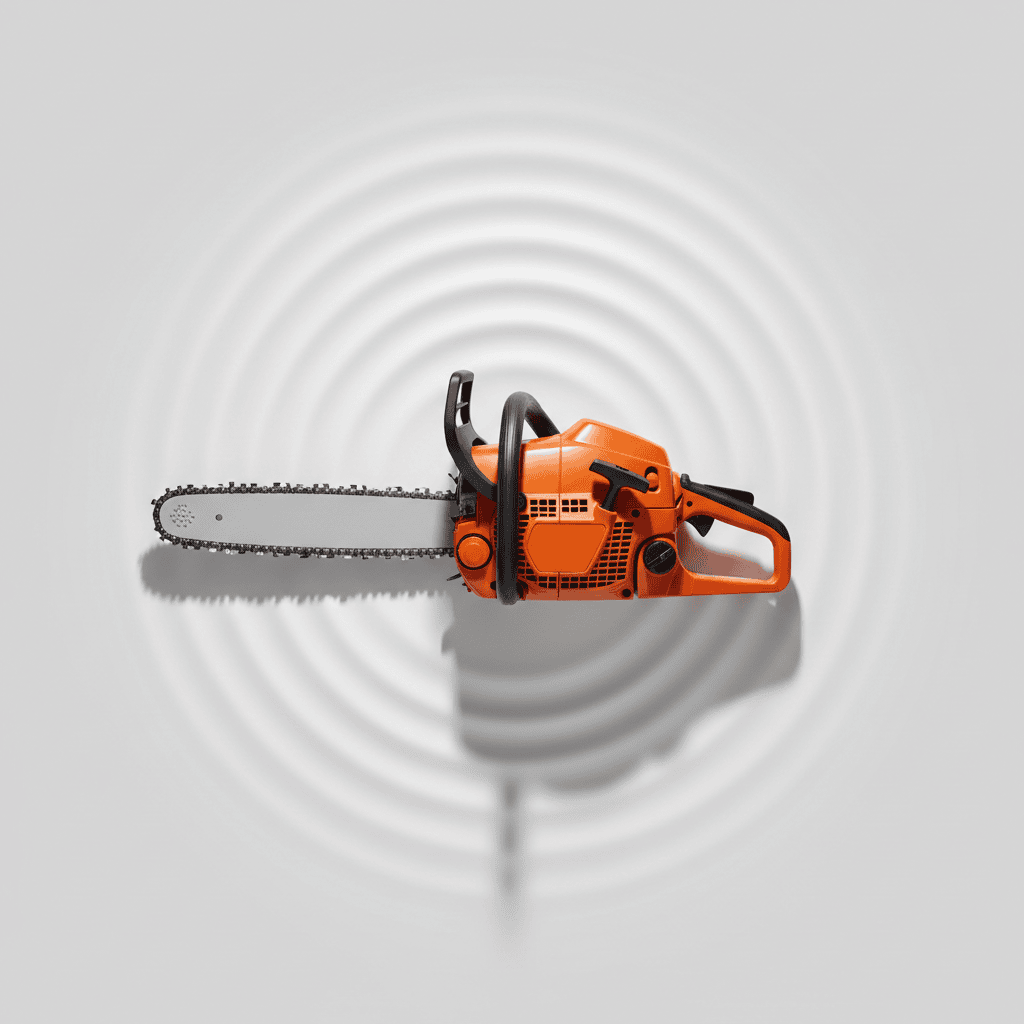
If you’re shopping for general yard work, a weight near the lower end of your category’s range will be easier to control and less tiring. If you’re felling trees or bucking large logs all day, a heavier, more powerful saw may actually be the safer and more efficient choice, weight often goes hand-in-hand with cutting capability.
What Determines a Chainsaw’s Weight?
Before you compare model numbers, it helps to understand why chainsaws weigh what they do. Several core components contribute to a saw’s overall weight, and knowing them makes the spec sheet far easier to read.

Pros
- Powerful 59.8-cc, 4.16-HP X-Torq engine built for heavy-duty cutting
- AutoTune system automatically adjusts engine settings for environment
- Smart Start feature designed for easier pull-cord startup
- Durable magnesium crankcase withstands demanding use
- Side-mounted chain tensioning provides quick access for adjustments
Cons
- 13-pound dry weight can cause fatigue during all-day operation
- Requires ongoing gas-and-oil fuel mixing and standard engine upkeep

Pros
- Professional 50.1cc gas engine with 3.6 HP output for serious cutting applications.
- AutoTune and Smart Start add convenience for users who need reliable performance and easier startup.
- Air Injection and enhanced cooling are designed to support durability in dusty, high-demand cutting environments.
- Inertia-activated chain brake adds an important safety feature for reducing kickback-related injury risk.
- Slimmed-down design is intended to improve handling for forestry and tree care crews.
Cons
- Gas-powered operation requires fuel mixing, engine maintenance, and proper storage compared with electric chainsaws.
- Professional-grade power may be more than casual homeowners need for occasional light trimming.
- Product data does not specify included accessories, weight, or exact package contents, so buyers should verify what comes in the box.
Overview and design: The Husqvarna 545 Mark II is a professional gas-powered chainsaw built for forestry crews, tree care professionals, and serious outdoor users. It uses a slimmed-down design and is recommended for bar lengths from 13 inches to 20 inches, with this listing centered on a 20-inch setup for larger cutting work.
Performance and key features: Its 50.1cc, 3.6 HP X-Torq engine is designed for strong cutting capacity in felling, limbing, and demanding woodcutting tasks. Smart Start helps reduce startup effort, while AutoTune automatically adjusts engine settings to maintain performance without manual tuning. The Air Injection system helps remove larger dust and debris before they reach the air filter, and the cooling system is built to support extended engine life.
Drawbacks and considerations: This is a gas chainsaw, so it requires fuel handling, routine engine maintenance, and proper storage. It may be more tool than needed for casual users who only cut small branches occasionally. The manufacturer listing does not list weight, dimensions, or all included accessories, so buyers should confirm package contents before purchase.
Verdict: The Husqvarna 545 Mark II is best suited for professional tree care, forestry, farm, and property maintenance users who want a powerful 20-inch gas chainsaw with automatic engine adjustment, improved filtration, cooling support, and vibration reduction. It is a strong fit for demanding outdoor cutting rather than light-duty occasional trimming.

Pros
- Powerful 3.6-HP X-Torq engine delivers high cutting performance
- Ergonomic LowVib design reduces vibrations for easier handling
- Smart Start and combined choke/stop control simplify reliable startups
- Air filtration system supports longer engine durability
- Built-in inertia chain brake enhances user safety
Cons
- 2-cycle gas engine requires fuel-oil mixing and ongoing maintenance
- Limited to recommended bar lengths of 13 to 24 inches only
- Gas-powered design produces typical noise and emissions of combustion tools
The Husqvarna 460 Rancher is a robust gas powered chainsaw with a 24 inch bar built for wood cutting, tree trimming and land clearing. It combines exceptional ergonomic features for easier handling and mobility with the superior power of a gas chainsaw, creating a solid immediate impression as a durable outdoor tool.
Performance comes from the 60.3-cc 3.6-HP X-Torq engine that maximizes power even at low RPMs. Standout features include Smart Start for effortless quick startups, Air Injection Technology that expels larger dust and debris particles before they reach the air filter, an automatic adjustable oil pump, LowVib technology, a 7 degree offset front handle with improved grip, and an inertia-activated chain brake to reduce kickback risks. Combined choke/stop control further eases starting and lowers flooding risk.
Drawbacks and considerations include the need for regular 2-cycle fuel mixing and maintenance typical of gas engines. It is recommended strictly for bar lengths between 13 inches minimum and 24 inches maximum, which may limit versatility on bigger jobs. Users should also account for the noise and emissions common to this power type.
The Husqvarna 460 Rancher delivers the most value to experienced users handling demanding land clearing or heavy wood cutting tasks who prioritize raw power, safety features and ergonomic handling in a reliable gas chainsaw.
Pros
- Performs two sharpening tasks at once, which can simplify chain maintenance.
- Includes a bonus replacement file for added convenience and longer use.
- Purpose-built for 3/8"P 4.0mm chains, offering clear application specificity.
Cons
- Only suitable for 3/8"P 4.0mm chains, so it is not a universal sharpener.
- Manual sharpening may take more time and effort than powered alternatives.
- Best aligned with occasional use, so frequent heavy-duty sharpening needs may prefer a more specialized setup.
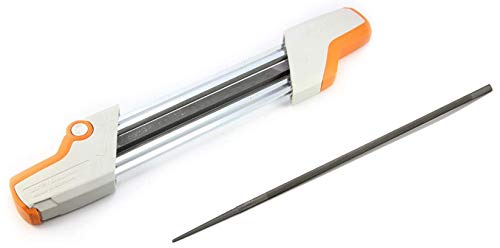
Overview: The Stihl 2-in-1 Easy File Chainsaw Chain Sharpener 56057504303 is a manual sharpening tool made for 3/8"P 4.0mm chains. It is designed to keep chain maintenance simple by combining two sharpening steps into one tool.
Performance & Features: Its main advantage is the ability to sharpen the cutter teeth and depth gauge in a single action. The package includes round and flat files, and the bonus replacement file adds extra value for users who want a spare on hand.
Drawbacks & Considerations: This is not a universal sharpener, so it only fits the specified chain type. It is also aimed at occasional users, which means people who sharpen chains often or want the fastest possible workflow may prefer a different solution.
Verdict: If you use a compatible 3/8"P 4.0mm chainsaw chain and want a straightforward manual sharpening tool, this Stihl file system is a practical choice. It is most compelling for users who value simplicity, control, and an included replacement file.
The Main Components That Add Weight
- Engine or motor: The power source is the single heaviest component. Gas engines need a cylinder, piston, crankshaft, carburetor, and fuel system. Electric motors are smaller and lighter, while battery models add the weight of the battery pack itself.
- Guide bar and chain: Longer bars weigh more. A 16-inch bar is noticeably lighter than a 24-inch bar, and the extra chain links add up as well.
- Fuel tank and oil reservoir: Gas saws carry gasoline and bar oil, which adds fluid weight. An empty tank versus a full tank can change the working weight by a pound or more.
- Chassis and housing: Magnesium, aluminum, and high-grade plastic all weigh different amounts. Professional saws often use metal components that add heft but improve durability for daily use.
- Anti-vibration system and frame: Larger saws include springs or rubber mounts and reinforced frames, all of which contribute to the total.
How the Power Source Affects Weight
The power source is the biggest dividing line in chainsaw weight. Electric chainsaws run on a simple motor and lightweight plastic housing, which is why they hover at the low end of the scale. Battery-powered chainsaws add an 18V, 40V, or 80V battery pack; the higher the voltage and amp-hour rating, the heavier the pack. Gas-powered chainsaws carry the most machinery, an internal combustion engine with all its supporting systems, so they naturally weigh the most.
The Role of Bar Length and Engine Displacement
Bar length and engine displacement track closely with weight. A utility saw with a 14 to 16-inch bar and a small engine will be light and nimble. A professional felling saw with a 20 to 28-inch bar and a 60cc-plus engine will be heavy but powerful. As a general rule, for every few inches of bar length you add, you should expect the weight to climb by one to two pounds. Engine displacement (measured in cubic centimeters, or cc) increases along with power output, and more metal means more mass.
When comparing models, look at the power-to-weight ratio. A moderately heavy saw with excellent engine design can out-cut a lighter saw with a weaker motor. Weight alone doesn’t tell you how well a saw performs, it tells you how much you’ll be holding up during the job.
Weight Ranges by Chainsaw Type
Here’s the direct comparison most buyers are looking for: how much does each type of chainsaw weigh?
| Chainsaw Type | Typical Weight Range | Best For |
|---|---|---|
| Electric (corded) | 6 to 12 lbs (2.7 to 5.4 kg) | Light trimming, branches, DIY use near an outlet |
| Battery-powered (cordless) | 8 to 15 lbs (3.6 to 6.8 kg) | Moderate yard work, portability without fuel |
| Gas-powered (entry/consumer) | 10 to 14 lbs (4.5 to 6.4 kg) | General firewood, fallen limbs, larger yards |
| Gas-powered (professional) | 14 to 20 lbs (6.4 to 9 kg) | Felling, bucking, all-day professional use |
How Much Do Electric Chainsaws Weigh?
Electric chainsaws are the featherweights of the category. Most corded models weigh between 6 and 12 pounds. Because they don’t carry fuel or a heavy engine, they’re easy to lift one-handed for limbing overhead or trimming small branches. The trade-off is that you’re tethered to an extension cord, which limits your reach.
What Is the Typical Weight of a Gas-Powered Chainsaw?
Gas-powered chainsaws are the heavyweight contenders, ranging from about 10 to 20 pounds. Smaller consumer models with 30 to 40cc engines and 16-inch bars sit around 10 to 12 lbs. Larger professional saws with 50 to 80cc engines and 18 to 28-inch bars can reach 15 to 20 lbs. When filled with fuel and bar oil, add roughly a pound to those figures.
How Do Battery-Powered Chainsaws Compare in Weight?
Battery-powered chainsaws occupy the middle ground at roughly 8 to 15 pounds. The exact weight depends heavily on the battery you use , a high-capacity 80V battery adds heft but extends run time. Many cordless saws are designed with the battery positioned to balance the weight, so they feel lighter in use than the spec sheet suggests. If you already own a cordless tool platform, choosing a chainsaw that shares the same battery system can save you money and keep the total package weight predictable. For troubleshooting and reliability insights, consult our in-depth marshall stanmore iii vs harman kardon onyx studio 8 report.
Weight Classes: Light, Medium, and Heavy-Duty
Beyond the power source, it’s useful to think of chainsaws in weight classes tied to the jobs they’re designed to handle.
Light-Duty Chainsaws (6 to 10 lbs)
Light-duty saws are built for light trimming, pruning, and cutting small branches up to a few inches thick. They typically have short bars (10, 16 inches) and are easy to start, easy to control, and easy to store. This class is ideal for homeowners, older users, or anyone who only cuts occasionally. Because they’re easier to maneuver one-handed in awkward positions, they reduce strain during short sessions. Readers comparing setup options can review our technical analysis on dyson v8 cyclone vs bissell featherweight stick.
Medium-Weight Chainsaws (10 to 14 lbs)
Medium-weight saws are the workhorse category for most homeowners and part-time firewood cutters. They usually feature 16 to 20-inch bars and engines or motors capable of handling 6 to 12 inch logs. They balance enough power for real work with enough manageability for a few hours of cutting. If you clear storm damage, cut firewood on weekends, or have several trees on your property, this is the class to focus on.
Heavy-Duty Chainsaws (14 to 20 lbs)
Heavy-duty models are professional-grade saws built for felling trees, bucking large logs, and all-day use. They come with long bars (20 inches or more) and powerful engines that can push through dense hardwood without stalling. They are physically demanding to operate , the weight and torque require experience and upper-body strength. For a homeowner, buying a heavy-duty saw often means owning more machine than the job calls for, which actually makes work harder rather than easier. For complementary field maintenance guidelines, examine our breakdown of bissell crosswave hydrosteam vs shark stainforce.
To help you decide quickly, consider this rough guidance:
- Small pruning jobs around the yard: light-duty, 6 to 10 lbs
- Storm cleanup and occasional firewood: medium, 10 to 14 lbs
- Felling and commercial logging: heavy-duty, 14 to 20 lbs
Why Chainsaw Weight Matters for Users
Weight isn’t just a number on a box, it directly affects how safe, comfortable, and effective your cutting session will be.
How Weight Affects Maneuverability and User Fatigue
A heavier chainsaw requires more strength to lift, guide, and stabilize. Every cut involves holding the saw at arm’s length or overhead at least some of the time, and fatigue sets in quickly when the saw is heavy. Fatigue is more than an inconvenience: a tired operator makes poor decisions, loses control of the saw, and is more likely to have an accident. Lighter saws allow longer sessions with fewer breaks, which is why ergonomics matter just as much as horsepower.
What Tasks Suit Lighter vs. Heavier Chainsaws
Lighter saws shine at precision work, pruning, trimming, and cutting small material where control matters more than raw power. Heavier saws excel at volume work, cutting large-diameter logs, felling trees, and sawing through dense wood where momentum and engine output keep the chain moving. Matching the saw to the task is the best way to stay safe and efficient.
Ergonomic Considerations Related to Weight
Modern chainsaws incorporate several features to offset the downsides of weight:
- Anti-vibration systems: Springs and rubber mounts reduce the saw’s kickback forces and fatigue-inducing vibration.
- Balanced design: A well-balanced saw feels lighter than its spec weight because the mass is centered near the front handle, reducing wrist strain.
- Ergonomic grips: Wraparound rear handles and padded front handles improve control, making a heavier saw easier to manage.
- Reduced kickback bars and chains: These lower the risk of the saw jerking backward, which is especially important when pushing a heavy saw through a cut.
If you’re choosing between two models, try to handle them in person. A saw that weighs 14 lbs but balances beautifully can feel easier to use than a 12 lb model with poor weight distribution.
Frequently Asked Questions About How Much Does A Chainsaw Weigh
What is the average weight of a homeowner chainsaw?
The average homeowner chainsaw weighs around 10 to 12 pounds. This typically covers gas models with 16 to 18-inch bars and larger electric or battery models. If you’re buying for general yard maintenance, expect to be lifting roughly 10 to 14 lbs while you work.
Are electric chainsaws lighter than gas chainsaws?
Yes, in most cases. Electric chainsaws generally weigh 6 to 12 lbs, while gas models range from 10 to 20 lbs. Battery-powered saws fall between the two at roughly 8 to 15 lbs, depending on the size of the battery pack. The one exception is professional battery saws with large high-voltage batteries, which can approach the weight of a small gas model.
Does bar length change chainsaw weight significantly?
Yes. A longer guide bar adds metal and chain, increasing the total weight. For example, a saw sold with a 16-inch bar can become one to two pounds heavier when fitted with a 24-inch bar. Longer bars also usually require a larger, heavier engine or motor to drive them effectively, which increases weight further.
How can I reduce fatigue when using a heavy chainsaw?
Take frequent breaks, keep both hands on the saw, and let the chainsaw do the cutting instead of forcing it. Use a saw that matches the job, you don’t need a 20-inch pro bar to prune branches. Keep the chain sharp and properly tensioned, because a dull chain forces you to push harder, increasing fatigue. For long sessions, a harness or shoulder strap can transfer some of the saw’s weight to your body instead of your arms.
Wrap-Up: Which Model Delivers True Value?
To summarize: chainsaws weigh anywhere from 6 to 20 pounds depending on type and size. Electric models are the lightest at 6 to 12 lbs, battery models sit in the middle at 8 to 15 lbs, and gas models are the heaviest at 10 to 20 lbs. Choose the lightest saw that can handle your largest expected cut, and prioritize balance and comfort over raw numbers. The right weight for you is the one you can control safely from the first cut to the last.
Related Maintenance and Operating Guides
To keep your equipment running at peak operating efficiency, explore our related technical walkthroughs and maintenance tutorials:
- Consult our detailed breakdown on residential zero-turn lawn mower guide.
Background Reading on Chainsaw Weight
Chainsaw weight shifts with engine size, bar length, and fuel type, and heavier models can tire an operator quickly during long cuts. Operators who spend long days with power saws may also find general safety information from American National Standards Institute (ANSI) a useful companion to the points raised here.









