
Direct Answer: How to Repair a Self-Propelled Lawn Mower
To repair a self-propelled lawn mower, first determine whether the problem is in the self-propulsion drive system or the engine. For drive issues, inspect and adjust the drive cable, check the drive belt for wear or slippage, and clear debris from the drive pulleys. For starting or stalling problems, replace the spark plug, clean or replace the air filter, clean the carburetor, drain old fuel, and change the oil. A stretched or loose drive cable is the most common cause of a drive that won’t engage, and it is a repair most homeowners can complete in under an hour with a basic wrench set.
Understanding the Problem: Is It the Drive System or the Engine?
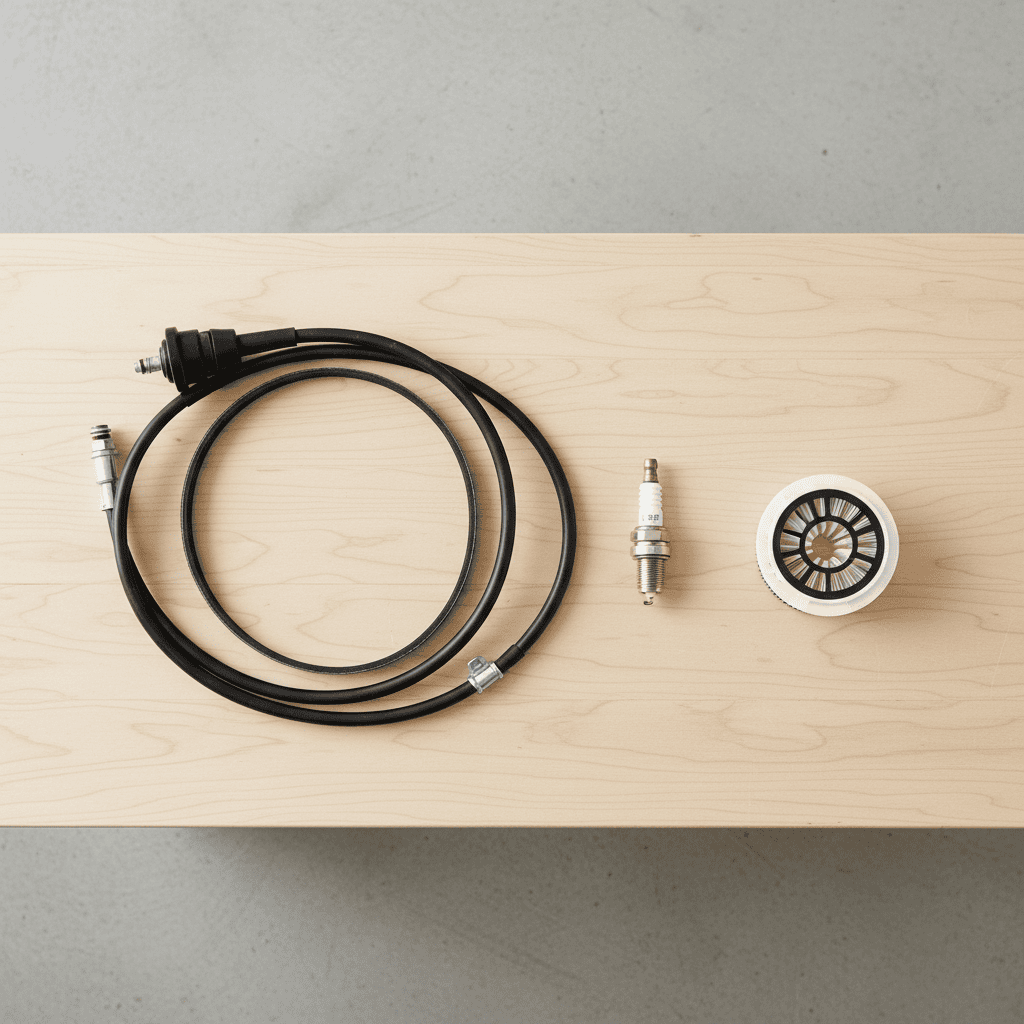
Before you turn a single bolt, identify which system is actually failing. Many mower owners assume they have a transmission problem when the real culprit is old fuel or a fouled spark plug. The table below helps you sort symptoms into the correct repair path.
| Symptom | Likely System | Most Probable Cause |
|---|---|---|
| Engine runs but wheels don’t pull forward | Drive system | Stretched/loose drive cable, worn belt, or broken transmission |
| Mower pulls weakly or jerks while mowing | Drive system | Slipping drive belt, debris in pulleys, or worn drive wheels |
| Engine won’t start at all | Engine | Old fuel, fouled spark plug, or clogged carburetor |
| Engine starts but stalls under load | Engine / fuel | Dirty air filter, water in fuel, or clogged fuel line |
| Excessive vibration or poor cut | Blade | Dull, bent, or unbalanced blade |
Quick diagnostic tip: If the engine runs perfectly while stationary but the wheels fail to turn when you squeeze the drive lever, you are dealing with the drive system. If the engine itself sputters, dies, or refuses to crank, start with the engine checklist in this guide.
Step-by-Step Guide to Repairing the Self-Propulsion Drive System
Work through these repairs in order from easiest to most complex. Most drive failures are resolved at the first or second step.
1. Inspect and Adjust the Drive Cable
A stretched or loose drive cable is the single most frequent cause of a self-propelled drive that stops engaging. The cable connects the drive lever (or bar) on the handle to the transmission, and over time it stretches, allowing the transmission to disengage completely.
- Locate the drive cable where it attaches to the handle lever. It is usually a metal cable inside a black plastic or rubber sheath.
- Look for an adjustment nut or bracket near the handle or near the transmission end of the cable. Many mowers have a threaded adjuster with a wing nut or a fixed nut requiring a 10mm wrench.
- Turn the adjuster to take up slack until there is about 1/8 inch of free play in the lever before the cable tension begins.
- Test the drive by squeezing the lever with the engine off and pushing the mower. The wheels should resist turning when the drive is engaged.
- If the cable is frayed, kinked, or has no adjustment range left, replace it. Replacement cables cost roughly $15–$25 and slide out after removing the clips and retaining pins.
Safety note: Always disconnect the spark plug wire before working near the drive system so the engine cannot accidentally start while your hands are around moving parts.
2. Check and Replace the Drive Belt
The drive belt transfers engine power to the transmission. When it wears, stretches, or becomes glazed, the wheels slip or stop turning entirely.
- Tip the mower onto its side (carburetor side up, toward the sky, to avoid oil leaks) and remove the belt cover or pulley guard.
- Inspect the belt for cracks, fraying, glazing (a shiny, hard surface), or a V-shape that has become rounded.
- Check belt tension: it should deflect no more than about 1/2 inch when pressed firmly at the midpoint between pulleys.
- If the belt is worn, note the model number printed on it and buy an exact replacement. Remove the old belt by releasing tension from the idler pulley, route the new belt exactly as the old one ran, and reapply tension.
- Reinstall the cover and test the drive.
A slipping belt often produces a squealing sound when the drive is engaged, and it is one of the easiest self-propelled mower repairs to complete at home.
3. Clean Debris From the Drive Pulleys and Wheels
Grass clippings, mud, and twigs accumulate around the drive pulleys, making the belt slip and the wheels bind.
- With the mower tipped and the spark plug disconnected, scrape caked grass from the pulley grooves and the idler arm using a flathead screwdriver or a stiff brush.
- Remove the drive wheels (usually held by a bolt or clip) and clean grass packed around the axle and wheel hub.
- Check the wheel drive gear or friction wheel for worn or flat spots. If the wheel gear teeth are missing or rounded, replace the wheel.
- Apply a light coat of grease to the axle and gear contact surfaces, avoiding the friction drive disc itself if your mower uses that design.
4. Evaluate the Transmission or Gearbox
If the cable is adjusted, the belt is new, and everything is clean but the wheels still will not drive, the transmission (gearbox) is likely the culprit.
- Listen and feel for grinding, clicking, or a complete lack of engagement when the drive lever is squeezed.
- Some transmissions have a grease fill port or a small drain screw. If the gearbox is dry, adding compatible gear grease may revive it temporarily, but this is rarely a permanent fix.
- Check whether replacement parts are still available for your mower’s model. Many budget mowers use sealed, non-serviceable transmissions.
- Reality check: A full transmission replacement often costs $80–$150 in parts plus significant labor. If your mower is more than five years old, compare this against the price of a new mower before committing. For most DIYers, a failed sealed transmission is the point where replacement wins.
Essential Engine Maintenance and Repair for Starting Issues
Engine problems are frequently mistaken for drive problems because a mower that “won’t go” is often a mower whose engine is losing power. Work down this list of common, cheap fixes first.
1. Check and Replace the Spark Plug
A fouled or worn spark plug is one of the top reasons a self-propelled mower fails to start or misfires.
- Pull the spark plug wire off the plug and use a spark plug socket with an extension to remove it.
- Inspect the electrode: if it is black, oily, or covered in carbon, replace the plug.
- Check the gap against your engine manual’s specification (typically 0.020–0.030 inches) and set it with a feeler gauge if the plug is being reused.
- Hand-thread the new plug, then tighten with the socket—avoid overtightening, which can crack the porcelain.
2. Clean or Replace the Air Filter
A dirty air filter chokes the engine and causes hard starting, poor performance, and stalling.
- Remove the air filter cover (usually a single thumbscrew or clip) and take out the filter element.
- Foam filters can be washed in warm soapy water, rinsed, dried, and lightly oiled with air filter oil.
- Paper filters cannot be washed—tap them gently to remove loose dirt, but replace them if they are dark, oily, or torn.
- Clean the inside of the housing so dirt doesn’t bypass the new filter, then reinstall.
3. Clean the Carburetor
If the mower won’t start or stalls right after starting, a clogged carburetor jet is the likely cause, usually from ethanol fuel that has turned to varnish.
- Remove the air filter and the carburetor assembly (note the position of every linkage and screw, or photograph it with your phone).
- Spray the carburetor body, jets, and passages with carburetor cleaner, focusing on the small fuel jet and the float bowl.
- If the bowl has old fuel residue, remove the bowl drain screw and let it drain, then clean the bowl itself.
- Reassemble and test. If the mower still won’t idle, the carburetor may need ultrasonic cleaning or a rebuild kit, which is often more cost-effective on newer engines than replacement.
4. Fix Fuel System Issues (Old Fuel Is the #1 Culprit)
Gasoline that has sat for more than 30 days begins to break down, leaving gummy deposits that clog the fuel line and carburetor.
- Drain the old fuel into an approved container and dispose of it properly at a hazardous waste facility.
- If your mower has an in-line fuel filter, replace it—it costs about $5 and takes one minute.
- Refill with fresh, ethanol-free fuel whenever possible, and add a fuel stabilizer if the mower will sit unused for more than a month.
- For stubborn cases, a fuel system cleaner added to a full tank can dissolve light varnish without disassembly.
5. Change the Oil
Old, low oil can cause the engine to run hot, stall, or trigger the low-oil shutdown on newer models.
- Run the engine for a few minutes to warm the oil, then turn it off, pull the spark plug wire, and drain the old oil into a pan from the drain plug or dipstick tube.
- Replace the drain plug and fill with the grade recommended in your manual (typically SAE 30 or 10W-30) to the full mark on the dipstick.
- Most manufacturers recommend an oil change every 50 hours of operation or once a season.
- Recycle the used oil at an auto parts store or your local transfer station.
Blade Maintenance and General Upkeep
A dull or damaged blade makes the engine work harder, causes a ragged cut, and creates the vibration that loosens drive components over time.
How to Sharpen or Replace the Lawn Mower Blade
- Disconnect the spark plug wire, tip the mower on its side, and block the blade with a piece of wood to keep it from spinning.
- Remove the center bolt (note which way the blade faces) and inspect the blade for nicks, bends, or cracks.
- Sharpen the cutting edge with a bench grinder, angle grinder, or hand file, keeping the original bevel angle of about 30 degrees.
- Balance the blade by hanging it on a nail through the center hole. If one side drops, grind that side a little more until it hangs level.
- Replace the blade if it is bent, deeply pitted, or thinner than about halfway to the original edge—a new blade costs $15–$30 and is safer than trying to save a worn one.
- Tighten the bolt to the torque specified in your manual (typically 30–50 ft-lb) so it doesn’t loosen at high speed.
Routine Care That Prevents Future Repairs
- Clear grass clippings from the underdeck and around the drive pulleys after every use.
- Store the mower in a dry place and remove or drain fuel before winter storage.
- Replace the air filter and spark plug annually at the start of the season.
- Keep tires at the recommended pressure so the self-propulsion system gets even traction.
- Lubricate pivot points, cable ends, and wheel axles with a light oil or grease twice a season.
When to Repair vs. When to Replace Your Mower
Not every repair is worth doing. Use these guidelines to make a smart, cost-effective decision.
| Scenario | Recommendation |
|---|---|
| Drive cable or belt needs adjustment/replacement | Repair—parts are cheap ($10–$30) and DIY-friendly |
| Spark plug, air filter, fuel, or oil issue | Repair—each fix is under $20 and takes minutes |
| Blade needs sharpening or replacement | Repair—$15–$30 for a new blade |
| Sealed transmission failed on a mower under 3 years old | Repair may be justified if parts and labor are under 50% of replacement cost |
| Transmission failed on a mower over 5 years old, or repair quote exceeds ~50% of a new mower’s price | Replace—a new self-propelled mower costs roughly $250–$600, and a major repair rarely extends life by more than a season or two |
| Engine has a blown head gasket, cracked block, or severe smoke | Replace—these failures usually exceed the mower’s residual value |
Rule of thumb: If the repair costs more than half the price of a comparable new mower, or the mower is more than seven years old, replacement is almost always the better financial choice.
Frequently Asked Questions
Why won’t my self-propelled mower move forward even though the engine runs fine?
The most common cause is a stretched or loose drive cable that no longer fully engages the transmission. Adjust the cable tension first, then inspect the drive belt for wear or slipping and clean grass debris from the drive pulleys. Only after those checks should you suspect the transmission itself.
Can I repair a self-propelled mower transmission at home?
Some gear-driven transmissions can be opened, cleaned, and repacked with grease if replacement parts are available, and a few mowers use repairable friction-wheel drives. However, many modern mowers use sealed, non-serviceable transmissions. If the transmission is sealed or internal parts are no longer manufactured, professional service or mower replacement is more practical.
How much does it cost to fix a self-propelled lawn mower?
DIY repairs are inexpensive: drive cables cost about $15–$25, drive belts $15–$30, spark plugs $5–$10, air filters $5–$15, and blades $15–$30. Taking the mower to a shop typically costs $75–$150 for labor plus parts, and a full transmission replacement can reach $150–$250. Compare these figures against the 50% of replacement cost guideline.
How often should I maintain a self-propelled lawn mower?
Change the oil every 50 hours or once a season, replace the air filter and spark plug annually, sharpen the blade once or twice per season, and clean grass clippings from the deck and drive pulleys after every use. At the end of each season, run the fuel dry or add a stabilizer to prevent carburetor clogs.