Why You Need to Remove Gas from Your Lawn Mower
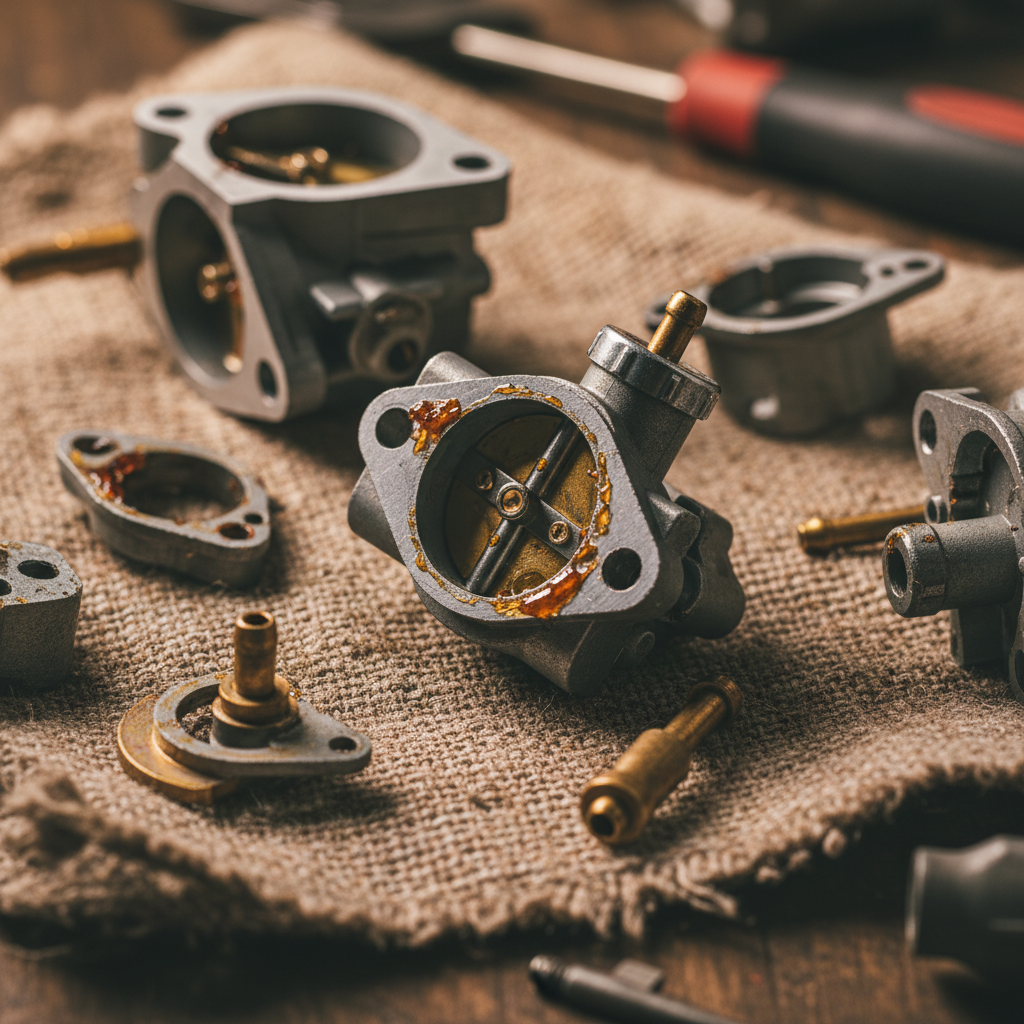
Gasoline left sitting in a mower’s fuel system causes real, costly damage. As fuel ages, it oxidizes and forms varnish-like deposits that clog carburetor jets, gum up the fuel line, and foul the float needle — often the root cause of a mower that cranks but won’t start after winter. According to Briggs & Stratton, untreated gasoline can begin to degrade in as little as 30 days, and ethanol-blended fuel (E10, the standard pump gas in most U.S. states) absorbs moisture, accelerating corrosion inside the tank and carburetor.
The four most common reasons to drain a mower’s tank are:
- Winter storage prep: Fuel left over a storage season is the leading cause of spring start-up failures.
- Pre-repair access: Removing the carburetor, fuel line, or tank requires an empty, fume-free system for safety.
- Transport: Many towing and equipment-rental regulations require an empty fuel tank during transport.
- Stale or contaminated gas removal: If the mower sat with old fuel, draining and cleaning is necessary before fresh gas will solve the problem.
Fuel stabilizer as an alternative: If the mower will be stored for fewer than 12 months and you’d rather not drain the tank, a quality fuel stabilizer (such as STA-BIL or Sea Foam) extends gasoline shelf life up to 24 months per manufacturer data. Add stabilizer to a nearly full tank, run the engine for two minutes to circulate it through the carburetor, then store. For storage beyond one season, or for removing bad gas already in the system, draining is the correct action.
Safety Precautions Before You Start
Gasoline is a Class IB flammable liquid. The vapor — not the liquid — ignites, and those fumes are heavier than air, meaning they accumulate at ground level and can travel to a distant ignition source. The National Fire Protection Association (NFPA) and OSHA both require that gasoline be handled only in well-ventilated outdoor areas, away from enclosed spaces where fumes concentrate.
Before touching the fuel system, complete every step below:
- Work outdoors. A driveway or open yard — not a garage, shed, or enclosed space — is the only appropriate location.
- Let the engine cool completely. Hot engine components and exhaust manifolds can ignite spilled fuel. Allow at least 15–20 minutes after last operation.
- Eliminate all ignition sources. No smoking, no open flames, no running power tools, no active electrical switches within at least 10 feet of the work area.
- Use an approved fuel container. Only use a red, ANSI/ASTM-certified portable fuel container with a tight-fitting cap. Never use glass jars, milk jugs, or uncertified plastic containers.
- Wear nitrile gloves and safety glasses. Gasoline is absorbed through skin with repeated exposure, and fuel splatter is a common eye hazard during siphoning.
- Keep a fire extinguisher rated ABC within reach.
- Have absorbent rags or kitty litter nearby to contain any spill immediately.
Method 1: How to Remove Gas with a Hand Siphon Pump (Recommended)
A hand siphon pump — available at any hardware or auto parts store for $8–$20 — is the cleanest, fastest, and most controlled method. It works for push mowers and riding mowers alike and leaves minimal residual fuel.
What you need
- Manual or squeeze-bulb hand siphon pump with fuel-rated tubing
- Approved red fuel container (large enough for the tank volume — push mowers hold roughly 1 quart to 1 gallon; riding mowers 1.5–3 gallons)
- Nitrile gloves and safety glasses
- Clean rags
Step-by-step instructions
- Position the mower on a flat, level surface outdoors. For a push mower, tilt is not necessary — keep it flat to prevent oil from migrating into the air filter.
- Locate the fuel tank cap and remove it slowly to release any pressure. Set it aside on a clean rag.
- Insert the siphon intake tube fully into the fuel tank. Push it down until it contacts the bottom of the tank — this ensures you extract the maximum amount of fuel, including sediment-laden fuel at the lowest point.
- Run the siphon output tube into the mouth of the approved fuel container. Keep the container lower than the tank to assist gravity flow once the siphon is primed.
- Prime the siphon pump by squeezing the bulb (on a squeeze-bulb model) or operating the hand pump lever until fuel begins flowing through the output tube. Fuel should flow continuously once the siphon is established.
- Allow the pump to run until flow stops. When the tube begins pulling air, the tank is effectively empty. A small residual pool (a few tablespoons) may remain — this is normal and addressed in Method 2.
- Remove both tubes carefully to avoid dripping fuel on the mower or ground. Place the intake tube tip over a rag to catch drips.
- Seal the fuel container immediately. Wipe the outside of the fuel tank opening with a dry rag and replace the fuel cap.
Push mower vs. riding mower note: Push mower tanks typically have a small, narrow opening — check that the siphon tube diameter fits (most standard 3/8-inch tubing fits). Riding mower tanks are larger and usually easier to access; see the dedicated riding mower section below for fuel line disconnection steps that allow a more complete drain.
Method 2: How to Run the Engine Dry to Remove Remaining Gas
Running the engine until it stalls is best used to clear the carburetor of residual fuel after siphoning, or when only a small amount of gas remains in the tank. It is not recommended as a primary drain method for a full or near-full tank — burning off a large volume wastes fuel and generates unnecessary exhaust.
Important: Running a small engine completely dry repeatedly over many seasons can accelerate wear on carburetor needle valves and the diaphragm (on diaphragm-type carburetors), per Briggs & Stratton small engine service documentation. Occasional run-dry for storage prep is acceptable; it should not be the routine maintenance approach every cycle.
Step-by-step instructions
- If the mower has a fuel shut-off valve (a small lever or petcock on the fuel line beneath the tank — common on riding mowers and some walk-behind models), close it now. This isolates the tank and allows the engine to consume only fuel already in the carburetor bowl and fuel line.
- Start the engine normally and let it run at its standard operating speed. Do not place your hands near the blade or moving parts.
- The engine will sputter and stall when the carburetor runs out of fuel. This typically takes 1–3 minutes after the shut-off valve is closed, or longer if running from a partial tank without a shut-off valve.
- Once the engine stalls, turn the ignition key or kill switch to OFF.
- Drain the carburetor bowl (if accessible): Many carburetors have a small drain screw or bolt on the bottom of the bowl. Place a rag beneath it, loosen the screw, and allow the small amount of residual fuel to drain into the rag or a small container. Retighten the screw snugly.
- Confirm the fuel shut-off valve is in the closed position before storing the mower.
Method 3: How to Use a Turkey Baster or Fluid Transfer Syringe for Small Tanks
A turkey baster or large-barrel fluid transfer syringe works for push mowers with narrow tank openings that won’t accommodate a siphon pump tube, or when only partial removal is needed (for example, removing contaminated fuel down to a serviceable level). It is slower than siphoning and best suited for tanks holding less than half a gallon.
Step-by-step instructions
- Remove the fuel cap and set it on a clean rag.
- Insert the baster or syringe tip into the fuel and squeeze the bulb fully before inserting, then release it slowly to draw fuel in.
- Withdraw the baster carefully and expel fuel into the approved fuel container. Repeat until the tank is empty or reaches the desired level.
- Expect approximately 20–40 draws to empty a typical 1-quart push mower tank with a standard 2-oz baster — this process takes 10–15 minutes.
- After use, the baster or syringe is gasoline-contaminated and must not be used for food. Place it in a sealed plastic bag and dispose of it with hazardous household waste, or dedicate it permanently to fuel tasks and store it in your tool area.
How to Remove Gas from a Riding Mower: Extra Steps
Riding mowers carry significantly more fuel than push mowers — tanks commonly hold 1.5 to 3 gallons — and the fuel system includes a fuel shut-off valve, a longer fuel line run, and sometimes an in-line fuel filter. Full drainage often requires both siphoning and fuel line disconnection for a complete result.
Step-by-step instructions for a riding mower
- Locate the fuel shut-off valve. On most riding mowers (Husqvarna, Cub Cadet, John Deere, Troy-Bilt), the petcock or shut-off valve sits on the underside of the tank or along the fuel line near the tank. Consult your owner’s manual for the exact location. Turn it to the OFF or CLOSED position.
- Access the fuel tank. On most riding mowers, the tank is under the hood or beneath the seat. Remove the hood or lift the seat to expose the tank cap.
- Siphon the bulk of the fuel using Method 1 above. A riding mower tank typically has a wide enough filler neck to accept a standard siphon tube without difficulty.
- To drain the remaining fuel via the fuel line: Place an approved container under the fuel line connection point near the carburetor. Turn the shut-off valve to OPEN and place the disconnected fuel line end into the container, allowing gravity to drain residual fuel from the line and lower portion of the tank. Reconnect and clamp the fuel line when flow stops.
- Drain the carburetor bowl using the same drain-screw method described in Method 2, Step 5.
- Return the shut-off valve to the CLOSED position before storing or transporting the mower.
How to Deal with Stale or Bad Gas in a Lawn Mower
Stale gasoline — fuel that has been sitting in the tank for more than 30 days without a stabilizer — is a distinct problem from simply draining fresh fuel. Ethanol-blended gasoline begins to phase-separate (the ethanol absorbs water and drops to the bottom of the tank) and leaves behind gum and varnish deposits that coat the carburetor’s internal passages.
How to identify bad gas
- Color: Fresh gasoline is pale yellow. Stale gas turns darker amber to brown.
- Smell: Old gas has a sour, paint-thinner odor rather than the sharp smell of fresh fuel.
- Appearance: Phase-separated fuel shows a visible layered or cloudy look in a clear container.
- Symptom: The mower cranks but won’t start, or starts and immediately stalls — classic stale-fuel carburetor symptoms.
Steps after removing stale gas
- Drain the tank completely using Method 1 or Method 3.
- Run the engine dry or drain the carburetor bowl per Method 2 to flush stale fuel from the carburetor circuit.
- Inspect and clean the carburetor. If the mower still won’t start after fresh fuel is added, the carburetor jets require cleaning with carburetor cleaner spray or a full carburetor rebuild kit (available for most small engine models for $8–$15).
- Dispose of old gas separately and label the container — do not mix it with fresh fuel for reuse if it shows signs of phase separation or heavy contamination.
Gasoline shelf life: Standard E10 pump gas is usable for approximately 3–6 months without stabilizer; non-ethanol fuel lasts 6–12 months. With a quality fuel stabilizer added at mix time, shelf life extends to 12–24 months per manufacturer specifications (STA-BIL 360 Protection, PRI-G).
How to Safely Dispose of Drained Lawn Mower Gas
Gasoline is a regulated hazardous waste. Pouring it on the ground, into a storm drain, or down a household drain is a federal violation under the EPA’s Resource Conservation and Recovery Act (RCRA) and state environmental laws in all 50 U.S. states. Ground disposal also creates a fire hazard and contaminates soil and groundwater.
Approved disposal methods
- Certified household hazardous waste (HHW) facility: Search Earth911.com or call 1-800-CLEANUP to find the nearest HHW drop-off in your area. Most municipalities hold free drop-off events monthly or quarterly. Bring fuel in the original approved container, sealed and labeled.
- Auto parts stores: Many AutoZone, O’Reilly, and Advance Auto Parts locations accept small quantities of used gasoline — call your local store to confirm.
- Fire stations: Some local fire departments accept small quantities for disposal; call ahead.
- Mixing with fresh gas for reuse (fresh fuel only): If the drained fuel is fresh (less than 30 days old, no signs of contamination), it can be blended into a vehicle’s fuel tank at a ratio of no more than 1 part old fuel to 3 parts fresh fuel. Do not reuse stale, phase-separated, or contaminated fuel.
Storage while awaiting disposal
- Keep fuel in a sealed, approved red container — never in an open container or a non-fuel-rated vessel.
- Store in a detached shed or garage, away from living areas and any heat source.
- Do not store for more than 90 days before disposal.
- Keep containers off concrete floors (use a wood pallet or shelf) to minimize static charge buildup.
Frequently Asked Questions
Can I leave a small amount of gas in my lawn mower over winter?
Only if you add a fuel stabilizer to the remaining fuel and run the engine for two to three minutes to circulate it fully through the carburetor. Without stabilizer, even a small amount of ethanol-blended gas will varnish the carburetor over a 3–6 month storage period. A fully empty tank and carburetor is the most reliable approach for storage beyond one season.
Is it okay to run a lawn mower completely out of gas?
Occasionally, yes — running the engine dry to clear the carburetor before storage is a widely used and acceptable practice. Doing it repeatedly as the primary storage method each season can accelerate wear on carburetor needle valves and diaphragms in some engine types, per Briggs & Stratton service guidance. Siphoning first, then running dry for the final residual, is the preferred combination.
How do I know if the gas in my mower has gone bad?
Visual and smell checks are reliable indicators. Pour a small sample into a clear glass jar: fresh gas is pale yellow with a sharp odor; stale gas is darker amber to brown with a sour smell. Phase-separated fuel (ethanol-blended gas that has absorbed moisture) appears cloudy or shows a distinct lower layer. Any of these signs indicate the fuel should be drained and disposed of rather than used.
Can I use the gas I drained from my mower in my car?
Only if the fuel is fresh (under 30 days old) and shows no signs of contamination or phase separation. Blend it at a maximum ratio of one part mower fuel to three parts fresh fuel in the car’s tank to dilute any minor degradation. Never pour stale, discolored, or phase-separated fuel into a vehicle — it can damage fuel injectors, oxygen sensors, and catalytic converters, creating a repair bill far exceeding the value of the fuel saved.