Quick Answer: Oil Type by Engine and Temperature
The correct oil for your lawn mower depends on two primary factors: your engine type (4-stroke or 2-stroke) and your local operating temperature. The table below provides a quick lookup for the most common scenarios.
| Engine Type | Operating Temperature | Recommended Oil Type |
|---|---|---|
| 4-Stroke Engine (Most modern mowers) |
Below 40°F (4°C) | Synthetic 5W-30 |
| 40°F to 85°F (4°C to 29°C) | 10W-30 | |
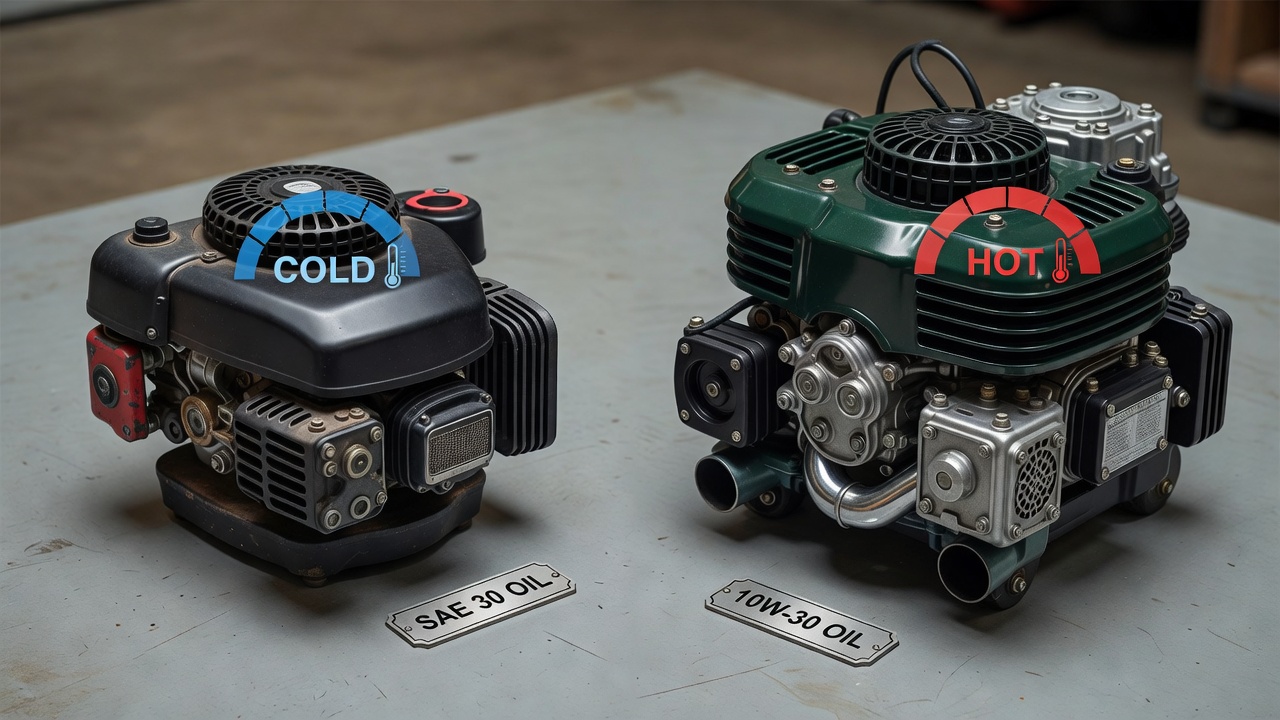
| Above 85°F (29°C) | SAE 30 | |
| 2-Stroke Engine (Older or specific models) |
All temperatures | 2-Stroke Oil (pre-mixed with gasoline, e.g., 50:1 ratio) |
4-Stroke vs. 2-Stroke Engines: Why the Difference Matters
Using the wrong oil type can cause catastrophic engine damage. The fundamental difference lies in how the engine is lubricated.
- 4-Stroke Engines: These are the standard in most modern push, riding, and zero-turn mowers. They have a dedicated crankcase that holds a reservoir of oil. The oil lubricates internal components and is changed periodically. You pour oil directly into the crankcase via a fill port or dipstick tube.
- 2-Stroke Engines: Common in older, lightweight push mowers or some handheld equipment. These engines do not have an oil reservoir. Instead, the oil must be pre-mixed with the gasoline at a specific ratio (commonly 50:1) before being added to the fuel tank. The oil lubricates the engine as the fuel-oil mixture passes through it.
How to Identify Your Engine Type: Check for an oil dipstick or fill cap. If you find one, it’s almost certainly a 4-stroke engine. If there is no way to add oil separately, it’s likely a 2-stroke that requires a fuel mix. The engine label or owner’s manual will definitively state the type.
Critical Warning: Putting straight motor oil into the gas tank of a 2-stroke engine, or failing to mix oil into the fuel, will lead to engine seizure and permanent damage.
Oil for Push Mowers with Small 4-Stroke Engines
The most common scenario is a homeowner with a walk-behind push mower. These typically use small, single-cylinder 4-stroke engines from brands like Briggs & Stratton, Honda, and Kawasaki.
Common OEM Recommendations
- Briggs & Stratton: Recommends SAE 30 for temperatures above 40°F (4°C). For a wider temperature range, they suggest 10W-30. Synthetic oil is compatible.
- Honda (GCV Series): Recommends 10W-30 for general use. For temperatures below 40°F (4°C), use 5W-30. SAE 30 is acceptable above 40°F.
- Kawasaki: Often specifies 10W-30 or 10W-40. Check the specific engine model.
Typical Oil Capacity and Procedure
Most small push mower engines hold approximately 15 to 20 fluid ounces of oil. Always check the dipstick to avoid overfilling. The oil fill port is typically located on the side of the engine, marked with a yellow or black cap.
Can you use synthetic oil in a small push mower? Yes. Most modern 4-stroke lawn mower engines are fully compatible with synthetic motor oil. Synthetic oil can provide better protection during cold starts and may allow for longer drain intervals, though you should still follow the manufacturer’s recommended schedule.
Oil for Riding Mowers and Zero-Turn Mowers
Riding mowers, lawn tractors, and zero-turn mowers use larger, often V-twin engines with higher oil capacities. The principles are the same, but specifications differ.
Common OEM Recommendations
- Kohler Engines: Many Kohler engines specify 10W-30 or 10W-40. Synthetic oil is often recommended or required for certain models.
- Kawasaki V-Twin: Typically specify 10W-30 or 10W-40. Consult the engine manual.
- Briggs & Stratton V-Twin: Recommend SAE 30 or 10W-30 based on temperature, similar to their smaller engines.
Typical Oil Capacity
Riding mower engines have a much larger oil reservoir, typically holding between 48 and 64 fluid ounces (1.5 to 2 quarts). The process for checking and changing oil is similar to a push mower but on a larger scale.
How Operating Temperature and Climate Affect Oil Viscosity
Oil viscosity (thickness) changes with temperature. The numbers in grades like 10W-30 indicate how the oil flows in cold (W for Winter) and hot conditions.
- Cold Weather (Below 40°F / 4°C): Use a lower winter viscosity oil like 5W-30 or a full synthetic. This oil remains thinner when cold, allowing for easier engine starts and immediate lubrication.
- Temperate Weather (40°F to 85°F / 4°C to 29°C): A multi-grade oil like 10W-30 provides good protection across this range.
- Hot Weather (Above 85°F / 29°C): A single-grade oil like SAE 30 maintains its thickness better in sustained high temperatures, preventing excessive oil burn-off.
Synthetic vs. Conventional: Synthetic oil is engineered for more stable viscosity across temperature extremes and resists breakdown longer. It is an excellent choice for variable climates or if you want to extend oil change intervals (always within OEM limits). Conventional oil is more cost-effective and perfectly suitable for most standard-use mowers in stable, warm climates.
How to Check and Change Lawn Mower Oil
Following the correct procedure ensures you don’t overfill or underfill the engine.
- Check Level: With the engine off and on a level surface, remove the dipstick, wipe it clean, reinsert it fully, and remove it again to read the level. The oil should be between the “add” and “full” marks.
- Drain Old Oil: Place a drain pan under the drain plug or oil fill tube. Remove the plug or tip the mower (if designed for it) to drain the old oil completely.
- Refill: Using a funnel, pour the new oil into the fill port. Add about 80% of the specified capacity, then check the dipstick. Add oil in small increments until it reaches the “full” mark.
- Disposal: Never pour used motor oil down a drain or in the trash. Take it to a recycling center, auto parts store, or municipal hazardous waste facility.
Change Interval: For a new engine, change the oil after the first 5 hours of use. After that, change it every 50 hours of operation or at least once per season, whichever comes first.
Finding Your Mower’s Exact Oil Spec: Owner’s Manual and Engine Label
All the general guidance above is superseded by your specific engine manufacturer’s recommendation. The owner’s manual is the authoritative source.
- Check the Engine Label: Look for a sticker or plate on the engine shroud. It often lists the recommended oil type and capacity.
- Locate the Manual: If you don’t have the physical manual, search online using your mower’s brand, model number, and “owner’s manual PDF.” Manufacturer websites like Briggs & Stratton, Honda, and Kohler have extensive support libraries.
- Understand API Classifications: You may see labels like “API Service SJ” or “SL.” These indicate the oil meets certain performance standards. For lawn mower engines, SJ or higher is recommended.
Frequently Asked Questions
Can I use 10W-30 instead of SAE 30 in my lawn mower?
Yes, in most cases. If your manual specifies SAE 30 for warm weather, 10W-30 is an acceptable alternative, especially if you also operate the mower in cooler temperatures. 10W-30 provides better cold-start protection than SAE 30 while still performing well in heat.
What happens if I put the wrong oil in my lawn mower?
Using an oil with an incorrect viscosity can lead to poor lubrication, increased engine wear, overheating, and potential engine failure. Using motor oil in a 2-stroke engine will cause immediate and severe damage. Always verify your engine type and consult the manual.
How often should I change the oil in my lawn mower?
Change the oil after the first 5 hours on a new engine. For regular maintenance, change it every 50 hours of use or once per mowing season, whichever comes first. Riding mower engines that run for many hours may need more frequent changes.
Is synthetic oil worth it for a lawn mower?
For most homeowners, conventional oil is sufficient. Synthetic oil offers superior performance in extreme temperatures and may extend drain intervals, but it comes at a higher cost. If you mow in very cold or very hot conditions, or have a high-value riding mower, synthetic is a worthwhile investment.