Direct Answer: When to Replace a Chainsaw Bar
Replace your chainsaw bar when it shows any of these conditions: a visible bend or warp, a groove too shallow to fully seat the chain’s drive links, more than 1–2 mm of lateral chain wobble, asymmetric rail wear that persists after flipping, cracks or stress fractures anywhere on the bar body, or a seized sprocket nose. As a proactive interval rule, replace the bar after every 2–3 chain replacements. Routine maintenance — flipping, cleaning, rail dressing — extends bar life but cannot reverse structural failure; once the bar is bent, cracked, or the groove is critically worn, replacement is the only safe option.

Pros
- Supports a wide range of chainsaw chains up to .404 pitch
- Includes both chain grinding wheels and a depth-gauge maintenance disc
- Can be mounted on a bench or wall for flexible workspace setup
- Built for frequent sharpening tasks rather than occasional use
Cons
- May be more machine than needed for casual users who sharpen chains only occasionally
- Requires mounting and workshop space, so it is less portable than handheld sharpeners
- Compatibility is limited to chains up to .404 pitch
Overview: The Oregon 520-120 is a professional 120-volt chainsaw chain sharpener designed for frequent, high-volume use. It can be mounted on a bench or wall, making it a practical fit for a garage, workshop, or service area.
Performance and Features: This universal sharpener handles chains up to .404 pitch and is intended to work with many popular chain brands, including Oregon, Stihl, and Husqvarna. Multiple adjustment points support more accurate sharpening, while the built-in light helps improve visibility during detailed grinding work.
Drawbacks and Considerations: Its professional focus means it may be more capable than many casual users need. It also requires a mounting setup and dedicated space, so it is not as portable as simpler chain sharpeners. Chains larger than .404 pitch are not supported.
Verdict: The Oregon 520-120 is best suited to professional users or serious property owners who sharpen chains regularly and want a more controlled, workshop-style solution. If you need a durable sharpener for repeated use and value adjustment precision, this model is a strong fit.

Pros
- Space-saving alternative to a full-size chain sharpener.
- Wide chain compatibility up to .404 inch pitch.
- Includes useful setup and maintenance accessories.
- Bench mounting with included bolts adds stability in a workshop or garage.
Cons
- Best suited to occasional use rather than high-volume sharpening.
- Requires a bench or fixed work surface for installation.
- No customer review details are available in the provided data, so long-term performance feedback is limited.
Overview & Design: The Oregon Professional Compact 120-Volt Bench Chain Grinder is a small bench-mounted chain sharpener built for home workshops and garages. Its compact footprint makes it a practical choice for users who want a dedicated sharpening tool without the size of a full professional machine.
Performance & Key Features: This grinder is designed to sharpen chains up to .404 inch pitch, which covers many common chainsaw chains from brands such as Oregon, Stihl, and Husqvarna. It includes a manual chain clamping vice, one-way motor rotation for added safety, two grinding wheels, a dressing brick, and a profile guide.
Drawbacks & Considerations: The main limitation is that it is aimed at occasional users rather than heavy-duty shop use. It also needs to be bolted to a bench, so it is not a portable sharpener. Since no customer review details were provided, there is limited real-world feedback to judge long-term durability.
Verdict: For homeowners, property owners, and light-duty users who want an affordable and space-saving way to maintain saw chains, this Oregon grinder is a sensible option. It offers the core features needed for basic sharpening while staying compact and straightforward.
Pros
- Electric sharpener with a 230W rating listed in the title
- Designed for saw chain and blade sharpening per title
Cons
- Chain size compatibility is not stated in supplied data
Pros
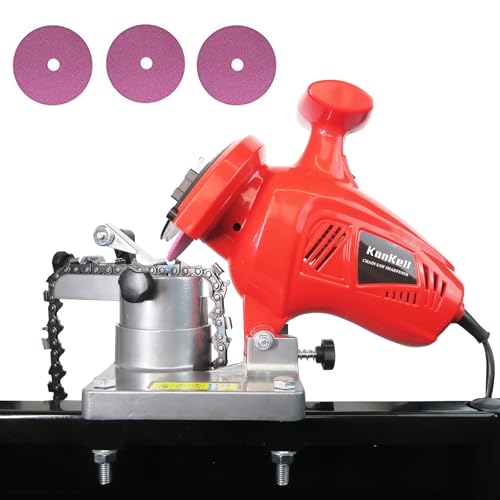
- High-speed 8400 RPM operation supports efficient sharpening.
- Adjustable angle adds flexibility for different chain types.
- Stable mountable base can improve control during use.
- Lightweight and compact compared with many bench-style sharpeners.
Cons
- Best suited to chains between 1/4" and 3/8" pitch, so it is not a universal solution for every chain size.
- Mountable setup is less portable than a fully handheld sharpener.
- No included accessory list or detailed specs were provided in the source data, so buyers may need to confirm what comes in the box.
Overview: The KonKell Electric Chainsaw Sharpener is a 250W bench-style chain grinder designed to restore cutting edges quickly and with more consistency than manual filing. Its heavy-duty build and compact 1.55 kg design make it a practical option for garages, workshops, and on-site maintenance.
Performance and Features: With an 8400 RPM motor and adjustable grinding angle, this sharpener is built for efficient, repeatable sharpening on chains from 1/4" to 3/8" pitch. The mountable base adds stability, which can help improve accuracy and reduce movement during operation. That makes it a strong fit for users who want a more controlled sharpening process.
Drawbacks and Considerations: The sharpening range is limited to specific chain pitches, so it will not fit every chainsaw chain. Because it is designed to be mounted, it is less convenient for fully portable use than a handheld tool. The provided product data also does not include a full accessory list, so buyers may want to confirm what is included before purchasing.
Verdict: This sharpener makes the most sense for DIY owners, homeowners, and professionals who regularly maintain compatible chains and want a stable, power-driven sharpening solution. If you value speed, adjustability, and a more precise setup, it is a sensible choice.
What Does a Chainsaw Bar Do and Why Does It Wear Out?
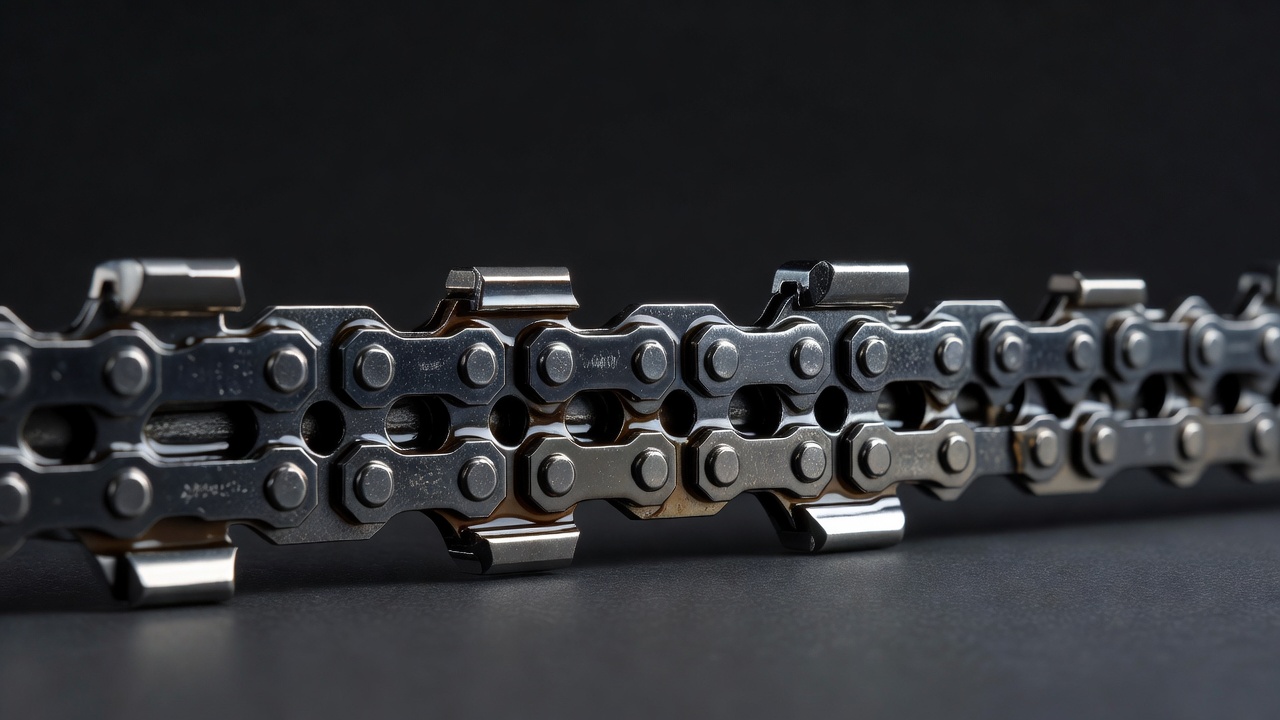
The guide bar (also called the chainsaw bar) is the flat steel rail that supports and guides the cutting chain around a continuous loop. During every cut, the chain slides at high speed through the bar groove — the channel milled into each bar rail — while the bar itself is pressed sideways by the wood and pulled forward by the drive sprocket. The combination of friction, heat, lateral pressure, and abrasion from debris causes the groove to widen and the rails to wear down over time. Even with correct bar-and-chain oil flow, wear is inevitable; lubrication slows it, it does not stop it.
Hard-Nose Bars vs. Sprocket-Nose Bars
The two main bar types wear differently and have different replacement criteria: Users looking for related component recommendations can explore our jbl partybox club 120 vs sony srs xv500 breakdown.
- Hard-nose bars have a solid, welded nose with no moving parts. They are durable and resist tip damage, but the nose rail wears in a fixed pattern and cannot be serviced. When the nose groove rounds out, the bar must be replaced.
- Sprocket-nose bars have a small replaceable sprocket bearing at the tip that reduces friction and chain wear. The sprocket itself can seize or wear independently. In some designs the sprocket nose is replaceable without replacing the full bar — but the bar rails still wear and must be evaluated separately.
How Duty Cycle Affects Wear Rate
A homeowner cutting firewood a few times per year may get 5–10 years from a single bar. A professional arborist or logger running a saw for hours daily may replace a bar every season. The warning signs below apply equally to both; the interval at which those signs appear depends entirely on hours of use and cutting conditions.
7 Clear Signs Your Chainsaw Bar Needs to Be Replaced
1. Visible Bend or Warp in the Bar Body
Lay the bar on a flat surface. Any gap between the bar and the surface, or any curve visible along the bar’s length, indicates a bent bar. A bent bar causes the chain to track unevenly, increases kickback risk, and accelerates one-sided groove wear. A bent bar cannot be safely straightened and must be replaced. Attempting to bend it back introduces stress fractures that may not be visible to the naked eye. ANSI B175.1 chainsaw safety standards and all major OEM service manuals classify a deformed bar as a replacement-only condition. Users looking for related component recommendations can explore our jbl partybox club 120 vs sony srs xv500 breakdown.
2. Bar Rail Groove Too Shallow to Seat Drive Links
The bar groove depth must be deep enough to fully seat the chain’s drive links — the teeth that ride inside the groove and keep the chain on the bar. As the rails wear, the groove shallows. When the drive links no longer sit flush and instead ride proud of the rail surface, the chain can derail under load. To check: slide a worn drive link into the groove; the link’s body should sit below the rail top surface. If it sits flush or above it, the groove is critically worn. Bar manufacturers specify minimum groove depth in their service documentation; as a practical field test, a chain that wobbles side-to-side more than 1–2 mm with normal hand pressure is a strong indicator that groove depth is insufficient. Before finalizing equipment decisions, refer to our comprehensive z890 vs x870e motherboard comparison.
3. Excessive Lateral Chain Wobble
With the saw off and chain tension set correctly, grip the chain at the bar’s mid-point and push it sideways. A small amount of play — up to approximately 1–2 mm — is normal and necessary for the chain to articulate. Play beyond that threshold means the groove has widened past the chain’s gauge (the drive link thickness). A widened groove cannot be corrected by dressing; the metal has been removed permanently. A chain running in an oversized groove will wobble, cut erratically, and is at elevated risk of derailing and causing injury.
4. Asymmetric or Uneven Rail Wear That Flipping Cannot Fix
Most bars are designed to be run in two orientations. Flipping the bar 180° every 2–5 hours of use distributes wear evenly across both rails. When one rail is significantly more worn than the other, the chain tilts in the groove and cuts at an angle rather than straight. If you flip the bar and the problem persists — or if both rails are equally and severely worn — flipping is no longer sufficient. Visually, severe asymmetric wear appears as a rail that is visibly lower or thinner than the opposite side when viewed from the bar’s end. Before finalizing equipment decisions, refer to our comprehensive z890 vs x870e motherboard comparison.
5. Cracks or Stress Fractures
Inspect the bar body, particularly around the mounting slot, the heel of the bar, and along the rails near the nose. Any crack — visible as a dark line, a separation, or a surface irregularity that catches a fingernail — is an immediate replacement trigger. Cracks propagate under the cyclic stress of cutting. A bar that fractures during operation can redirect the chain in an uncontrolled direction, creating a severe laceration or kickback event. Do not attempt to weld or fill cracks in a chainsaw bar.
6. Damaged or Seized Sprocket Nose
On sprocket-nose bars, spin the nose sprocket by hand with the chain removed. It should rotate smoothly and freely. A sprocket that is seized (will not spin), grinds, wobbles laterally, or has visibly broken teeth is worn out. A seized sprocket nose increases chain friction dramatically at the tip — the area most involved in kickback — and accelerates chain stretch. On bars where the sprocket nose is a separately sold replacement part, you may replace only the nose. On bars where the nose is integral, the full bar must be replaced. For broader ecosystem context, read through our operational guide on marshall stanmore iii vs harman kardon onyx studio 8.
7. Blocked or Corroded Oil Feed Hole Beyond Cleaning
The bar’s oil feed hole connects the saw’s oiling system to the bar groove. If this hole is permanently blocked by hardened pitch, corrosion, or impact damage that cannot be cleared with a pick and solvent soak, the bar will run dry regardless of oil tank level. A bar running without lubrication will overheat within minutes, causing rapid groove wear, chain stretch, and potential bar warping. If the oil hole cannot be restored to free flow, replace the bar.
Bar Dressing and Flipping: Repairs That Extend Life vs. Signs They Are No Longer Enough
What Rail Dressing Actually Does
Rail dressing with a bar dressing file (a flat mill file used specifically on bar rails) removes small burrs, mushroomed metal, and uneven high spots from the top of the rail edges. This restores a flat, square rail surface that the chain can slide on cleanly. Dressing is appropriate when rails show minor roughness or small burrs — it is a surface correction, not a groove-depth correction. Dressing removes metal from the rail tops, which actually reduces groove depth slightly with each pass. For troubleshooting and reliability insights, consult our in-depth dyson v8 cyclone vs bissell featherweight stick report.
When Dressing and Flipping Are No Longer Viable
- The groove is already at or near minimum depth — further dressing makes it worse.
- Rail wear is so severe that no amount of filing produces a square, even surface.
- The bar has been dressed so many times that the rails are visibly thin and structurally weak.
- Asymmetric wear is deeper than the file can correct without removing excessive material from the higher rail.
Dressing and flipping are maintenance actions that delay the inevitable on a bar in normal wear. They are not solutions for a bar showing any of the 7 failure signs listed above.
The Chain-to-Bar Replacement Ratio: A Rule-of-Thumb Maintenance Schedule
The widely cited guideline in chainsaw service literature and manufacturer maintenance guides is: replace the bar after every 2–3 chain replacements. The reasoning is mechanical — chains stretch and wear faster than bars, so multiple chains are consumed in the time it takes a bar to reach end of life under normal use. This ratio gives you a proactive replacement schedule before failure signs appear. Readers comparing setup options can review our technical analysis on bissell crosswave hydrosteam vs shark stainforce.
Factors That Alter the Ratio
| Factor | Effect on Bar Life |
|---|---|
| Cutting sandy or dirt-contaminated wood | Accelerates bar groove wear significantly; ratio may drop to 1–2 chains per bar |
| Frozen timber | Increases chain and bar stress; shorten replacement interval |
| Correct oiling and chain tension | Maximizes bar life; ratio stays at 2–3 or extends beyond |
| Sprocket-nose bar vs. hard-nose bar | Sprocket-nose bars generally last longer because nose friction is lower; hard-nose bars may wear faster at the tip in sustained bucking work |
| Professional daily use | All intervals compress; experienced operators often replace bars seasonally regardless of chain count |
| Homeowner intermittent use | Calendar time may cause corrosion before wear thresholds are reached; inspect before each season |
Cost vs. Continue: Is Replacing the Bar Worth It?
Typical Bar Replacement Costs
Replacement bar prices vary by bar length, brand, and whether the bar is OEM or aftermarket:
- Homeowner-class bars (12–16 inch): approximately $20–$60 for aftermarket; $40–$90 for OEM.
- Professional-class bars (18–36 inch): approximately $60–$150 for aftermarket; $80–$250+ for OEM from brands such as Husqvarna, Stihl, or Oregon.
Note: Prices reflect general retail market ranges. Verify current pricing at manufacturer websites or major retailers before purchasing.
The Hidden Cost of Running a Worn Bar
A worn bar groove accelerates chain stretch, increases the frequency of sharpening, and causes the chain to consume itself faster. Running one additional chain to destruction on a worn bar often costs more than the bar replacement itself. More critically, a worn bar degrades cut quality — the saw works harder, fuel consumption rises, and operator fatigue increases.
Safety Risk Is Not Negotiable
OSHA chainsaw safety guidelines and chainsaw manufacturer safety manuals consistently identify worn or damaged guide bars as a contributor to chain derailment and kickback events. Kickback — the sudden upward rotation of the saw when the nose contacts an object — is most severe when the chain is not properly guided by the bar. A bar showing cracks, a seized nose, or an oversized groove is not a performance problem; it is a safety hazard. The cost of a replacement bar is always less than the cost of a preventable injury.
Bar + Chain Cost vs. New Saw Cost
For entry-level homeowner chainsaws priced at $150–$250, a bar and chain replacement together ($40–$100) is clearly worthwhile if the saw’s engine is sound. If the bar replacement cost approaches 50% of a new equivalent saw’s price — which can occur with large professional bars — evaluate the overall saw condition before committing.
How to Choose a Replacement Bar: Compatibility and Specifications
Four Specifications That Must Match
- Bar length (cutting length): The usable cutting length in inches. Must match or be within the range specified by your saw’s manufacturer. Longer bars require more power; do not exceed the OEM maximum.
- Chain pitch: The distance between drive link rivets, expressed in fractions of an inch (common values: 3/8″, .325″, 3/8″ low-profile). The bar’s nose sprocket and the saw’s drive sprocket must match the chain pitch.
- Chain gauge: The thickness of the drive link that fits into the bar groove (common values: .043″, .050″, .058″, .063″). Bar groove width must match chain gauge exactly.
- Bar mount pattern (heel/mount hole pattern): The shape and spacing of the slot and holes that attach the bar to the saw body. This is model-specific.
Reading the Part Number on Your Existing Bar
Most bars have a part number, pitch, gauge, and sometimes bar length stamped or printed on the bar body near the heel. This number is the fastest path to a confirmed compatible replacement. Enter it directly into an OEM parts lookup or a cross-reference tool on aftermarket supplier sites such as Oregon Products.
OEM vs. Aftermarket Bars
OEM bars (made by or for the saw manufacturer) guarantee fit and are the safest choice when compatibility is uncertain. Aftermarket bars from established manufacturers — Oregon, Carlton, Sugihara — are a widely accepted and cost-effective alternative. Avoid unbranded bars with no published specifications; groove tolerance and steel hardness vary widely at the low end of the market and directly affect safety.
Bar Length Upgrades
Upgrading to a longer bar than stock requires that the saw’s engine displacement and drive sprocket can handle the additional chain mass and friction load. Consult your saw’s owner manual for the published maximum bar length. Exceeding it voids warranties, reduces cutting control, and risks engine damage.
How to Make Your Next Chainsaw Bar Last Longer
Flip the Bar Every 2–5 Hours of Use
Flipping distributes wear evenly across both rails. Make it part of chain sharpening routine — every time the chain comes off for sharpening, flip the bar before reinstalling.
Maintain Correct Chain Tension
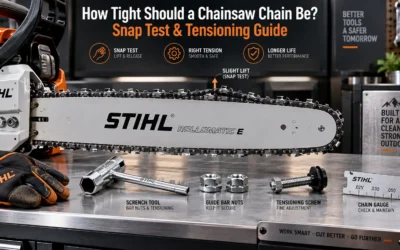
A chain that is too loose slaps against the bar rails, widening the groove unevenly and creating impact wear on the rail edges. A chain that is too tight generates excess friction and heat, accelerating groove wear and nose sprocket wear. Correct tension: the chain can be pulled away from the bar rail by approximately 3–5 mm at the bar’s mid-point and snaps back when released. Check tension each time the saw is refueled; chains stretch as they warm up.
Verify Oil Flow Before Every Session
With the chain installed and the saw running, hold the bar tip near a light-colored surface (a wood offcut works). Accelerate the engine briefly. A fine spray of oil on the surface confirms the oiling system is functioning. If no oil appears, investigate before cutting: check oil tank level, oil feed hole, and the oil pump outlet port. Running a saw dry for even a few minutes causes permanent groove damage.
Clean the Bar at Every Oil Fill
Remove the bar, clear the groove with a groove cleaning tool or a flat pick, and clear the oil feed hole with a thin wire or pick. Hardened pitch and sawdust packed into the groove act as an abrasive that accelerates wear. Clean the underside of the bar where it contacts the saw body to prevent oil channel blockage.
Storage Conditions
Store the saw with a bar scabbard (plastic bar cover) fitted. Exposed bars corrode when stored in humid environments, and rail corrosion pits the groove surface, creating abrasive texture that wears the chain faster. Apply a light coat of bar-and-chain oil to the groove before long-term storage. Store horizontally or hang vertically — do not rest the saw on the bar tip, which can stress the nose.
Common Questions on When To Replace Chainsaw Bar Answered
How often should I replace a chainsaw bar?
Replace the bar after every 2–3 chain replacements as a proactive maintenance interval, or sooner if any of the 7 failure signs — bending, groove wear, excessive wobble, asymmetric rail wear, cracks, seized sprocket nose, or blocked oil feed hole — appear first. Homeowner users running a saw a few times per year may go many years between replacements; professional users may replace bars seasonally.
Can a bent chainsaw bar be straightened and reused?
No. A bent chainsaw bar must be replaced, not straightened. Bending the bar back introduces internal stress fractures that are not visible externally but can cause the bar to fail catastrophically during use. OEM service manuals and chainsaw safety standards classify a deformed bar as a non-repairable condition.
What is the difference between replacing a chainsaw bar and dressing the rails?
Rail dressing with a bar dressing file corrects minor surface burrs and uneven high spots on the rail top edges — it is a surface finishing operation that extends life on a bar still within serviceable groove depth. Bar replacement is required when the groove is too shallow to retain drive links safely, when the bar is structurally damaged (bent, cracked), or when wear has progressed beyond what dressing can correct. These are distinct actions; dressing cannot substitute for replacement once failure thresholds are reached.
Will a worn chainsaw bar damage a new chain?
Yes. Installing a new chain on a worn bar accelerates the new chain’s wear immediately. An oversized groove (wider than the chain’s gauge) allows the chain to wobble, causing drive links to contact the groove walls at angles rather than sliding cleanly. This wears the drive links and increases chain stretch rate, effectively shortening the new chain’s service life from the first cut. Always evaluate bar condition before installing a new chain.
For more hands-on benchmarks and buying recommendations, consult our guides on residential zero-turn lawn mower guide, as well as high-CFM commercial leaf blower guide, as well as durable ride-on lawn tractor guide.
Mechanical safety standards, operational tolerances, and protective gear guidelines align with benchmark specifications established by the American National Standards Institute (ANSI).