Quick Answer: How Much Is A Reciprocating Saw?
Reciprocating saws typically range from around $50 for basic corded models to over $400 for professional-grade cordless kits. Most DIYers and homeowners can find a capable tool in the $100 to $200 range, while professional contractors often invest in premium models that cost $250 or more. The final price depends heavily on the power source, motor type, brand, and included…

Pros
- 1-1/8-inch stroke length supports fast cutting speeds
- Keyless lever-action clamp allows quick blade swaps
- Brushless motor provides heavy-duty cutting power
- Includes XR POWERPACK battery and charger
- Manufacturer rates it for up to 102 cuts per charge
Cons
- Relatively heavy kit package at 15.55 pounds

Pros
- Brushless motor and 20V MAX XR platform are designed for efficient runtime.
- Compact size is well suited to tight spaces, remodeling, and stud work.
- Lightweight build helps reduce fatigue during longer cutting sessions.
- Variable speed control offers more precision for different materials.
Cons
- Tool only package does not include a battery or charger.
- Compact design is optimized for maneuverability, not maximum size or reach.
- Users needing a fully bundled kit will need to purchase compatible 20V MAX batteries separately.
Overview & Design: The DEWALT DCS367B is a 20V MAX XR cordless reciprocating saw built around a compact, lightweight form factor. At 14.5 inches long and about 5 lbs. as a tool only unit, it is designed to be easier to handle in tight spaces than larger saws.
Performance & Key Features: This model uses a brushless motor for improved runtime and delivers up to 2,900 SPM with a 1-1/8 inch stroke length. The variable speed trigger supports better control, while the keyless 4-position blade clamp and built-in LED light add convenience and visibility during cutting.
Drawbacks & Considerations: The main limitation is that this is a tool only purchase, so battery and charger are not included. Its compact format is a strength for mobility, but buyers who want a full kit or the largest cutting platform may need a different setup.
Verdict: The DCS367B is a strong fit for contractors, remodelers, and homeowners who need a portable reciprocating saw for tight access work. It offers a practical mix of runtime, control, and maneuverability without unnecessary bulk.

Pros
- Brushless motor design offers stronger performance than basic brushed models
- Fast tool-free blade changes improve jobsite efficiency
- Variable-speed trigger and 2-speed settings provide flexible control
- LED work light adds usefulness in low-light spaces
Cons
- Bare tool only, so a compatible battery and charger must be purchased separately if you do not already own them
- No detailed specs were provided for stroke length, weight, or included accessories
- Best value is mainly for users already invested in the CRAFTSMAN V20 battery platform
Overview & Design: The CRAFTSMAN V20 RP CMCS351B is a cordless reciprocating saw built as a bare tool, which makes it best suited for users already using the V20 platform. Its brushless motor and compact saw format point to a tool intended for practical cutting, demolition, and general jobsite use.
Performance & Key Features: This model offers 2-speed control with a range of 0 to 2,300 SPM on low and 0 to 3,200 SPM on high, plus a variable-speed trigger for more controlled starts and cleaner handling. The tool-free blade release is a useful real-world advantage, and the LED light adds visibility when working in darker spaces.
Drawbacks & Considerations: The biggest limitation is that this is a bare tool only, so battery and charger are not included. Buyers should also note that the manufacturer listing does not list details such as stroke length, weight, or included blades, which may matter for comparing it with other reciprocating saws.
Verdict: This saw is a solid fit for CRAFTSMAN V20 users who want a cordless reciprocating saw with brushless power, flexible speed control, and quick blade changes. It is less appealing for first-time buyers who still need to assemble the battery system from scratch.
Understanding the cost landscape helps you choose a saw that matches your project demands without overspending. This guide breaks down the typical price tiers, explains what drives cost differences, and helps you determine which category fits your needs.
Understanding Reciprocating Saw Price Tiers
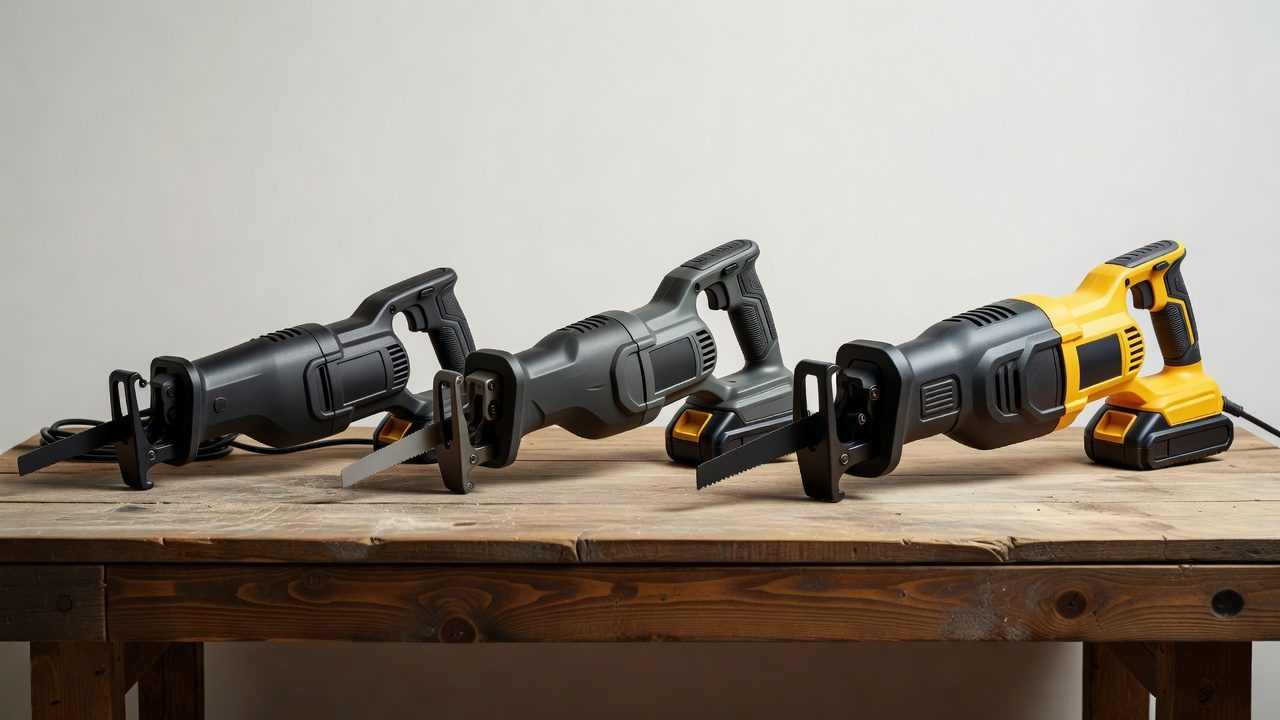
Reciprocating saws fall into three general price categories: budget, mid-range, and professional. Each tier reflects differences in build quality, power, features, and intended use frequency.
Budget models, typically priced under $100, offer basic functionality for occasional tasks. Mid-range saws, generally costing between $100 and $200, provide better performance and more features suitable for regular DIY projects. Professional-grade tools, often priced from $200 to $400 or more, deliver maximum durability and advanced capabilities for demanding, frequent use.
A higher price does not automatically mean a better tool for your specific situation. The right choice depends on how often you plan to use the saw, the materials you will cut, and whether you need corded or cordless convenience. A homeowner tackling occasional demolition may find a budget model perfectly adequate, while a contractor needs the reliability and power of a professional tool.
Budget Reciprocating Saws (Typically Under $100)
Budget reciprocating saws provide an affordable entry point for homeowners and occasional DIYers. These models prioritize basic cutting ability over advanced features or long-term durability.
Most budget saws are corded, drawing power directly from an electrical outlet. They typically feature lower-amperage motors that handle light to moderate cutting tasks but may struggle with thick or dense materials. Common features at this tier include a simple trigger, basic blade change mechanisms, and standard ergonomic designs.
While budget saws work well for occasional projects like trimming branches, removing old fixtures, or light demolition, they may not withstand heavy or frequent use. The motors may overheat during extended operation, and the build materials may not hold up to the rigors of a jobsite environment. Buyers should expect to replace a budget saw sooner if they use it regularly.
These tools are ideal for people who need a reciprocating saw for a specific project and do not plan to use it frequently. They offer a practical solution without a significant financial commitment. For complementary field maintenance guidelines, examine our breakdown of marshall stanmore iii vs harman kardon onyx studio 8.
Mid-Range Reciprocating Saws (Typically $100-$200)
Mid-range reciprocating saws strike a balance between affordability and performance. They offer meaningful upgrades over budget models, making them suitable for serious DIYers and light professional work.
At this price point, you can expect better build quality, higher-powered motors, and more features. Many mid-range saws include variable speed triggers, allowing you to adjust cutting speed for different materials. Orbital action, which provides more aggressive cutting for faster material removal, is also common in this tier. To evaluate matched hardware tolerances, consult our detailed overview of dyson v8 cyclone vs bissell featherweight stick.
Cordless options become available in the mid-range category, though buyers should be aware that prices vary significantly depending on whether the saw is sold as a bare tool or a complete kit. A bare tool includes only the saw itself, while a kit includes batteries and a charger. If you already own compatible batteries from another tool, purchasing a bare tool can save money.
Mid-range saws can handle more demanding projects than budget models, including cutting through thicker wood, metal pipes, and demolition materials. They offer improved ergonomics and durability, making them more comfortable and reliable during extended use. When planning workspace deployment, consider the engineering criteria outlined in our bissell crosswave hydrosteam vs shark stainforce guide.
Professional-Grade Reciprocating Saws (Typically $200-$400+)
Professional-grade reciprocating saws are designed for contractors and tradespeople who use their tools daily in demanding environments. These models prioritize durability, power, and advanced features.
Professional saws often feature brushless motors, which offer improved efficiency, longer lifespan, and better performance compared to brushed motors. They are built with higher-quality materials to withstand the rigors of a jobsite, including impacts, dust, and moisture.
Advanced features at this tier may include enhanced vibration reduction, ergonomic designs for extended use, LED work lights, and tool-free blade changes. Professional cordless kits typically include high-capacity batteries and fast chargers, adding to the upfront cost but providing the runtime and convenience needed for all-day work.
While professional saws represent a significant investment, they offer the reliability and performance that demanding work requires. For homeowners who tackle frequent, challenging projects, a professional-grade tool may justify the higher cost through its longevity and capabilities.
Key Factors That Influence Reciprocating Saw Prices
Several factors contribute to the wide price range of reciprocating saws. Understanding these elements helps you evaluate whether a higher price translates to value for your specific needs.
Power Source: Corded vs. Cordless
The power source is one of the most significant factors affecting price. Corded saws draw power from an electrical outlet, providing consistent performance without battery concerns. They are generally less expensive because they do not require battery technology.
Cordless saws offer greater portability and convenience, allowing you to work anywhere without being tethered to an outlet. However, they require batteries and chargers, which add to the cost. The price difference between corded and cordless models can be substantial, especially when comparing complete kits.
Bare tools, which exclude batteries and chargers, offer a lower entry point for cordless saws. If you already own compatible batteries from other tools in the same platform, purchasing a bare tool can be a cost-effective choice. However, if you are starting fresh, a complete kit provides everything you need but at a higher price.
Motor Type: Brushed vs. Brushless
The motor type significantly impacts both performance and price. Brushed motors are simpler and less expensive to produce, making them common in budget and mid-range saws. They provide adequate power for many applications but may wear out faster due to friction between the brushes and commutator.
Brushless motors use electronic controllers instead of physical brushes, resulting in less friction, greater efficiency, and longer lifespan. They generate less heat, run quieter, and deliver more power from the same battery. These advantages come at a premium, making brushless saws more expensive.
For occasional use, a brushed motor may be perfectly sufficient. For frequent or demanding work, the efficiency and durability of a brushless motor may justify the higher cost over time.
Amperage and Voltage
For corded saws, amperage indicates the motor’s power draw and, by extension, its cutting capability. Higher amperage generally means more power for tougher cuts. Cordless saws are rated by voltage, with higher voltage typically indicating more power.
While higher amperage or voltage often correlates with higher prices, these specifications alone do not tell the whole story. Motor efficiency, gear design, and overall build quality also influence performance. A well-designed saw with moderate power may outperform a poorly designed saw with higher specifications.
Features and Build Quality
Features like variable speed triggers, orbital action, tool-free blade changes, and ergonomic designs add to the cost but also enhance usability and performance. Variable speed allows you to match cutting speed to the material, while orbital action provides more aggressive cutting for faster material removal.
Build quality encompasses the materials used in construction, the precision of assembly, and the overall durability of the tool. Professional-grade saws use higher-quality components and undergo more rigorous testing, contributing to their higher prices and longer lifespans.
Corded vs. Cordless: How Power Source Affects Cost
The choice between corded and cordless reciprocating saws involves trade-offs in cost, convenience, and performance. Understanding these differences helps you make an informed decision based on your priorities.
Corded saws offer consistent power without the need to recharge batteries. They are generally less expensive because they do not include battery technology. However, they limit your mobility to the reach of an extension cord, which may be inconvenient for outdoor work or locations without nearby outlets.
Cordless saws provide freedom of movement, allowing you to work anywhere without worrying about power outlets. This convenience comes at a higher price due to the cost of batteries and chargers. A complete cordless kit, including the saw, batteries, and charger, can cost significantly more than an equivalent corded model.
Bare tools offer a middle ground for cordless saws. If you already own compatible batteries from other tools, purchasing a bare tool reduces the upfront cost. However, if you do not have compatible batteries, you will need to purchase them separately, which can add to the total investment.
Consider your typical work environment and project requirements when choosing between corded and cordless. If you primarily work in a workshop with easy access to power, a corded saw may be more cost-effective. If you need portability for jobsite work or outdoor projects, a cordless saw may be worth the additional expense.
Brand Considerations Without Brand Recommendations
Brand reputation influences pricing in the reciprocating saw market. Established brands with long histories of quality and innovation often command higher prices than lesser-known manufacturers.
However, a higher price from a well-known brand does not guarantee that the tool is the best choice for your needs. Some lesser-known brands offer competitive features and performance at lower prices. The key is to evaluate the tool based on its specifications, features, and build quality rather than relying solely on brand name.
Brand ecosystem compatibility is another factor to consider. If you already own cordless tools from a particular brand, staying within that platform ensures battery compatibility and can save money in the long run. Purchasing bare tools from the same brand allows you to share batteries across multiple tools, reducing the need for duplicate batteries and chargers.
When evaluating brands, consider factors like warranty coverage, customer support, and the availability of replacement parts and accessories. These elements contribute to the overall value and longevity of your investment.
Additional Costs Beyond the Saw Itself
The purchase price of a reciprocating saw is just one part of the total cost of ownership. Several additional expenses can add up over time.
Blades
Blades are consumables that require periodic replacement. The frequency of replacement depends on the materials you cut and how often you use the saw. Specialty blades designed for specific materials, such as metal, wood, or demolition, may cost more than general-purpose blades.
While some saws include a starter blade, most do not come with a comprehensive set of blades for different applications. Budgeting for replacement blades ensures you have the right tool for each job.
Accessories
Additional accessories may include carrying cases, blade storage, and safety gear like gloves and eye protection. While not always essential, these items can enhance convenience and safety.
Carrying cases protect your saw during transport and storage, extending its lifespan. Some models include cases, while others require separate purchase. Safety gear is always recommended when operating power tools, regardless of the saw’s price tier.
Maintenance
Regular maintenance, such as cleaning the tool, lubricating moving parts, and inspecting for wear, helps keep your saw in good working condition. While these tasks do not typically require expensive supplies, neglecting maintenance can lead to premature wear and costly repairs.
Following the manufacturer’s maintenance recommendations ensures optimal performance and longevity. Keep the saw clean, store it in a dry environment, and address any issues promptly to avoid more significant problems.
Matching Your Budget to Your Project Needs
Choosing the right price tier for a reciprocating saw requires honest assessment of your project needs and usage patterns. A saw that is too basic may not meet your demands, while an overly expensive model may be unnecessary for your level of use.
Consider the following factors when determining your budget:
- Frequency of use: Occasional DIY projects may not justify a professional-grade saw, while frequent use demands a more durable tool.
- Material types: Cutting thick metal or dense wood requires more power than trimming branches or light demolition.
- Project scale: Small, quick tasks may be handled by a budget model, while large projects benefit from the efficiency and comfort of a higher-tier saw.
- Portability needs: If you need to work in multiple locations, a cordless saw may be worth the additional cost.
For occasional homeowners tackling light to moderate projects, a budget or mid-range saw often provides adequate performance. For serious DIYers who regularly take on demanding projects, a mid-range or professional-grade saw offers better value through improved durability and features. For professional contractors, investing in a professional-grade tool ensures the reliability and performance needed for daily use.
Where to Shop and How to Find Value
Finding the best value for a reciprocating saw involves comparing prices across multiple retailers and considering factors beyond the sticker price.
Home improvement stores, online retailers, and tool specialty shops all carry reciprocating saws. Comparing prices across these channels helps you identify competitive offers. Seasonal sales events, such as holiday promotions or end-of-season clearance sales, can provide opportunities to purchase higher-tier tools at lower prices.
Refurbished or used saws offer another way to save money. These tools have been inspected and restored to working condition, often at a significant discount compared to new models. However, refurbished tools may not include the same warranty coverage as new ones, so consider the potential risks and benefits.
When evaluating value, consider the total cost of ownership, including batteries, blades, and accessories. A lower upfront price may not represent the best value if additional purchases are required to make the tool functional for your needs.
Conclusion
Reciprocating saw prices range from under $100 for basic corded models to over $400 for professional-grade cordless kits. The right choice depends on your project frequency, material requirements, and need for portability. Budget saws suit occasional DIY tasks, mid-range models offer better performance for regular use, and professional tools provide the durability and features demanded by contractors.
Key factors influencing price include power source, motor type, features, and build quality. Cordless saws cost more due to battery technology, while brushless motors command premiums for their efficiency and longevity. Additional costs like blades, accessories, and maintenance should also factor into your budget.
By understanding the price landscape and evaluating your specific needs, you can choose a reciprocating saw that delivers the performance you require without unnecessary expense.
Related Maintenance and Operating Guides
To keep your equipment running at peak operating efficiency, explore our related technical walkthroughs and maintenance tutorials:
- Consult our detailed breakdown on cordless stick vacuum buyer guide.
- Consult our detailed breakdown on robotic pool cleaner comparison guide.
Technical Standards and Compliance
Mechanical safety standards, operational tolerances, and protective gear guidelines align with benchmark specifications established by the American National Standards Institute (ANSI).