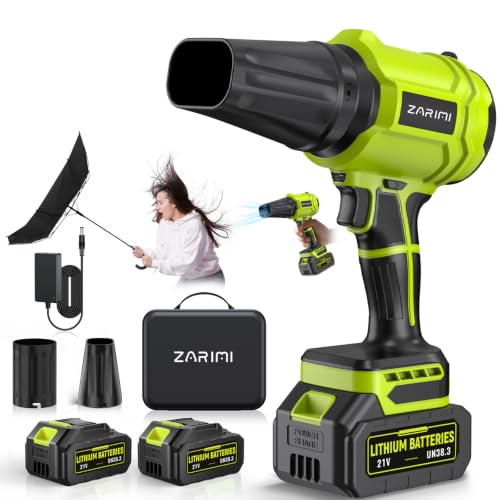
For homeowners managing expansive lawns with heavy, wet debris, high-output blowers deliver gas-rivaling volume, though pushing maximum turbo settings quickly exhausts a single charge. Budget-friendly dual-battery options extend routine runtime for standard driveways, but they lack the heavy clearing force needed for caked yard waste.
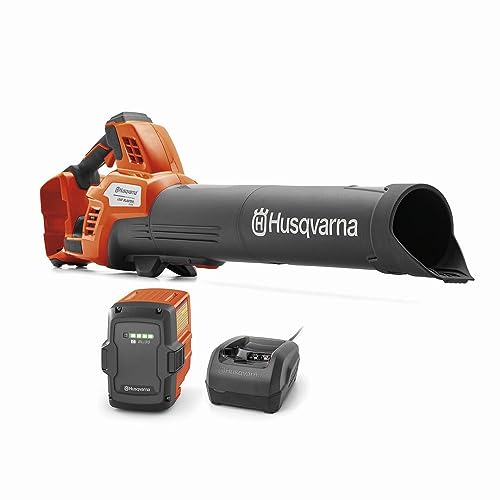
Pros
- Brushless motor provides strong 200-MPH and 800-CFM performance for efficient debris removal
- 15 percent lighter weight design reduces user fatigue during extended operation
- Quiet zero-emission operation suitable for eco-conscious residential use
- Includes full 40V 7.5 Ah battery and charger kit for out-of-box readiness
- Compatible 40V battery system works across Husqvarna handheld tools
Cons
- Battery-powered design requires recharging and offers finite runtime unlike gas alternatives
- Handheld form may still cause fatigue on very large properties despite the lighter build
- Battery appearance may vary from images as noted in the product details
The Husqvarna Leaf Blaster 350iB is a battery-powered cordless leaf blower that arrives as a complete kit with a 40V lithium-ion 7.5 Ah battery and charger. Its brushless motor construction and focus on reduced weight create an immediate impression of a modern, user-friendly tool built for regular lawn maintenance and outdoor cleanup tasks.
In performance, this model generates wind speeds up to 200 MPH with 800 CFM airflow to move leaves and debris effectively while remaining quiet and producing zero emissions. Simple keypad controls allow instant starts, cruise control supports hands-free convenience, and the power boost mode adds 20 percent more power along with a built-in debris scraper for wet or sticky material. The shared 40V battery further increases value by working with other Husqvarna handheld tools.
Considerations include the inherent limits of cordless operation, which depends on battery charge and requires recharging between uses. Even with the 15 percent lighter design, the handheld style can lead to arm fatigue over very large areas, and battery appearance may vary from promotional images.
Overall, the Husqvarna Leaf Blaster 350iB delivers excellent value for homeowners, fathers, or outdoor workers seeking a powerful yet quieter alternative to traditional blowers, particularly those who appreciate the convenience of a full battery kit and ecosystem compatibility.

Pros
- Delivers up to 615 CFM and 170 MPH in turbo mode
- Variable speed dial with lock-on button from 200–480 CFM
- High-efficiency brushless motor reduces operating vibration
- Includes 56V 2.5Ah battery and standard 50-minute charger
- Fully compatible with all EGO 56V ARC Lithium batteries
Cons
- Turbo mode rapidly reduces the available battery runtime
- Weighs 7.5 pounds, which may feel heavy with larger batteries

Pros
- Delivers up to 880 CFM and 200 MPH air speed in turbo mode
- Includes two 4.0Ah 56V ARC Lithium batteries for extended runtime
- Integrated digital display monitors charge level and cruise lock
- Variable speed dial easily adjusts output from 270 to 700 CFM
- Includes both tapered and spread nozzles for task versatility
Cons
- Maximum 880 CFM power is restricted to short turbo bursts
- Full runtime of up to 90 minutes requires lower power settings
Pros
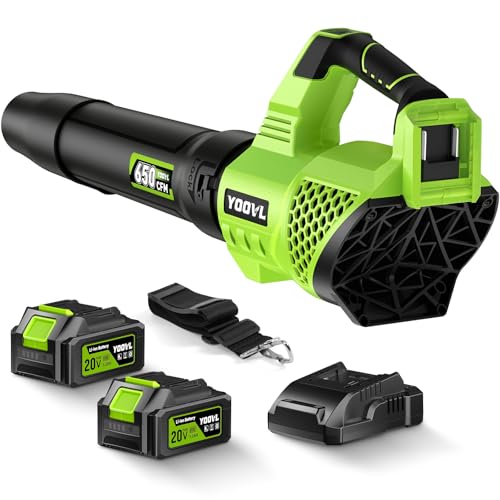
- Airflow rated up to 650 CFM using advanced turbo technology
- Comes with two high-capacity 20V 5.2Ah batteries and fast charger
- Three selectable speed modes for delicate to heavy-duty jobs
- Includes an adjustable shoulder strap to reduce arm fatigue
- Includes blower tube and extension nozzle attachments
Cons
- Maximum 150-minute runtime applies only to low-speed mode
- Heavier battery packs may add weight during prolonged handheld use

Pros
- Includes two 21V 4.0Ah batteries for extended runtime
- Delivers up to 420 CFM airflow and 150 MPH air speed
- Lightweight design weighs under 3 lbs bare tool for low fatigue
- Comes with both round and flat interchangeable nozzles
- Two adjustable speed settings for varying cleanup tasks
Cons
- Limited to two preset airflow speeds
- Best suited for dry leaves and light debris rather than heavy wet waste

Pros
- Brushless motor delivers rated airflow up to 650 CFM and 180 MPH
- Includes two 20V 4.0Ah batteries and a fast charger
- Six adjustable speed settings ranging from 80 to 180 MPH
- Comes with an ergonomic shoulder strap and two detachable nozzles
- Includes a storage bag to keep components organized
Cons
- Stated 30-minute runtime is restricted to low-speed operation
- High-speed settings will deplete battery charge more rapidly

Pros
- Includes two 20V 2.0Ah batteries and a fast charger
- Extremely lightweight design at just 3.4 pounds
- Two selectable speed modes match light and heavier tasks
- Ergonomic non-slip grip allows comfortable one-handed use
- Comes with an extension nozzle for targeted airflow
Cons
- Runtime decreases significantly at the higher speed setting
- Best suited for light residential cleanup rather than dense debris

Pros
- 1200W brushless motor delivers up to 700 CFM and 200 MPH
- Includes two 5.2Ah batteries and a fast charger
- Three speed modes adapt to dusting or heavy clearing
- Claimed runtime reaches up to 160 minutes on low speed
Cons
- Weighs 7.7 pounds, which may tire arms during long tasks
- Runtime drops to 40 minutes at maximum speed setting

Pros
- Turbo mode delivers up to 530 CFM and 110 MPH
- Up to 75 minutes of stated runtime per charge
- Brushless motor reduces vibration and tool wear
- Fast 50-minute battery recharge with included charger
- Variable speed dial with a lock-on trigger button
Cons
- High turbo output significantly reduces battery runtime
- Requires extra batteries for prolonged high-power jobs
Pros
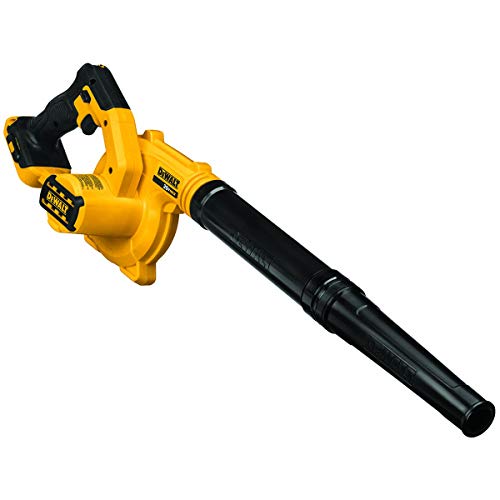
- Lightweight 2.5-pound design fits into tight spaces
- 3-speed variable switch plus variable speed trigger
- Trigger lock-on reduces hand fatigue during continuous use
- Includes 3 nozzle attachments for different clearing tasks
Cons
- Sold as a bare tool without battery or charger
- 100 CFM airflow is strictly intended for jobsite debris
Airflow and Velocity: Balancing High CFM Against Battery Drain
Cubic feet per minute (CFM) measures total air volume to push wide piles of dry leaves, while miles per hour (MPH) provides the concentrated speed required to lift damp, stuck-down debris. Higher ratings directly demand more power from the battery cell, which reduces total continuous operation when operating at maximum output.
Units like the high-powered leaf blower options from EGO and Husqvarna exceed 800 CFM and 200 MPH in burst modes. The EGO Power+ Cordless Electric Leaf Blower, 880 CFM reaches up to 880 CFM and 200 MPH using turbine fan engineering, while the Husqvarna Leaf Blaster 350iB Battery Powered generates up to 800 CFM and 200 MPH. However, running these tools continuously in turbo mode significantly cuts into the manufacturer-advertised runtime figures. By contrast, tools like the VIBOGEN Electric Leaf Blower Cordless with Battery top out at an advertised 420 CFM and 150 MPH, which suits light dust and grass clippings on patios but will struggle with thick, damp mats of fall foliage.
Dual-Battery Kits vs Single-Pack Systems for Yard Maintenance
A dual-battery setup provides continuous yard cleanup by allowing one pack to charge while the other runs, or by pairing capacities for prolonged jobs. Single-battery kits keep total upfront costs lower but force you to pause chores during recharge cycles.
YOOVL Leaf Blower advertises up to 150 minutes of runtime with two 20V 5.2Ah batteries, with operating speed and per-battery allocation unspecified. MTKOALA Leaf Blower explicitly states 160 minutes at its lowest speed and 40 minutes at its highest speed. EGO POWER+ Cordless Electric Leaf Blower lists a 50-minute charging time for its included 2.5Ah battery. These figures measure different conditions, so do not rank working time or sustained output from battery voltage alone.
Heavy-Duty Clearing: Husqvarna 350iB vs EGO Power+ 880 CFM
Both the Husqvarna 350iB and EGO 880 CFM represent premium, top-tier cordless options priced at $379.00, yet they approach power management and operator controls differently. The Husqvarna relies on a massive single 40V 7.5Ah battery, whereas the EGO includes two 56V 4.0Ah batteries.
The Husqvarna Leaf Blaster 350iB lists cruise control, a power-boost mode, and a built-in scraper. EGO Power+ Cordless Electric Leaf Blower advertises up to 90 minutes of runtime with its two included 4.0Ah batteries, but the supplied data does not state the operating speed for that figure. Choose by documented airflow, included battery configuration, controls, and compatibility with your existing battery system; verify any bare-tool versus kit differences.
Compact Cleanups: Jobsite Blowers vs Full-Size Yard Blowers
Compact utility blowers excel at clearing sawdust from workbenches and dirt from garage floors, but their focused, low-volume air output cannot handle open lawn maintenance.
The DEWALT 20V MAX Blower, 100 CFM Airflow is designed specifically for tight quarters, producing a manufacturer-rated maximum airflow of 100 CFM. It features a 3-speed variable switch, a variable speed trigger with lock-on, and three nozzle attachments suited for clearing work areas or masonry joints. However, it is sold as a bare tool without a battery or charger, and its 100 CFM output is completely inadequate for raking or moving leaves across turf. Homeowners needing dedicated surface clearing on hard walkways benefit more from lightweight yard blowers like the RYAHT Leaf Blower Cordless, Leaf Blower with Battery, which weighs 3.4 lbs and includes two 20V 2.0Ah batteries, or dedicated leaf blower for driveway tools that balance manageable weight with wider airflow.
Cordless Leaf Blower FAQ: Runtime and Airflow Decisions
What is the difference between CFM and MPH when choosing a leaf blower?
CFM (cubic feet per minute) indicates the volume of air pushed out, which determines how wide of a debris pile the blower can move. MPH (miles per hour) indicates the velocity of the air stream, which dictates the force available to dislodge wet, compacted leaves or heavy dirt.
Why do manufacturer runtime estimates differ from real-world yard use?
Advertised runtimes are typically measured at the lowest speed setting under continuous operation. Using high-speed modes, variable cruise settings, or brief turbo bursts draws significantly more amperage from the battery, reducing practical operating time on a single charge.
Can I use leaf blower batteries across other outdoor power tools?
Interchangeability depends strictly on the manufacturer's tool ecosystem. Major brands like EGO (56V ARC Lithium) and Husqvarna (40V) design their batteries to power compatible mowers, string trimmers, and chainsaws, whereas generic multi-pack kits generally only fit tools from that specific manufacturer.
Choosing the Right Battery Powered Leaf Blower for Your Yard
Selecting the right battery powered leaf blower requires matching the air volume and battery platform to your property’s size and debris type. Prioritize high-CFM brushless models on 40V or 56V platforms if you regularly manage wet leaves, large lawns, or deep seasonal buildup. For routine driveway sweeping, deck clearing, and garage dusting, lightweight 20V or 21V dual-battery packages offer adequate performance at a fraction of the cost.
For buyers needing maximum clearing force across demanding properties, the EGO Power+ Cordless Electric Leaf Blower, 880 CFM is the recommended choice due to its class-leading 880 CFM turbo output, dual 4.0Ah battery configuration, and real-time digital display. Its primary limitation is the premium $379.00 price tag and the added physical weight of larger 56V battery packs. Buyers who want an economical alternative for light patio tidying and hard-surface sweeping should consider the Leaf Blower Cordless, 650CFM Electric Leaf Blowers, which includes two high-capacity 5.2Ah batteries and a shoulder strap for under $100.