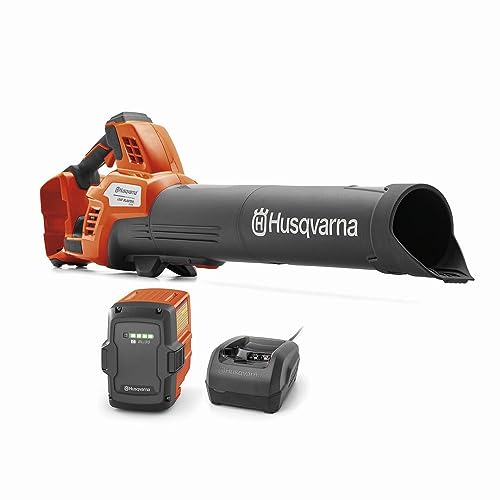
For homeowners managing routine grass clippings and scattered turf debris, a dual-battery cordless lawn blower offers cord-free mobility across the entire yard, though operating at high throttle drains compact battery packs quickly. Choosing an ultra-light handheld model provides easy maneuverability for quick patio touch-ups, but sacrifices the sustained volume needed to push heavy, damp grass piles.
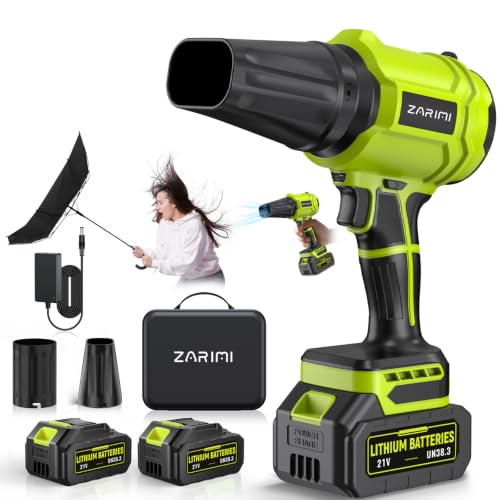
Pros
- Extremely lightweight at only 2.8 pounds for low-fatigue use
- Reaches stated air speeds over 50 m/s (110+ MPH)
- Comes with two batteries and charger for alternating use
- Includes a concentrated narrow nozzle for detailed edging
- Compact footprint stores easily in tight spaces or vehicle trunks
Cons
- Limited runtime of only about 13 minutes per battery
- Not designed for moving heavy or deep piles of wet leaves
Pros
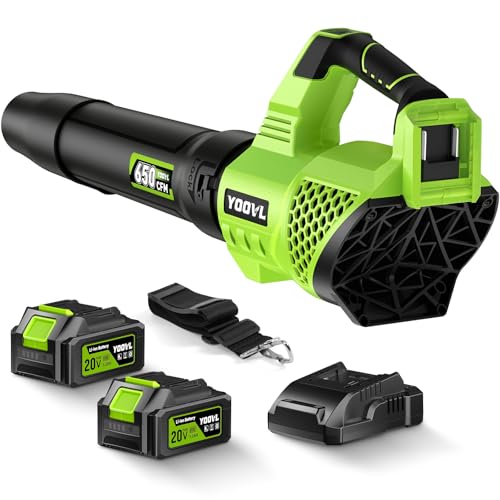
- Airflow rated up to 650 CFM using advanced turbo technology
- Comes with two high-capacity 20V 5.2Ah batteries and fast charger
- Three selectable speed modes for delicate to heavy-duty jobs
- Includes an adjustable shoulder strap to reduce arm fatigue
- Includes blower tube and extension nozzle attachments
Cons
- Maximum 150-minute runtime applies only to low-speed mode
- Heavier battery packs may add weight during prolonged handheld use

Pros
- Includes two 21V 4.0Ah batteries for extended runtime
- Delivers up to 420 CFM airflow and 150 MPH air speed
- Lightweight design weighs under 3 lbs bare tool for low fatigue
- Comes with both round and flat interchangeable nozzles
- Two adjustable speed settings for varying cleanup tasks
Cons
- Limited to two preset airflow speeds
- Best suited for dry leaves and light debris rather than heavy wet waste

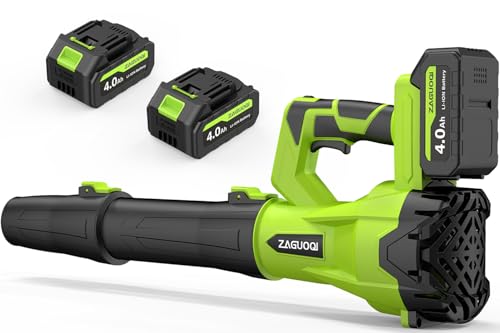
Pros
- Brushless motor delivers rated airflow up to 650 CFM and 180 MPH
- Includes two 20V 4.0Ah batteries and a fast charger
- Six adjustable speed settings ranging from 80 to 180 MPH
- Comes with an ergonomic shoulder strap and two detachable nozzles
- Includes a storage bag to keep components organized
Cons
- Stated 30-minute runtime is restricted to low-speed operation
- High-speed settings will deplete battery charge more rapidly

Pros
- Includes two 20V 2.0Ah batteries and a fast charger
- Extremely lightweight design at just 3.4 pounds
- Two selectable speed modes match light and heavier tasks
- Ergonomic non-slip grip allows comfortable one-handed use
- Comes with an extension nozzle for targeted airflow
Cons
- Runtime decreases significantly at the higher speed setting
- Best suited for light residential cleanup rather than dense debris

Pros
- Claims up to 450 CFM and 150 MPH for efficient debris clearing
- Lightweight 3.8-pound body reduces arm fatigue
- Includes two batteries and a charger for extended sessions
- Two selectable speed modes match different cleaning tasks
- Simple assembly requiring only nozzle and battery attachment
Cons
- Runtime reaches up to 30 minutes per battery only on low speed
- High-speed battery consumption significantly shortens run times

Pros
- Weighs only 2.6 pounds for easy one-handed handling
- Includes two 2.0Ah rechargeable batteries and a charger
- Manufacturer-rated airflow reaches up to 130 MPH and 180 CFM
- Two interchangeable tubes accommodate floor or tabletop work
- Rated for over 30 minutes of total operating time across packs
Cons
- Not intended for heavy, wet leaf piles
- Modest 180 CFM output limits heavy-duty yard clearing

Pros
- Weighs only 3.27 pounds for easy handling
- Up to 150 MPH wind speed for clearing hard surfaces
- Includes 40V 2.0Ah battery and dedicated charger
- Variable speed dial adapts to light or denser debris
- Ergonomic grip minimizes fatigue during use
Cons
- Modest 135 CFM airflow limits heavy debris clearing
- Narrow sweeper tube is best suited for hard surfaces
Pros
- Brushless motor rated up to 280,000 RPM
- Includes two 4.0Ah lithium-ion battery packs
- Six adjustable speed modes for versatile cleaning control
- Rated for up to 650 CFM and 288 MPH maximum output
- Lightweight handheld design weighing under 3 pounds
Cons
- Battery life decreases rapidly on higher speed modes
- Requires full initial charging before first use
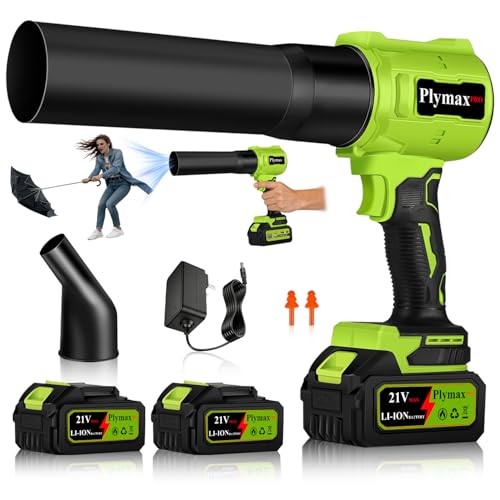
Pros
- Includes two 21V 4.0Ah lithium batteries and a charger
- Motor rated up to 800,000 RPM for focused air speeds
- Includes both a wide nozzle and a precision jet nozzle
- Suitable for outdoor patios, garage dusting, and car drying
- Compact, lightweight handheld design minimizes fatigue
Cons
- Compact frame less suited for expansive lawn leaf clearing
- Airflow volume specifications are not provided
Airflow Volume vs. Wind Speed for Lawn Care Tasks
Airflow volume determines how broad a swath of debris you can push across open turf, whereas wind speed provides the force required to break loose damp or matted grass clippings. When evaluating leaf blowers for turf maintenance, matching both metrics to your yard conditions prevents frustration.
Several models in this category highlight substantial differences in air dynamics. The Leaf Blower Cordless, 650CFM Electric Leaf Blowers and the Leaf Blower Cordless 650CFM with 2×4.0Ah Battery each advertise up to 650 CFM of air volume, designed to gather large piles across wide lawn sections. In contrast, the Greenworks 40V Cordless Leaf Blower, 135 CFM pairs a modest 135 CFM rating with an advertised 150 MPH wind speed. While high air speed excels at sweeping paved surfaces like an outdoor leaf blower for driveway setup, low air volume struggles to float heavy piles across textured turf.
The core trade-off centers on application: narrow, high-velocity nozzles blast away stuck matter but create a narrow cleaning path, while high-CFM wide nozzles clear open lawns quickly at the cost of faster battery consumption.
Battery Capacity and Real Runtime Expectations in Dual-Pack Kits
Dual-battery kits allow you to rotate packs to finish larger yard tasks, but running at top speed significantly reduces operating time compared to manufacturer maximum claims. Buyers should treat advertised maximum runtimes as baseline estimates achieved under minimal-load conditions. To evaluate matched hardware tolerances, consult our detailed overview of blower para soplar hojas.
YOOVL Leaf Blower lists two 20V 5.2Ah batteries and a manufacturer-stated maximum runtime of up to 150 minutes. The supplied listing does not identify the operating speed or whether that figure applies to one battery or both. laapee Leaf Blower states up to 30 minutes of runtime at low speed with its two 20V 4.0Ah batteries; the listing does not clearly define a per-battery or combined total. RYAHT Leaf Blower states up to 60 minutes per full charge at low speed. Compare these as advertised figures rather than equivalent measured results, and check the manufacturer’s runtime conditions before buying.
Because higher speeds draw vastly more current, relying on a single charge cycle for heavy lawn clearing can leave a job half-finished. Choosing a cordless battery leaf blower with interchangeable dual batteries helps minimize downtime, provided you recharge one battery while operating the other.
Maneuverability and Weight Management During Extended Yard Cleanups
Lightweight blowers minimize forearm strain during fast spot cleanups, while heavier high-volume blowers benefit greatly from included shoulder straps that distribute tool weight across the torso. Balancing bare-tool weight against ergonomic support features ensures comfortable operation throughout your cleanup routine.
Several compact options prioritize minimal physical strain. The Electric Leaf Blower Cordless with Battery weighs an advertised 2.74 pounds without its battery, the JAGROM Leaf Blower Cordless with 2.0Ah Battery & Charger lists a weight of 2.6 pounds, and the YUQUESEN Cordless Leaf Blower claims 2.8 pounds. These ultra-light designs function well as a small rechargeable leaf blower for clearing decks, porches, and steps with single-handed ease.
However, larger tools designed for extended lawn sweeping, such as the Leaf Blower Cordless, 650CFM Electric Leaf Blowers and the Leaf Blower Cordless 650CFM with 2×4.0Ah Battery, add mass to house larger impellers. Both of these models include adjustable shoulder straps to offload weight from the wrist and arm. The trade-off is clear: ultra-light tools provide unmatched agility for tight spots, but models with support straps offer better ergonomic relief during sustained yard work.
Comparing High-Airflow Options: YOOVL vs. laapee
The YOOVL Leaf Blower Cordless, 650CFM Electric Leaf Blowers provides larger advertised battery capacity and three straightforward speed modes, whereas the laapee Leaf Blower Cordless 650CFM with 2×4.0Ah Battery offers a brushless motor and granular 6-speed control. Both machines advertise a top-tier airflow rating of 650 CFM, making them direct competitors for property maintenance.
The YOOVL unit comes equipped with two 20V 5.2Ah batteries, providing a higher total advertised milliamp-hour reserve intended to keep you working longer between charges. It organizes airflow across low, medium, and high settings, accompanied by an extension nozzle and shoulder strap. In comparison, the laapee unit includes two 20V 4.0Ah batteries and features a brushless motor with a 6-speed dial spanning 80 to 180 MPH, also supplying a shoulder strap and dual detachable nozzles.
The primary decision factor between them is capacity versus control. The YOOVL configuration prioritizes overall energy storage with its 5.2Ah batteries, while the laapee model offers finer throttle adjustment across six settings to dial in precise airspeed for delicate garden beds versus open turf.
Frequently Asked Questions About Cordless Lawn Blowers
Can a cordless lawn blower effectively move wet grass and damp leaves?
Models with higher airflow volume, such as those advertising 650 CFM, generate sufficient mass airflow to shift damp clippings and clustered foliage. However, moving heavier, wet debris requires higher power settings, which will drain battery packs significantly faster than light patio dusting.
Why do dual-battery cordless blowers list different runtimes for similar battery sizes?
Runtime ratings are advertised under specific motor loads and power modes. A kit operating at a low sweeping speed draws far less current than one operating at maximum velocity, meaning advertised numbers often represent minimal-load runtimes rather than continuous heavy yard blowing.
What is the practical difference between CFM and MPH when clearing a lawn?
Cubic feet per minute (CFM) measures the overall volume of air moving out of the tube, which determines how wide a swath of leaves or grass you can push at once. Miles per hour (MPH) measures the velocity of that air, which determines how effectively the stream dislodges stuck or wet debris.
Choosing the Best Cordless Lawn Blower for Your Yard
Selecting the right cordless blower requires matching your yard’s specific surface types and debris volume against tool weight and battery capacity. Paved driveways and small patio spaces require modest airflow and benefit from featherweight designs, while broad lawns covered in seasonal debris demand high CFM ratings and balanced weight distribution.
The recommended option for most general yard maintenance is the Leaf Blower Cordless 650CFM with 2×4.0Ah Battery, which suits homeowners who need high 650 CFM airflow, brushless efficiency, and granular 6-speed control to handle both delicate landscaping and heavy lawn debris. Its main limitation is that running continuously at its highest speed setting will rapidly exhaust the 4.0Ah battery packs, requiring regular pack swapping. For buyers with small yards or paved areas who prefer a simpler, ultra-lightweight sweeper without extra harness straps, the Greenworks 40V Cordless Leaf Blower, 135 CFM serves as a practical, low-maintenance alternative.
Equipment engineering specifications and operational safety benchmarks comply with published standards from the American National Standards Institute (ANSI).