If you want complete mobility across a larger yard without dragging extension cords, the HEYWORK 40V Yard Blower Vacuum provides the highest advertised airflow at 600 CFM and includes dual 4.0Ah batteries, though working time is fundamentally limited by battery charge compared to continuous corded options.
Pros
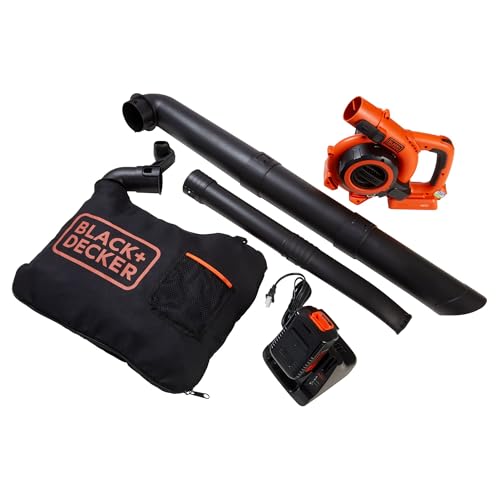
- Lightweight design at 5.4 lbs in blow mode and 6.9 lbs in vac mode
- 40V MAX battery with built-in state of charge indicator
- Mulching fan shreds up to 6 bags of leaves down to 1 bag
- Built-in scraper on the tube helps loosen stuck debris
- 6-speed Powercommand dial tailors airflow to the task
Cons
- Modest 120 mph maximum air velocity intended for hard surfaces
- Lower mulching ratio compared to larger yard units

Pros
- Instant switch between blow and vacuum modes
- High 18:1 mulch ratio maximizes bag capacity
- Rated up to 350 CFM and 210 MPH air output
- Variable-speed control for different debris types
- Includes 42L debris collection bag
Cons
- Corded design limits overall yard reach
- Weighs 9.3 pounds before debris accumulates

Pros
- High-output airflow rated up to 600 CFM and 160 MPH
- Includes two 4.0Ah batteries for cordless runtime
- Efficient 15:1 mulching ratio reduces disposal volume
- Tool-free easy-clean access gate for clearing clogs
- Height-adjustable wheels and anti-static handle for user comfort
Cons
- Turbo Boost and top speeds will deplete battery runtimes quickly
- Weighs 10 pounds, which may tire some users during extended sessions

Pros
- Delivers up to 600 CFM of blowing output
- Tool-free switch between blow and vac modes
- 16:1 mulch ratio compacts collected leaves
- Large 50L collection bag included
- Variable-speed control for tailored airflow
Cons
- Requires an extension cord and nearby power source
- Weighs 9.1 pounds before filling collection bag
Cordless Mobility vs. Corded Continuous Power
Cordless designs grant unrestricted range across lawn edges, beds, and outbuildings, but they trade away the infinite runtime of corded alternatives. For buyers needing an untethered cordless battery leaf blower and vac, the HEYWORK 40V Yard Blower Vacuum and the BLACK+DECKER Leaf Blower Cordless Leaf Vacuum operate entirely on battery systems. The Heywork unit includes two 4.0Ah 40V batteries, while the Black+Decker kit includes a single 40V MAX battery.
In contrast, models like the WORX Trivac 3-in-1 Electric Leaf Blower/Leaf (WG509) and WORX Trivac 3-in-1 Electric Leaf Blower/Leaf (WG512) rely on 12-amp corded motors. While corded blowers never require battery management or mid-job recharging, they confine your cleanup radius to the reach of an extension cord. Choosing between them comes down to whether property size or uninterrupted operating time is your primary constraint.
Airflow and Airspeed: Comparing Cordless and Corded Options
Airflow volume determines how quickly you can vacuum and gather broad leaf piles, while airspeed controls how effectively the tool dislodges wet or stuck debris. The HEYWORK 40V Yard Blower Vacuum leads the cordless category with an advertised 600 CFM airflow and 160 MPH air speed across four speed settings plus a Turbo Boost mode. This matches the 600 CFM output of the corded WORX WG512, making it a viable cordless option for larger volume gathering. For troubleshooting and reliability insights, consult our in-depth small rechargeable leaf blower report.
By comparison, the BLACK+DECKER Leaf Blower Cordless Leaf Vacuum focuses on lighter tasks with an advertised 120 MPH air speed and a 6-speed dial. It is engineered primarily as a hard-surface sweeper vac for driveways, patios, and decks rather than heavy lawn clearing, though it features a built-in scraper on the blow tube to help dislodge matted foliage. If clearing wet debris from pavement is your routine task, you might also consider dedicated setups like a leaf blower for driveway maintenance. Meanwhile, the corded WORX WG509 strikes a different balance with 350 CFM but a faster 210 MPH air stream.
Mulch Ratios and Waste Volume Reduction
Higher mulching ratios compact shredded leaves more aggressively, reducing how often you need to stop and empty the collection bag. The corded WORX WG509 delivers the tightest reduction with an advertised 18:1 mulch ratio, dropping debris into a 42-liter bag, while the corded WORX WG512 offers a 16:1 ratio paired with a slightly larger 50-liter bag.
Among cordless selections, the HEYWORK 40V Yard Blower Vacuum claims a 15:1 mulch ratio, which condenses roughly 15 bags of whole leaves into a single bag. The BLACK+DECKER Leaf Blower Cordless Leaf Vacuum provides a more modest 6:1 reduction ratio. If your yard produces heavy oak or maple leaf drops, lower mulch ratios mean more frequent dumping, whereas lighter patio dusting requires far less collection capacity. Readers comparing setup options can review our technical analysis on blower para soplar hojas.
Maneuverability, Weight, and Anti-Clogging Systems
Tool weight and clog resistance dictate how physically demanding long vacuuming sessions will be. The BLACK+DECKER Leaf Blower Cordless Leaf Vacuum documents specific, verified weights: just 5.4 pounds in blower mode and 6.9 pounds in vacuum mode. This lightweight footprint reduces arm fatigue when cleaning steps, garage floors, and small decks.
The HEYWORK 40V Yard Blower Vacuum addresses physical strain differently by incorporating adjustable-height ground wheels, allowing users to roll the tool across the turf rather than supporting the entire assembly. Heywork also advertises an upgraded square tube interface, an anti-static handle, and an “Easy-Clean Access Gate” designed for clearing internal jams without hand tools. Neither Worx model nor the Black+Decker unit includes integrated ground wheels, requiring handheld support throughout operation.
Cordless Leaf Blower and Vacuum FAQ
How long will a cordless leaf blower vacuum run on a single charge?
Exact runtime varies by battery capacity, motor load, and speed setting. Vacuuming and mulching demand significantly more power than light sweeping, so running in Turbo mode depletes batteries much faster. Check the manufacturer's amp-hour (Ah) rating and consider having a spare battery charged for larger jobs.
Can a cordless leaf vacuum handle wet leaves and twigs?
Cordless vacuums are best suited for dry leaves and light garden clippings. Wet, matted leaves and thick sticks can jam mulching impellers and clog collection tubes. Models with built-in scrapers or tool-free cleanout gates help dislodge stuck debris, but clearing heavy wet material typically strains battery-powered motors.
Why do some leaf blower vacuums require switching tubes while others use a lever?
Tools with tool-free mode conversion use internal diverter gates to switch between blowing and vacuuming instantly without swapping parts. Other designs require detaching the blow tube and installing a wider vacuum tube and collection bag, which takes slightly longer but often provides a lighter dedicated configuration for each task.
Which Yard Blower and Vacuum Should You Choose?
Your choice depends on whether you value true portable reach across turf or unlimited electrical runtime near the house. Buyers with vast yards and no outdoor power access will struggle with cord management, while homeowners tackling massive multi-hour leaf drops may find recharging batteries an unwanted chore. For sheer blowing volume without cords, a high-powered leaf blower design with vac capabilities ensures you can both sweep and bag without dragging long cables.
For most shoppers prioritizing cordless freedom and heavy cleanup capability, the HEYWORK 40V Yard Blower Vacuum is the recommended choice due to its advertised 600 CFM airflow, 15:1 mulching ratio, and included dual batteries. Its primary limitation is the reality of finite battery runtime during extensive cleanups. If your cleanup is confined strictly to hard surfaces and you prefer a verified ultra-lightweight tool, the BLACK+DECKER Leaf Blower Cordless Leaf Vacuum is a practical alternative at under seven pounds in vacuum mode.
Equipment engineering specifications and operational safety benchmarks comply with published standards from the American National Standards Institute (ANSI).