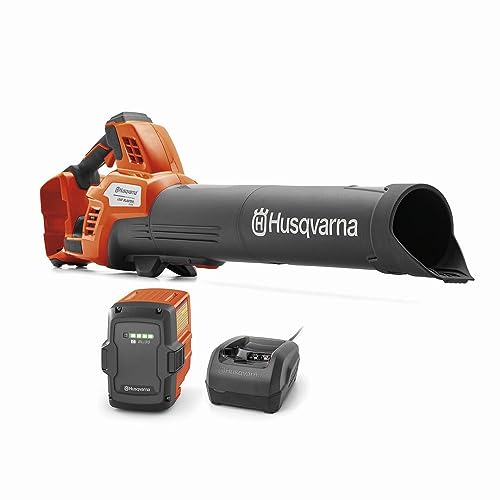
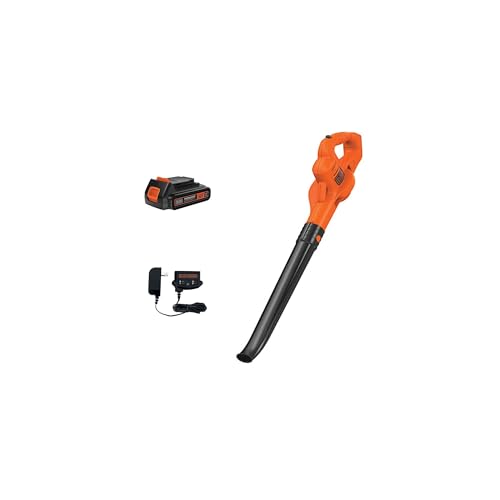
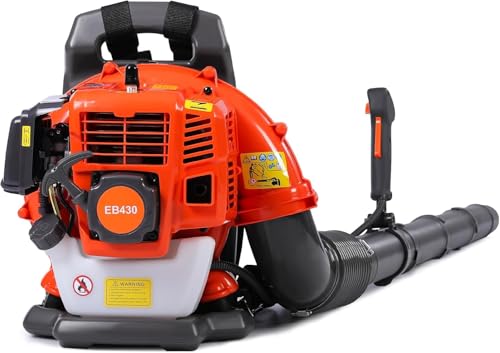
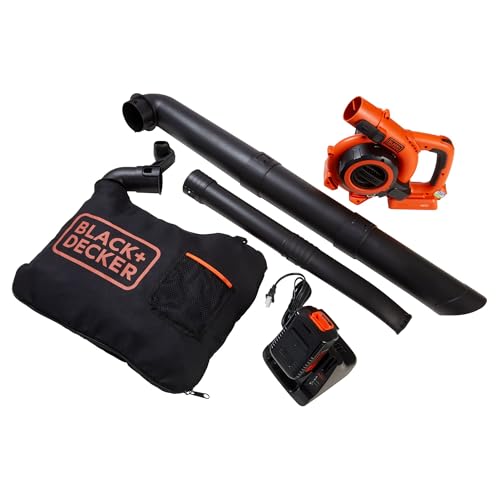
For homeowners managing expansive properties, an advanced tool like the high-powered leaf blower options powered by 56V platforms provides professional-grade clearing, though premium brushless systems demand a higher upfront investment than compact 20V utility tools.

Pros
- Compatible with Dewalt 20V Max lithium-ion batteries
- Lightweight 1.8-pound handheld design reduces arm fatigue
- Includes standard tube and flat concentrating nozzle
- Manufacturer-rated airflow reaches up to 720 CFM and 180 MPH
- Built-in work light aids visibility in dim workspaces
Cons
- High-power operation may quickly deplete the included 4.0Ah battery
- Charger is not explicitly mentioned as included in the package

Pros
- Delivers up to 615 CFM and 170 MPH in turbo mode
- Variable speed dial with lock-on button from 200–480 CFM
- High-efficiency brushless motor reduces operating vibration
- Includes 56V 2.5Ah battery and standard 50-minute charger
- Fully compatible with all EGO 56V ARC Lithium batteries
Cons
- Turbo mode rapidly reduces the available battery runtime
- Weighs 7.5 pounds, which may feel heavy with larger batteries

Pros
- Brushless motor delivers rated airflow up to 650 CFM and 180 MPH
- Includes two 20V 4.0Ah batteries and a fast charger
- Six adjustable speed settings ranging from 80 to 180 MPH
- Comes with an ergonomic shoulder strap and two detachable nozzles
- Includes a storage bag to keep components organized
Cons
- Stated 30-minute runtime is restricted to low-speed operation
- High-speed settings will deplete battery charge more rapidly
How Brushless Motors Improve Leaf Blower Efficiency and Lifespan
Brushless motors eliminate physical carbon brushes, significantly reducing mechanical friction, heat buildup, and wear during sustained yard cleanup. By electronically controlling the electromagnetic current, these motors deliver power only when demanded, which directly increases tool longevity and operational reliability.
In standard brushed tools, internal contact brushes generate heat and inevitably wear out over time. In contrast, manufacturer specifications for the EGO POWER+ Cordless Electric Leaf Blower, 615 CFM highlight that its high-efficiency brushless motor lowers tool vibration while actively expanding the motor’s lifespan. By dropping internal resistance, brushless systems draw power from battery cells more sustainably, ensuring stable output even under demanding outdoor conditions.
Voltage Systems and the Impact of Motor Engineering on CFM Output
Airflow volume (CFM) and air speed (MPH) depend heavily on the motor’s ability to drive axial or turbine fan assemblies without thermal throttling. A brushless design maintains high rotational speed under heavy airflow resistance, letting smaller fans produce substantial clearing force.
Consider how different designs approach air delivery. The DOOYUTOOL Cordless Leaf Blower for DEWALT 20V Max Battery advertises axial flow technology paired with its brushless motor, claiming up to 720 CFM and 180 MPH on a 20V platform. Meanwhile, the EGO POWER+ LB6151 pairs its brushless architecture with turbine fan engineering to push up to 615 CFM and 170 MPH in turbo mode. The laapee Leaf Blower Cordless 650CFM with 2×4.0Ah Battery advertises a 6-speed range from 80 to 180 MPH with a 650 CFM ceiling. These high manufacturer output claims demonstrate that brushless motors allow compact units to move volumes of air once limited to heavier gasoline equipment.
Runtime Expectations and Battery Platform Trade-Offs
A primary benefit of brushless engineering is battery conservation, though actual runtime always correlates directly with selected speed modes and battery amp-hour capacity. Brushless efficiency stretches runtimes, but maximum throttle settings deplete any battery pack quickly.
For example, the EGO POWER+ LB6151 claims up to 75 minutes of total runtime with its bundled 2.5Ah 56V ARC Lithium pack, but that figure applies to lower dial speeds (200 to 480 CFM) rather than continuous turbo mode. Similarly, the laapee blower includes two 20V 4.0Ah batteries, advertising up to 30 minutes of operation on low speed per battery. While a brushless motor draws energy far more prudently than brushed equivalents, users demanding peak air speeds to shift wet leaves should expect to rotate between spare batteries.
Handling and Fatigue: Weight Distribution Versus Raw Blower Power
Brushless motors are noticeably more compact and lighter than traditional motors of equivalent power, reducing physical strain during prolonged property maintenance. However, overall tool ergonomics are still heavily influenced by battery weight and nozzle configuration.
The DOOYUTOOL model emphasizes an ultra-lightweight bare tool weight of just 1.8 lbs, positioning it as an agile tool for light yard work or quick patio dusting. Conversely, heavier tools often address user fatigue through carrying accessories; the laapee 650 CFM blower includes a dedicated shoulder strap to distribute weight off the arms during jobs lasting 30 minutes or more. When evaluating a cordless battery leaf blower, buyers must weigh ultra-light tool agility against the balance required for sustained yard clearing.
EGO POWER+ LB6151 vs. DOOYUTOOL 20V: Platform Scale Compared
Choosing between dedicated outdoor equipment ecosystems and multi-brand tool compatibility depends on your existing workshop inventory and property scale. While both tools leverage brushless motor advantages, they serve distinct property sizes and battery setups.
The EGO POWER+ LB6151 lists at $179.00 and operates on a dedicated 56V ARC Lithium platform with an included 50-minute fast charger. It offers a variable-speed dial with a lock-on trigger and a dedicated turbo mode for challenging debris. In contrast, the DOOYUTOOL cordless blower costs $99.99 and provides cross-compatibility with DeWalt 20V MAX batteries (such as DCB204 or DCB205), making it a budget-conscious, plug-and-play solution for owners already invested in that battery ecosystem. While the DOOYUTOOL advertises a higher peak CFM rating (720 CFM vs. 615 CFM), the EGO platform provides a refined, heavy-duty build designed for comprehensive yard maintenance.
Brushless Leaf Blower Motor FAQ
Does a brushless motor give a leaf blower more runtime?
Yes. Because brushless motors adjust energy draw electronically and avoid the mechanical friction of carbon brushes, they waste less energy as heat. This results in more efficient power consumption from the battery pack, although operating continuously in turbo or maximum speed modes will still drain batteries rapidly.
What maintenance does a brushless blower motor require?
Unlike traditional electric motors that eventually require carbon brush replacements and internal cleaning to prevent contact wear, brushless motors have no physical brushes to replace. General maintenance is limited to keeping the air intake vents clean and free of lawn debris.
Choosing the Best Brushless Cordless Blower for Your Yard
A brushless motor delivers reduced heat, lower operational vibration, and superior battery efficiency, making it the preferred standard for modern yard blowers. The right choice ultimately depends on whether you value an established outdoor equipment battery line or entry-level utility convenience.
For buyers needing reliable, variable-power lawn cleanup backed by an expansive outdoor tool ecosystem, the EGO POWER+ Cordless Electric Leaf Blower, 615 CFM is our primary recommendation. Its main trade-off is a higher purchase price and a smaller 2.5Ah starter battery. If your priority is maximum budget value and you already own DeWalt power tool packs, consider the Cordless Leaf Blower for DEWALT 20V Max Battery instead for quick, low-strain cleanups around patios and driveways.