If you need to sweep wide yards and wet leaf mats quickly, selecting a leaf blower with high cubic feet per minute (CFM) clears broad surface areas faster, but maximum airflow drains batteries rapidly on top turbo settings. Choosing the right high-volume tool requires balancing peak advertised output against battery capacity, tool weight, and overall system cost.

Pros
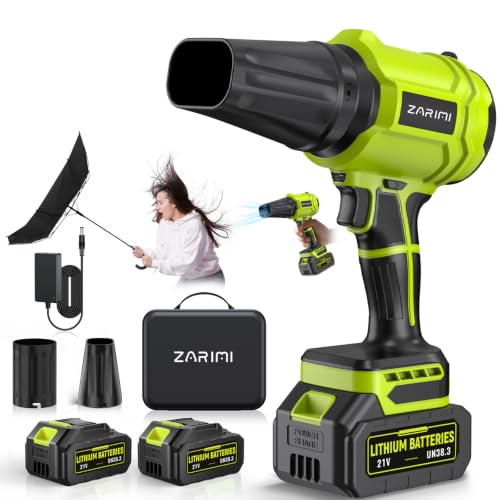
- High-volume airflow rated up to 680 CFM
- Includes two 21V batteries and a charger
- 5-speed variable control for delicate or heavy debris
- Lightweight build at just 3.6 pounds
- Ergonomic handle with anti-slip grip
Cons
- Battery life drops faster at maximum speed
- Requires swapping and charging batteries

Pros
- Lightweight design at only 4.4 pounds
- 7-Amp motor rated up to 180 MPH and 180 CFM
- Built-in cord retention prevents unplugging
- Zero emissions with instant push-button start
- Simple, low-maintenance corded design
Cons
- Extension cord is not included
- Operating range is limited by cord reach

Pros
- Delivers up to 880 CFM and 200 MPH air speed in turbo mode
- Includes two 4.0Ah 56V ARC Lithium batteries for extended runtime
- Integrated digital display monitors charge level and cruise lock
- Variable speed dial easily adjusts output from 270 to 700 CFM
- Includes both tapered and spread nozzles for task versatility
Cons
- Maximum 880 CFM power is restricted to short turbo bursts
- Full runtime of up to 90 minutes requires lower power settings

Pros
- Delivers up to 600 CFM and 110 MPH airflow
- Continuous corded power eliminates recharging and gas mixing
- Variable-speed control adjusts airflow to the task
- Lightweight design weighs just 6.4 pounds
Cons
- Operating range is tethered to an electrical outlet
Pros
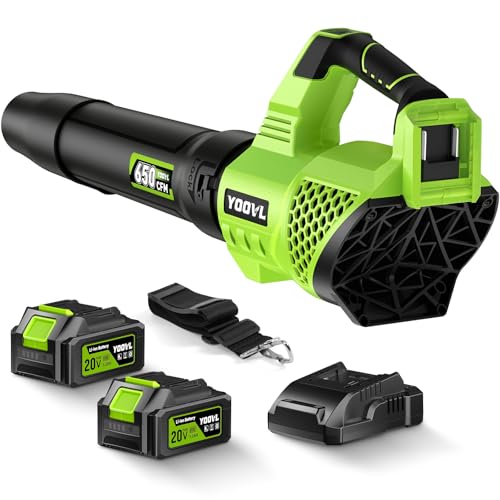
- Airflow rated up to 650 CFM using advanced turbo technology
- Comes with two high-capacity 20V 5.2Ah batteries and fast charger
- Three selectable speed modes for delicate to heavy-duty jobs
- Includes an adjustable shoulder strap to reduce arm fatigue
- Includes blower tube and extension nozzle attachments
Cons
- Maximum 150-minute runtime applies only to low-speed mode
- Heavier battery packs may add weight during prolonged handheld use

Pros
- Brushless motor delivers rated airflow up to 650 CFM and 180 MPH
- Includes two 20V 4.0Ah batteries and a fast charger
- Six adjustable speed settings ranging from 80 to 180 MPH
- Comes with an ergonomic shoulder strap and two detachable nozzles
- Includes a storage bag to keep components organized
Cons
- Stated 30-minute runtime is restricted to low-speed operation
- High-speed settings will deplete battery charge more rapidly

Pros
- Delivers up to a stated 930 CFM airflow and 197 MPH
- Includes two 4.0Ah batteries and a fast charger
- Six variable-speed settings with a constant-speed lock
- Tool-free assembly with included blower tubes
Cons
- Stated dual-battery runtime is limited to 30–60 minutes

Pros
- Brushless motor delivers up to 700 CFM and 180 MPH
- 3-in-1 tool-free blowing, vacuuming, and mulching
- Stated 15:1 mulch ratio with a 40L collection bag
- Adjustable support wheels help carry the tool's weight
- Includes two 4.0Ah batteries and a quick-access clean gate
Cons
- Total runtime is limited to up to 30 minutes
- Turbo blast mode is restricted to 10-second bursts

Pros
- 1200W brushless motor delivers up to 700 CFM and 200 MPH
- Includes two 5.2Ah batteries and a fast charger
- Three speed modes adapt to dusting or heavy clearing
- Claimed runtime reaches up to 160 minutes on low speed
Cons
- Weighs 7.7 pounds, which may tire arms during long tasks
- Runtime drops to 40 minutes at maximum speed setting

Pros
- Turbo mode delivers up to 530 CFM and 110 MPH
- Up to 75 minutes of stated runtime per charge
- Brushless motor reduces vibration and tool wear
- Fast 50-minute battery recharge with included charger
- Variable speed dial with a lock-on trigger button
Cons
- High turbo output significantly reduces battery runtime
- Requires extra batteries for prolonged high-power jobs
How CFM Differs from Airspeed When Clearing Heavy Yard Debris
Cubic feet per minute (CFM) measures the total volume of air pushed through the nozzle, making it the primary metric for moving wide swaths of dry leaves and thick debris piles across large lawns. While miles per hour (MPH) dictates the velocity needed to dislodge stuck, wet matter, a high CFM rating ensures you sweep broader paths with fewer passes.
For example, the EGO Power+ Cordless Electric Leaf Blower, 880 CFM combines an advertised 880 CFM with up to 200 MPH air speeds via turbine fan engineering, allowing it to move broad piles while maintaining enough force for stubborn material. In contrast, compact tools like the BLACK+DECKER Electric Leaf Blower deliver an advertised 180 MPH velocity but only 180 CFM. While that 180 MPH speed is adequate for tight spots and hard surfaces like driveways, its narrow air volume means significantly more sweeping passes on an open yard. When evaluating a high-powered leaf blower, prioritizing CFM gives you the surface coverage necessary for expansive cleanup tasks.
EGO Power+ 880 CFM vs. RAXONE 930 CFM: Platform Reliability vs. Budget Claims
The EGO Power+ Cordless Electric Leaf Blower, 880 CFM offers an established 56V battery platform with real-time digital monitoring, while the 930CFM Electric Leaf Blower Cordless with 2 X 4.0 provides a higher advertised CFM figure at an entry-level price point.
RAXONE advertises a class-leading 930 CFM and 197 MPH wind speed powered by two 4.0Ah batteries for $69.98. However, these figures are manufacturer-stated specifications and lack independent lab verification. In comparison, the EGO LB8803-2 is priced at $379.00 and features a high-efficiency brushless motor, cruise control adjustable from 270 to 700 CFM, an 880 CFM turbo mode, and tapered and spread nozzles. Furthermore, the included 4.0Ah batteries work across EGO’s entire 56V ARC Lithium line. The deciding trade-off comes down to cost versus ecosystem maturity: RAXONE delivers high advertised numbers on a budget, whereas EGO offers platform integration, digital telemetry, and refined cruise controls.
Cordless Freedom vs. Continuous Corded Power for Extended Cleanup
Corded blowers provide continuous, fade-free power for properties with accessible outdoor outlets, whereas cordless blowers trade unlimited run duration for total unrestricted mobility.
The WORX 12 Amp Turbine Electric Leaf Blower for Daily outputs up to 600 CFM and 110 MPH at a lightweight 6.4 pounds, offering uninterrupted power for $75.27 without requiring battery recharges. The clear limitation is the extension cord: you are restricted to a fixed radius around your electrical outlets, and the unit itself does not include an extension cord in the box. On the other hand, choosing a cordless battery leaf blower such as the Cordless Leaf Blower, 680 CFM High Power Battery (weighing only 3.6 lbs) or the Leaf Blower Cordless, New Upgraded 1200W Brushless (700 CFM, 200 MPH) lets you move freely along remote fence lines and long driveways, provided you plan around battery swaps.
Managing Runtime Trade-Offs at Maximum Airflow Settings
Pushing a high-CFM cordless leaf blower to its maximum output significantly accelerates battery consumption, making variable speed controls essential for managing realistic runtimes across larger properties.
Advertised battery runtimes frequently reflect operation at low power levels rather than full-throttle performance. For instance, the MTKOALA 700 CFM model advertises up to 160 minutes of runtime at its lowest setting with two 5.2Ah batteries, but that drops to an advertised 40 minutes on high speed. Similarly, the Leaf Blower Cordless, 650CFM Electric Leaf Blowers advertises up to 150 minutes across 3 speed modes, while the Leaf Blower Cordless 650CFM with 2×4.0Ah Battery claims up to 30 minutes on low speed. For dense, wet leaves, high airflow is required, but alternating between moderate speed for general sweeping and burst modes for stubborn debris helps maximize dual-battery runtimes.
Frequently Asked Questions About High-CFM Leaf Blowers
What CFM rating is considered good for heavy residential yard work?
For light driveway dust and small dry clippings, blowers around 200 to 400 CFM can suffice. However, managing wide lawns, deep autumn leaves, and damp debris typically requires 600 to 880 CFM to move substantial piles quickly and minimize passes.
Why do high-CFM cordless blowers often include two batteries?
Axial turbine fans draw substantial power to push 600 CFM or higher, particularly on top speed or turbo settings. Dual-battery kits allow you to charge one pack while working with the other, helping you sustain progress on larger yard projects.
Can high-CFM leaf blowers clear light snow and wet leaves?
Yes, blowers producing 650 to 930 CFM combined with air speeds above 180 MPH can move wet debris and light, fluffy snow. However, wet or compacted snow requires high power settings that will deplete cordless batteries more quickly.
Selecting the Right High-CFM Blower for Your Yard
Choosing the ideal high-CFM leaf blower hinges on whether you need multi-function yard capabilities, a corded continuous run setup, or a robust cordless platform for extensive outdoor cleanup.
Homeowners seeking more than blowing power can look at the MZK 40V Leaf Vacuum Mulcher, which advertises 700 CFM alongside a 15:1 mulching ratio, collection bag, and rolling support wheels, though continuous high-demand use is limited by its dual 4.0Ah battery capacity. For small suburban yards close to home outlets, the corded WORX WG520 provides a consistent 600 CFM without battery charging intervals.
For homeowners seeking top-tier air volume backed by a mature cordless ecosystem, the EGO Power+ Cordless Electric Leaf Blower, 880 CFM is the recommended choice, ideal for large properties needing wide-swath clearing and variable cruise control. Its primary limitation is its premium $379.00 price tag, which represents a substantial upfront investment compared to entry-level tools. For budget-conscious homeowners who want strong output without the high cost of a 56V ecosystem, the Cordless Leaf Blower, 680 CFM High Power Battery serves as a capable alternative, offering 680 CFM and two included batteries at an accessible price point.