For homeowners tackling routine deck, driveway, and gutter maintenance, cordless handheld blowers offer swift, single-handed cleanup without extension cords or fuel mixtures. However, choosing between an ultra-lightweight bundled kit and a high-performance bare tool requires trading off universal battery compatibility against out-of-the-box convenience.

Pros
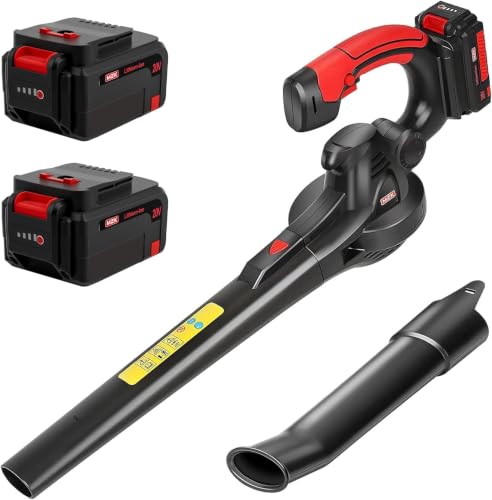
- Includes two 4.0Ah batteries and a fast charger
- Stepless variable-speed trigger with safety lock
- Comes with two detachable nozzle tubes and a shoulder strap
- Stated wind speed capability reaching up to 65 m/s
- Includes storage toolbox and protective earplugs
Cons
- Claimed 30-minute runtime per battery is limited to low speed
- Conflicting weight figures listed between specs and description

Pros
- Rated for up to 200 MPH airspeed and 550 CFM air volume
- Infinite variable speed trigger provides precise airflow control
- Includes two 20V 4.0Ah batteries and a dual-port charger
- Comes with flat, round, and brush interchangeable nozzles
- Lightweight 3.5-pound design allows comfortable one-handed use
Cons
- High-output operation significantly reduces battery runtime
- Battery power may struggle with heavy, waterlogged debris piles

Pros
- Compatible with Dewalt 20V Max lithium-ion batteries
- Lightweight 1.8-pound handheld design reduces arm fatigue
- Includes standard tube and flat concentrating nozzle
- Manufacturer-rated airflow reaches up to 720 CFM and 180 MPH
- Built-in work light aids visibility in dim workspaces
Cons
- High-power operation may quickly deplete the included 4.0Ah battery
- Charger is not explicitly mentioned as included in the package
Pros
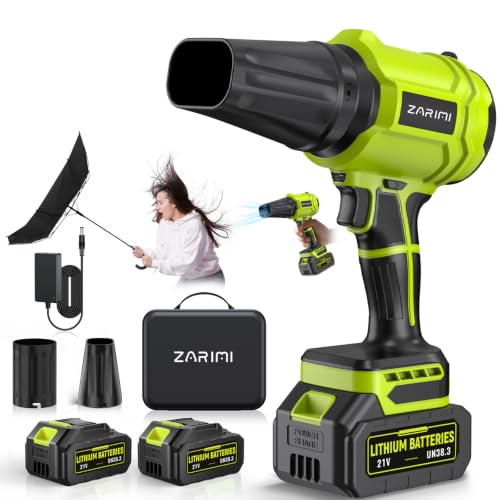
- Extremely lightweight at only 2.8 pounds for low-fatigue use
- Reaches stated air speeds over 50 m/s (110+ MPH)
- Comes with two batteries and charger for alternating use
- Includes a concentrated narrow nozzle for detailed edging
- Compact footprint stores easily in tight spaces or vehicle trunks
Cons
- Limited runtime of only about 13 minutes per battery
- Not designed for moving heavy or deep piles of wet leaves

Pros
- Weighs only 2.28 lbs for easy one-handed operation
- Includes two 21V 4000mAh lithium batteries
- Variable speed trigger provides precise airflow control
- Comes with an extension tube and flat nozzle attachment
Cons
- Rated runtime tops out at roughly 30 minutes
- Not designed for large properties or heavy wet debris
Pros
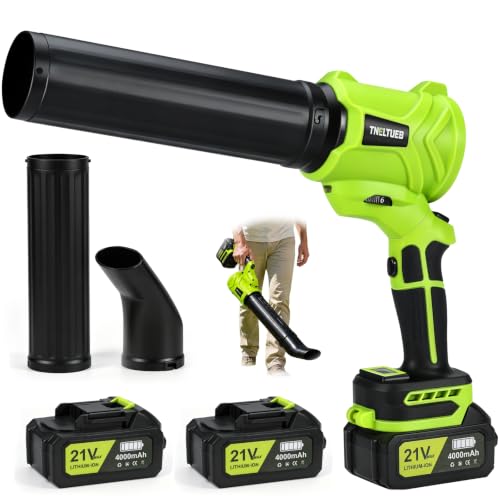
- Six selectable speed settings spanning 100 to 200 MPH
- 180-degree rotating handle facilitates versatile blowing angles
- Includes two 21V 4.0Ah rechargeable battery packs
- Comes equipped with two interchangeable nozzle attachments
- Ultralight 2-pound build allows easy one-handed maneuvering
Cons
- Battery runtime drops considerably when using higher speed modes
- Requires swapping batteries during large property cleanups
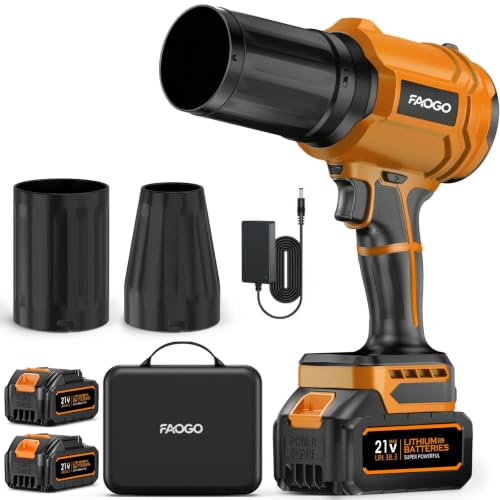
Pros
- Lightweight and compact design for comfortable one-handed use
- Includes two batteries and charger for uninterrupted swapping
- Comes with two extended interfaces for reach in tight spaces
- Storage bag included for convenient organization
Cons
- Total battery life is rated at roughly 26+ minutes across both packs

Pros
- Includes two high-capacity 6.0Ah rechargeable battery packs
- Tool-free assembly allows quick and straightforward setup
- Ergonomic, lightweight handheld frame minimizes arm fatigue
- 21V cordless platform enables flexible mobility around the yard
Cons
- Does not disclose standardized CFM or MPH airflow metrics
- Charger inclusion is not explicitly stated in the package details
- 990,000 RPM motor claim is an unrealistic marketing figure

Pros
- Includes two rechargeable batteries and a dedicated charger
- Ultra-lightweight handheld body allows easy one-handed control
- Comes with two extension interfaces and a storage carry bag
- Built-in overheat protection during battery charging
Cons
- Total runtime is limited to approximately 26+ minutes across both packs
- Manufacturer motor rating of 990,000 RPM is an exaggerated marketing claim
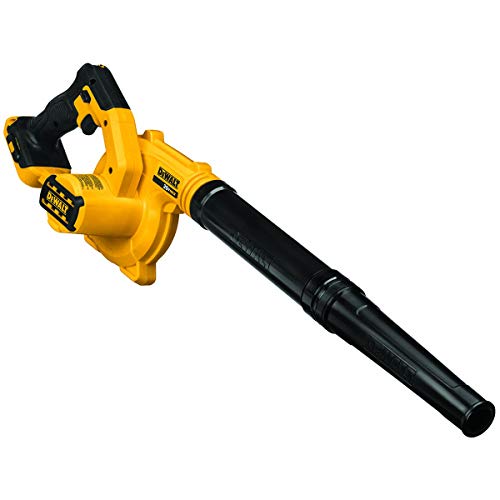
Pros
- Lightweight 2.5-pound design fits into tight spaces
- 3-speed variable switch plus variable speed trigger
- Trigger lock-on reduces hand fatigue during continuous use
- Includes 3 nozzle attachments for different clearing tasks
Cons
- Sold as a bare tool without battery or charger
- 100 CFM airflow is strictly intended for jobsite debris
Bare Tool Versus Complete Battery Kits
Choosing between a bare tool and a complete kit comes down to whether you already own compatible power tool batteries, as bare tools save money upfront but require existing hardware. Buyers who have already invested in a brand ecosystem often find bare tools the most practical path forward.
For example, the DEWALT 20V MAX Blower, 100 CFM Airflow retails as a bare tool without an included battery or charger. This design suits workshops and job sites where DeWalt 20V Max batteries are already in regular rotation. However, for a homeowner without that platform, purchasing separate batteries and chargers quickly drives up total expenditure.
Conversely, models like the DOOYUTOOL Cordless Leaf Blower for DEWALT 20V Max Battery bridge this gap by including a 4.0Ah battery while remaining compatible with standard DeWalt packs. Complete standalone bundles such as the Handheld Cordless Leaf Blower 980,000 RPM and the Leaf Blower Cordless Handheld Blower with 2×4.0Ah provide two dedicated batteries and chargers in the box. While these all-in-one kits eliminate initial setup friction, their proprietary battery casings typically cannot be used across mainstream power drill or saw platforms.
Evaluating Airflow Claims and CFM Ratings
CFM measures total air volume moved while MPH gauges air velocity, and balancing these two metrics determines whether a tool excels at sweeping broad lawns or scouring tight cracks. High air velocity lifts stuck debris, but adequate volume is essential to herd large mounds of leaves across open grass.
The DOOYUTOOL Cordless Leaf Blower advertises an airflow rating of 720 CFM alongside 180 MPH air speed, utilizing an axial flow fan design to clear widespread outdoor areas. In a similar vein, the Handheld Cordless Leaf Blower 980,000 RPM lists 550 CFM and 200 MPH, providing the cyclonic force needed for damp leaves and gravel. For buyers comparing large-scale yard tools, exploring high-powered leaf blower configurations can provide additional context on standard volume benchmarks.
In contrast, compact jobsite units like the DEWALT 20V MAX Blower offer a stated 100 CFM. While this lower volume is not intended for raking extensive yards, it provides focused, controllable output for sweeping sawdust, cleaning tuck-pointing joints, or clearing workbenches. Additionally, several generic models cite manufacturer-advertised motor speeds exceeding 980,000 or 990,000 RPM; buyers should treat these extreme rotational figures as unverified internal turbine ratings rather than direct indicators of real-world sweeping effectiveness.
Weight and Ergonomic Handling for Extended Yard Work
Operating a blower for prolonged sessions quickly strains the wrist and forearm, making overall tool weight and balance pivotal purchase considerations. Light tools allow effortless overhead work when clearing gutters or car tops, though featherweight designs often rely on compact housings with less physical dampening.
The Leaf Blower Cordless Handheld Blower with 2×4.0Ah stands out with an advertised bare weight of just 1.12 pounds and includes an auxiliary shoulder strap to mitigate arm fatigue. Similarly, the DOOYUTOOL model weighs in at 1.8 pounds, and the wanvzo Cordless Leaf Blower weighs 2.28 pounds, both providing easy one-handed maneuverability for seniors or users seeking strain-free operation. Even slightly heavier alternatives, like the 2.8-pound YUQUESEN Cordless Leaf Blower, remain significantly lighter than gas-powered equipment.
Handle ergonomics also impact comfort. The TNELTUEB Cordless Leaf Blower Lightweight Handheld Blowers integrates a 180-degree rotating handle, allowing users to alter blowing angles without contorting their wrists. However, when selecting ultralight units bundled with large batteries—such as the Handheld 21V Cordless Leaf Blower, 990000 RPM with twin 6.0Ah packs—the balance point shifts noticeably toward the base, requiring a firm grip during downward-angled sweeping.
Speed Control and Nozzle Attachments for Versatile Cleaning
A multi-speed switch or stepless variable trigger prevents accidental blowback when working near loose gravel, garden soil, or delicate porch decor. Without adjustable air control, high-velocity output can easily scatter mulch into lawns or blow debris back into cleaned areas.
The TNELTUEB blower features a 6-speed selector ranging between an advertised 100 MPH for dusting and up to 200 MPH for dense debris. The DEWALT 20V MAX Blower incorporates a 3-speed variable switch alongside a variable-speed trigger and a trigger lock-on, allowing hands-free throttle maintenance during repetitive sweeping. Meanwhile, models from wanvzo and YANXIZAO utilize stepless triggers, modulating airflow smoothly based directly on finger pressure.
Nozzle geometry further dictates versatility. Flat nozzles, such as those supplied with the DOOYUTOOL and YUQUESEN units, flatten the airflow into a wide blade to dislodge wet, matted leaves. Round nozzles produce a concentrated jet ideal for corners, while the Handheld Cordless Leaf Blower 980,000 RPM adds a soft brush nozzle designed for drying vehicles and dislodging dust from workshop machinery without scratching surfaces.
Frequently Asked Questions About Handheld Blowers
How do CFM and MPH ratings affect handheld blower performance?
CFM (cubic feet per minute) indicates the volume of air produced, which governs how much debris the blower can push at once. MPH (miles per hour) measures airspeed, dictating the force used to dislodge stuck or damp leaves. Balanced ratings are ideal for yard work, while specialized workshop blowers often utilize lower CFM for concentrated, dust-controlled sweeping.
Can batteries from generic handheld blowers be swapped across different brands?
Generally, no. Most generic cordless blowers use proprietary slide-on battery interfaces that only fit their respective bundled chargers and tools. An exception among the reviewed options is the DOOYUTOOL blower, which is explicitly designed to accept standard DeWalt 20V Max battery packs.
Are manufacturer RPM ratings of 980,000 or 990,000 reliable indicators of power?
These extreme RPM numbers represent manufacturer-advertised rotational speeds of internal turbine fans rather than independently verified performance standards. When comparing models, look closer at verified battery capacity, included nozzle types, and CFM specifications rather than advertised motor RPM.
Choosing the Best Handheld Blower for Your Space
Selecting the right handheld blower depends on your property layout, storage space, and whether you need sweeping power for large lawns or controlled air for tight workshops. Those managing larger gardens should prioritize dual-battery kits that allow swapping packs mid-cleanup, whereas homeowners maintaining small patios can opt for compact, sub-two-pound designs for quick sweeps.
For general home, yard, and patio maintenance, the Handheld Cordless Leaf Blower 980,000 RPM offers the most balanced overall value. It provides two 4.0Ah batteries, a simultaneous charging base, an infinite speed trigger, and three practical nozzle attachments in one package. Its primary limitation is reliance on proprietary battery packs that do not cross-operate with standard commercial power tool brands. For users who already possess DeWalt 20V batteries and need a tough, compact blower for workshop benches or light outdoor clearing, the DEWALT 20V MAX Blower, 100 CFM Airflow serves as an ideal bare-tool alternative.